Istanbul Stock Exchange (Borsa İstanbul)
Istanbul, Turkey · Established 1866
This site requires authorization to access.
To request access, contact
william.goetzmann@yale.edu
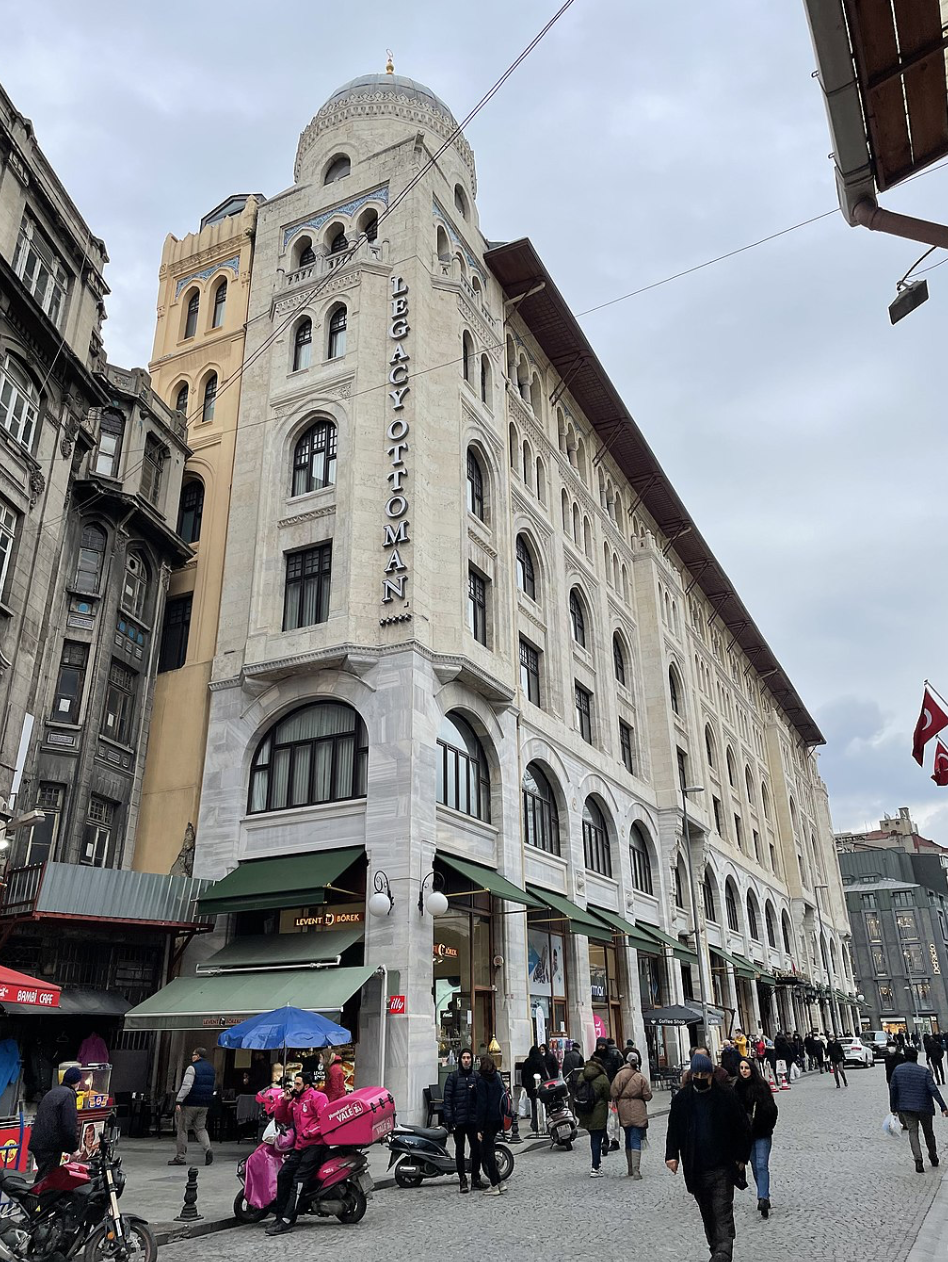
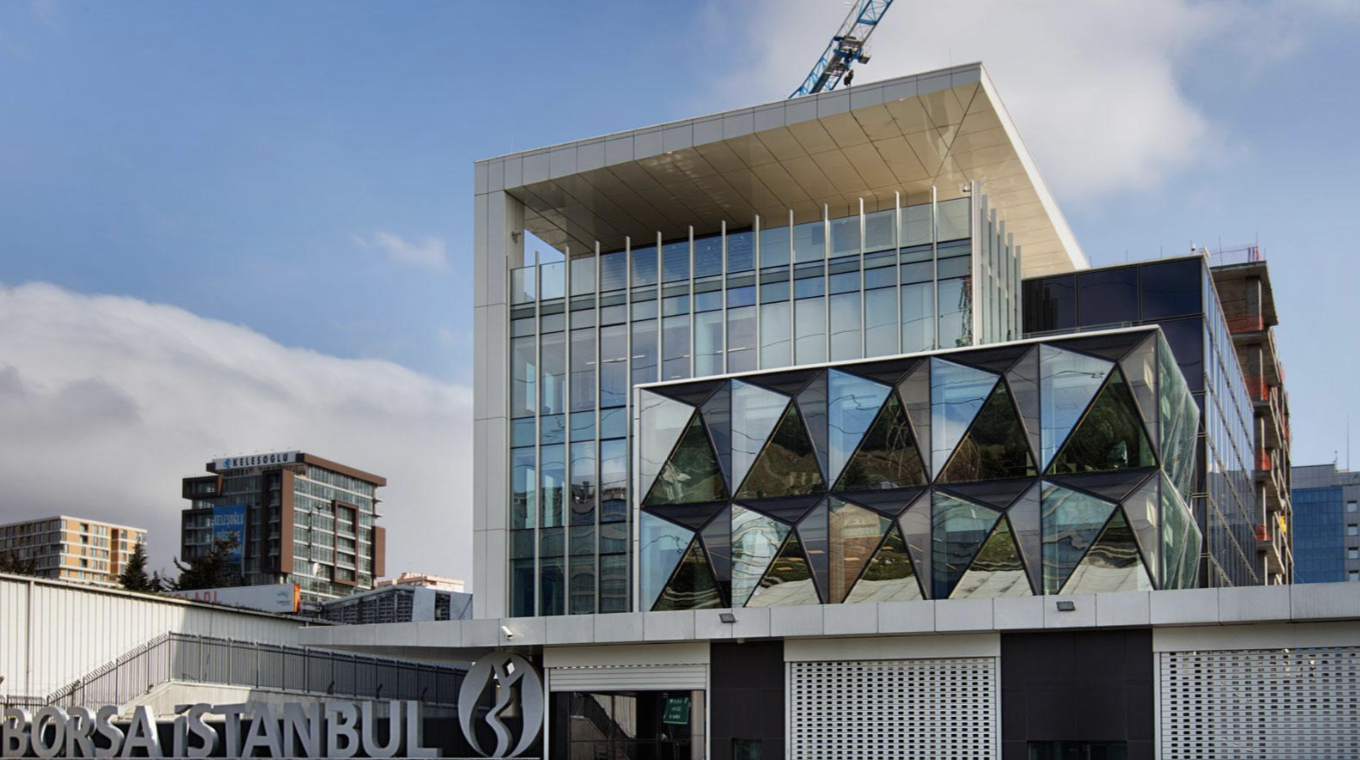
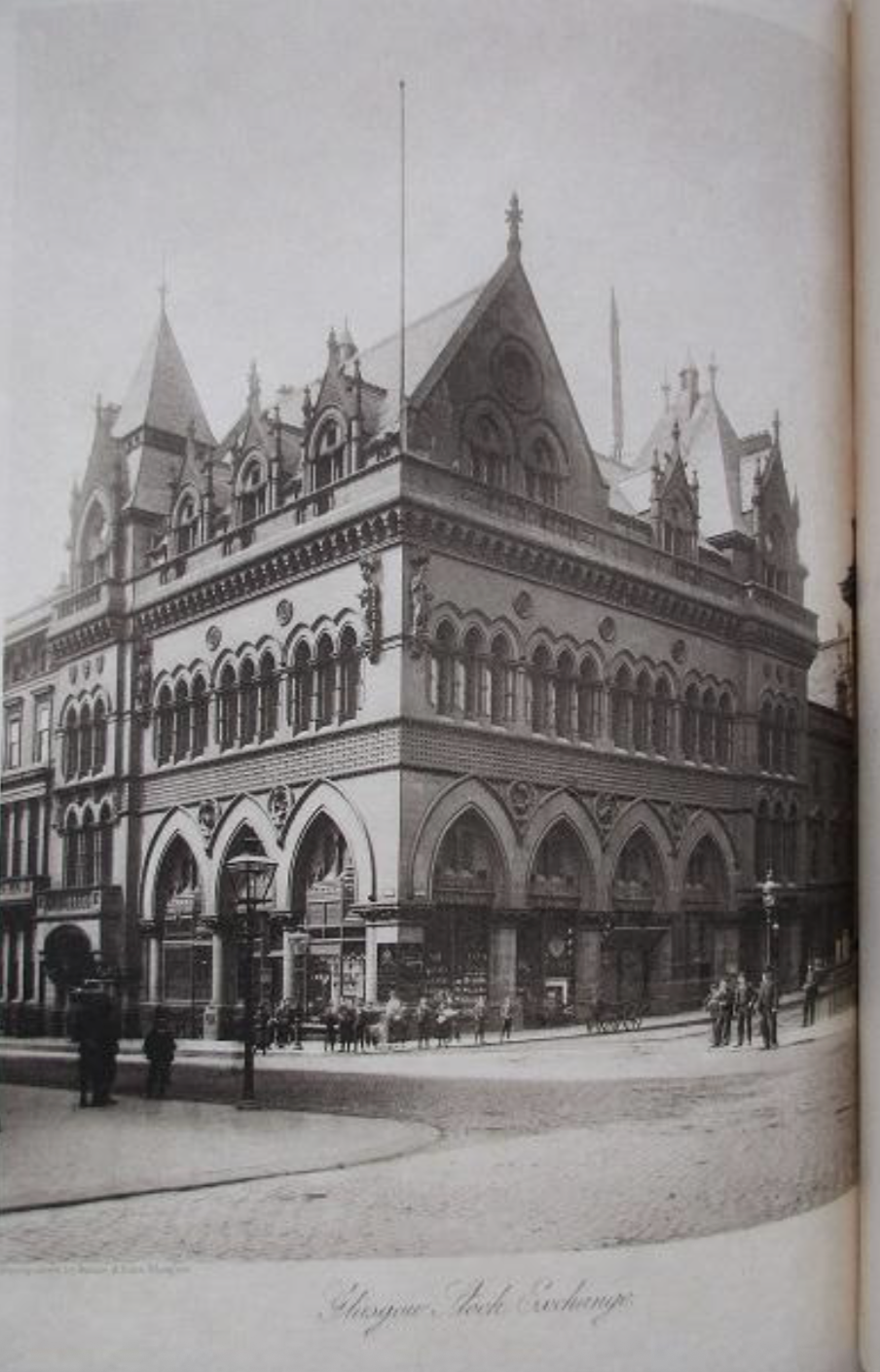
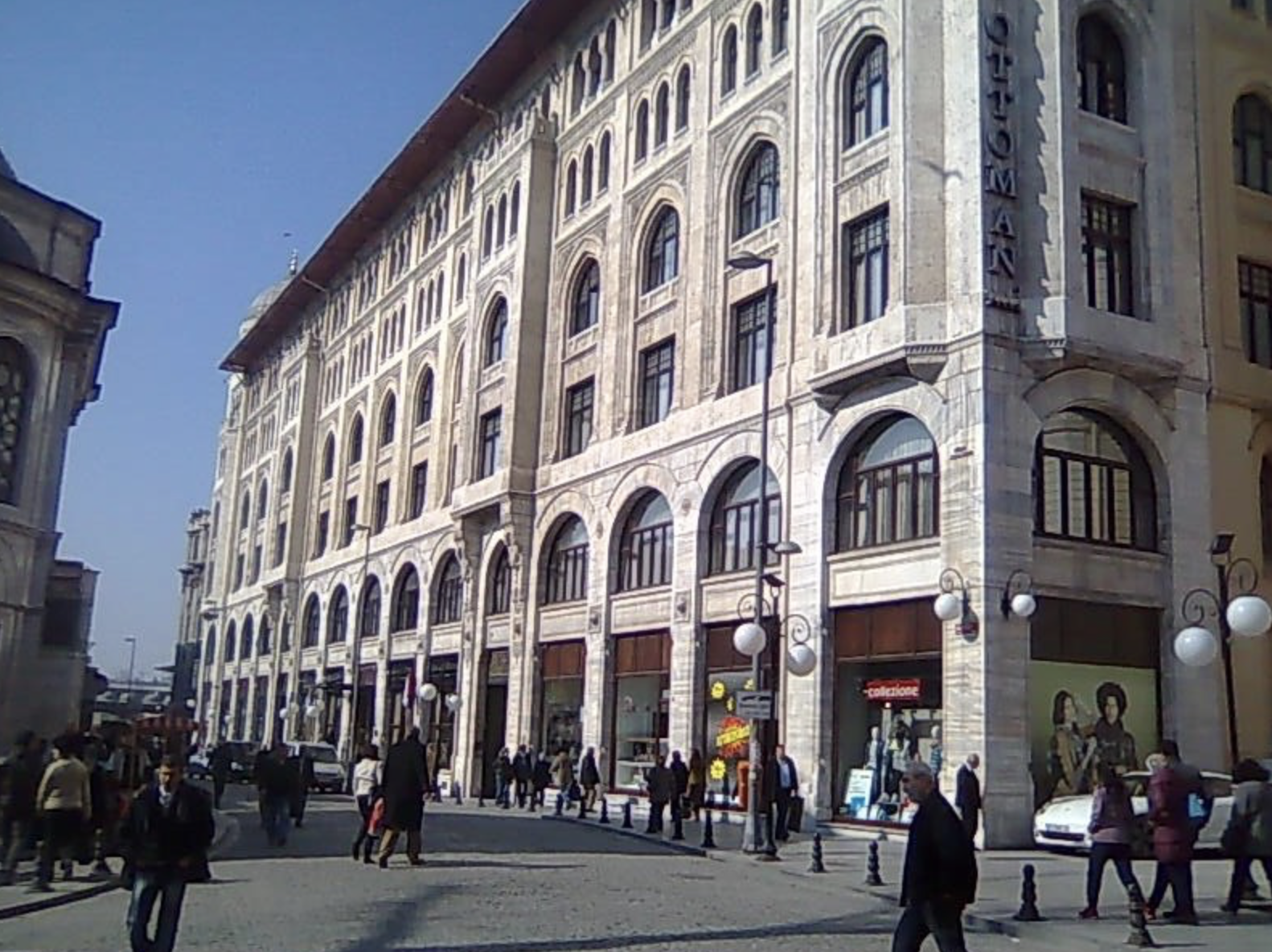
The Istanbul Stock Exchange has occupied a succession of architecturally significant buildings reflecting the city’s shifting financial geography. When the Dersaadet Tahvilat Borsası was established in 1866, trading took place in Havyar Han, a traditional Ottoman commercial han in the Galata district whose thick stone walls, arcaded courtyard, and vaulted ground-floor chambers had long served as the nucleus of Istanbul’s money and capital market. As Zafer Toprak recounts in “From Imperial Debt to Global Offerings: The History of the Istanbul Stock Exchange, 1839–1995” (2016), the exchange moved in 1870 to Komisyon Han (also called Konsolid Han), a more spacious courtyard han on nearby Voyvoda Caddesi that better suited the growing volume of bond speculation. When Komisyon Han collapsed in 1913, trading shifted to Mehmet Ali Paşa Han before the outbreak of the First World War suspended exchange operations entirely. During the early Republican era, the 1929 Law No. 1447 reconstituted the bourse as the Istanbul Securities and Foreign Exchange Bourse, and it was housed within the monumental 4th Vakıf Han in Eminönü—a landmark designed by the architect Mimar Kemaleddin Bey between 1911 and 1926 in the First National Architecture style (Birinci Ulusal Mimarlık Akımı), with its pointed arches, tile cladding, and Ottoman Revivalist façade. In 1985, when the modern Istanbul Stock Exchange (İMKB) was formally re-established under capital-markets legislation, it initially operated in rented offices before relocating on 15 May 1995 to a purpose-built campus in İstinye, a historic Bosphorus village in Sarıyer district. The İstinye campus occupies an eight-hectare wooded site, with original structures housing the trading floor and administrative offices. Following the 2013 merger that created Borsa İstanbul A.Ş., a new phase of campus development began: a 2014 groundbreaking ceremony launched the Finance and Technology Campus designed by Teget Mimarlık (architects Hande Ciğerli and Caner Bilgin), comprising a 16,500-square-metre double-skinned glass office tower rising through the existing tree canopy. The 2016 completion added buildings for Borsa İstanbul, Takasİstanbul, and Merkezi Kayıt İstanbul. Additional service buildings by TeCe Architects (2013) and interior renovations by OSO Architecture (2019) further modernized the campus, whose transparent glass façades and elevated entrance canopies now contrast sharply with the stone hans and neoclassical bank buildings of the exchange’s Ottoman past.
The decorative culture of Istanbul’s exchange buildings reflects the broader Ottoman tradition of embedding calligraphic and ornamental art into documents of financial authority. Ottoman government bonds—the esham and later esham-ı cedid issued from the 1770s onward—bore the sultan’s tuğra, an elaborately calligraphic monogram that functioned as both seal of authenticity and work of art. As the Metropolitan Museum of Art’s study of the Tuğra of Sultan Süleyman the Magnificent notes, court illuminators embellished these signatures with “delicate scroll design and naturalistic flowers” in gold and polychrome pigment, creating “a colorful voluminous effect” that proclaimed imperial authority on every bond certificate and firman. The Havyar Han and Komisyon Han where early trading took place were traditional commercial hans whose aesthetic vocabulary drew on Islamic geometric tilework, carved stone muqarnas corbels, and iron grillwork typical of late Ottoman commercial architecture in Galata. The nearby Ottoman Bank headquarters on Voyvoda Caddesi, designed by Alexandre Vallaury and completed in 1892, offered a more dramatic decorative program: the street-facing northern façade deployed a European neoclassical vocabulary of Corinthian columns, sculpted pediments, and rusticated stone, while the south façade overlooking the Golden Horn adopted what Fabian Steininger, writing for Global Urban History (2016), describes as “neo-Ottoman or neo-Islamic” motifs with pointed arches and ornamental eaves. The SALT Galata cultural center, now housed in the Vallaury building, preserves in its basement vaults the Ottoman Bank Museum Collection—banknotes, share certificates, corporate seals, and personnel photographs that constitute a visual archive of Ottoman financial material culture. The 4th Vakıf Han contributed the aesthetic of Ottoman Revivalism: Kemaleddin Bey’s façade incorporates İznik-inspired tile panels, pointed-arch window surrounds, and carved stonework that synthesize Seljuk and Ottoman decorative traditions. At the modern İstinye campus, art gives way to corporate minimalism: the Teget Mimarlık tower features a transparent double-skinned glass cube, exposed ceilings, and elevated floors, while OSO Architecture’s 2019 interior renovation introduced a contemporary palette of clean surfaces, open-plan workspaces, and integrated digital display walls in the exhibition hall, library, and foyer areas.
The Istanbul Stock Exchange’s physical locations trace the migration of the city’s financial center from the dense commercial quarter of Galata to the leafy Bosphorus suburb of İstinye. In the Ottoman era, the exchange was embedded in the fabric of Galata—the Genoese-founded trading colony on the northern shore of the Golden Horn that had served as Constantinople’s commercial gateway since the medieval period. Havyar Han, where trading began in 1866, stood within a cluster of hans (caravanserai-like commercial buildings) that housed the sarraflar (moneychangers), predominantly Armenian, Jewish, and Greek financiers whom scholars call the Galata bankers. As the exchange moved to Komisyon Han in 1870, it joined the emerging financial corridor of Voyvoda Caddesi—later renamed Bankalar Caddesi (Banks Street)—which Fabian Steininger describes as the Ottoman “Wall Street.” By the 1890s this narrow street concentrated the headquarters of the Ottoman Bank (1892, Vallaury), the Banque de Salonique, the Crédit Lyonnais, and numerous insurance companies, all within walking distance of the exchange and the underground Karakoy Tünel railway (opened 1875). Istanbul’s population nearly tripled between 1844 and 1896, reaching one million inhabitants, and the Galata financial district absorbed much of that commercial energy. After the Republic moved the capital to Ankara in 1923, Istanbul’s financial activity contracted, but Bankalar Caddesi retained its banking function through most of the twentieth century. The 4th Vakıf Han in Eminönü, where the exchange operated during the mid-Republican decades, sat at the nexus of the Sirkeci railway terminus, the Galata Bridge, and the bazaar district, ensuring accessibility across the city. By the 1980s and 1990s, however, Turkish banks began relocating headquarters to the modern high-rise districts of Levent and Maslak on the European side. The 1995 move of the stock exchange to İstinye—a former fishing village on the Bosphorus between Emirgan and Yeniköy—signaled this northward migration of finance. The eight-hectare wooded campus sits above the İstinye bay, surrounded by residential neighborhoods and the luxury İstinyePark shopping center (2007), in a setting that trades the claustrophobic energy of Galata’s stone streets for panoramic Bosphorus views and landscaped greenery. The 2010s pedestrianization and gentrification of Bankalar Caddesi, together with the Galataport cruise terminal project, have meanwhile transformed the old financial district into a cultural and heritage corridor anchored by SALT Galata.
The institutional history of the Istanbul Stock Exchange spans the final decades of the Ottoman Empire, the Turkish Republic’s state-led industrialization, and the liberalization of modern Turkey’s capital markets. Ottoman borrowing on European markets began in 1854, when the empire took its first foreign loan to finance the Crimean War, a decision that the Galata bankers—families such as the Baltazzis, Zarifis, and Camondos—helped facilitate through their connections to Paris and London. Informal secondary trading in these bonds coalesced in Galata’s hans, and in 1866 the government formally established the Dersaadet Tahvilat Borsası (Bond Exchange of the Sublime Porte), modeled on the French bourse system. A regulation of 1873 gave the exchange statutory form, but speculative excess and the global financial crisis emanating from the Vienna Stock Exchange that year brought bankruptcies and scandal. By 1874 the Ottoman government had defaulted on roughly half its external debt. In 1881 the Ottoman Public Debt Administration (Düyun-u Umumiye) was created under European creditor supervision—an institution that, as Toprak notes, managed 113 million pounds in debt between 1882 and 1914. A 1906 decree reorganized the bourse as the Esham ve Tahvilat Borsası (Stock and Bond Exchange), broadening its remit to corporate equities. The Balkan Wars (1912–13) and the First World War disrupted trading; Sevket Pamuk’s and Kim Oosterlinck’s research in “War-related Risks and the İstanbul Bourse on the Eve of the First World War” (Borsa Istanbul Review, 2015) shows how war-bond pricing reflected the empire’s dissolution. Under the Republic, Law No. 1447 of 1929 reconstituted the bourse as the Istanbul Securities and Foreign Exchange Bourse, but decades of statist economic policy (etatism) limited capital-market activity. The modern era began with Prime Minister Turgut Özal’s liberalization program: the Capital Markets Law of 1981 created a regulatory framework, and the Istanbul Stock Exchange (İMKB) was formally inaugurated on 26 December 1985, commencing trading on 3 January 1986. The 1994 currency crisis, the devastating 2000–2001 banking crisis—in which the ISE-100 index lost 50 percent and interest rates spiked to 3,000 percent, triggering $16 billion in IMF assistance—and the 2008 global financial crisis (market capitalization fell from $288 billion to $118 billion) tested the exchange’s resilience. On 3 April 2013, the İMKB merged with the Istanbul Gold Exchange and the Derivatives Exchange of Turkey (VOB) to form Borsa İstanbul A.Ş., a unified, demutualized exchange with founding capital of approximately $240 million.
The securities traded on the Istanbul bourse evolved from a narrow Ottoman bond market into a diversified modern exchange encompassing equities, derivatives, precious metals, and Islamic finance instruments. The exchange’s origins lay in Ottoman government debt: the esham system, introduced in the late eighteenth century, created life-annuity bonds backed by specific tax revenues, while from 1854 onward the empire issued foreign-denominated bonds on European markets to finance the Crimean War and subsequent deficits. As noted in “Buying Ottoman Debt before the Bankruptcy” (Central European Historical Review, 2021), the esham-ı cedid (new bonds) issued in 1871–1872 carried 10 percent annual interest and were offered to Ottoman subjects in both Constantinople and provincial centers for railway construction. The Dersaadet Tahvilat Borsası thus principally traded Ottoman treasury bonds, with the price of the General Debt bond serving as the market’s benchmark from 1874. Foreign currencies—French francs, British pounds sterling, and Austrian thalers—also circulated actively, reflecting the cosmopolitan character of the Galata financial community. Gold coins and bullion were traded by the sarraflar (moneychangers) who operated alongside the formal exchange. The 1906 reorganization as the Esham ve Tahvilat Borsası introduced corporate equities: railway companies, banks, and public-works concessions financed through the Ottoman bourse laid the groundwork for a diversified securities market. Under the Republic, the 1929 law formally incorporated foreign-exchange trading, and during the etatist decades government bonds and a handful of state-enterprise shares dominated turnover. The post-1985 re-establishment brought explosive growth: the İMKB listed corporate equities in sectors from banking to telecommunications, launched a Bonds and Bills Market (1991), introduced fully automated electronic trading (1994), opened Repo and Reverse Repo Markets (1997), established an ETF market (2004), and began trading derivatives through TurkDEX. By 2007, when the exchange began hosting international bonds, the share turnover rate reached 242 percent (2018). The 2013 merger that created Borsa İstanbul unified equities, fixed income, derivatives, and—crucially—the Istanbul Gold Exchange, making precious-metals trading a core asset class. Recent years have added swap markets, committed-transaction markets, and sukuk (Islamic bonds), reflecting Turkey’s growing role in Islamic finance.