Fustat Commercial Quarter
Fustat (Old Cairo), Egypt · Established c. 10th century CE
This site requires authorization to access.
To request access, contact
william.goetzmann@yale.edu
The principal surviving monument of Fustat’s commercial quarter is the Ben Ezra Synagogue, nestled within the walls of the Roman fortress of Babylon in what is now Old Cairo. Originally a Coptic church sold to the Jewish community around 882 CE, the synagogue housed the celebrated Cairo Geniza—a repository in an upper chamber where, following Jewish custom against destroying texts bearing the name of God, documents accumulated for nearly a millennium. The synagogue underwent a major restoration completed in 2023 by the Egyptian Ministry of Tourism and Antiquities. Beyond the fortress, the commercial quarter proper extended along the Nile’s east bank, where qaysariyyas (covered bazaars specializing in high-value goods such as textiles and spices), funduqs (merchant hostels combining storage, lodging, and wholesale trade), and wikalas (caravanserais) lined the streets. Olivia Remie Constable, in Trade and Traders in Muslim Spain (Cambridge University Press, 1994), traces the funduq as a pan-Islamic commercial institution originating in precisely this Egyptian milieu. The Persian traveler Nasir-i Khusraw, visiting in 1047 CE, described multi-story residential buildings of up to fourteen stories in his Safarnama, a density of vertical construction unmatched in the contemporary medieval world. Archaeological campaigns have peeled back these layers: Ali Bahgat and Albert Gabriel conducted pioneering excavations between 1912 and 1924, published as Fouilles d’Al-Foustât (E. de Boccard, 1921), while George T. Scanlon led the American Research Center in Egypt (ARCE) excavations at Fustat from 1964 to 1980, systematically documenting the quarter’s commercial and residential architecture through stratigraphic analysis across multiple campaigns.
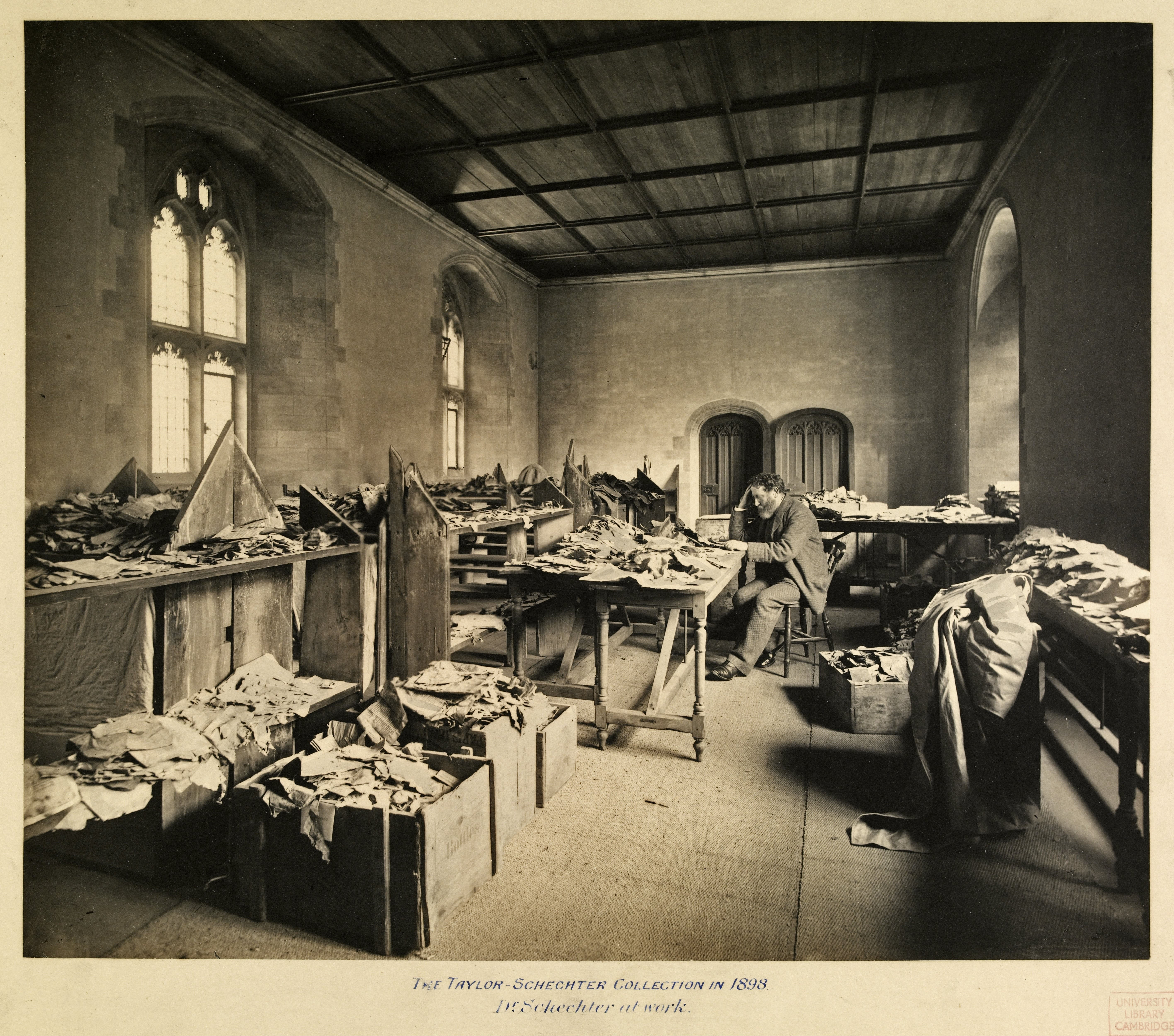
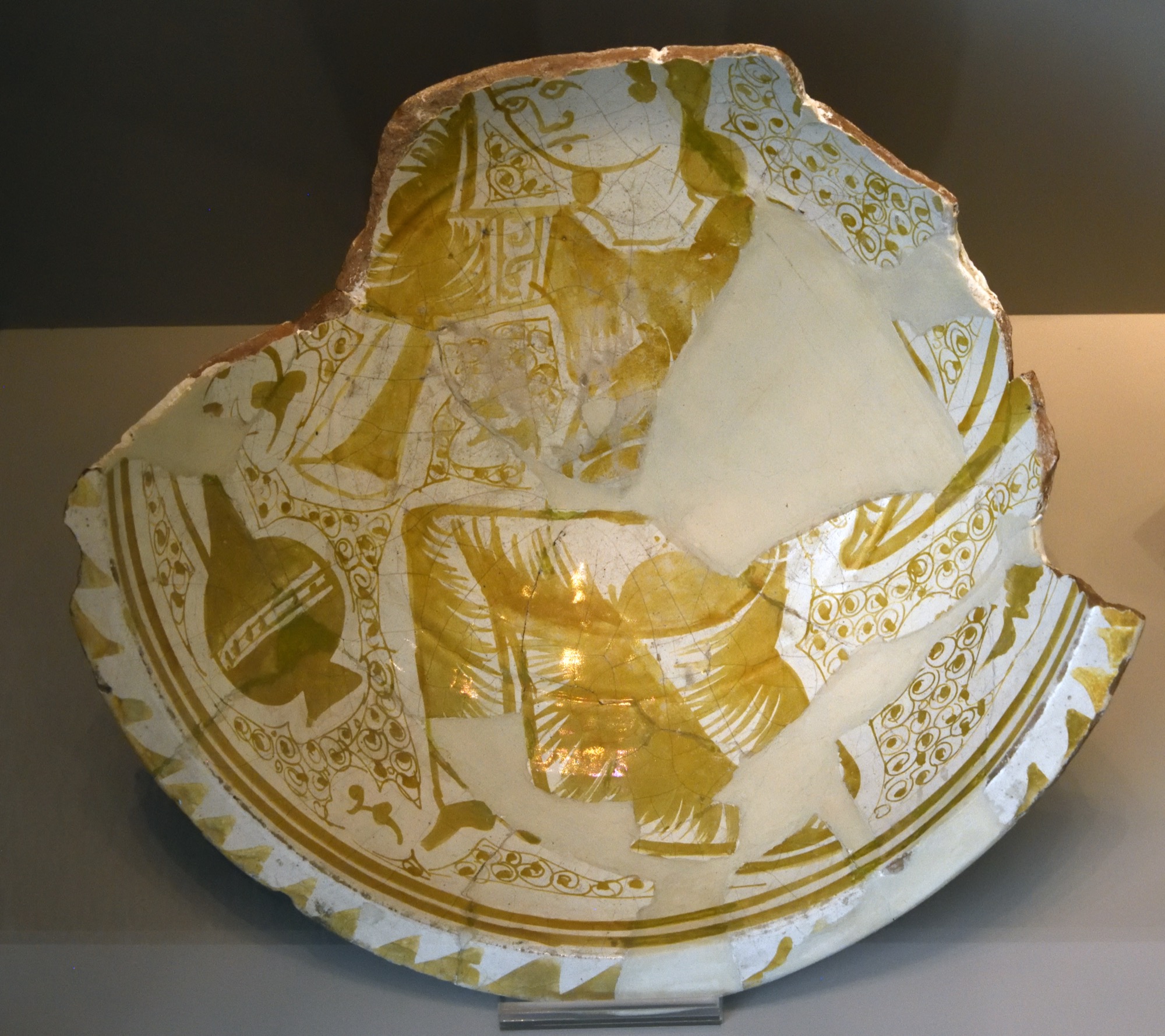
The Geniza manuscripts themselves constitute one of the most extraordinary documentary archives in world history—approximately 400,000 fragments spanning the tenth through nineteenth centuries, encompassing commercial correspondence, legal contracts, liturgical poetry, philosophical treatises, and personal letters. The bulk of the collection was acquired by Solomon Schechter for Cambridge University Library in 1896–1897, where the Taylor-Schechter Genizah Collection now numbers over 193,000 fragments and has been progressively digitized through the Cambridge Digital Library and the Friedberg Genizah Project. Additional major holdings are dispersed across the Bodleian Library at Oxford, the Jewish Theological Seminary in New York, the John Rylands Library in Manchester, the Alliance Israélite Universelle in Paris, and the Russian National Library in St. Petersburg. Beyond manuscripts, Scanlon’s ARCE excavations yielded rich material culture from the commercial quarter: Fatimid-era luster-painted ceramics, carved woodwork, glass vessels, and fragments of fine textiles that attest to Fustat’s role as a center of luxury production. Scanlon published his ceramic findings in a series of reports in the Journal of the American Research Center in Egypt (1964–1986), demonstrating that local Fustat potters produced luster ware rivaling the celebrated workshops of Samarra and Kashan. The Victoria and Albert Museum and the Museum of Islamic Art in Cairo hold important collections of Fustat ceramics and textiles recovered from these excavations. Ali Bahgat’s earlier campaigns likewise uncovered carved stucco panels, wooden screens (mashrabiyya), and architectural fragments reflecting the interplay of Fatimid, Ayyubid, and Mamluk decorative traditions across the quarter’s long history.
Fustat was founded in 641 CE by the Arab general ‘Amr ibn al-‘As following the Muslim conquest of Egypt, making it the country’s first Islamic capital. The city grew around the Roman fortress of Babylon—a strategic position on the east bank of the Nile at the apex of the Delta, commanding both river traffic and the overland route to the Red Sea. For over three centuries, Fustat served as Egypt’s administrative and commercial hub before the Fatimid dynasty established al-Qahira (Cairo) to its north in 969 CE as a royal enclave. Even after this political shift, Fustat remained the principal center of trade and population; the Fatimid caliph’s palatine city was initially closed to ordinary commerce. The Geniza documents reveal that Fustat’s commercial quarter was densely inhabited by a mixed population of Muslims, Jews, and Christians living in close proximity—a pattern of residential integration emphasized by S.D. Goitein in A Mediterranean Society (University of California Press, 1967–1993). The Jewish community, concentrated within and around the fortress of Babylon near the Ben Ezra Synagogue and the Mu‘allaqa (Hanging Church), participated fully in the broader urban economy. The Nile port of al-Maks connected Fustat to the Mediterranean via the Rosetta and Damietta branches of the Delta, while the canal of Khalij al-Hakim linked the city to the Red Sea trade. This dual orientation—toward both the Mediterranean and the Indian Ocean—gave Fustat a unique position in the medieval commercial world, functioning as the central node in what Goitein called a “triangle of trade” linking the Maghreb, Egypt, and India.
The modern scholarly recovery of Fustat’s commercial world began in 1896, when Solomon Schechter, Reader in Rabbinics at Cambridge, traveled to Cairo and retrieved approximately 140,000 manuscript fragments from the Ben Ezra Synagogue’s geniza chamber, acting on a lead from the Scottish twin sisters Agnes Lewis and Margaret Gibson, who had shown him a fragment of the Hebrew text of Ben Sira. Schechter’s acquisition, supported by Charles Taylor, Master of St John’s College, brought to Cambridge what would become the Taylor-Schechter Genizah Collection. The commercial and social dimensions of the archive were first fully explored by S.D. Goitein, who devoted over three decades to his monumental A Mediterranean Society: The Jewish Communities of the Arab World as Portrayed in the Documents of the Cairo Geniza (6 volumes, University of California Press, 1967–1993). Goitein reconstructed the daily life of the merchant community with extraordinary granularity, drawing on hundreds of commercial letters, partnership agreements, and court records. Among the most prominent merchants was Nahray ben Nissim (active c. 1045–1096), whose surviving dossier of over 350 letters, analyzed by Murad Michael in his doctoral dissertation at the University of Pennsylvania and by Jessica Goldberg in Trade and Institutions in the Medieval Mediterranean (Cambridge University Press, 2012), reveals a sophisticated network of agency relationships spanning Tunisia, Egypt, and Sicily. Equally striking is the figure of Wuhsha al-Dallala (“the Broker”), a Jewish businesswoman of the late eleventh century whose property dealings, inheritance disputes, and independent commercial activity—documented in a remarkable cluster of Geniza texts—were analyzed by S.D. Goitein and by Mark R. Cohen in The Voice of the Poor in the Middle Ages (Princeton University Press, 2005). Avner Greif’s influential article “Reputation and Coalitions in Medieval Trade: Evidence on the Maghribi Traders” (Journal of Economic History, 1989) used Geniza evidence to model how a coalition of eleventh-century Jewish traders from the Maghreb enforced contracts across the Mediterranean through multilateral reputation mechanisms—a thesis that stimulated extensive debate, including responses by Jeremy Edwards and Sheilagh Ogilvie in the Journal of Economic History (2012) and a reappraisal by Jessica Goldberg emphasizing the complementary role of formal legal institutions alongside informal networks.
The Geniza documents illuminate a commercial world of remarkable institutional sophistication. The most common business arrangement was the partnership contract, particularly the ‘inan (limited partnership) and the mudaraba or qirad—a form of commenda in which one partner contributed capital and the other labor, with profits shared according to a pre-agreed ratio and losses borne by the investor. Jessica Goldberg, in Trade and Institutions in the Medieval Mediterranean (Cambridge University Press, 2012), demonstrates that these partnerships were underpinned by detailed written agreements filed with courts, enabling merchants to operate across vast distances with enforceable obligations. Agency relationships (wakala) allowed merchants to conduct business through representatives in distant ports, with the agent’s duties, authority, and compensation carefully stipulated. Maritime and caravan correspondence constituted a significant portion of Geniza commercial letters, documenting shipping along Mediterranean routes from Tunisia, Sicily, and al-Andalus to Alexandria and Fustat, as well as overland and Red Sea routes to Aden and the Indian Ocean—a network analyzed by Roxani Eleni Margariti in Aden and the Indian Ocean Trade (University of North Carolina Press, 2007). The principal commodities included flax and linen (Egypt’s chief exports), spices (pepper, cinnamon, and aromatics from India and Southeast Asia), silk, dyes (indigo, lac, brazilwood), metals, and pharmaceuticals. The funduq system, as Constable describes in Housing the Stranger in the Mediterranean World (Cambridge University Press, 2003), provided the physical infrastructure for this trade—secure warehousing, lodging for traveling merchants, and supervised marketplaces where transactions were witnessed and taxed. Credit instruments circulated widely: the suftaja (bill of exchange), the hawala (letter of credit or transfer order), and various forms of promissory notes allowed merchants to move funds across the Mediterranean without physically transporting specie. Goitein observed that the Geniza reveals a “pre-modern capitalism” in which long-distance trade, credit, partnership, and commercial law operated with a coherence and complexity that anticipated later European developments.