Cairo Stock Exchange
Cairo, Egypt · Established 1903
This site requires authorization to access.
To request access, contact
william.goetzmann@yale.edu
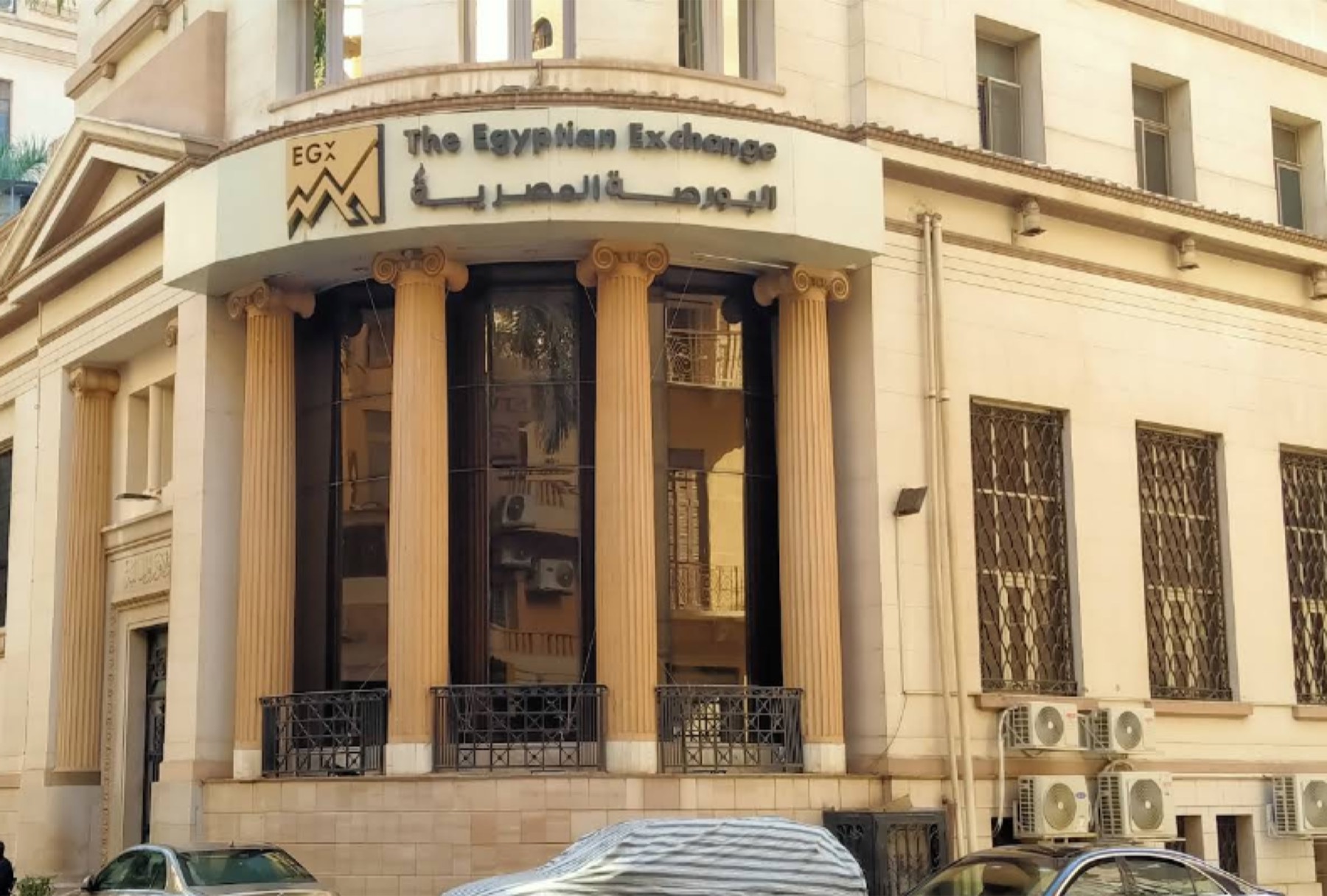
The Cairo Stock Exchange occupies a distinguished Art Nouveau building on al-Sherifein Street in downtown Cairo, designed by the French architect Georges Parcq and completed in 1928. Parcq, who also designed the Sednaoui department store on Midan Khazindar, gave the façade multiple Ionic colonnades that blend neoclassical restraint with Art Nouveau flourishes, as documented in Samir Raafat’s The Egyptian Bourse (Zeitouna, 2011). The exchange’s earlier incarnations occupied more modest quarters: it was founded in 1903 in the Manuk Building—formerly the Ottoman Bank—on Maghrabi Street, before relocating in 1909 to a purpose-built structure on Sharia al-Borsa al-Gedida designed by Edward Matasek and Ernest Jaspar. The 1928 move to Sherifein Street placed the Bourse on part of the former Palais Cattaui, the residence of its founding patron, Maurice “Moise” Cattaui Bey. The trading floor featured a gallery for public observation of transactions, a significant advance from the cramped earlier premises. Cairo’s formal exchange architecture contrasts with the city’s far older commercial building traditions: the medieval wakala (caravanserai), exemplified by the Wikala of Sultan al-Ghuri (1504–1505), provided a five-story structure centered on a courtyard where merchants stored goods below and lodged above, as described in Doris Behrens-Abouseif’s Cairo of the Mamluks (I.B. Tauris, 2007). The Khan el-Khalili complex, established under Mamluk amir Jaharkas al-Khalili during the reign of Sultan Barquq (1382–1389), created a dense commercial quarter of multistory khans that functioned simultaneously as warehouses, wholesale markets, and merchant hostels.
The decorative program of the Cairo Stock Exchange building reflects the cosmopolitan taste of interwar Egypt’s Belle Époque. Georges Parcq’s 1928 design features ornamental Ionic capitals, Art Nouveau ironwork, and carved stone detailing characteristic of what Mohamed Elshahed, in Cairo Since 1900: An Architectural Guide (AUC Press, 2020), terms the “European-inflected commercial aesthetic” of downtown Cairo. The building’s interior incorporated marble floors and decorative moldings suited to the theatrical spectacle of open-outcry trading. Cairo’s earlier commercial spaces carried far richer decorative programs rooted in Islamic artistic traditions. The Wikala of Sultan al-Ghuri preserves twenty-nine mashrabiyya screens—turned-wood lattice panels of extraordinary geometric intricacy—that Behrens-Abouseif considers among the finest surviving examples of this Mamluk craft tradition. The wikala’s monumental portal displays stone-carved muqarnas (stalactite vaulting), marble mosaics, and alternating courses of colored stone (ablaq masonry), techniques analyzed in the University of Pennsylvania’s study of Mamluk mason traditions by Wahby and Montasser. Khan el-Khalili’s commercial gateways employ similar carved muqarnas canopies, while interior façades feature geometric interlace patterns and Qur’anic calligraphy in carved stone. These decorative elements were not merely aesthetic: as André Raymond argues in Cairo (Harvard University Press, 2000), the monumental portals and elaborate ornamentation of commercial buildings served to project the prestige of their waqf patrons and to signal the reliability and grandeur of the markets they housed.
The Cairo Stock Exchange stands at the intersection of two radically different urban orders. Downtown Cairo’s grid of wide boulevards and European-style squares was created during the 1860s and 1870s under Khedive Ismail, who commissioned Ali Mubarak Pasha to draft a master plan modeled on Haussmann’s Paris, as Janet Abu-Lughod documents in Cairo: 1001 Years of the City Victorious (Princeton University Press, 1971). The Bourse’s location on al-Sherifein Street places it within this planned financial quarter—a district of banks, insurance offices, and foreign consulates connected by gas-lit avenues radiating from Midan al-Ataba and Talaat Harb Square. Barely a kilometer to the east lies medieval commercial Cairo, organized along the Qasaba—the great north-south artery now called al-Muizz Street—which André Raymond describes as the “commercial spine” of the Fatimid and Mamluk city. Founded in 969 CE alongside the Fatimid capital itself, the Qasaba hosted the major suqs, and as it became saturated with shops, the market zone expanded eastward into the Khan el-Khalili quarter. The wakala district around al-Azhar and the Muski served as Cairo’s entrepot for long-distance trade, connecting the Mediterranean via Alexandria with the Red Sea trade routes to India and East Africa. Khedive Ismail’s nineteenth-century modernization deliberately separated this old commercial fabric from the new European-style financial center, creating what Abu-Lughod calls a “dual city”—indigenous markets to the east, modern capital markets to the west—a spatial logic that the Stock Exchange’s Sherifein Street location epitomizes.
Cairo’s role as a commercial crossroads stretches back to the founding of al-Qahira by the Fatimid general Jawhar in 969 CE. The Cairo Geniza documents—thousands of merchant letters in Judeo-Arabic from the eleventh through thirteenth centuries—reveal a sophisticated commercial world in which, as S. D. Goitein demonstrates in A Mediterranean Society (University of California Press, 1967–1993), traders coordinated shipments of flax, textiles, spices, and metals across the Mediterranean and Indian Ocean basins. Jessica Goldberg’s Trade and Institutions in the Medieval Mediterranean (Cambridge University Press, 2012) shows these Geniza merchants operating through partnership contracts and commercial correspondence that constituted an early institutional framework for long-distance trade. Under the Mamluks, Cairo’s wakala network expanded dramatically, with Nelly Hanna’s Making Big Money in 1600 (Syracuse University Press, 1998) documenting how Ottoman-era merchants like Isma’il Abu Taqiyya amassed fortunes through the coffee and spice trades. Modern financial markets emerged under Muhammad Ali (r. 1805–1848), who established state monopolies over cotton, and accelerated under Khedive Ismail, whose sale of Egypt’s Suez Canal shares to Britain in 1875 became, as Roger Owen notes in Cotton and the Egyptian Economy (Oxford University Press, 1969), a pivotal episode in Egypt’s financial entanglement with European capital. The Alexandria Stock Exchange was founded in 1883, followed by the Cairo Bourse in 1903 under Maurice Cattaui Bey. By 1907 the Cairo exchange listed 228 companies with combined capital of 91 million Egyptian pounds, but a speculative crash that year—driven by over-leveraged cotton and real estate positions—devastated the market. Both exchanges recovered and by the 1940s ranked fifth in the world, before nationalization under Nasser in 1961 ended private trading.
Cotton dominated Egyptian exchange trading from the late nineteenth century onward. Roger Owen’s Cotton and the Egyptian Economy (1969) documents how, by century’s end, cotton accounted for ninety-three percent of Egypt’s export revenues. Alexandria’s Café de l’Europe hosted the first recorded cotton transaction in 1885, and the Association Cotonnière d’Alexandrie formalized futures trading in long-staple varieties—Karnak, Menouf, Ashmouni, and Zagora—with forward contracts legalized in 1909 following the 1907 crash. On the Cairo Bourse, government bonds formed a major class of securities, particularly Egyptian sovereign debt instruments that had entangled the country with European creditors since Khedive Ismail’s borrowing spree of the 1860s and 1870s. Suez Canal Company shares, after their dramatic sale to Britain in 1875, became among the most actively watched securities in the global market. The exchanges also listed shares of banks, insurance companies, mortgage firms, sugar refineries, and real estate ventures—the last category contributing to the speculative bubble of 1907. In the medieval period, Cairo’s commercial exchanges handled a far broader palette of goods. Goitein’s analysis of Geniza documents reveals regular trade in Egyptian flax and linen, Indian pepper and aromatics, Yemeni coffee (from the sixteenth century onward), North African olive oil, and precious metals. The wakalas served as wholesale clearinghouses for these commodities, with the Wikala of Sultan al-Ghuri specializing in textile storage and the Khan el-Khalili quarter handling spices, perfumes, and luxury goods from the Silk Road and trans-Saharan trade routes.
Images will be added as the project develops. Photographs by Larry Ng and from research sources.