Amman Stock Exchange (ASE)
Amman, Jordan · Established 1999
This site requires authorization to access.
To request access, contact
william.goetzmann@yale.edu
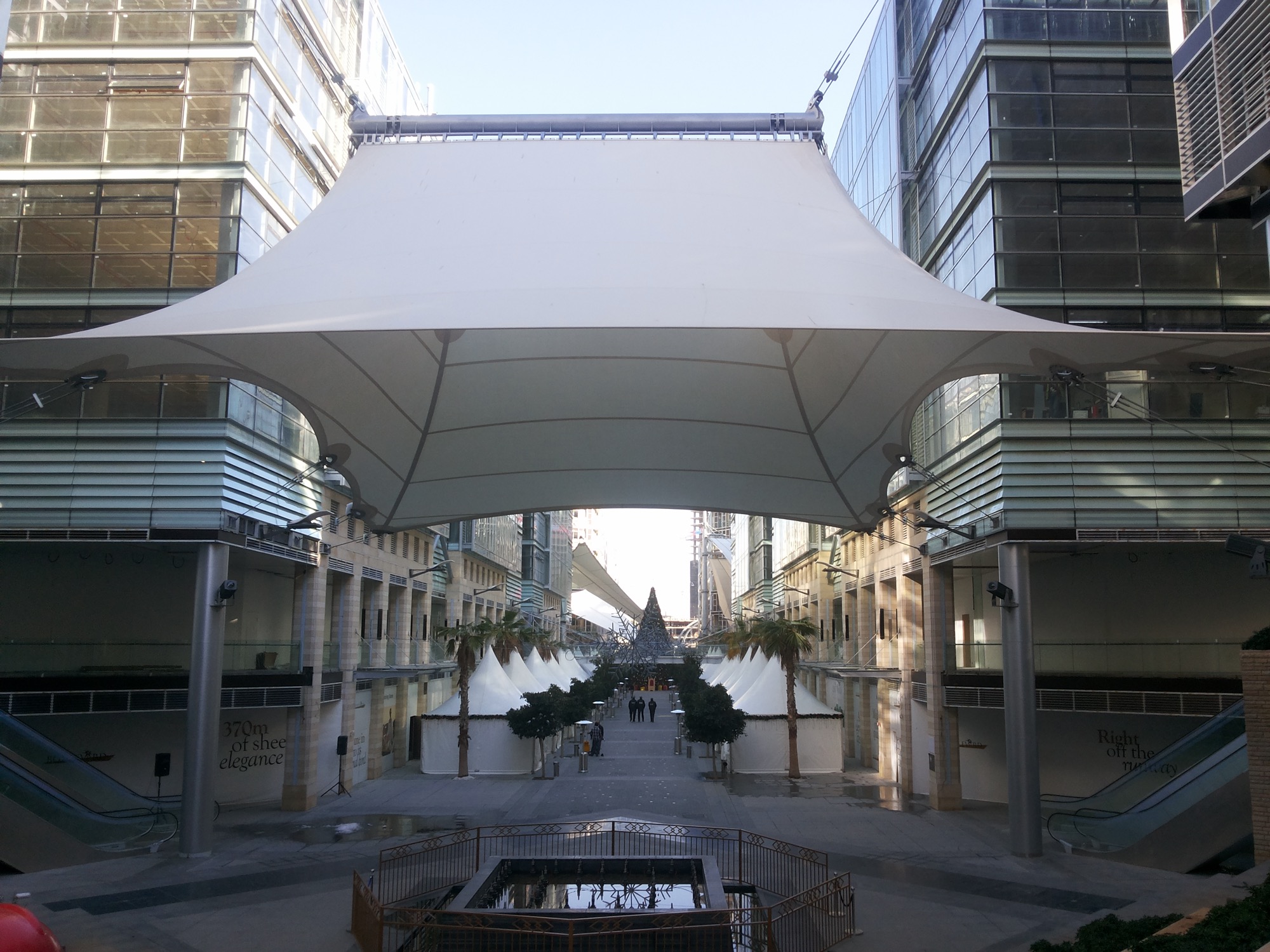
The Amman Stock Exchange is headquartered in the Capital Market Building on Al-Mansour Bin Abi Amer Street in the Al-Madina Al-Riyadiya District of the Al-Abdali area, Amman’s emergent central business district. The building is a modernist institutional structure of glass and steel in the international style, consistent with the broader Abdali redevelopment that began in 2004 as a public-private partnership transforming 384,000 square meters of prime real estate into a mixed-use urban center. As documented in urban studies by Suleiman Alhadidi (“Abdali Commercial Downtown,” 2014), the Abdali project imposed a bold new architectural layer upon Amman’s cityscape, with high-rise office towers and a pedestrian commercial spine that contrasts sharply with the limestone vernacular of the older city. Before the ASE’s establishment in its current Abdali premises, securities trading in Jordan was closely associated with the Shmeisani commercial district, which emerged in the 1980s as the kingdom’s premier financial hub. As Rami Daher has observed in studies of Amman’s urbanism, Shmeisani became the address of choice for major banks, brokerage houses, and international hotel chains, its marble-clad commercial blocks representing a particular form of 1980s Middle Eastern modernity. The earlier Amman Financial Market, established in 1976, operated from government offices rather than a purpose-built exchange, and the creation of the Capital Market Building in the Abdali area marked the first time Jordan’s securities market occupied a dedicated institutional structure befitting its growing importance in regional finance.
The Capital Market Building housing the Amman Stock Exchange follows the spare aesthetic conventions of modern institutional architecture in Jordan, where decorative programs tend to be minimal. The building’s visual identity relies on clean geometric lines, glass curtain walls, and the restrained deployment of Jordanian limestone cladding—the latter a nod to Amman’s longstanding tradition of building in local stone, as documented in studies of Jordanian architectural heritage (International Journal of Sustainable Development and Planning, “Detection of Limestone Quarries in Jordan,” 2021). Unlike historical exchanges in Europe or Asia with elaborate sculptural programs celebrating commerce, the ASE’s design language is functional and contemporary. The broader Abdali district, however, incorporates public art installations and landscaped plazas along its Boulevard pedestrian spine, creating a curated environment that frames the exchange within a vision of Amman as a modern, globally connected capital. Jordan’s rich artistic traditions—from Nabataean carved façades to Umayyad mosaic work—are more prominently represented in the city’s museums and heritage sites than in its financial architecture, reflecting the pragmatic, efficiency-oriented design philosophy that has characterized capital market buildings across the developing world since the late twentieth century.
Amman, often called the “City of Seven Hills,” was originally built across seven jabals (hills), though it has since expanded to encompass more than nineteen. The city’s ancient core, known in antiquity as Rabbath-Ammon and later as Philadelphia under Ptolemy II (c. 255 BCE), was a member of the Decapolis—the league of Greco-Roman cities in the eastern Mediterranean that Pliny the Elder enumerated. The Roman theater, the Temple of Hercules atop the Citadel, and remnants of a colonnaded forum testify to Philadelphia’s importance along Emperor Trajan’s road linking Ailah (Aqaba) to Damascus, a route that channeled Nabataean trade goods northward. As scholars of the Decapolis have shown (see the collection “From Philadelphia to Pella,” published by Holy Jordan, 2023), Amman occupied a strategic nodal position in the ancient commercial networks that connected Arabia, Egypt, and the Levant. Modern Amman grew rapidly after 1948 and again after 1967, absorbing successive waves of Palestinian refugees whose entrepreneurial energies transformed the city’s economy. The business district of Shmeisani developed in the 1980s as what Myriam Ababsa, in her contribution to the Institut Français du Proche-Orient publication “Amman: Urban Development and the Role of the Service and Banking Sector in a Rentier-State” (Presses de l’Ifpo, 2011), described as the physiognomic expression of Jordan’s growing banking sector. Shmeisani housed the headquarters of major Jordanian banks—Arab Bank, Housing Bank for Trade and Finance, Bank of Jordan—and the brokerage firms that serviced the capital market. The subsequent development of the Abdali project beginning in 2004, where the ASE now sits, represents a further westward migration of Amman’s financial geography, repositioning the exchange within a purpose-built central business district adjacent to the Jordanian Parliament and the King Abdullah I Mosque.
Securities trading in Jordan traces its origins to the 1930s, when the earliest public shareholding companies were established: Arab Bank (1930), Jordan Tobacco and Cigarettes (1931), and Jordan Electric Power (1938). Trading in these shares occurred through informal, unregulated offices. Following studies conducted by the Central Bank of Jordan and the World Bank’s International Finance Corporation in 1975–1976, Temporary Law No. 31 of 1976 established the Amman Financial Market (AFM), which commenced operations on January 1, 1978, with sixty-six listed companies and a market capitalization of JD 286 million. The AFM was among the earliest organized securities markets in the Arab world, as Bashar Malkawi and Haitham Haloush documented in “Reflections on the Securities Law of Jordan” (American University International Law Review, Vol. 23, No. 4, 2007). The AFM served a dual role as both regulator and exchange—a structural tension that would eventually necessitate reform. Jordan’s economy suffered severe disruptions during the 1988–1989 financial crisis, when the dinar lost nearly half its value, and again during the 1990–1991 Gulf War, which cut off remittances from Jordanian workers in Kuwait and ended subsidized Iraqi oil imports. These shocks, analyzed by Mussa Shteiwi in “The 1991 Gulf War and Jordan’s Economy” (Middle East Review of International Affairs, 2002), paradoxically accelerated economic liberalization. The government adopted a privatization program in 1996, establishing the Executive Privatization Unit within the Prime Ministry, and sold stakes in major enterprises including Jordan Cement Factories (to Lafarge, 1998), Jordan Telecommunications Corporation (IPO on the ASE, 1999), and eventually Royal Jordanian Airlines (2007). The landmark Securities Law No. 23 of 1997 separated the AFM’s regulatory and operational functions, creating three independent institutions: the Jordan Securities Commission (JSC), the Amman Stock Exchange (ASE), formally established on March 11, 1999, and the Securities Depository Center (SDC). The ASE launched an electronic trading system on March 26, 2000, replacing over two decades of manual floor trading—a transition studied by Aktham Maghyereh and Ghassan Omet in “Electronic Trading and Market Efficiency in an Emerging Market: The Case of the Jordanian Capital Market” (SSRN, 2003). From 2002 to 2007, market capitalization surged from JD 5 billion to JD 29.2 billion, with the ASE index reaching 7,519 in 2007. Martin Petri and Tahsin Saadi Sedik, in their IMF Working Paper “The Jordanian Stock Market—Should You Invest in It for Risk Diversification or Performance?” (2006), noted evidence of overvaluation by late 2005, when stock market returns reached 95 percent in a single year. The speculative rally, fueled by household credit expansion and unreasonable expectations of profit growth, was followed by a regulatory decision to tighten daily price fluctuation limits from 10 to 5 percent, which triggered margin calls and accelerated selling. The 2007–2009 global financial crisis further depressed the market, with the ASE index falling to 5,520 by 2009 and foreign investment declining sharply. A joint IMF/World Bank Financial Sector Assessment Program (FSAP) review in 2008–2009, and again in 2022, found Jordan’s banking sector broadly resilient but noted that capital markets remained shallow and dominated by government bond issuance.
The Amman Stock Exchange lists equities across three principal sectors: financial, services, and industrial. The financial sector—anchored by major banks such as Arab Bank (founded 1930, one of the largest financial institutions in the Middle East), Housing Bank for Trade and Finance, Bank of Jordan, and Cairo Amman Bank—has historically dominated market capitalization and trading volume. Jordan’s banking sector, comprising over twenty commercial and Islamic banks, has been well-capitalized relative to regional peers, a finding confirmed by the IMF’s 2023 Financial System Stability Assessment. Among the most prominent industrial listings are Jordan Phosphate Mines Company (JPMC), founded in 1949 and the sole phosphate mining enterprise in Jordan, which operates three mining facilities and a chemical manufacturing complex at Aqaba; and the Arab Potash Company (APC), incorporated in 1956, which harvests minerals from the Dead Sea and ranks as the eighth-largest potash producer worldwide. These two companies reflect Jordan’s principal natural resource endowments and have long been bellwether stocks on the exchange. The privatization program of the late 1990s and 2000s brought additional major listings, including Jordan Telecommunications Group and Royal Jordanian Airlines. Beyond equities, the ASE provides a market for government development bonds, treasury bills, corporate bonds issued by public shareholding companies, and Islamic finance sukuk—the latter reflecting the growing role of sharia-compliant instruments in Jordanian finance. Investment fund units and depository receipts are also traded. An unlisted securities (OTC) market operates alongside the main exchange for companies not meeting full listing requirements. As of late 2024, approximately 162 companies were listed across sectors including pharmaceuticals, food and beverages, mining and extraction, engineering and construction, technology and communications, real estate, and utilities. The ASE was admitted to the World Federation of Exchanges as an affiliate member in 2004 and has pursued successive strategic plans aligning with Jordan’s Economic Modernization Vision (2022–2033), which targets diversification through innovation-led sectors including ICT, logistics, and renewable energy.
Images will be added as the project develops. Photographs by Larry Ng and from research sources.