Alexandria Stock Exchange
Alexandria, Egypt · Established 1883
This site requires authorization to access.
To request access, contact
william.goetzmann@yale.edu
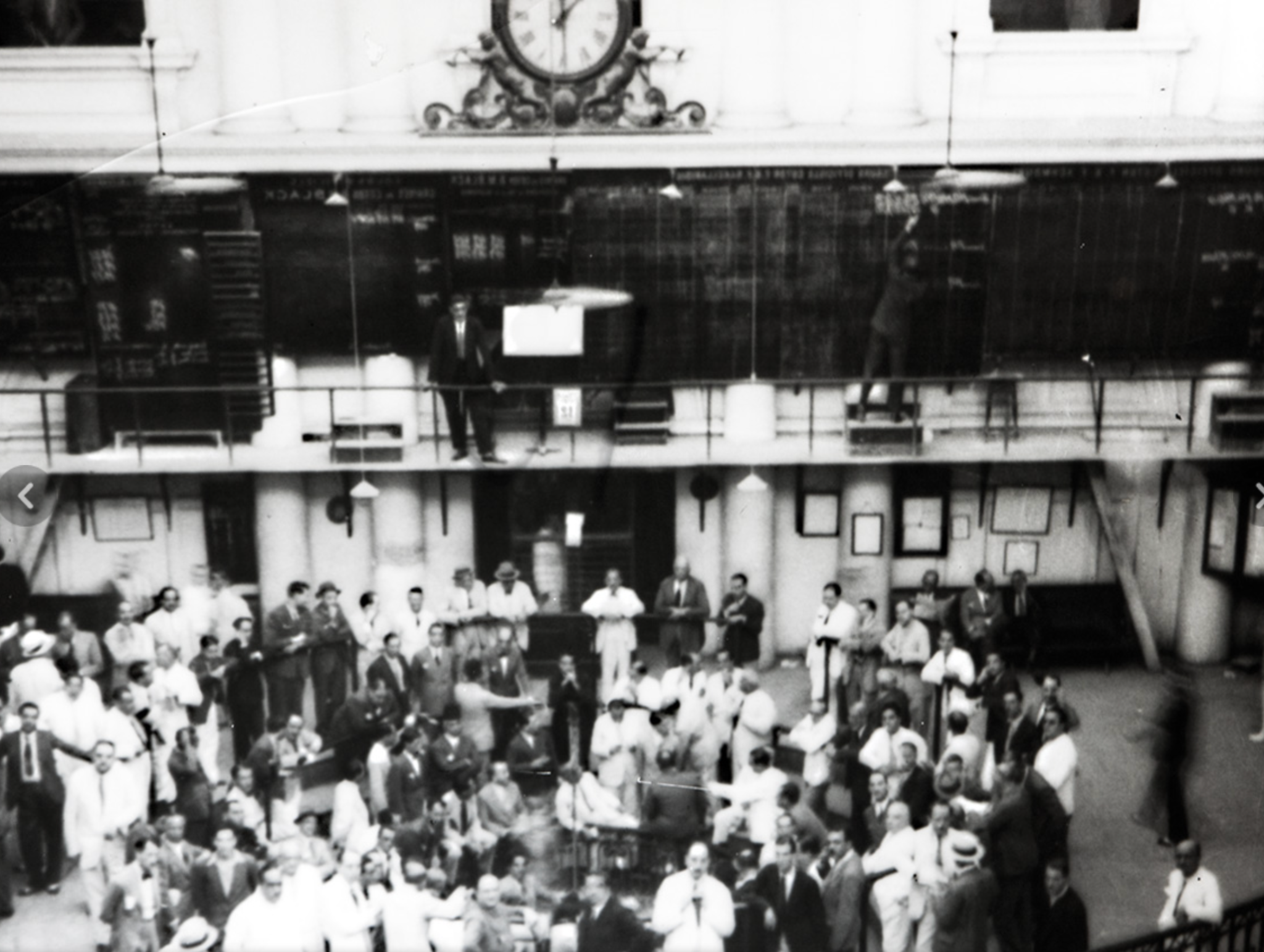
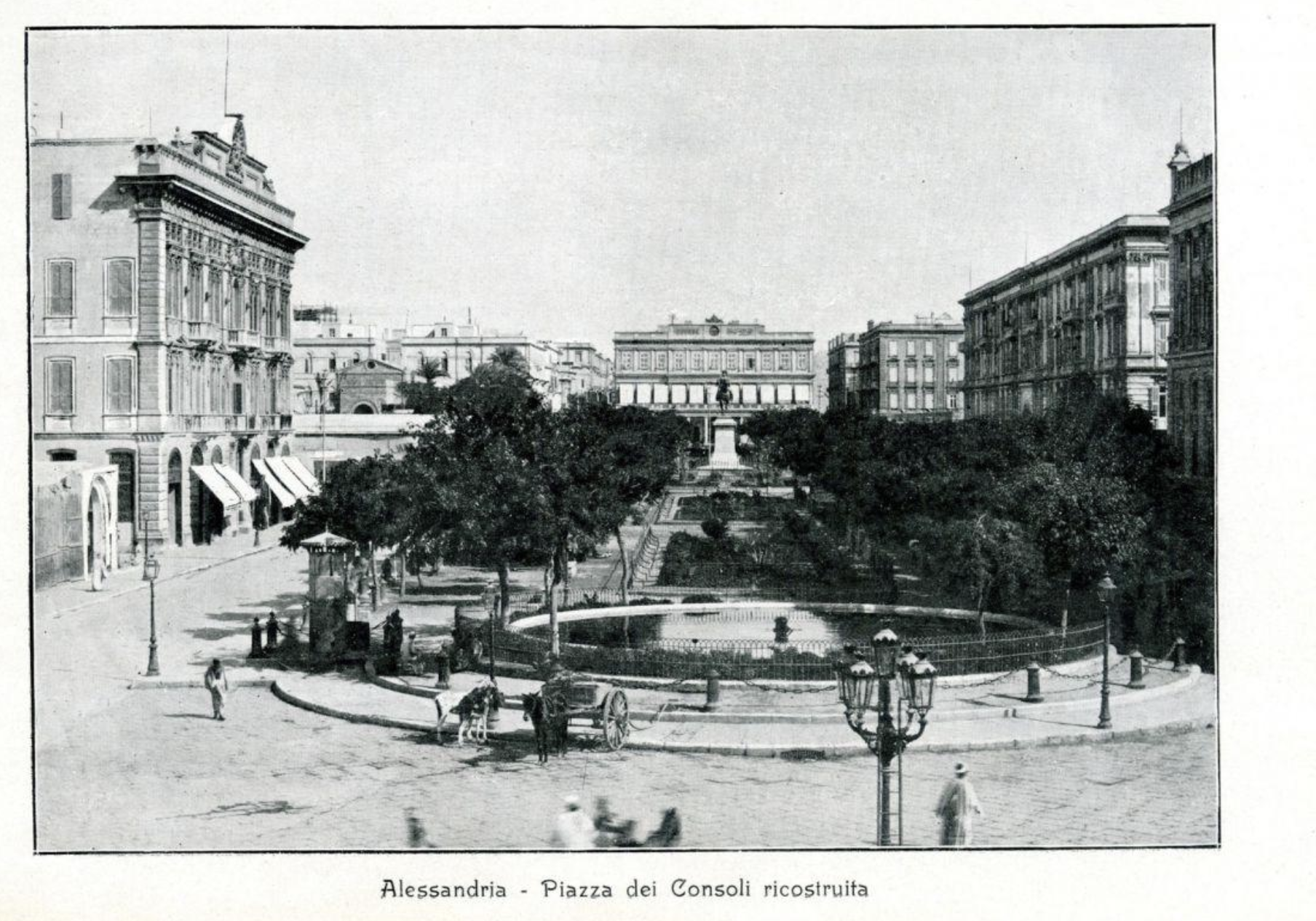
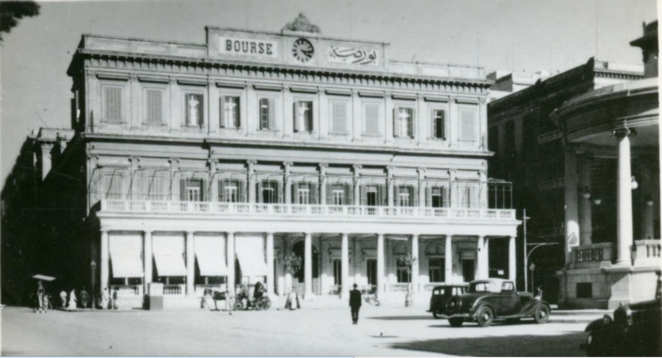
The Alexandria Bourse, formally inaugurated in 1899 under Khedive Abbas Hilmi II, occupied an imposing neoclassical edifice at the eastern end of the Place des Consuls—later renamed Mohamed Ali Square—in the heart of the city’s European commercial quarter. Designed in the Italianate style that dominated Alexandria’s belle époque streetscape, as documented by Cristina Pallini in “Italian Architects and Modern Egypt” (2005), the building featured a grand façade with classical pilasters, arched windows, and a prominent balcony from which Gamal Abdel Nasser would deliver his fateful nationalization speech in 1956. The cotton district at Minet el-Bassal housed a separate Bourse de Coton designed by the Italian architect Pietro Avoscani, as noted by Mohamed Awad in his studies of Alexandrian architecture (2008); this structure served as the international marketing center for Egyptian cotton. Both buildings belonged to a wider European architectural imprint shaped by the Commissione d’Ornato, the board of works established by Muhammad Ali in 1834, which Francesco Mancini directed in laying out the Place des Consuls as a monumental rectangular piazza. The Bourse on Mohamed Ali Square was devastated by fire during the 1977 bread riots and demolished entirely by 1982, as recorded by the Bibliotheca Alexandrina’s AlexMed heritage project. Earlier commercial architecture included the medieval funduq compounds that housed Venetian, Genoese, and Pisan merchants, studied by Olivia Remie Constable in “Housing the Stranger in the Mediterranean World” (2003), and the ancient emporion described by Strabo in his Geography (c. 25 BCE), who called Alexandria “the greatest emporion of the inhabited world.”
The decorative program of the Alexandria Bourse reflected the Italianate neoclassical vocabulary that pervaded the city’s nineteenth-century commercial architecture. Cristina Pallini’s research on Italian architects in Egypt documents how buildings along Mohamed Ali Square employed classical pilasters, sculptural pediments, and ornamental cornices drawn from Renaissance and Beaux-Arts traditions. The Minet el-Bassal cotton bourse, designed by Pietro Avoscani—a Livornese architect who emigrated to Egypt in 1837—featured the restrained decorative idiom of Tuscan commercial architecture adapted to the Mediterranean climate. Within the trading halls, functional grandeur prevailed: high ceilings for ventilation, marble floors, and iron-framed galleries overlooking the trading pit where brokers called prices for Karnak and Sakellaridis cotton varieties. The ancient commercial spaces of Ptolemaic Alexandria, explored through underwater archaeology by Jean-Yves Empereur in “Alexandria Rediscovered” (1998), reveal harbor infrastructure—quays, warehouses, and the monumental Emporion district—that Strabo described alongside the Kaisareion and royal dockyards. P. M. Fraser’s “Ptolemaic Alexandria” (1972) documents the commercial quarters where traders from across the Mediterranean exchanged grain, papyrus, and luxury goods in colonnaded stoas. The medieval funduq buildings that housed Italian merchant communities combined warehouse and residential functions, their courtyard plans reflecting the architectural traditions studied by Constable in her analysis of Mediterranean commercial hospitality. Archaeological evidence of Ptolemaic-era commercial decoration—mosaic floors, painted plaster, and carved stone lintels—has emerged from excavations in the Kom el-Dikka area near the ancient agora.
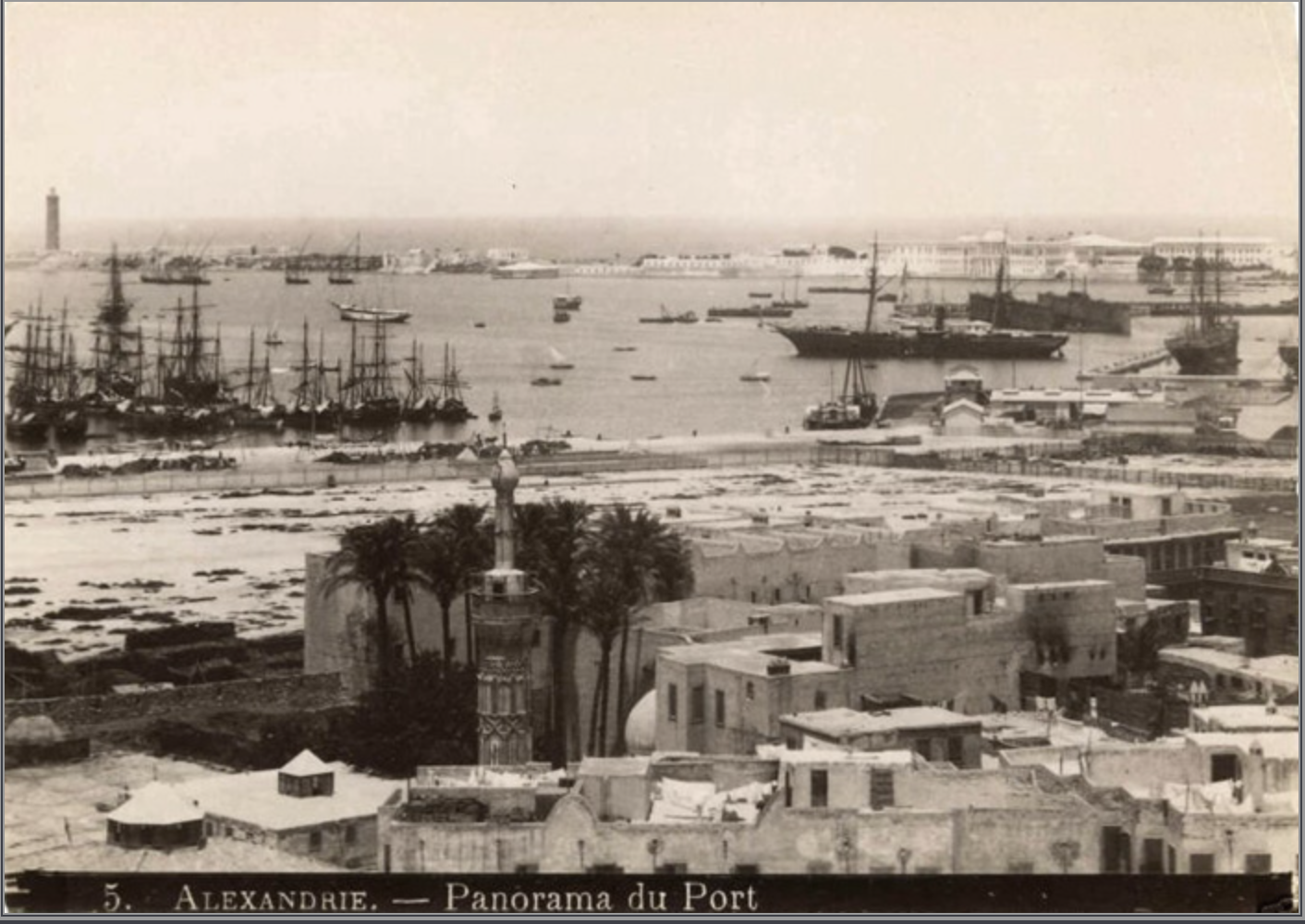
Alexandria’s commercial geography has been shaped across three millennia by its unique position between the Mediterranean and the Nile Delta. Strabo observed in his Geography that the city’s dual harbors—the Great Harbor to the east and Eunostos to the west, connected by the Heptastadion causeway to Pharos Island—generated more trade through the lake harbor linked to the Nile than through the sea itself. Robert Ilbert’s magisterial “Alexandrie 1830–1930: Histoire d’une communauté citadine” (1996) traces how Muhammad Ali’s modernization transformed the medieval town into a cosmopolitan port, with the Place des Consuls—designed by Francesco Mancini and inaugurated in 1860—becoming the financial heart where consulates, banks, and merchant houses clustered. Michael Reimer’s “Colonial Bridgehead: Government and Society in Alexandria, 1807–1882” (1997) demonstrates how the city functioned simultaneously as Egypt’s link to the international economy and as a crucible of incipient nationalism. The cotton district at Minet el-Bassal, built from the 1810s overlooking the western port, positioned cotton warehouses (chunahs) strategically along both the Mahmoudieh Canal—for receiving raw cotton from the Delta—and the harbor edge for export. By 1870, Alexandria ranked as the fourth-largest Mediterranean port after Istanbul, Marseilles, and Genoa. The Bourse on Mohamed Ali Square anchored a commercial axis stretching from the harbor through the banking district, while the Mixed Courts established in 1875—studied by Jasper Brinton in “The Mixed Courts of Egypt” (1930)—provided the legal infrastructure for international commercial transactions in this polyglot trading city.
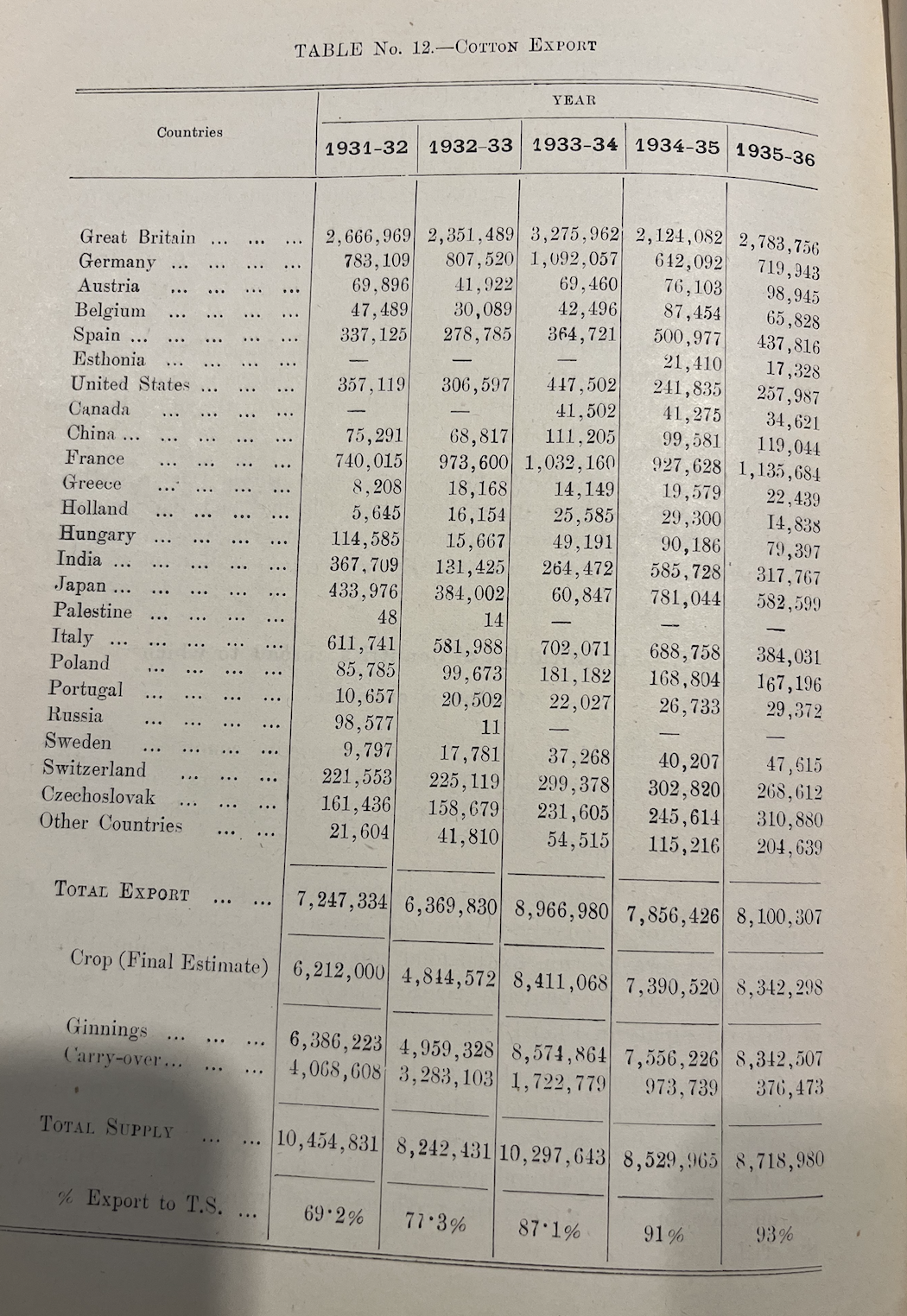
Alexandria’s financial history spans from the Ptolemaic grain monopoly to one of the oldest stock exchanges in Africa. Founded by Alexander the Great in 331 BCE, the city became what P. M. Fraser’s “Ptolemaic Alexandria” (1972) describes as the ancient world’s supreme commercial hub, exporting Egyptian grain that sustained Rome—an estimated 150,000 tons annually during the imperial period, as Roger Bagnall documents in “Egypt in Late Antiquity” (1993). Medieval Alexandria hosted a network of fondaci—the commercial compounds studied by Olivia Remie Constable—where Venetian, Genoese, and Pisan merchants negotiated spice and textile trades under treaties with Mamluk sultans, as analyzed by Georg Christ in “Trading Conflicts” (2012). The modern financial renaissance began under Muhammad Ali (r. 1805–1848), whose introduction of long-staple cotton cultivation—the Jumel variety discovered by a French engineer in the 1820s—transformed Egypt’s economy. Roger Owen’s “Cotton and the Egyptian Economy, 1820–1914” (1969) shows how cotton came to represent 93 percent of Egyptian export revenues. The formal stock exchange was established in 1883, with the first recorded cotton transaction in 1885 at the Café de l’Europe on the Place des Consuls. Robert Tignor’s “State, Private Enterprise, and Economic Change in Egypt” (1984) chronicles the interwar period when the combined Cairo and Alexandria bourses ranked among the world’s five largest exchanges. Cotton forward contracts were legalized in 1909, and the exchange flourished until Nasser’s nationalization programs of the 1950s and 1960s shuttered private trading, ending Alexandria’s era as a global cotton futures marketplace.
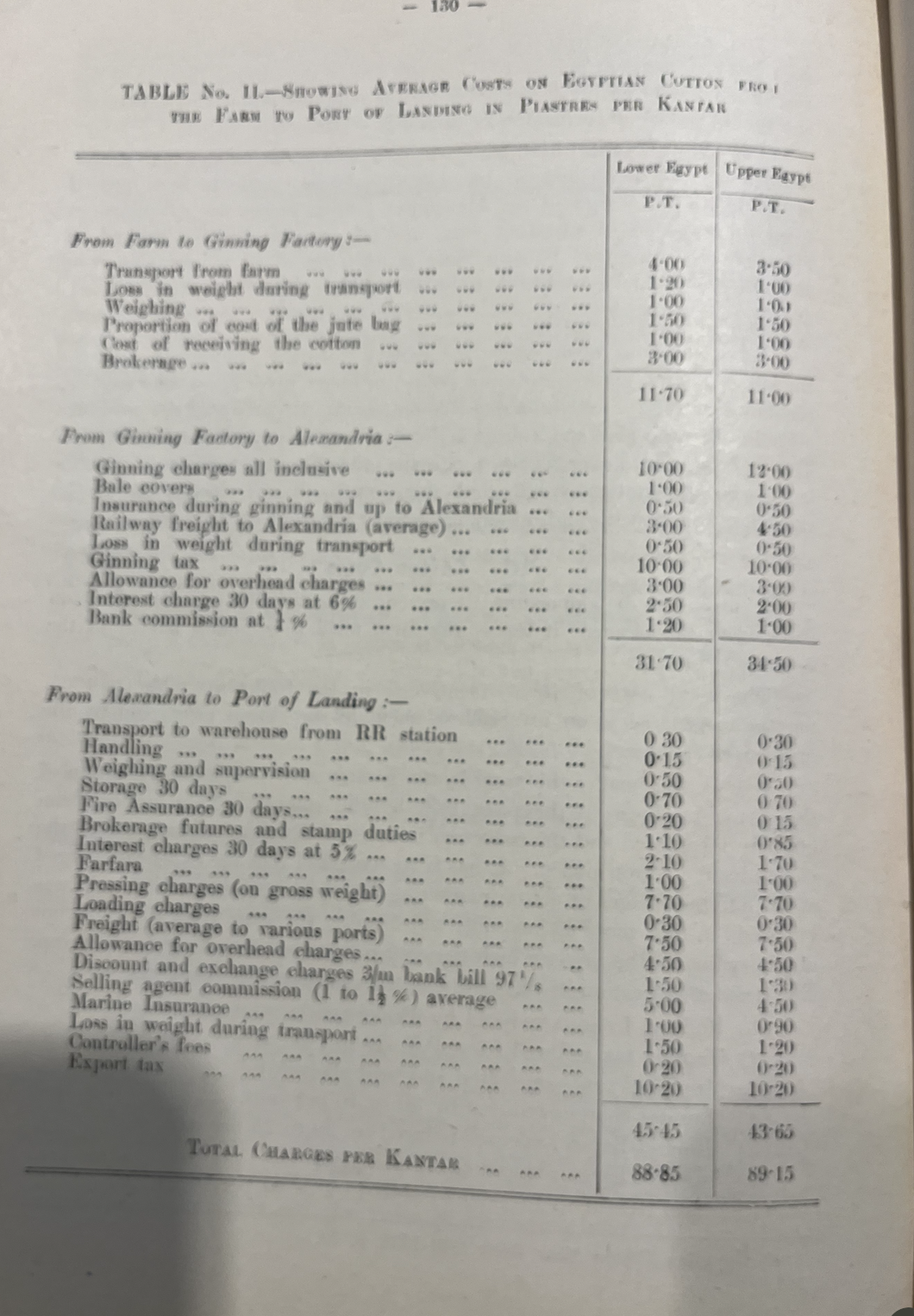
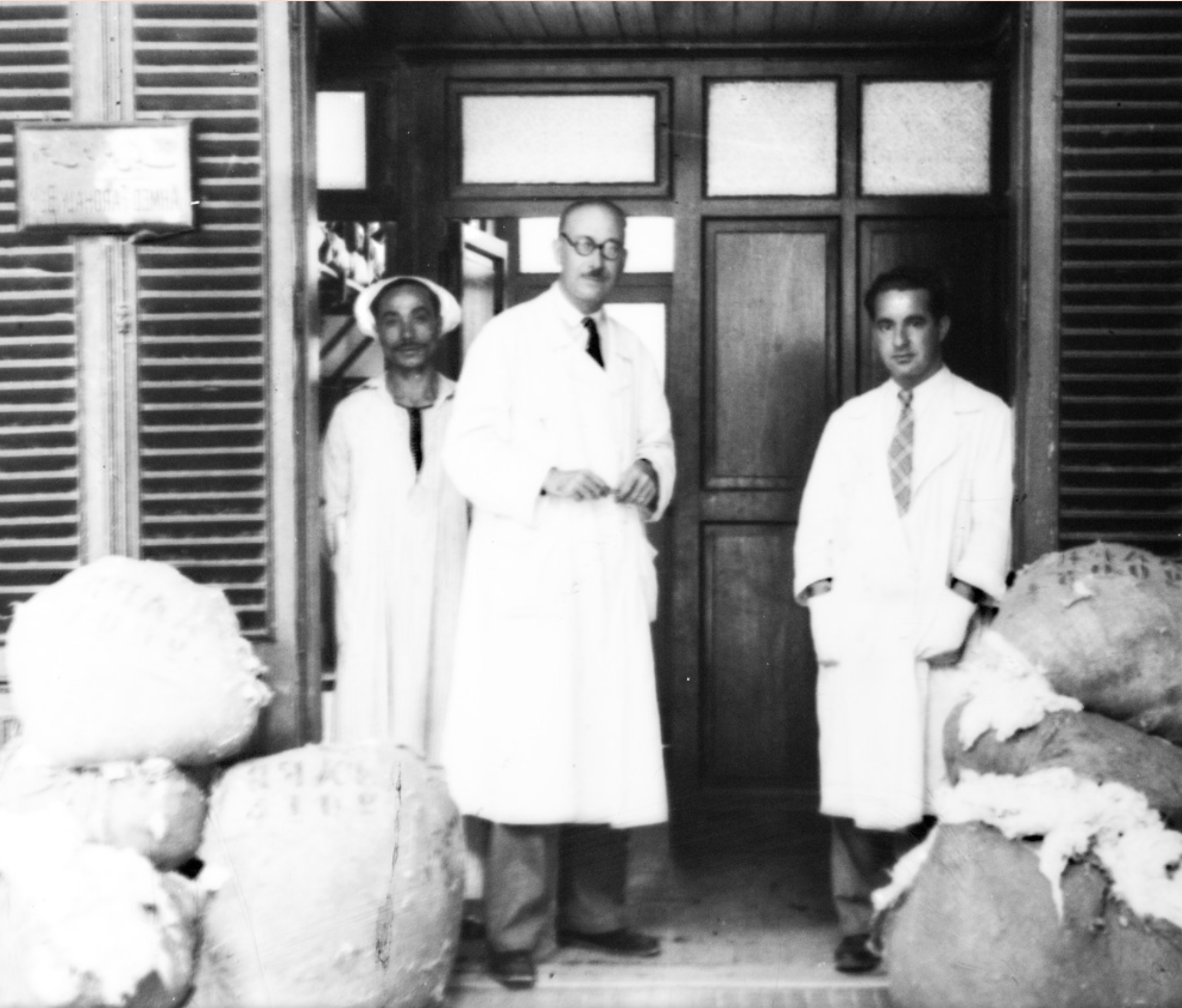
Cotton dominated the Alexandria exchange from its inception, particularly the prized long-staple Egyptian varieties—Karnak, Menoufi, Ashmouni, Giza, Zagora, and later the superior Sakellaridis—that fed Manchester’s textile mills and rivaled the markets of Liverpool and New York. Roger Owen’s “Cotton and the Egyptian Economy” (1969) documents how the American Civil War’s disruption of Southern cotton supplies created an insatiable demand for Egyptian fiber, triggering the boom that defined Alexandria’s modern commercial identity. The Alexandria General Produce Association (AGPA) managed spot and futures trading in cotton, cotton seed, and cereals. Cotton forward contracts, legalized in 1909, became the exchange’s signature instrument; by the 1930s, specific futures were traded for Sakellaridis and Giza 7 (delivered in odd months) and Ashmouni (delivered in even months). Beyond cotton, the bourse handled government bonds, shares in shipping companies and land development firms, and bills of exchange denominated in multiple currencies to serve the cosmopolitan merchant community. In antiquity, Alexandria’s trade was even more diverse: Ptolemaic exports included grain (the wheat that made Egypt Rome’s granary), papyrus scrolls manufactured in Alexandrian workshops, fine linen textiles, and glassware, while imports encompassed Indian Ocean spices—cinnamon, pepper, ginger—Chinese silk, and Arabian incense arriving via Red Sea routes, as documented in the anonymous first-century “Periplus of the Erythraean Sea.” The medieval fondaco trade channeled Venetian glass, European textiles, and Levantine spices through Alexandria’s warehouses under the commercial treaties studied by Georg Christ.