New Zealand Stock Exchange (NZX)
Wellington, New Zealand · Established 1867

This site requires authorization to access.
To request access, contact
william.goetzmann@yale.edu
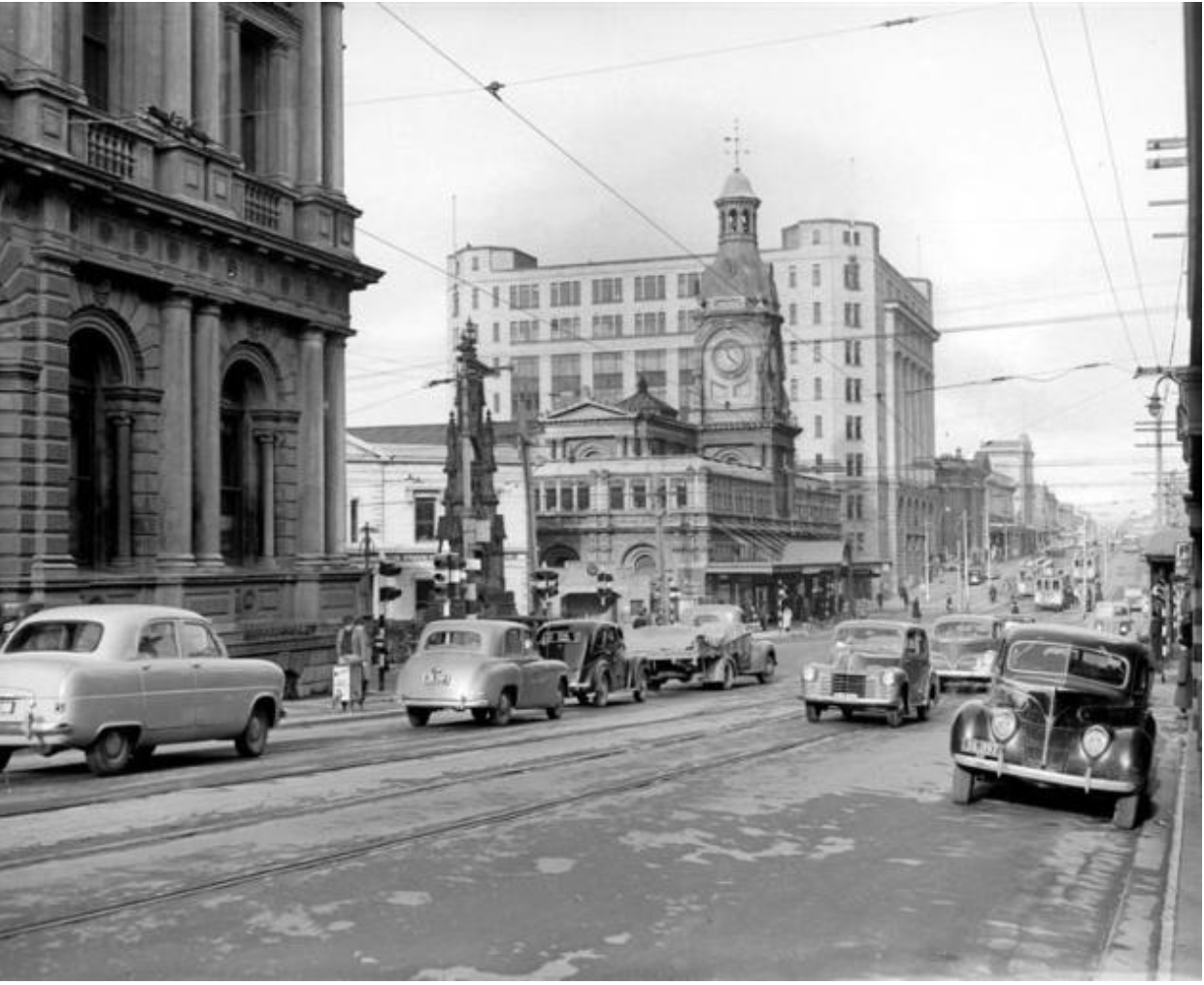
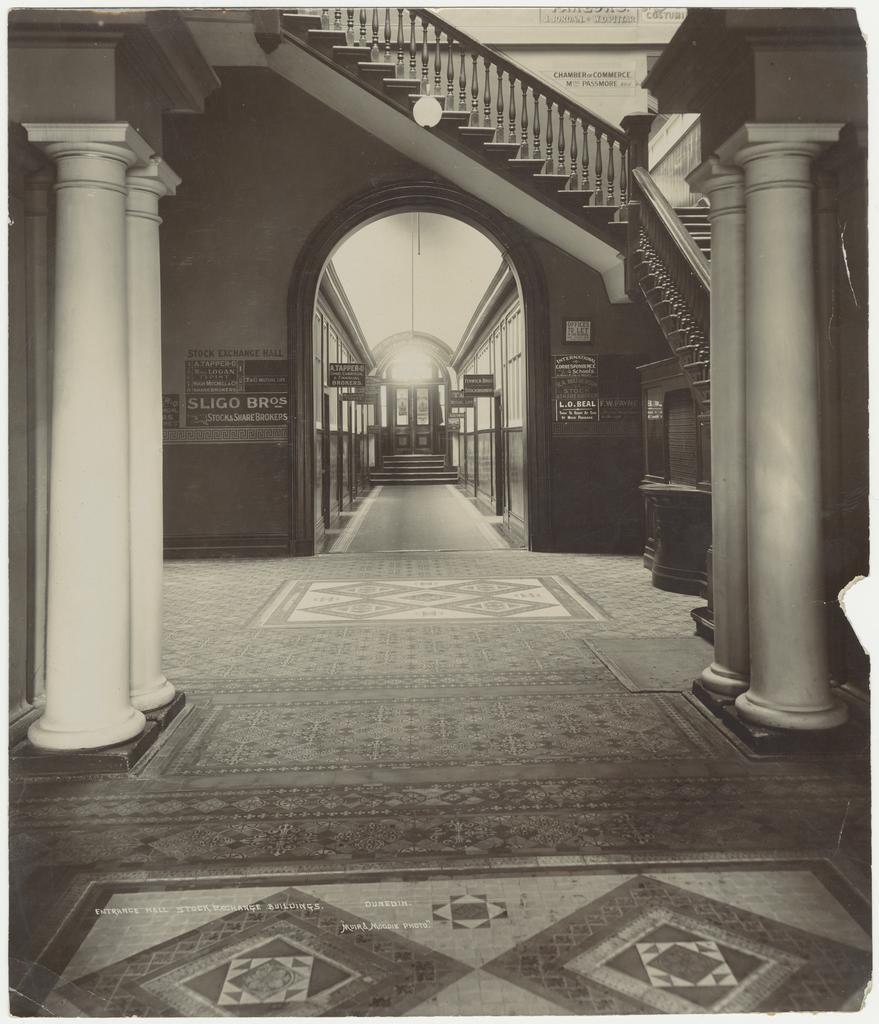
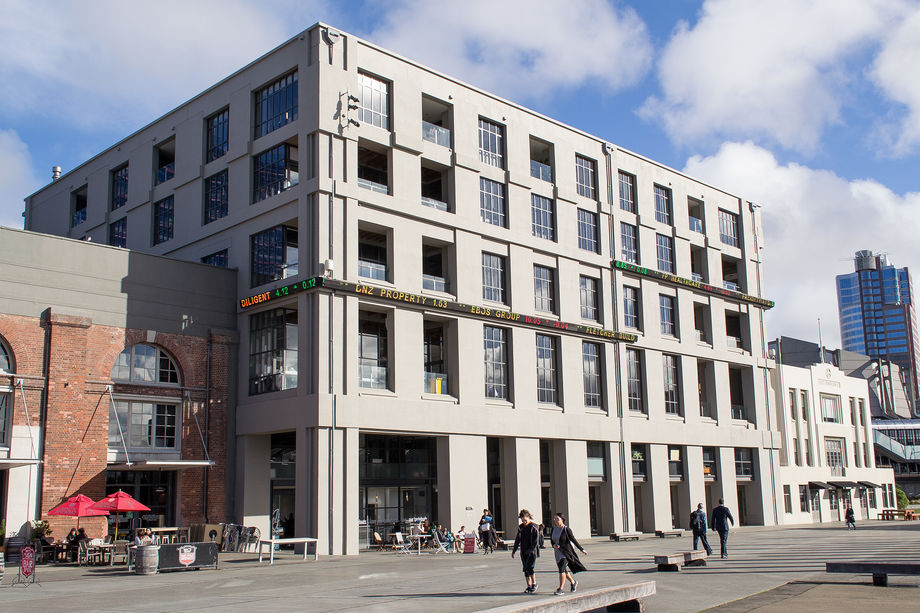
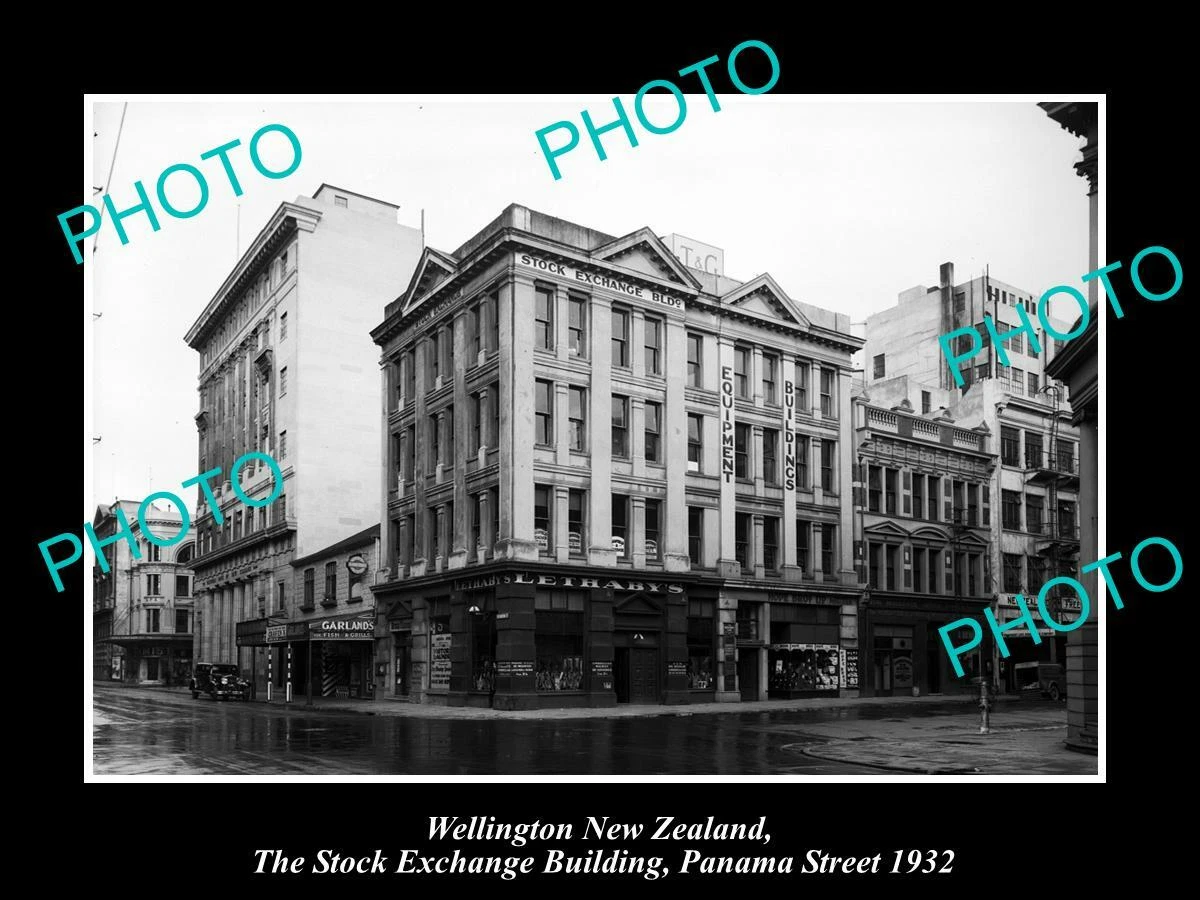
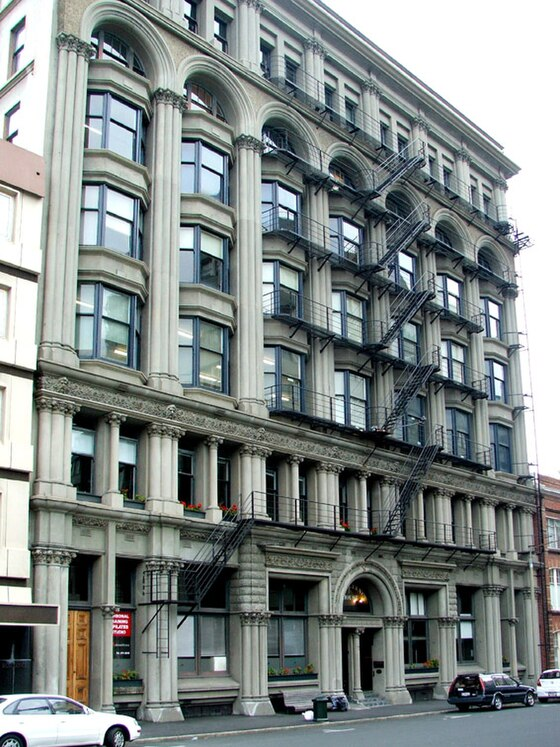
The New Zealand Stock Exchange is headquartered at the NZX Centre, 11 Cable Street, Wellington — a restored Edwardian warehouse on the city’s waterfront that has been adapted into a modern financial services hub. The building was originally constructed in 1906–1907 for the C. & A. Odlin Timber and Hardware Company, a firm established in Wellington in 1903 by Charles and Alfred Odlin. The Wellington Harbour Board leased the Cable Street site in 1906, and the five-storey structure — built of reinforced brick walls on Australian ironbark piles with concrete reinforcement, timber flooring, and roof trusses spanning approximately twenty-two metres — was completed by September 1907. Its restrained Edwardian commercial facade features a rusticated base, a hierarchy of windows culminating in rows of paired, slightly arched openings on the upper floors, and a regular rhythm typical of utilitarian industrial buildings of the period, as documented in the Wellington City Heritage inventory. After the Odlin company merged with Winstone’s Group in the 1980s, the building stood derelict for twenty-two years before property developer Willis Bond acquired it in 2003. The restoration, completed over several years, involved strengthening the heritage facade while constructing an entirely new building behind it, including an underground car park below sea level. Levels one through four provide approximately 4,645 square metres of office space, with NZX occupying the principal tenancy. The building is registered as a Category 1 Historic Place (Heritage New Zealand List Number 7418) and forms part of a significant heritage streetscape on Cable Street alongside the former Wellington Free Ambulance Building and Shed 22. Before settling at Cable Street, New Zealand’s stock exchanges operated from various premises: the Dunedin Exchange Building on Princes Street, designed by Mason and Wales and completed in 1864–1868, housed the Dunedin Stock Exchange from 1900 until the building’s demolition in the 1960s. In Wellington, brokers initially conducted business from offices along Lambton Quay and Customhouse Quay, the city’s original commercial waterfront.
The NZX Centre’s most distinctive visual element is the electronic ticker-tape display that runs across the heritage facade of the former Odlin Building, broadcasting live share prices and market data to passers-by on the Wellington waterfront. Installed in a prominent new configuration in February 2019, the ticker transforms an Edwardian industrial facade into a kinetic financial billboard — a twenty-first-century descendant of the chalkboard quotation systems that once lined the walls of New Zealand’s regional exchange rooms. The building itself, as Heritage New Zealand notes, derives its aesthetic character from material authenticity rather than applied ornament: the regular brick facade, paired arched windows, and rusticated base constitute a decorative vocabulary of structural honesty characteristic of early-twentieth-century warehouse architecture. The wider Wellington waterfront precinct around the NZX Centre is rich in public art that engages themes of commerce, cultural exchange, and maritime identity. The City to Sea Bridge, opened on 31 October 1993 and designed by architects Richard Thompson and John Gray with sculptural contributions from Paratene Matchitt and Matt Pine, connects Te Ngākau Civic Square to the harbour. Matchitt’s non-traditional wooden carvings, fashioned from Californian redwood, include representations of the taniwha Ngāke and Whātaitai from the Māori creation narrative of Wellington Harbour, along with six tall pouwhenua bearing metal shapes of stars, moons, and symbols of celestial navigation celebrating Māori voyaging traditions. At the foot of the bridge, Matt Pine’s Oamaru stone sculptures Prow and Capital flank the stairs. Nearby, in Te Ngākau Civic Square, Neil Dawson’s suspended sculpture Ferns (a 3.4-metre-diameter sphere composed of sculpted fronds of endemic New Zealand ferns) hangs fourteen metres above the terracotta-paved plaza, alongside fifteen metal palm tree sculptures. The Museum of New Zealand Te Papa Tongarewa, which opened on Cable Street in 1998 just metres from the NZX Centre, houses significant collections of New Zealand art including works by Colin McCahon, widely regarded as the country’s most important modern painter, whose large-scale canvases engaging landscape, text, and spirituality helped define a distinctly New Zealand visual identity.
Wellington became the capital of New Zealand in 1865, and the city’s geography — a narrow coastal strip between harbour and hills — has shaped both its urban form and its role as the nation’s administrative and financial centre. The central business district grew outward from Lambton Quay and Willis Street, which mark the line of the original 1840 European settlement waterfront where merchants built warehouses and jetties along the beach. The magnitude 8.2 Wairarapa earthquake of January 1855, the most powerful ever recorded in New Zealand, raised the harbour foreshore by several metres, and the resulting land uplift pushed Lambton Quay approximately 250 metres from the shoreline. Subsequent programmes of systematic reclamation, beginning in 1852 and continuing through the 1970s, added more than 155 hectares to central Wellington, creating the flat terrain on which much of the modern CBD now stands. Cable Street, where the NZX Centre is located, runs along this reclaimed waterfront zone. The Odlin Building was constructed on a Harbour Board lease in 1906–1907, when the area served the city’s timber, shipping, and industrial trades. After the Wellington Harbour Board disbanded in 1989, waterfront governance was divided between the commercial port operator Centreport to the north and a public recreation entity to the south, setting the stage for the precinct’s transformation into a cultural and commercial destination. The opening of Te Papa in 1998, together with the development of Waitangi Park, the restoration of heritage buildings including the Odlin Building, and the creation of the Whairepo Lagoon promenade, remade the Cable Street waterfront into a mixed-use quarter of museums, restaurants, apartments, and professional offices. Wellington today is ranked in the Global Financial Centres Index as a notable Asia-Pacific financial hub, with its economy centred on government, financial and business services, and the creative industries — particularly the film and visual effects sector anchored by Weta Workshop and Park Road Post Production. The NZX Centre’s position on Cable Street places it at the intersection of these civic, cultural, and financial functions, within walking distance of both Parliament and the commercial spine of Lambton Quay.
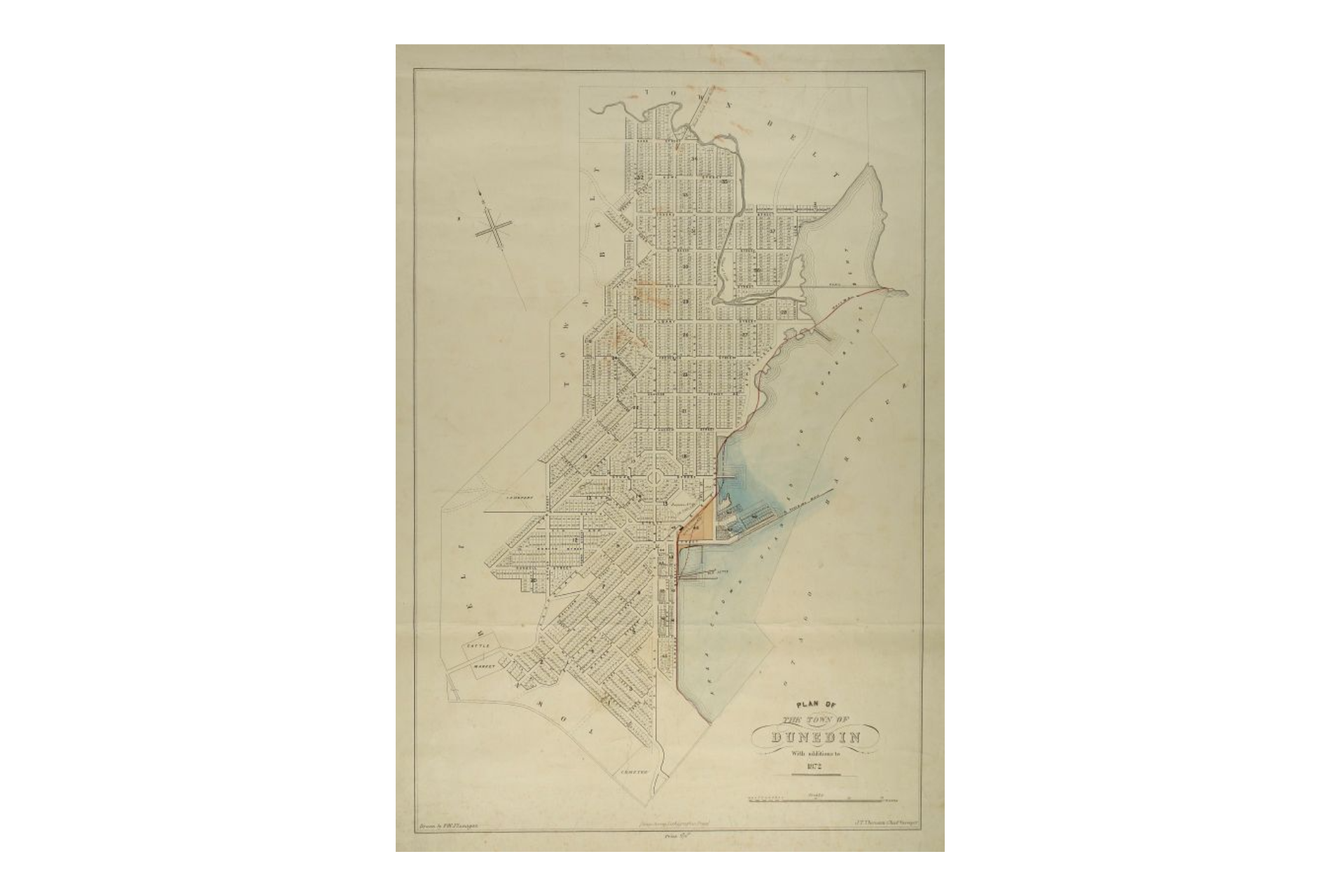
The institutional origins of the New Zealand Stock Exchange lie in the gold rushes of the 1860s. After alluvial gold deposits were exhausted in Otago and on the West Coast, quartz-mining companies were floated to attract capital, beginning with the Otago Pioneer Quartz Mining Company of 1864. Two Dunedin land agents, Connell and Moodie, set up as the country’s first full-time stockbrokers in 1866, and the following year they helped establish the Dunedin Brokers’ Association — a group of twelve men who met weekly to trade mining and non-mining stocks. A more formal Otago Brokers’ Association followed in 1868. At Thames, where a rich gold lode was discovered at the Manukau mine in 1868, brokers gathered at “Scrip Corner” — the intersection of Albert and Brown Streets — calling out prices from verandahs, as documented by the Te Ara Encyclopedia of New Zealand. By 1871, sixty-three quartz-mining companies had been floated. Regional brokers’ associations formed in Auckland (1872) and Wellington (1882); the Dunedin body became a formal stock exchange in 1893, and Christchurch followed in 1900. In 1915, Auckland, Christchurch, Dunedin, Thames, and Wellington created the Stock Association of New Zealand, with Arthur Bate of the Wellington Exchange as its first chair. The Association published the New Zealand Stock Exchange Gazette from 1929 to promote investment and list public company shares. The Sharebrokers Amendment Act 1981 amalgamated the four main regional exchanges into the New Zealand Stock Exchange (NZSE), which commenced operations as a unified national body in 1983. Regional trading floors were closed in 1991 as the exchange transitioned to electronic trading. The period from 1984 to 1987 was transformative: Finance Minister Roger Douglas’s radical deregulatory programme — dubbed “Rogernomics” — floated the New Zealand dollar, removed exchange controls, and fuelled a market explosion in which share values rose approximately 600 percent, as Brian Gaynor and other commentators have documented. By 1987 the exchange listed 309 companies, and over forty percent of adult New Zealanders owned shares. The crash of 20 October 1987 — “Black Tuesday” in New Zealand — wiped $5.7 billion from share values in four hours; by February 1988 the market had lost sixty percent of its value. Unlike other markets, New Zealand’s recovery was prolonged, with the Reserve Bank’s refusal to loosen monetary policy contributing to a recession lasting until 1993, by which time only 140 companies remained listed. In late 2002, members voted for demutualization, and on 30 May 2003 the New Zealand Stock Exchange Limited changed its name to the New Zealand Exchange Limited, trading as NZX, listing its own securities on 3 June 2003 under CEO Mark Weldon. The Australia–New Zealand Closer Economic Relations Trade Agreement (CER), in force since 1 January 1983, has deepened trans-Tasman capital market integration, with NZX-listed companies increasingly cross-listed on the ASX.
From the 1860s through the early twentieth century, the securities traded on New Zealand’s regional exchanges were dominated by gold-mining stocks. In Otago and Thames, shares in quartz-mining ventures such as the Otago Pioneer Quartz Mining Company (1864) and the fabulously rich Caledonian mine near Thames circulated briskly among brokers. As the mining boom subsided, pastoral company shares became central: New Zealand’s economy was built on wool exports from the open grasslands of the South Island, and the successful shipment of frozen meat to Britain aboard the SS Dunedin in February 1882 — approximately 5,000 carcasses preserved by a Bell Coleman freezing plant — inaugurated the refrigerated export trade that became the cornerstone of the twentieth-century economy, as documented by the New Zealand Ministry for Culture and Heritage. Companies such as the New Zealand Refrigerating Company (established in Otago, 1881), the Canterbury Frozen Meat Company, and the Gear Meat Company of Petone were early listed enterprises linked to this trade. Government bonds and municipal debentures have been continuously traded since the colonial period. In the contemporary market, the S&P/NZX 50 Index — introduced as the NZSX 50 in March 2003 and renamed in 2015 through a partnership between NZX and S&P Dow Jones Indices — serves as New Zealand’s preeminent benchmark, covering approximately ninety percent of domestic equity market capitalisation. Major constituents reflect the country’s resource-based and services economy: Fisher & Paykel Healthcare Corporation (founded 1934, a global respiratory care manufacturer), Fletcher Building Limited (founded 1909, New Zealand’s largest construction and building materials firm), Contact Energy (a major electricity generator and retailer), Air New Zealand, and the a2 Milk Company. Fonterra Co-operative Group, formed in 2001 from the merger of the New Zealand Dairy Group, Kiwi Cooperative Dairies, and the New Zealand Dairy Board, is the world’s largest dairy exporter, responsible for approximately thirty percent of global dairy exports. The Fonterra Shareholders’ Fund has been listed on the NZX Main Board and the ASX since November 2012, allowing public investors access to the economic rights of cooperative shares. The exchange also operates the NZX Debt Market (NZDX) for corporate and government bonds and the Fonterra Shareholders’ Market for cooperative share trading.