Banco Rosso (Red Bank)
Venice, Italy · Established 1516
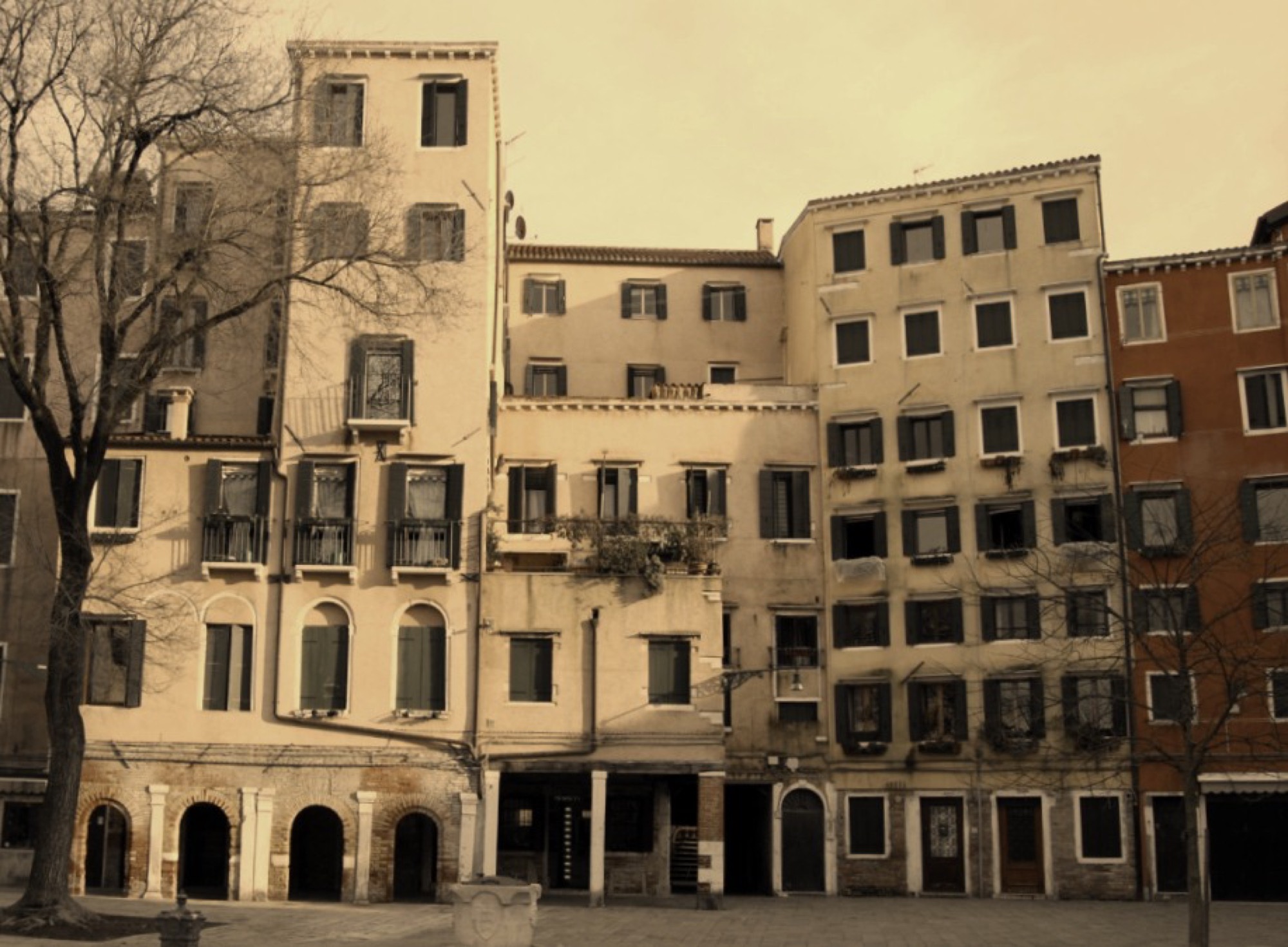
This site requires authorization to access.
To request access, contact
william.goetzmann@yale.edu
The Banco Rosso (Red Bank) was one of three licensed pawnshop-banks operating in the Campo del Ghetto Nuovo in Venice, alongside the Banco Verde (Green Bank) and Banco Nero (Black Bank). Its name derives from the red receipts issued to customers when pawning items.
The Campo del Ghetto Nuovo and its banking premises were visually austere compared to Venetian palazzi, yet the space accumulated distinctive artistic layers over centuries. Dana E. Katz, in The Jewish Ghetto and the Visual Imagination of Early Modern Venice (Cambridge, 2017), argues that the Ghetto's towering tenements — rising to seven or eight stories, far taller than typical Venetian buildings — created an architecture of 'exaggerated elevations and architectural asymmetries' that constituted a visual disturbance in the Venetian cityscape, drawing Christian and Jewish eyes alike. The five synagogues concealed within upper floors bear subtle exterior markers — rows of five arched windows symbolizing the five books of the Torah and small Hebrew inscriptions over doorways — while their interiors feature richly carved wooden Torah arks, gilded stuccowork, and Baroque silverwork by Venetian goldsmiths, now preserved in the Jewish Museum of Venice (Museo Ebraico), including Torah crowns (atarot), scroll finials (rimmonim), and Hanukkah lamps rescued from Nazi confiscation in 1943 and restored by Venetian Heritage. Canaletto's painting Venice: Entrance to the Cannaregio (c. 1734-42, National Gallery, London, NG1058) depicts the mouth of the Cannaregio Canal and the Ponte delle Guglie, with the distinctively tall buildings of the Ghetto visible in the distance, 'built up high because of the shortage of land.' In the twentieth century, the Lithuanian-American sculptor Arbit Blatas installed seven bronze bas-reliefs on the wall of the Campo del Ghetto Nuovo in 1980, depicting scenes of the Holocaust, followed in 1993 by his sculpture The Last Train commemorating the deportation of Venetian Jews.
The Ghetto occupies a small island in the Cannaregio sestiere of Venice, surrounded on all sides by canals — the Rio del Ghetto Nuovo and the Rio della Misericordia — and originally accessible only by two bridges whose gates were locked nightly at the ringing of the marangona bell in the Campanile of San Marco, with Christian guards posted at Jewish residents' expense. As Benjamin Ravid documented in Economics and Toleration in Seventeenth Century Venice (1978) and in his chapter in Robert C. Davis and Benjamin Ravid, eds., The Jews of Early Modern Venice (Johns Hopkins, 2001), the Ghetto functioned paradoxically as both a space of confinement and a vital node in the Venetian financial system: Jewish moneylenders operating under renewable condotta charters provided affordable credit to the urban poor, a service the Republic valued so highly that it paid annual tribute of 6,500 ducats to maintain it. Situated roughly a kilometer northwest of the Rialto Bridge — Venice's commercial heart, where Jewish traders had formerly been permitted to sell secondhand goods (strazzaria) for fifteen-day stretches before returning to the mainland at Mestre — the Ghetto consolidated these dispersed financial activities into a single regulated quarter. Donatella Calabi, in Venice and Its Jews: 500 Years Since the Founding of the Ghetto (2016), situates the Ghetto within Venice's broader urban logic of segregating foreign communities into distinct enclaves organized by function and ethnicity, comparable to the Fondaco dei Tedeschi for German merchants near the Rialto or the Fondaco dei Turchi for Ottoman traders. Yet the Ghetto's economic reach extended well beyond its walls: Levantine Jewish merchants maintained international trading networks across the Mediterranean that Venice depended upon for maritime commerce, while the pawnshops of the Campo del Ghetto Nuovo served Christians from across the city who crossed the bridges daily to transact business. The Ghetto thus embodied what scholars of Venetian urban history have described as the Republic's pragmatic calculus — balancing religious hostility with economic necessity in the service of the stato.
The Venice Ghetto, established by decree of Doge Leonardo Loredan on March 29, 1516, was the world’s first ghetto — the word itself comes from the Venetian getto (foundry), for the copper foundry that previously occupied the island. Jewish moneylenders had operated in Venice since 1385 under a condotta — a ten-year charter specifying taxes, permitted interest rates, and the number of banks allowed. The three banks occupied ground-floor premises on the Campo del Ghetto Nuovo. Customers deposited personal property as collateral and received cash loans; pawned items were stored on upper floors while the ground floor handled transactions. As the Church’s prohibition on usury prevented Christians from lending at interest, Jewish lenders filled a crucial economic role. The Venetian Republic regulated rates as low as five percent annually.
The English word “bank” derives from the Italian banco (bench) — the table at which moneylenders sat to conduct business. When a lender failed, his bench was broken (banca rotta), giving rise to the word “bankruptcy.” The Banco Rosso operated continuously until the fall of the Venetian Republic in 1797, when Napoleon’s forces removed the Ghetto gates. An inscription on a doorway lintel in the Campo still marks its former location.
Images will be added as the project develops. Photographs by Larry Ng and from research sources.