Sydney Stock Exchange
Sydney, Australia · Established 1871

This site requires authorization to access.
To request access, contact
william.goetzmann@yale.edu
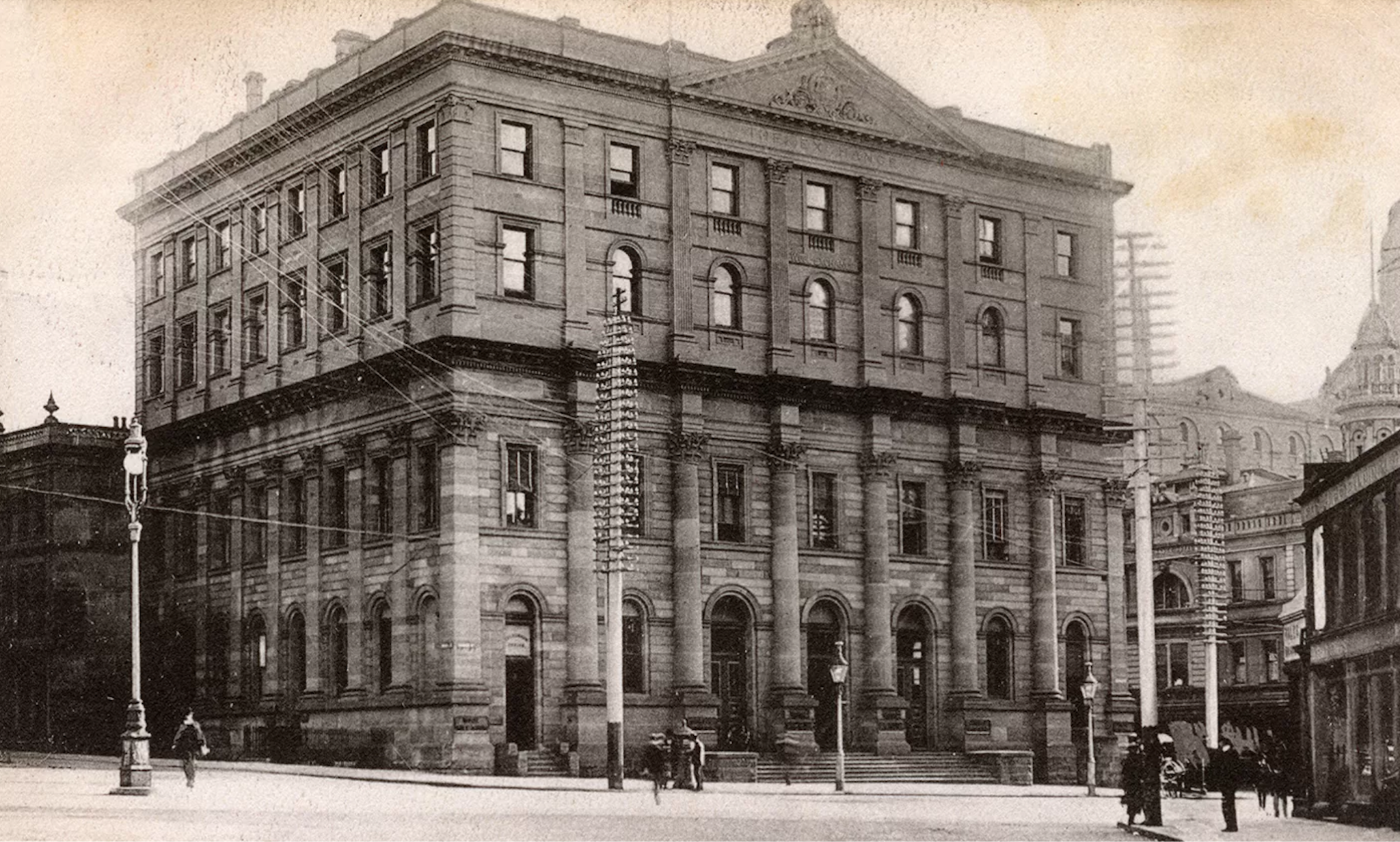
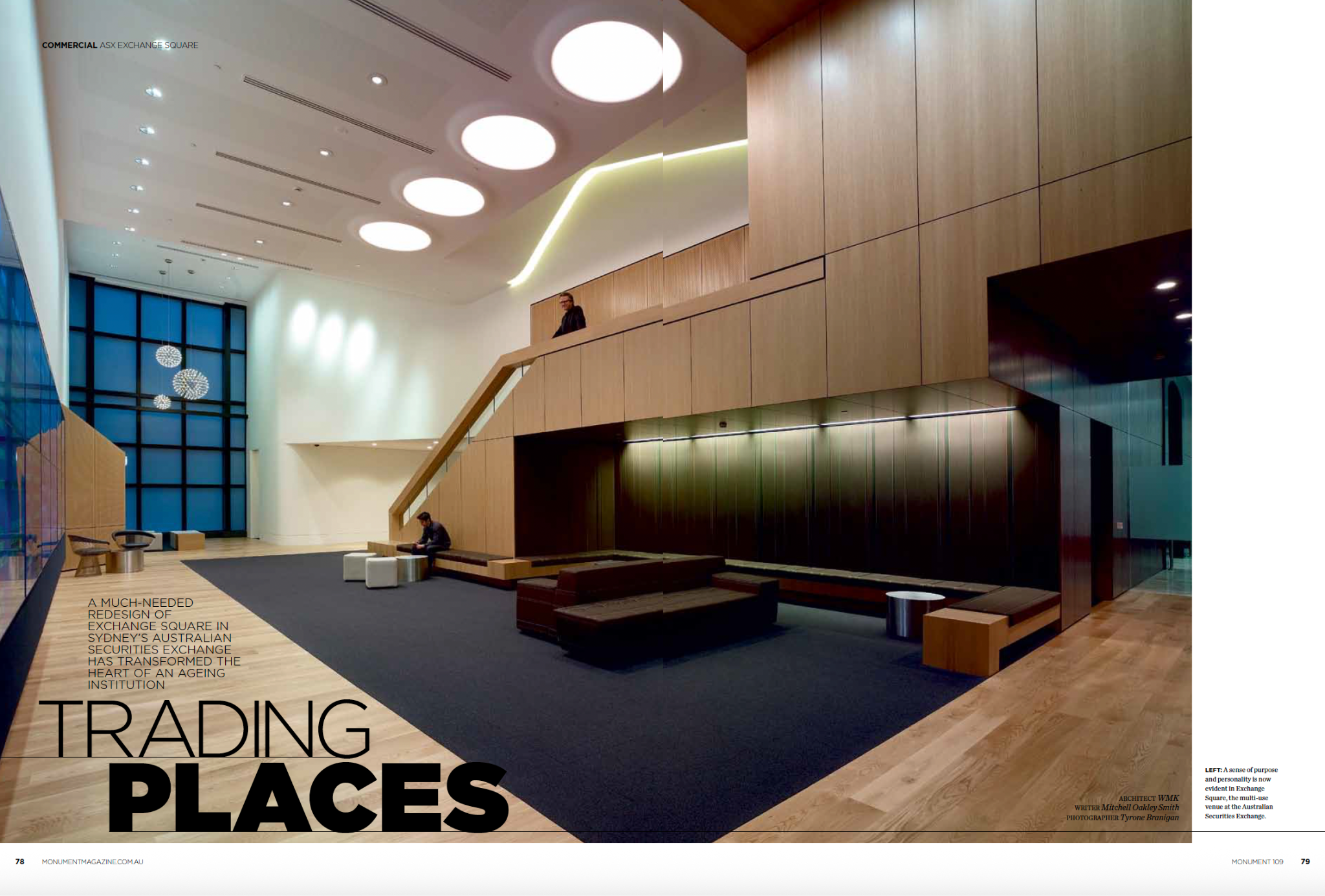
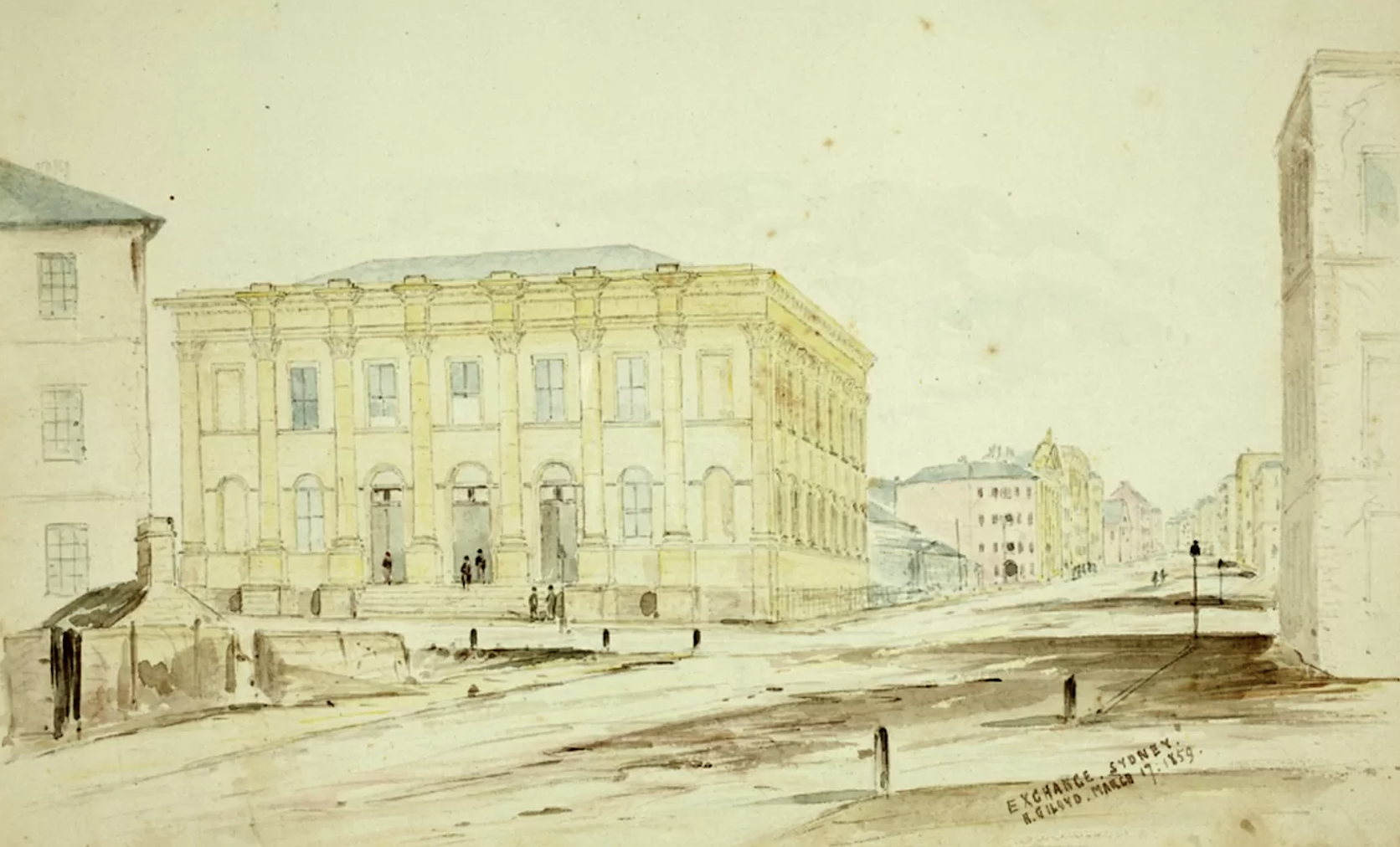
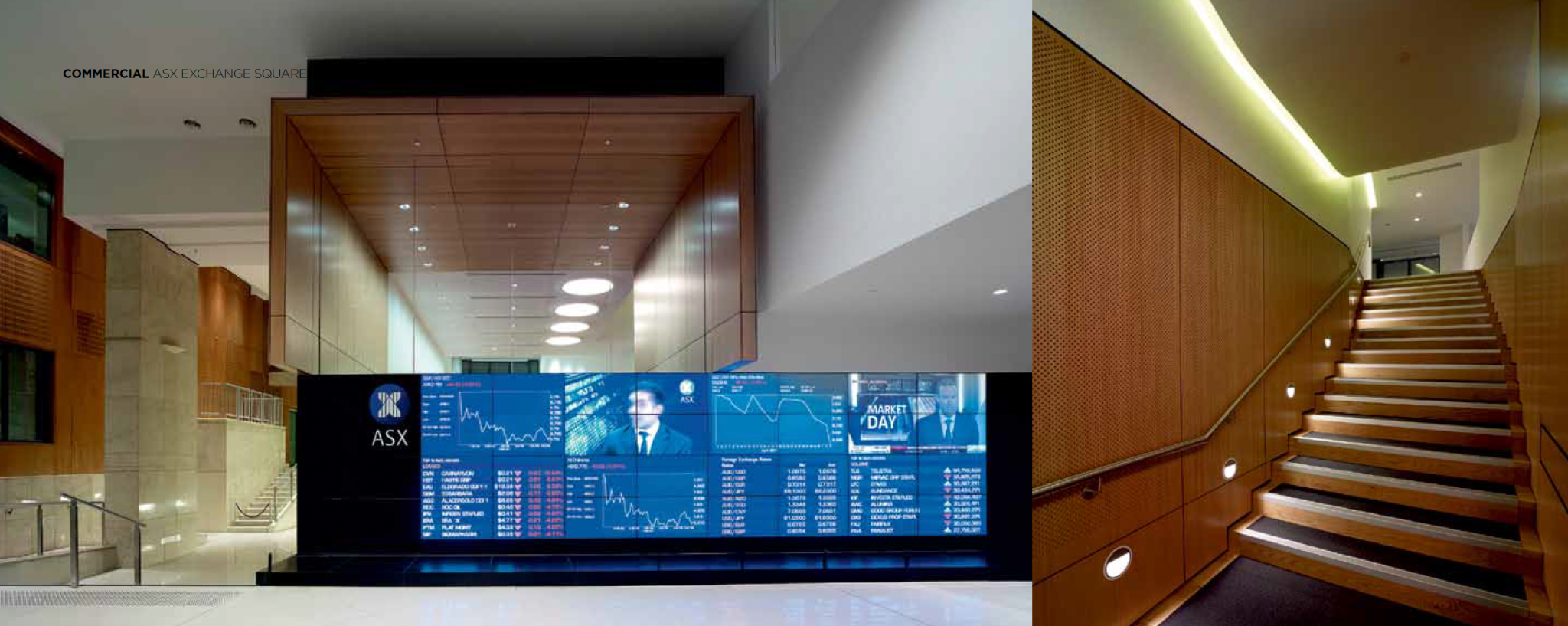
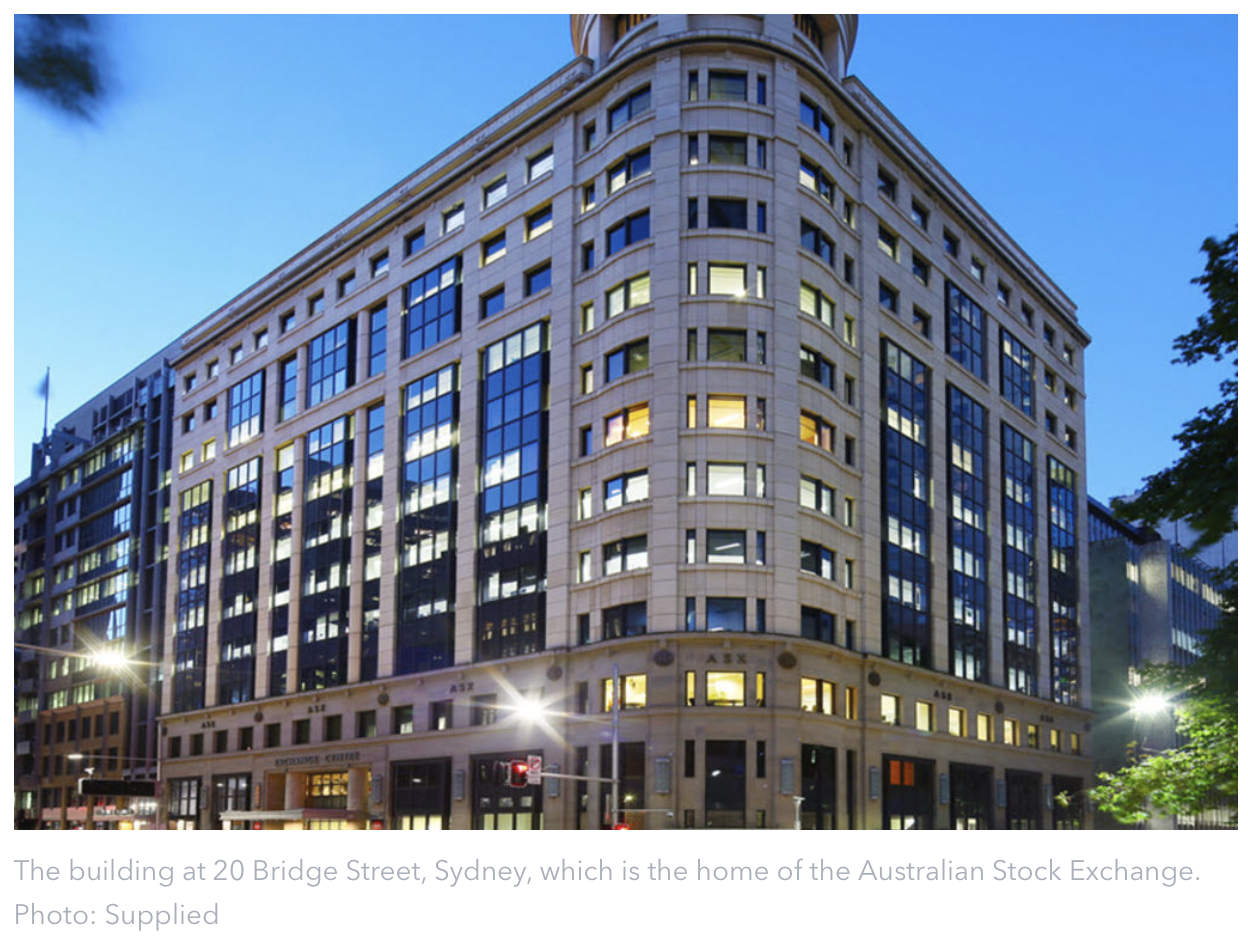
The Sydney Stock Exchange occupied a succession of buildings that traced the city’s transformation from colonial port to modern financial center. The exchange’s first home was the Royal Exchange building on Bridge Street, designed by the architect John Frederick Hilly and opened on 30 October 1857 by Governor General Sir William Denison. Hilly (c. 1810–1883), a Warwickshire-born surveyor and architect who arrived in Sydney in 1839, conceived the building as a four-storey sandstone structure in the Corinthian manner, its façade projecting an image of commercial solidity appropriate to the colony’s aspirations. The Dictionary of Sydney records that construction began on 25 August 1853, backed by prominent Sydney businessmen including John Fairfax, Thomas Holt Jr., David Jones, and the wool broker Thomas Sutcliffe Mort. The Royal Exchange served multiple commercial functions: it housed the Chamber of Commerce (founded 1824), the Sydney Wool Exchange, the Fire Underwriters Association, and the Coal Association. When share brokers established formal operations within the building in 1871, the Sydney Stock Exchange was born. By 1896 the exchange had outgrown the Royal Exchange and relocated to dedicated premises. The original sandstone building survived until 1964, when it was demolished during a wave of postwar redevelopment. The sculptor James White’s “Lady of Commerce” (1899), which had adorned the building, was preserved and remains at 56 Pitt Street as a fragment of the original structure. In the twentieth century, the exchange operated from various premises before occupying the Exchange Centre at 20 Bridge Street, a thirteen-storey commercial tower completed in 1999 comprising over 20,000 square meters of office space, an Exchange Square retail area at ground level, and an auditorium. The ASX subsequently relocated to 39 Martin Place in 2025. As Stephen Salsbury and Kay Sweeney documented in The Bull, the Bear and the Kangaroo: The History of the Sydney Stock Exchange (Allen and Unwin, 1988), the physical premises of the exchange evolved in step with the institutional and technological transformations of Australian capital markets.
The decorative program of the Sydney Stock Exchange was anchored by the Royal Exchange building’s Corinthian sandstone architecture, which projected an iconography of imperial commerce appropriate to a major colonial trading center. The building’s most notable surviving artistic element is the “Lady of Commerce” statue, sculpted by James White (1861–1918) and installed in 1899 at the Royal Exchange at 56 Pitt Street. The allegorical female figure, standing on a pedestal, embodied the mercantile identity of the institution where wool brokers, share dealers, and shipping agents conducted their business. White’s work belongs to a tradition of commercial allegorical sculpture common to exchanges worldwide, though in Sydney’s case the figure specifically referenced the wool and commodity trades that sustained the colonial economy. The four-storey sandstone façade itself, with its Corinthian pilasters and classical proportions, followed the conventions established by European exchange buildings — most notably the London Royal Exchange — in asserting the dignity and permanence of commercial enterprise. The interior trading spaces of the Royal Exchange, where both wool auctions and share trading took place, featured the high-ceilinged halls characteristic of nineteenth-century commercial architecture, designed to accommodate large gatherings of brokers and merchants. Later, the exchange’s twentieth-century trading floor operated under the “post” or “board” system, in which employees known as “chalkies” recorded bids and offers in chalk on large boards — a functional aesthetic that defined Australian trading floors until the introduction of the Stock Exchange Automated Trading System (SEATS) in October 1987 and the closure of physical trading floors in 1990. The visual culture of the exchange was thus defined as much by the ephemeral choreography of the chalkboard system as by the permanent architectural ornament of its earlier home.
The Sydney Stock Exchange occupied a pivotal position within the colonial city’s commercial geography, situated at the intersection of Bridge Street and Pitt Street in what became Sydney’s principal financial precinct. Bridge Street, one of the oldest thoroughfares in Australia — named by Governor Lachlan Macquarie in 1811 for the first bridge built by European settlers — developed as a corridor of government offices and commercial institutions, with an intact streetscape of nineteenth-century sandstone buildings that gave the precinct its distinctive character. The Royal Exchange stood directly opposite Macquarie Place, the first formally laid-out public space in Sydney (1810), which had served as the town’s commercial gathering point since the earliest days of European settlement. The proximity to Circular Quay, the colony’s principal port facility at the head of Sydney Cove, was critical: the quay was the point of arrival for both immigrants and imported capital, and the point of departure for the wool clip that constituted Australia’s primary export through the nineteenth century. The Customs House, located nearby, processed the maritime trade that underpinned the exchange’s business. Along Pitt Street and George Street — the CBD’s main north-south thoroughfare — the major colonial banks established their headquarters: the Bank of New South Wales, the Commercial Banking Company of Sydney, and later the Commonwealth Bank. Martin Place, which developed from the 1890s as Sydney’s ceremonial civic axis, became the address of the General Post Office and subsequently major banking chambers, establishing the financial character that persists today. The exchange’s later home at 20 Bridge Street placed it within the same precinct, at the intersection with Pitt Street, maintaining continuity with the commercial geography established in the 1850s. As Simon Ville observed in The Rural Entrepreneurs (Cambridge University Press, 2000), the concentration of stock and station agents, wool brokers, banks, and the stock exchange within a few blocks of the waterfront created an integrated commercial ecosystem that connected pastoral producers in the interior with international capital markets.
The Sydney Stock Exchange was formally established in 1871 when share brokers organized themselves within the Royal Exchange building on Bridge Street, making it the second stock exchange founded in colonial Australia after Melbourne (1861). The exchange emerged in the context of the economic transformation wrought by the gold rushes: as the Reserve Bank of Australia’s Ric Battellino noted in a 2010 address on mining booms and the Australian economy, the Victorian gold discoveries of the 1850s had driven mining output to approximately 35 percent of GDP at the 1852 peak and nearly trebled the colonial population within a decade. The Australian Gas Light Company became the second company to list on the Sydney exchange in 1871, joining established colonial enterprises. The exchange grew rapidly during the great mineral boom of the 1880s, driven above all by the spectacular silver and lead discoveries at Broken Hill in western New South Wales. The Broken Hill Proprietary Company Limited (BHP), incorporated on 13 August 1885 and listed on the exchange that same month, became the anchor of Australian mining capitalism. Geoffrey Blainey’s classic The Rush That Never Ended: A History of Australian Mining (Melbourne University Press, 1963) documented how the population of Broken Hill surged from 6,000 in 1888 to nearly 20,000 by 1891. A crucial legal innovation facilitated the mining boom: Victoria’s Mining Companies Act of 1871 introduced the “no liability” company, a form unique to Australasia that freed shareholders from the obligation to meet unpaid calls on their shares. As Grant Fleming, Zhangxin Liu, and colleagues demonstrated in their study “Share Ownership and the Introduction of No Liability Legislation in Nineteenth-Century Australia” (Business History, 2023), no liability companies largely replaced limited liability within a decade, attracting broader investor participation. New South Wales adopted similar legislation in 1881. The 1890s brought severe crisis: the Australian bank crashes of 1893, analyzed by David Merrett in “The Australian Bank Crashes of the 1890s Revisited” (Business History Review, 2013), devastated financial share values on the Sydney exchange. Recovery came through continued mining development, particularly in Western Australia. Federation in 1901 — the same year King Edward VII granted the “Royal” designation to the Exchange building — created a national economic framework, though the six state exchanges continued to operate independently. The Australian Associated Stock Exchanges (AASE) was established in 1937, with Sydney taking the lead in formalizing uniform listing rules and commission rates. Thomas Mathews’s Reserve Bank of Australia Research Discussion Paper, “A History of Australian Equities” (2019), demonstrated that the same companies that dominated the colonial-era market — mining firms and banks — remained dominant for a century. The six state exchanges merged on 1 April 1987 to form the Australian Stock Exchange (ASX), and the introduction of the Stock Exchange Automated Trading System (SEATS) that October ended the era of floor trading. The trading floors closed permanently in 1990. In 2006 the ASX merged with the Sydney Futures Exchange to form the Australian Securities Exchange.
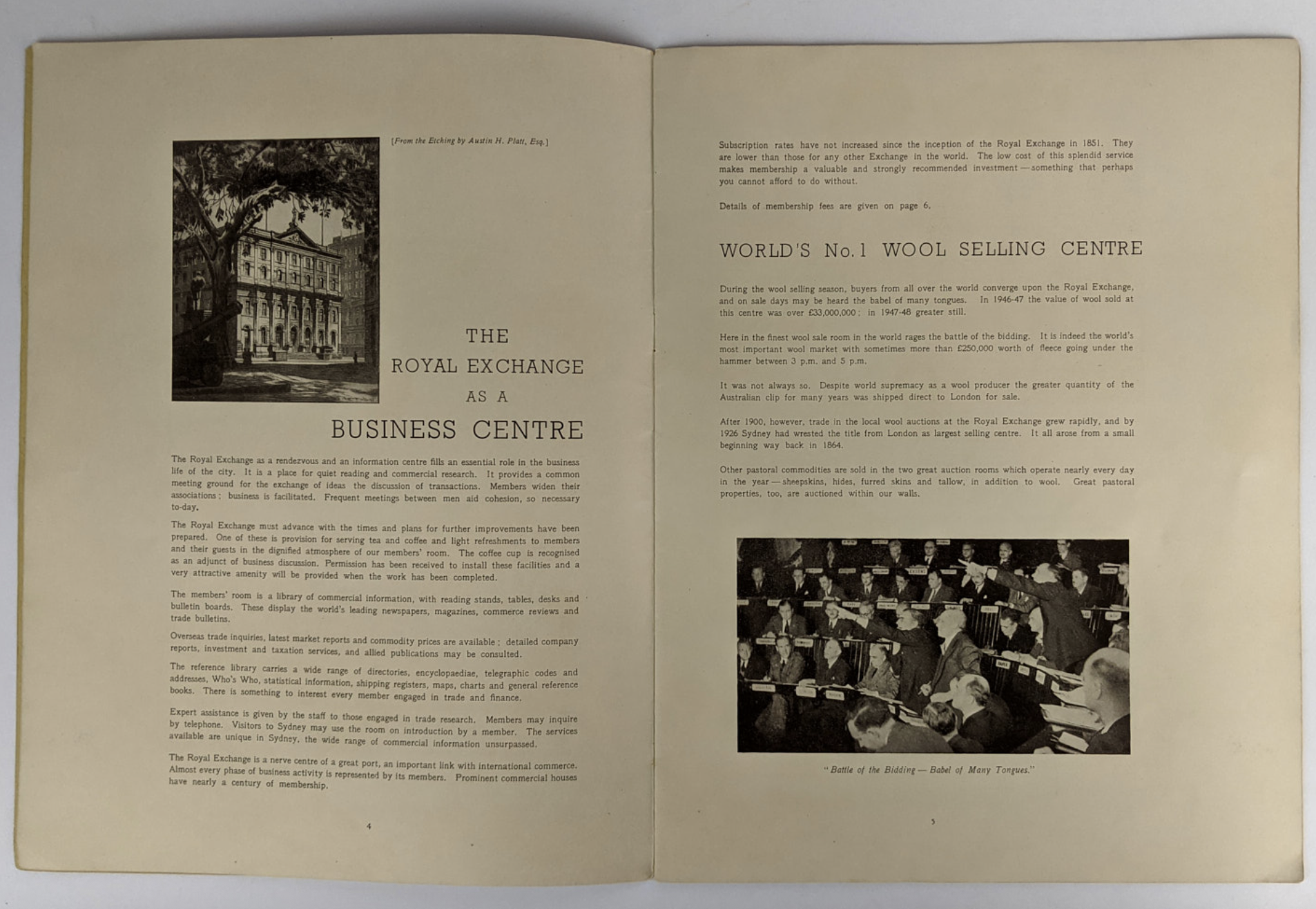
The securities traded on the Sydney Stock Exchange reflected the structure of the colonial and post-colonial Australian economy: mining shares, bank stocks, pastoral company securities, government bonds, and infrastructure enterprises. From its founding in 1871, the exchange listed shares in colonial banks — the Bank of New South Wales (later Westpac), the Commercial Banking Company of Sydney — and utility companies such as the Australian Gas Light Company, which became the second listing in 1871. The dominant category, however, was mining. Gold, silver, copper, tin, and lead mining companies proliferated on the exchange during the great mineral booms documented by Geoffrey Blainey in The Rush That Never Ended (1963). The listing of Broken Hill Proprietary (BHP) in August 1885 was transformative: BHP’s silver and lead operations at Broken Hill generated enormous capital flows and established the exchange as a center for mining finance. As Phillip Lipton noted in “A History of Company Law in Colonial Australia” (Melbourne University Law Review, 2007), the “no liability” share structure — introduced in Victoria in 1871 and adopted in New South Wales by 1881 — was a uniquely Australasian innovation that allowed mining investors to abandon unprofitable ventures without liability for unpaid calls, fundamentally shaping the market’s character. Trading was conducted through the “call” system, in which a stock exchange employee called the name of each listed security in turn while members bid, offered, or sold. This was later replaced by the “post” system, where stocks were quoted on boards and “chalkies” recorded transactions in chalk. The Royal Exchange building simultaneously hosted wool auctions from 1864 to 1964 — for a century, the world’s largest wool selling center — and Simon Ville’s study “The Relocation of the International Market for Australian Wool, 1880–1939” (University of Wollongong, 2002) documented how the marketplace for Australian wool shifted from London to the Australian capital cities during this period. Government bonds, both colonial and later Commonwealth, provided the fixed-income segment of the market. Pastoral company stocks and the shares of stock and station agents — firms like Goldsbrough Mort that provided integrated financial services to graziers — formed another significant category. Research published in the Financial History Review by Cambridge University Press, examining media tone and trading activity on the Sydney Stock Exchange from 1901 to 1950, found that positive news about wool auctions in the Sydney Morning Herald correlated with increased trading volumes, demonstrating the intimate connection between the pastoral economy and share market activity. By the early twentieth century, the exchange also listed industrial companies, insurance firms, and shipping lines, but mining and pastoral enterprises remained its distinctive specialization well into the postwar period.