Shanghai Futures Exchange (SHFE)
Shanghai, China · Established 1999

This site requires authorization to access.
To request access, contact
william.goetzmann@yale.edu
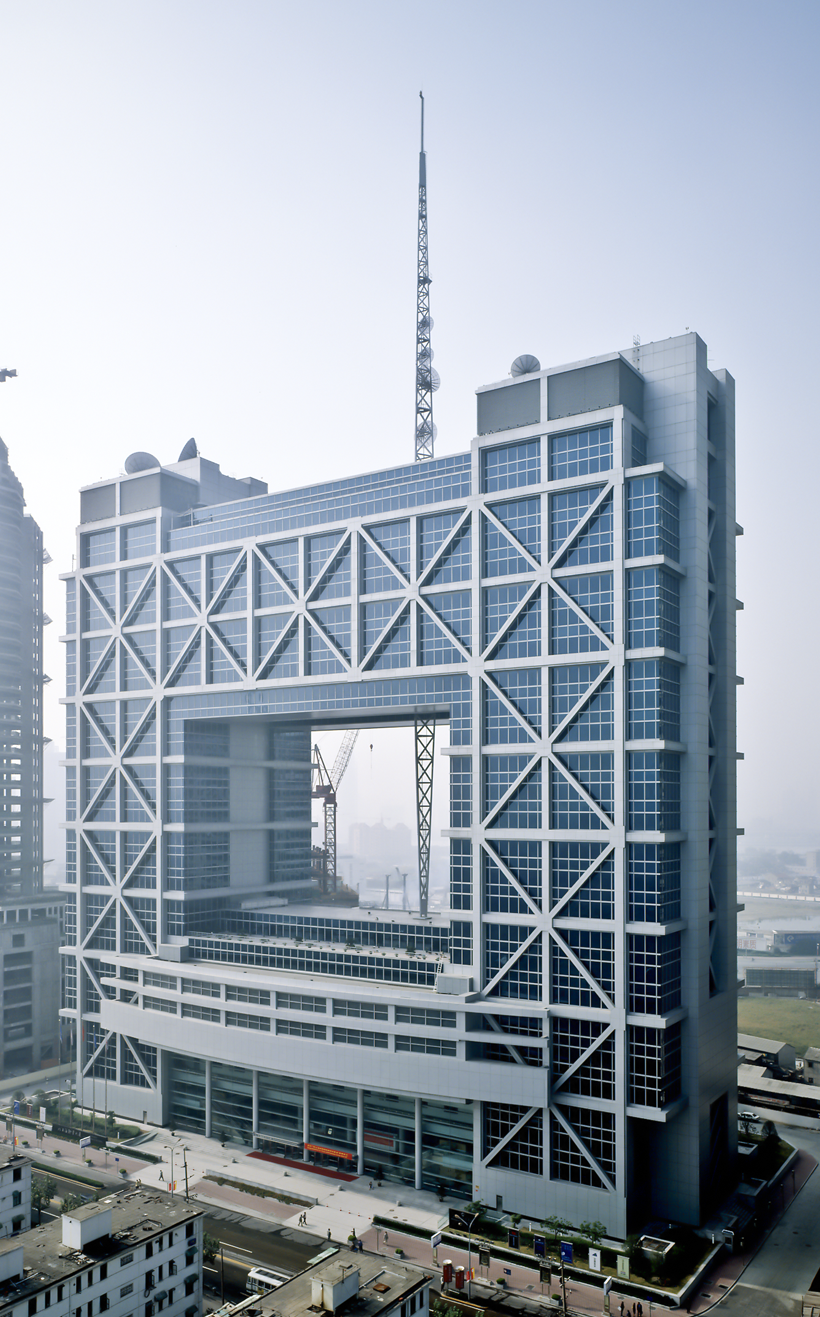
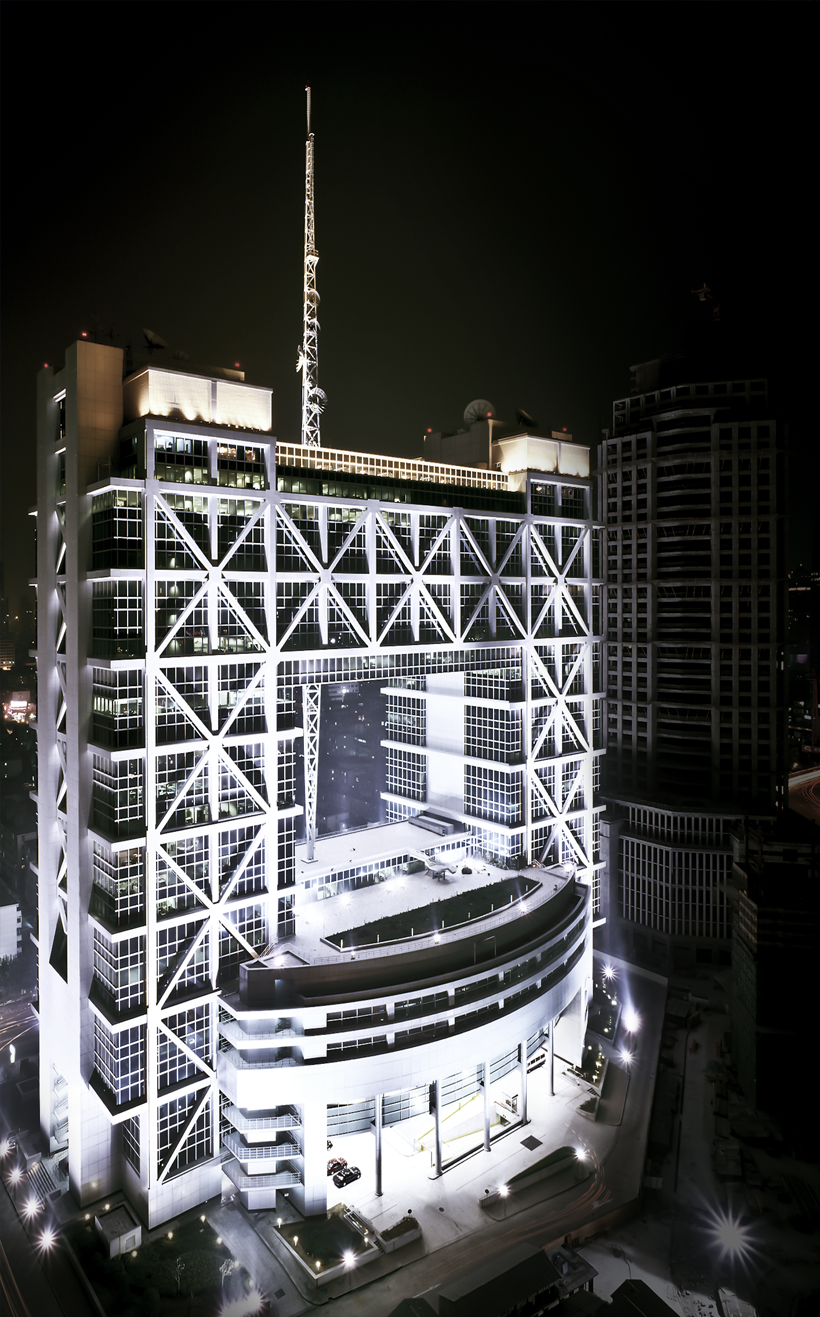
The Shanghai Futures Exchange is headquartered in the Shanghai Futures Tower (Qihuo Dasha), a 37-story office building at 500 Pudian Road in the Pudong district, completed in 1998 to a design by the American firm Langdon Wilson. Rising 187 meters above the Lujiazui financial zone, the tower’s sleek curtain-wall facade of tinted glass and aluminum cladding exemplifies the international modernist idiom that dominated Pudong’s rapid skyline construction in the 1990s, as analyzed by Ren Xuefei in “Building Globalization: Transnational Architecture Production in Urban China” (University of Chicago Press, 2011). The tower houses the exchange’s electronic trading operations, administrative offices, and a multi-story trading hall equipped with the centralized electronic auction system that replaced open-outcry trading. Below grade, three basement levels accommodate mechanical systems and data infrastructure. Shanghai Futures Information Technology Co., Ltd. (SFIT), established in 2004 as a wholly owned subsidiary, maintains the exchange’s technology platform from within the building. More recently, the broader Lujiazui financial campus has expanded with the Shanghai Financial Exchange Plaza, a three-tower complex completed in 2020–2021 to a design by Jahn (formerly Murphy/Jahn) in partnership with FGP Atelier. This LEED Gold–certified development, totaling 406,000 square meters across towers reaching 230 meters, features a 130-meter sky bridge connecting the three structures and a sunken Financial Theatre at the plaza level, housing the Shanghai Stock Exchange, China Financial Futures Exchange, and China Securities Depository and Clearing Corporation—consolidating the physical infrastructure of China’s capital markets within a single architectural ensemble.
The decorative program of the Shanghai Futures Tower reflects the functionalist ethos of late-twentieth-century Chinese commercial architecture, in which technological infrastructure supplanted traditional ornamental display. The tower’s lobby features polished granite and marble surfaces, with the SHFE’s institutional emblem—a stylized commodity chart suggesting upward market momentum—prominently displayed at the entrance. Inside the trading hall, ranks of electronic display screens and real-time ticker boards constitute the primary visual environment, a phenomenon that architectural historian Koolhaas and colleagues documented in studies of Asian financial districts as characteristic of the “generic city” paradigm. The adjacent Shanghai Financial Exchange Plaza, designed by Helmut Jahn, introduces a more expressive architectural vocabulary: the three towers feature projecting vertical mullions creating rhythmic shadow patterns across the facades, while split-core floor plans produce column-free office interiors flooded with natural light. The plaza’s sunken Financial Theatre, roofed by a reflecting pool, creates a symbolic gathering space for the financial community. Mid-level atriums and through-building lobbies provide visual transparency connecting the towers. The sky bridge’s exhibition spaces and rooftop gardens represent an effort to integrate cultural programming into the financial precinct—an approach that the CTBUH recognized with its Best Tall Building award. Throughout the complex, the aesthetic language privileges transparency, efficiency, and technological connectivity over historical allusion, embodying what Wu Fulong described in “Planning for Growth: Urban and Regional Planning in China” (Routledge, 2015) as the architectural expression of China’s aspirations to global financial leadership.
The Shanghai Futures Exchange occupies a pivotal position within the Lujiazui Finance and Trade Zone, the purpose-built central business district of the Pudong New Area on the eastern bank of the Huangpu River. Lujiazui’s transformation from low-rise warehouses and farmland into a global financial center began in April 1990, when Premier Li Peng, acting on Deng Xiaoping’s directive, designated Pudong a national-priority development zone. As Ren Xuefei documented in “Building Globalization” (2011), an international urban design competition held in 1992 attracted proposals from Richard Rogers, Dominique Perrault, and Toyo Ito, though the final master plan was executed by the Shanghai Urban Planning Design Institute (SUPDI), which had been developing schemes since 1984. The resulting district, analyzed by Sha Yongjie and Wu Jiang in “Shaping Lujiazui: The Formation and Building of the CBD in Pudong, Shanghai” (Journal of Urban Design, 2011), produced a superblock of gleaming towers flanking the Oriental Pearl Television Tower and culminating in the Shanghai Tower (632 meters). The SHFE’s Pudian Road headquarters sits at the southern edge of this financial cluster, connected by the Lujiazui Ring Road to the Shanghai Stock Exchange building and the major banks headquartered along Century Avenue. The Pudong location symbolically and practically separates modern China’s commodity futures infrastructure from the historic Bund across the river, where nineteenth-century trading houses once dominated Shanghai’s commerce—a spatial dialectic between treaty-port capitalism and state-guided market reform.
The Shanghai Futures Exchange was formally established on 26 December 1999 through the amalgamation of three predecessor institutions: the Shanghai Metal Exchange (founded 28 May 1992), the Shanghai Foodstuffs Commodity Exchange, and the Shanghai Commodity Exchange. This consolidation was mandated by the State Council’s “Notice on Further Consolidation and Standardization of the Futures Market” (August 1998), which reduced China’s fourteen regional futures exchanges to three national-level platforms—the SHFE, the Dalian Commodity Exchange, and the Zhengzhou Commodity Exchange—under unified supervision by the China Securities Regulatory Commission (CSRC). As Victor Hou analyzed in “Derivatives and Dialectics: The Evolution of the Chinese Futures Markets” (NYU Law Review, 1997), the proliferation of poorly regulated exchanges in the early 1990s had produced speculative crises that threatened macroeconomic stability. Sanzhu Zhu’s study in the Brooklyn Journal of Corporate, Financial and Commercial Law (2009) further documented how the consolidation imposed standardized contract specifications, margin requirements, and daily price limits. Shanghai’s commodity trading heritage, however, extends far deeper: the city served as East Asia’s preeminent commercial entrepot from the 1840s, with foreign trading houses (hongs) along the Bund dealing in tea, silk, cotton, and opium. The catastrophic Shanghai rubber stock bubble of 1910, studied by Jiajia Liu in “The Shanghai Rubber Stock Market Bubble of 1910” (SAFE Working Paper, 2022), destroyed forty-eight of the city’s ninety-one native banks (qianzhuang) and has been considered a contributing factor to the fall of the Qing dynasty. The modern SHFE thus represents both continuity and rupture: it channels Shanghai’s deep commercial tradition through the institutions of state-supervised market socialism.
The Shanghai Futures Exchange lists twenty-five futures products spanning base metals, precious metals, energy, chemicals, and agricultural commodities. Its core metal contracts—copper, aluminum, zinc, lead, nickel, and tin—inherited the franchise of the Shanghai Metal Exchange and have grown into globally significant benchmarks. SHFE’s copper futures—a contract inherited from the predecessor Shanghai Metal Exchange, where Chinese copper futures began trading in 1993—have become the world’s most actively traded copper contract by volume, with scholarly studies by Fernández-Pérez, Frijns, and Tourani-Rad in “Copper Price Discovery on COMEX, the LME and the SHFE, 2001–2013” demonstrating that SHFE now rivals COMEX in price discovery, surpassing the London Metal Exchange. Gold futures were introduced on 9 January 2008, and silver followed in 2012. In the energy sector, the exchange’s subsidiary, the Shanghai International Energy Exchange (INE), launched yuan-denominated crude oil futures on 26 March 2018—the first Chinese commodity contract open to foreign investors—based on a basket of medium-sour crudes from the Middle East and China, as analyzed by Huang, Huang, and Zhong in “China’s Crude Oil Futures: Introduction and Some Stylized Facts” (Finance Research Letters, 2019). Additional energy products include fuel oil, low-sulfur fuel oil, and bitumen. Chemical and industrial contracts cover natural rubber (historically among SHFE’s highest-volume products), synthetic rubber (TSR 20), hot-rolled steel coil, steel rebar, wire rod, stainless steel, and wood pulp. Physical delivery is facilitated through a network of designated warehouses, including bonded facilities in the Shanghai Pilot Free Trade Zone at Yangshan, enabling international participants to settle contracts without customs duties.