São Paulo Stock Exchange (B3)
São Paulo, Brazil · Established 1890
This site requires authorization to access.
To request access, contact
william.goetzmann@yale.edu
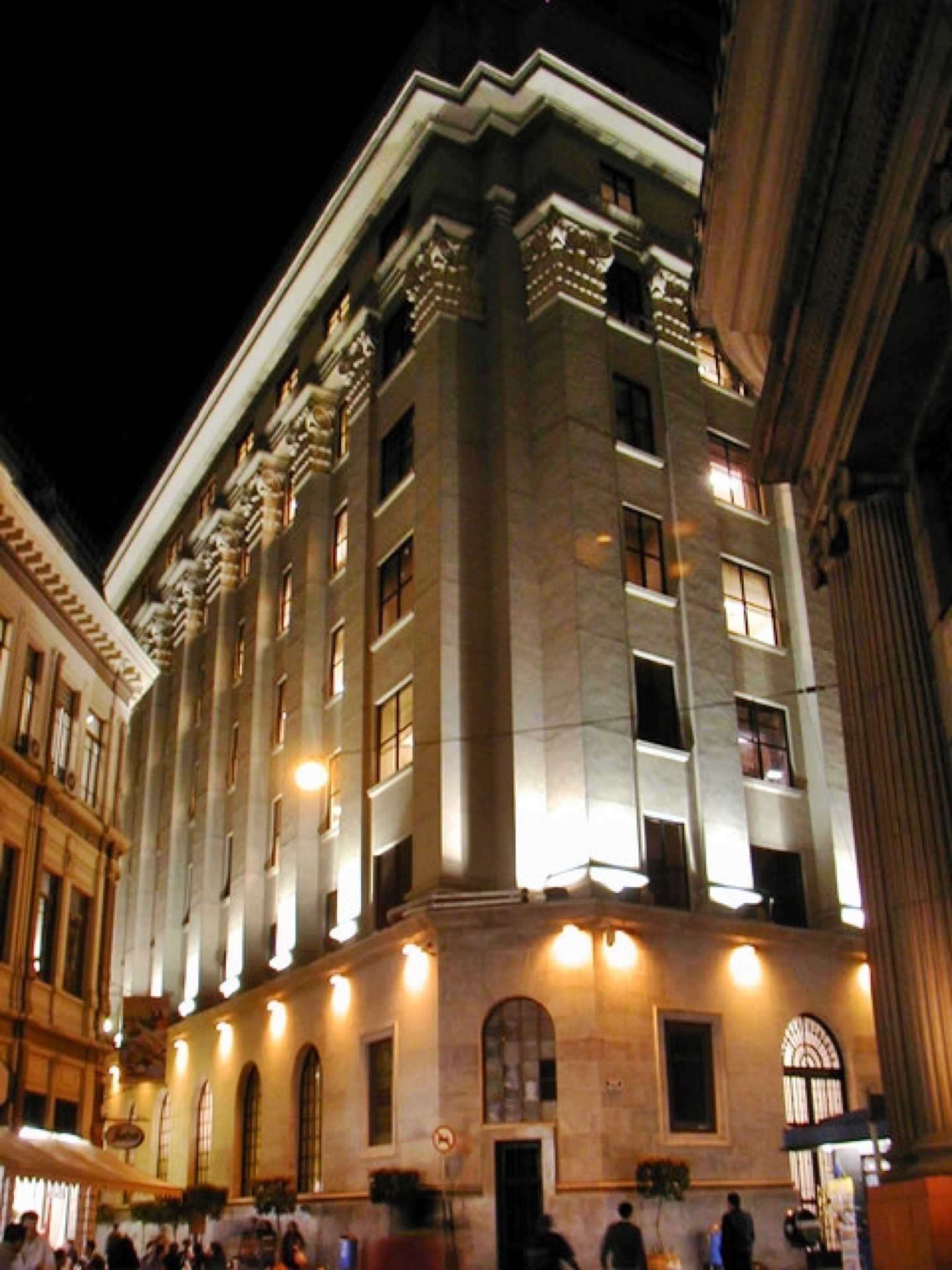
The physical history of the São Paulo Stock Exchange traces an architectural arc from improvised commercial gathering spaces to monumental neoclassical permanence. When Emílio Rangel Pestana inaugurated the Bolsa Livre on 23 August 1890, trading occurred in rented quarters along the commercial streets of the Centro Histórico, with no purpose-built exchange hall. After the Encilhamento crisis shuttered the Bolsa Livre in 1891, its successor—the Bolsa de Fundos Públicos de São Paulo, established in 1895—occupied similarly provisional spaces until 1934, when the institution moved into the Palácio do Café at Pátio do Colégio, the Jesuit founding site of São Paulo itself, a location freighted with symbolic significance as it connected the commercial present to the city’s colonial origins. The definitive architectural statement came with the acquisition and renovation of the neoclassical building at Rua XV de Novembro, 275—a structure featuring Italian marble staircases, three grand arched entrance portals, classical interior furnishings, and formal auditoriums. As Anne G. Hanley documents in Native Capital: Financial Institutions and Economic Development in São Paulo, Brazil, 1850–1920 (Stanford University Press, 2005), the evolution of São Paulo’s financial architecture reflected the growing ambitions of a coffee-export economy transforming itself into an industrial powerhouse. Today the XV Building, as B3 designates it, houses the B3 Space for IPO ceremonies and bell-ringing events, meeting rooms, the B3 Auditorium, and the MUB3—Museu da Bolsa do Brasil, inaugurated in September 2022 to preserve the material heritage of Brazilian capital markets.
The decorative program of the São Paulo exchange centered on the pregão—the trading floor—where architectural form and commercial performance merged into a kinetic spectacle. The earliest physical apparatus was the corbeille, a circular mobile structure in which the session director occupied the center, official brokers ringed the middle tier, and their assistants filled the outermost positions, creating a spatial hierarchy that made rank visible in geometry. As the MUB3 exhibition “Market Voices: The Tradition of Open Outcry Trading” (Google Arts & Culture, 2022) documents, the corbeille gave way in 1967 to a steel fixture nicknamed the “airplane” for its two-wing shape, which traders rejected for disadvantaging those at the wing tips. It was quickly replaced by the “wheel,” a circular structure that restored the concentric logic of the original corbeille. In the 1970s Bovespa adopted the “trading posts” model—sector-specific pits marked by circles on the floor—which persisted until open outcry ended on 30 June 2009. The viva-voz (open outcry) itself constituted a form of performance art: shouting traders, hand signals, scribbled tickets, and the roar of the pregão became iconic of Brazilian financial culture. The XV Building’s neoclassical interior—Italian marble staircases, classical furnishings, formal library—provided a dignified counterpoint to the controlled chaos of the trading floor. When Bovespa converted the pregão hall into a public visitation space in 2006, the preserved trading floor became itself a museum artifact, with the original post markings, electronic boards, and the ceremonial bell retained as decorative elements commemorating the material culture of open outcry.
The São Paulo exchange is inseparable from the Triângulo Histórico—the financial triangle formed by Rua XV de Novembro, Rua São Bento, and Rua Direita—that constituted the commercial heart of the city from the colonial era through the mid-twentieth century. As a 2024 study in Cities, “Transformations and Challenges of São Paulo’s Historic Triangle” (ScienceDirect, 2024), observes, this compact district experienced layers of rapid urban development that progressively overlaid one another, with the verticalization of the early twentieth century demolishing generations of low-rise colonial and imperial buildings. The Bolsa sat mere blocks from the Pátio do Colégio, the 1554 Jesuit mission site where São Paulo was founded, and indeed occupied the Palácio do Café at that very square from 1934 to its later move. The Viaduto do Chá, linking Rua Direita to the newer western city, served as both literal and symbolic bridge between the old commercial center and the expanding metropolis. Coffee baron mansions—first in Campos Elíseos and Higienópolis, then along Avenida Paulista by the 1890s—expressed the wealth that funded the exchange. Warren Dean’s The Industrialization of São Paulo, 1880–1945 (University of Texas Press, 1969) traces how this coffee capital financed the shift from agricultural exporting to industrial manufacturing. By the late twentieth century the financial center migrated southwest—first to Avenida Paulista, then to Faria Lima and Berrini—leaving the Triângulo as a public administrative hub, though the XV Building remains as an anchor of heritage in the old center.
The financial history of what is now B3 begins with the coffee economy that transformed São Paulo from a provincial Jesuit settlement into Latin America’s preeminent commercial city. Robert H. Mattoon’s “Railroads, Coffee, and the Growth of Big Business in São Paulo, Brazil” (Hispanic American Historical Review, 1977) demonstrates how railroad construction—financed by the planter elite—created the corporate structures and capital flows that made a stock exchange viable. On 23 August 1890, Emílio Rangel Pestana founded the Bolsa Livre, but the Encilhamento crisis—a speculative bubble fueled by Finance Minister Rui Barbosa’s policy of unrestricted credit and monetary expansion, as Gail D. Triner analyzes in Banking and Economic Development: Brazil, 1889–1930 (Palgrave, 2000)—collapsed the nascent market by 1891. The Bolsa de Fundos Públicos de São Paulo, reconstituted in 1895, provided continuity. Renamed the Bolsa Oficial de Valores de São Paulo in 1935, it became the Bolsa de Valores de São Paulo (Bovespa) in 1967. The Ibovespa benchmark index was created in 1968. A stock market crash in 1971 began Rio de Janeiro’s decline relative to São Paulo. The electronic Mega Bolsa system, introduced in 1997, gradually displaced the viva-voz pregão; open outcry ended definitively on 30 June 2009. The 2008 merger of Bovespa with BM&F (the commodities and futures exchange) created BM&FBovespa, and on 30 March 2017 its merger with CETIP—the over-the-counter fixed-income clearinghouse—produced B3 (Brasil, Bolsa, Balcão), now the largest exchange in Latin America by market capitalization.
The instruments traded on the São Paulo exchange evolved in tandem with Brazil’s economic transformation from agrarian exporter to diversified industrial economy. In the Bolsa Livre era of the 1890s, trading centered on government bonds and the shares of the railroad companies—such as the São Paulo Railway and the Companhia Paulista—that linked the coffee hinterland to the port of Santos. Bank stocks and early industrial equities followed as coffee planters reinvested export profits, a process documented by Anne G. Hanley in Native Capital (Stanford University Press, 2005). The Bolsa de Mercadorias de São Paulo, founded in 1917 by agricultural exporters, introduced forward contracts on coffee, cotton, and other commodities—Brazil’s first standardized futures trading. The Ibovespa index, launched in 1968, became the benchmark for Brazilian equities, tracking approximately fifty to seventy of the most liquid stocks across sectors including financial services, mining, energy, and consumer goods. When the BM&F (Bolsa de Mercadorias & Futuros, established 1985) merged with Bovespa in 2008, the combined entity unified equity trading with a vast commodity derivatives complex encompassing Arabica and robusta coffee futures, crystal sugar, live and feeder cattle, corn, soybeans, ethanol, cotton, and gold. The DI (one-day interbank deposit) interest rate futures contract emerged as one of the most actively traded derivatives in the world, alongside U.S. dollar/real currency futures. The 2017 creation of B3 through merger with CETIP added the over-the-counter fixed-income market, corporate bonds, and structured products.
Images will be added as the project develops. Photographs by Larry Ng and from research sources.