Philadelphia Stock Exchange
Philadelphia, USA · Established 1790

This site requires authorization to access.
To request access, contact
william.goetzmann@yale.edu
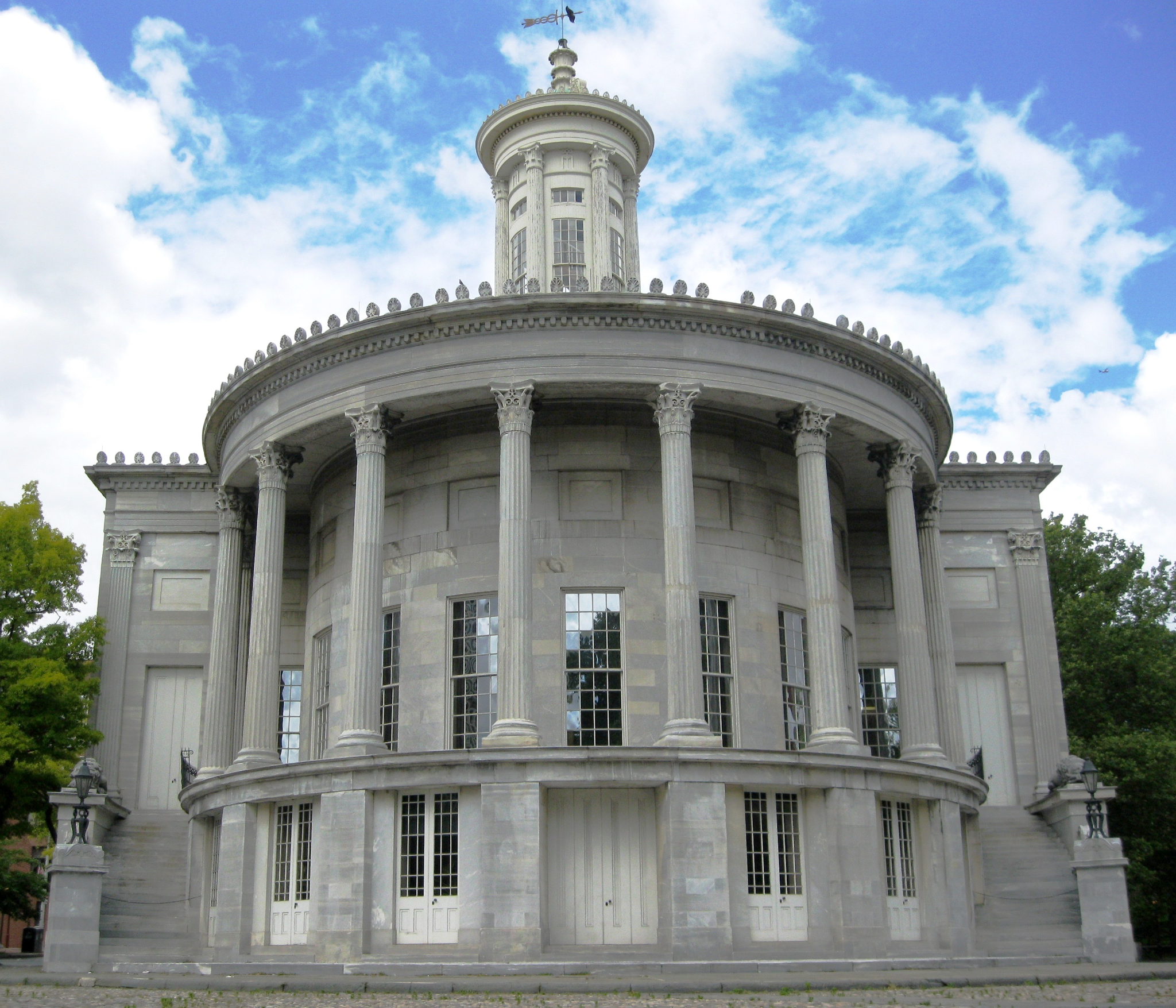
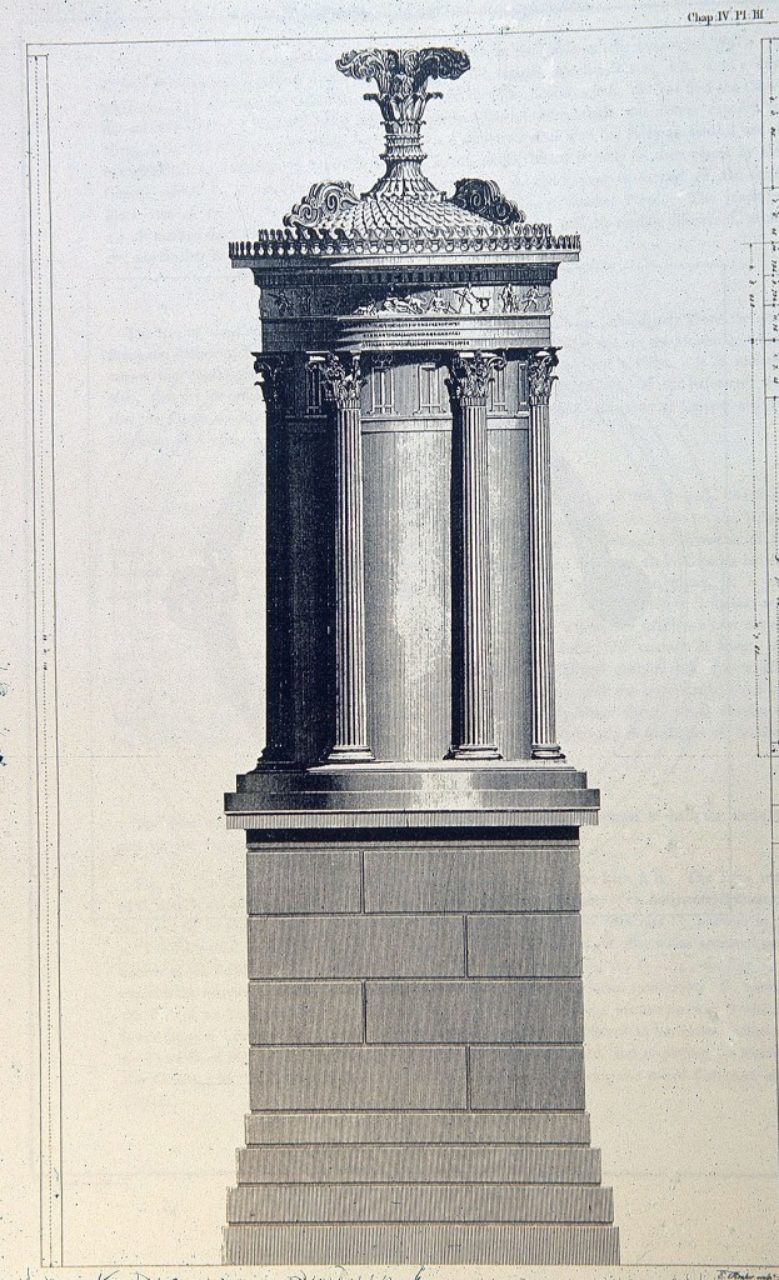
The Merchants' Exchange Building at 143 South Third Street in Philadelphia stands as the oldest surviving stock exchange building in the United States. Designed by architect William Strickland and constructed between 1832 and 1834, the building occupies a distinctive triangular lot bounded by Third, Walnut, and Dock Streets. Strickland, a former apprentice of Benjamin Henry Latrobe who had already designed the Second Bank of the United States in the Parthenon style, created a Greek Revival masterpiece that adapted brilliantly to its irregular site. The building's most celebrated feature is its semicircular eastern facade, where a screen of eight two-story fluted Corinthian columns and two Corinthian pilasters curves to follow the arc of Dock Street. The column capitals were modeled directly on the plates of Stuart and Revett's 'Antiquities of Athens' (1762), reproducing the Corinthian order of the Choragic Monument of Lysicrates, a fourth-century BC Athenian monument. Crowning the composition is a cylindrical lantern tower, itself an adaptation of the Lysicrates monument, which recalled the tower of the Royal Exchange in London. The lantern served a practical purpose: it contained a staircase providing telescopic views of a heliograph station across the Delaware River in New Jersey, which used a system of mirrors on signal towers to relay market information from New York in under five minutes. The building was declared a National Historic Landmark in 2001 and now serves as headquarters for Independence National Historical Park.
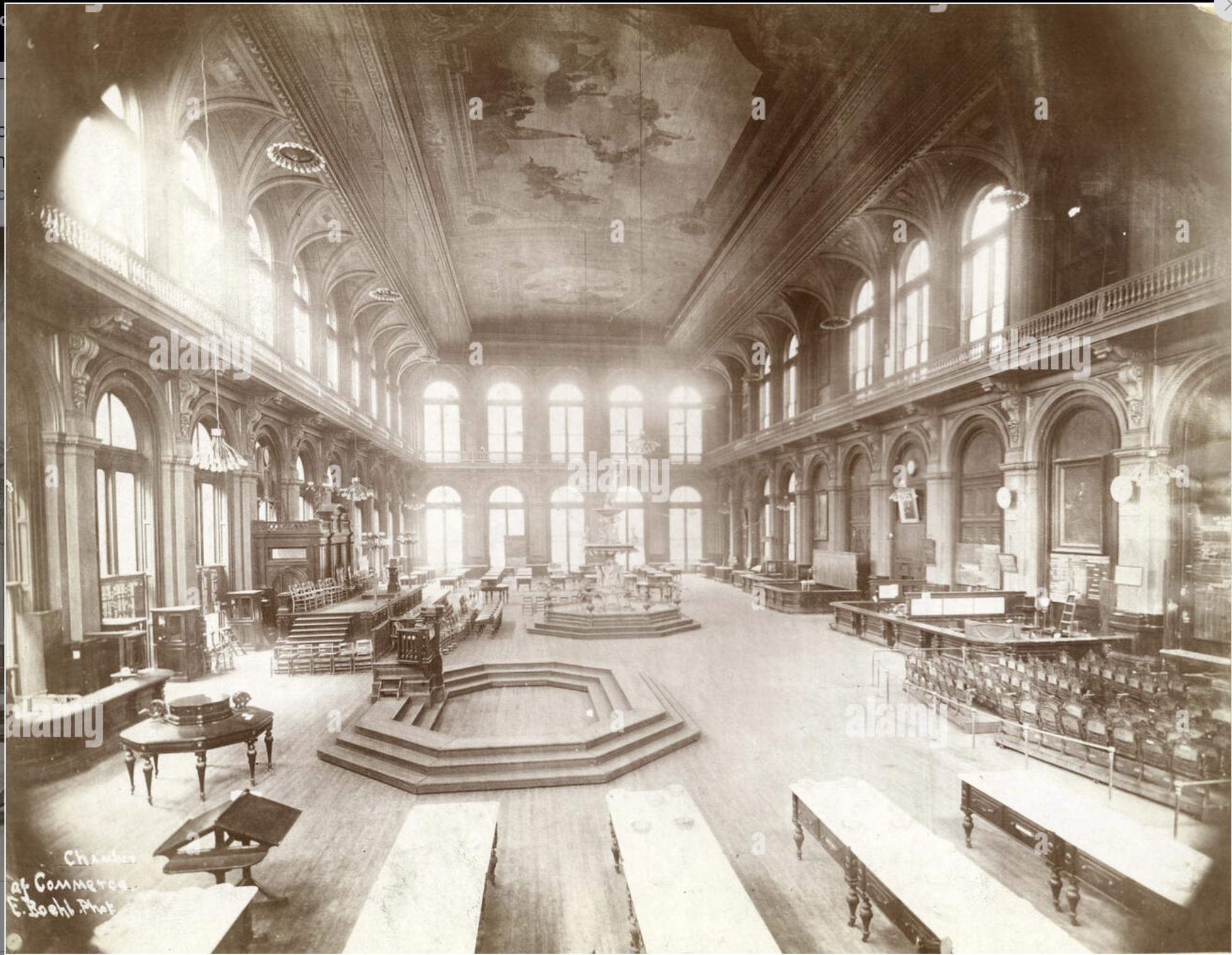
The interior of the Merchants' Exchange was richly ornamented. The principal Exchange Room, housed within the curved eastern volume of the building, featured a domed ceiling rising to the roof level, supported on marble columns, with a mosaic floor below. The walls and ceiling were decorated with frescoes executed by Nicola Monachesi (1795-1851), an Italian painter who emigrated to Philadelphia around 1831-1832 and is believed to have painted the earliest frescoes in the United States. The Corinthian capitals of the exterior colonnade represent a high achievement of architectural sculpture, faithfully reproducing the acanthus-leaf ornament of the ancient Choragic Monument of Lysicrates as documented in Stuart and Revett's measured drawings. The building became a celebrated subject for nineteenth-century artists and printmakers. John Caspar Wild (c. 1804-1846), a Swiss-born artist and lithographer, produced a hand-colored lithograph of the Exchange looking northeast from the intersection of Dock, Third, and Walnut Streets, published as part of his 'Views of Philadelphia and its Vicinity' series (1838). Multiple depictions of the Exchange survive in the collections of the Library of Congress, the Library Company of Philadelphia, and the Philadelphia Museum of Art.
The Merchants' Exchange Building occupies a commanding position in what was the commercial heart of early American Philadelphia. Its triangular site at Third, Walnut, and Dock Streets places it within steps of the nation's most consequential cluster of civic and financial buildings. Independence Hall, where the Declaration of Independence was signed in 1776 and the Constitution drafted in 1787, stands just two blocks to the west. Carpenters' Hall, meeting place of the First Continental Congress in 1774, lies one block north. The First Bank of the United States (1797) on Third Street, and the Second Bank of the United States (1824), designed by Strickland himself on Chestnut Street, both stand nearby — physical embodiments of Philadelphia's role as the cradle of American finance. The site's history is intimately tied to Dock Creek, a natural waterway that originally flowed from near Fourth Street southeast to the Delaware River, serving as the city's earliest commercial artery. By 1820 the entire creek had been covered and converted to a sewer, and its former course became Dock Street, the curving road that gives the Exchange its distinctive bent facade.
The Philadelphia Stock Exchange traces its origins to 1790, when twenty-four brokers organized the Board of Brokers at the Merchants' Coffee House (City Tavern) on Second and Walnut Streets, establishing the first organized securities exchange in the United States — two years before New York traders signed the Buttonwood Agreement in 1792. Philadelphia's preeminence in finance was rooted in its status as the nation's capital (1790-1800), the seat of the Continental Congress during the Revolution, and the headquarters of the two Banks of the United States. Alexander Hamilton's financial program of the early 1790s — funding the national debt, assuming state war debts, and chartering the First Bank of the United States — generated the securities that formed the core of early trading. The Board of Brokers moved into Strickland's newly completed Merchants' Exchange Building in 1834, gaining a permanent home worthy of the nation's leading financial marketplace. For nearly half a century, Philadelphia and New York were peer exchanges. Philadelphia's dominance rested on the Second Bank of the United States under Nicholas Biddle, but when Andrew Jackson vetoed the bank's recharter in 1832 and the institution failed after the Panic of 1837, the balance of financial power shifted decisively northward. New York's advantages compounded: the Erie Canal (completed 1825) made it the nation's commercial gateway, the electrical telegraph consolidated trading activity, and the Civil War vastly stimulated speculative securities trading on Wall Street.
The earliest securities traded on the Philadelphia Board of Brokers were instruments of national and state debt — the government bonds, notes, and bills that Alexander Hamilton's funding program of 1790 had created to consolidate and stabilize the Revolutionary War debt. Alongside public debt, the exchange traded shares in the pioneering financial institutions headquartered in Philadelphia: the Bank of North America (chartered 1781, the nation's first commercial bank), the First Bank of the United States (chartered 1791), and later the Second Bank of the United States (chartered 1816). Insurance company shares were also actively traded, notably those of the Insurance Company of North America, founded in Philadelphia in 1792 as one of the first stock insurance companies in America. As the economy expanded in the early nineteenth century, the exchange broadened its listings to include the canal and internal improvement companies — the Schuylkill Navigation Company, the Chesapeake and Delaware Canal, and the Lehigh Navigation — all of which used capital raised through the exchange to build waterways carrying anthracite coal and agricultural products. By the 1830s and 1840s, railroad securities began to dominate trading, including shares in the Philadelphia and Reading Railroad and the Pennsylvania Railroad.