Palermo Arab-Norman Markets
Palermo, Italy · Established c. 9th century CE
This site requires authorization to access.
To request access, contact
william.goetzmann@yale.edu
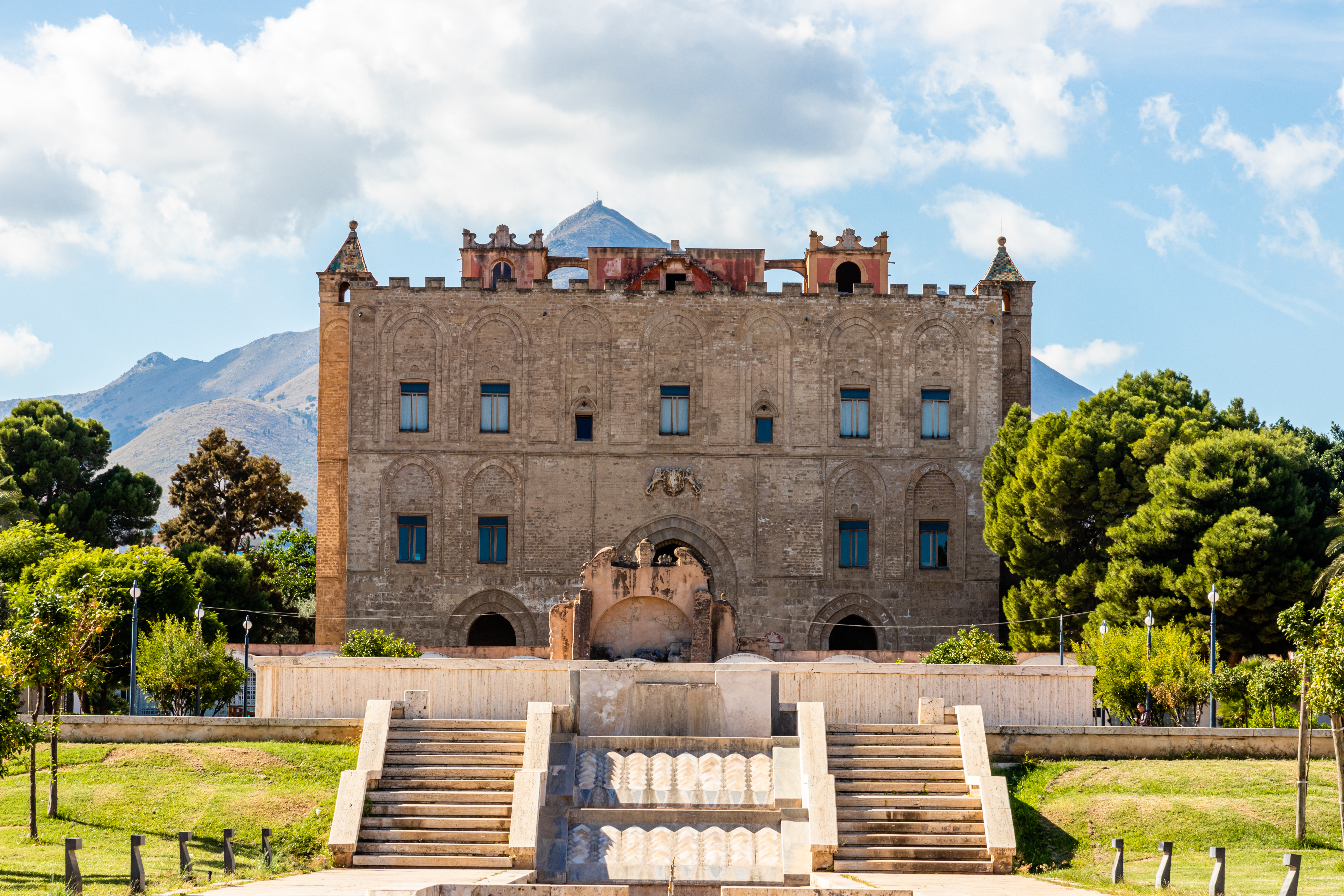
Palermo’s historic markets preserve the most complete surviving example of the Islamic suq tradition in Europe. The oldest is Ballarò, whose name scholars have traced to Arabic origins — possibly from the term Balhara, referring to an Indian trading village from which spices were sourced, or from segel-ballareth, meaning ‘place of the fair,’ as discussed in local Sicilian historiography and by the tenth-century geographer Ibn Hawqal, who described the agricultural environs of Palermo in his Surat al-Ard (977). The Vucciria, established in the thirteenth century near the port of La Cala when Genoese, Pisan, and Venetian merchants settled the area, takes its name from the Old French boucherie (butcher’s shop), reflecting the Angevin linguistic influence on post-Norman Palermo. The Capo market derives its name from the Latinized Arabic toponym Caput Seracaldi. Together with the smaller Borgo Vecchio, these markets occupy narrow medieval streets that preserve the ninth-century Islamic urban plan — a labyrinthine network of covered lanes, blind alleys, and open piazzas that Alexander Metcalfe has described as reflecting the persistence of Arabic spatial organization well into the Norman period (Muslims and Christians in Norman Sicily, Routledge, 2003). The broader Arab-Norman architectural fabric surrounding the markets was inscribed as a UNESCO World Heritage Site in 2015 under the title ‘Arab-Norman Palermo and the Cathedral Churches of Cefalù and Monreale,’ encompassing nine structures that exemplify the cultural syncretism of twelfth-century Sicily. The Palazzo dei Normanni (Norman Palace), built on the city’s highest point above a ninth-century Aghlabid fortification and expanded by Roger II after 1130, served as the administrative center of the kingdom and housed the royal dīwān, the Arabic-modeled fiscal bureaucracy that Jeremy Johns has analyzed in Arabic Administration in Norman Sicily: The Royal Dīwān (Cambridge, 2002). The Cathedral of Palermo, founded in 1185 on the site of a converted mosque, embodies the layered architectural history of the city. La Zisa, whose name derives from the Arabic al-ʿAzīza (‘the Splendid’), was begun under William I around 1165 and completed under William II by 1180; its rectangular plan, Sala della Fontana with muqarnas vaulting, and sophisticated hydraulic systems reflect the pleasure-palace tradition of Fatimid Egypt. La Cuba, built by William II in 1180 as a pavilion within the royal Genoardo park, displays blind arcades and muqarnas ornamentation characteristic of North African models.
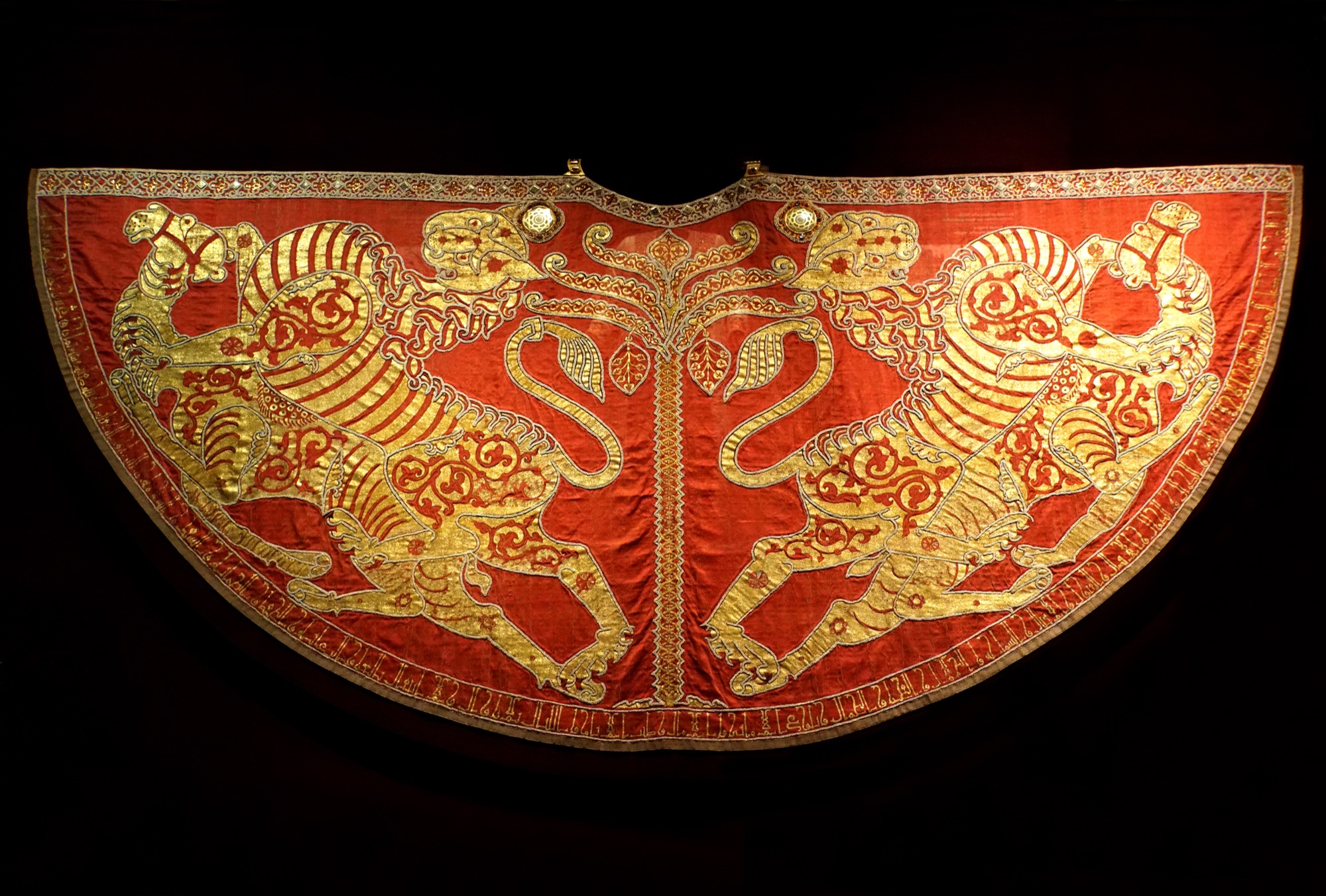
The artistic legacy of Arab-Norman Palermo represents what William Tronzo has called the most remarkable example of multicultural artistic synthesis in medieval Europe (The Cultures of His Kingdom: Roger II and the Cappella Palatina in Palermo, Princeton University Press, 1997). The Cappella Palatina, consecrated in 1140 within the Norman Palace, is the supreme monument of this tradition: its nave ceiling is adorned with painted wooden muqarnas executed by Fatimid-trained craftsmen from North Africa or Egypt, while its walls blaze with Byzantine gold-ground mosaics depicting christological cycles, and its lower registers display Islamic geometric interlace patterns in opus sectile. Tronzo demonstrated that the muqarnas ceiling was not merely decorative quotation from a foreign culture but an integral component of a royal program devised under Roger II to project his sovereignty over Latin, Greek, and Islamic subjects alike. The muqarnas panels of the Cappella Palatina ceiling incorporate painted scenes of courtly life — musicians, drinkers, dancers, hunters, and animals — that derive from the iconographic repertoire of Fatimid Egypt, as studies by Jeremy Johns and others at Oxford’s Khalili Research Centre have shown. At La Zisa, the Sala della Fontana preserves mosaic roundels depicting palm trees, peacocks, and archers that blend Byzantine and Islamic visual traditions within a framework of muqarnas vaulting. Roger II’s multicultural court also produced the royal mantle of 1133—1134, a semicircular silk cape embroidered with gold thread depicting two lions attacking camels, bearing a Kufic Arabic inscription invoking blessings on the king — now in the Kunsthistorisches Museum, Vienna. The Geniza documents from the Cairo synagogue storeroom, exhaustively studied by S. D. Goitein in A Mediterranean Society (University of California Press, 1967–1993), provide extensive evidence of the cultural and artistic exchange flowing through Palermo, including references to dyed textiles and decorated goods traded between Sicily, Egypt, and the Maghreb. In the modern period, the Sicilian painter Renato Guttuso memorialized the Vucciria market in his monumental canvas La Vucciria (1974), a three-by-three-meter oil painting of raw, visceral realism now housed at Palazzo Chiaramonte-Steri, University of Palermo.
Palermo occupies a position of extraordinary strategic importance on the northern coast of Sicily, at the center of the Mediterranean’s principal east-west and north-south maritime routes. The city’s natural harbor, La Cala, sheltered between the mouths of the Kemonia and Papireto rivers, made it a critical node in maritime trade networks from Phoenician times onward. Under Arab rule from 831 to 1072, Palermo — known as Bal’harm or Panormus — became one of the largest and most cosmopolitan cities in the Islamic world. The tenth-century Iraqi geographer Ibn Hawqal, who visited the city around 950, described it in his Surat al-Ard as possessing over three hundred mosques and a population that modern scholars estimate at approximately 100,000 to 350,000 — rivaling contemporary Constantinople and Córdoba. David Abulafia, in The Great Sea: A Human History of the Mediterranean (Oxford University Press, 2011), situated Palermo within the broader pattern of Mediterranean commercial cities that drew their vitality from the intersection of Islamic, Byzantine, and Latin trading spheres. The Islamic city was organized around a series of specialized suqs radiating from the central congregational mosque (later the site of the cathedral), each devoted to particular trades — a spatial arrangement that the markets of Ballarò, Vucciria, and Capo still preserve in attenuated form. After the Norman conquest of 1072, Roger I and subsequently Roger II maintained and even expanded the Islamic commercial infrastructure, permitting Muslim, Jewish, and Christian merchants to operate side by side. The Vucciria quarter developed its commercial character in the thirteenth century precisely because of its proximity to La Cala, where Genoese, Pisan, and Venetian traders established warehouses and fondaci (merchant lodges). Annliese Nef, in Conquérir et gouverner la Sicile islamique aux XIe et XIIe siècles (École française de Rome, 2011), has emphasized the continuity of Islamic administrative and commercial institutions under Norman rule, including the fiscal structures that taxed market transactions through the dīwān al-ma’mūr.
The Arab conquest of Sicily began with the Aghlabid invasion from Ifriqiya (modern Tunisia) in 827 and was consolidated with the fall of Palermo in 831. Under the Kalbid dynasty (948–1053), the island was administered as a semi-autonomous emirate linked to the Fatimid caliphate, and Palermo became the capital of a prosperous Muslim province. The Norman adventurer Roger de Hauteville began the Christian reconquest in 1061, and Palermo fell to his forces in January 1072. Roger II, crowned King of Sicily in 1130, created a remarkably tolerant multicultural administration that employed Arabic, Greek, and Latin as official languages of the court, as Hubert Houben documented in Roger II of Sicily: A Ruler between East and West (Cambridge University Press, 2002). Jeremy Johns has demonstrated that the Norman kings did not simply inherit their Arabic administrative apparatus but consciously restructured it on the model of Fatimid Egypt, using Arabic-speaking bureaucrats in the royal dīwān to manage taxation, land surveys, and commercial regulation (Arabic Administration in Norman Sicily, Cambridge, 2002). The Cairo Geniza documents provide uniquely detailed evidence of Palermo’s commercial life during this transitional period. S. D. Goitein, in his foundational article ‘Sicily and Southern Italy in the Cairo Geniza Documents’ (Archivio Storico per la Sicilia Orientale, vol. 67, 1971), and in Letters of Medieval Jewish Traders (Princeton University Press, 1973), published merchant correspondence documenting the pepper trade flowing through Sicilian ports, including letters from Mazara del Vallo dating to the 1060s that detail consignments of pepper, flax, and other commodities shipped along the al-Mahdiyya–Palermo trunk route connecting Fatimid Ifriqiya with Sicily. Shlomo Simonsohn’s comprehensive Between Scylla and Charybdis: The Jews in Sicily (Brill, 2011) drew on some 40,000 archival records to reconstruct the Jewish community’s role in commerce, agriculture, and international trade under Muslim and Christian rule alike. The reign of Frederick II (1198–1250) marked the beginning of the end for Islamic Palermo: the emperor deported the remaining Muslim population of Sicily to the colony of Lucera in Apulia in the 1220s and 1230s, extinguishing two centuries of coexistence that Metcalfe has characterized as the gradual ‘end of Islam’ on the island.
The markets of Arab-Norman Palermo served as distribution points for commodities flowing through the central Mediterranean’s most important trade networks. Pepper and Eastern spices constituted the most valuable long-distance trade, documented in the Cairo Geniza letters studied by S. D. Goitein in A Mediterranean Society (University of California Press, 1967–1993) and Letters of Medieval Jewish Traders (Princeton, 1973). Merchant correspondence from Mazara del Vallo and other Sicilian ports records consignments of pepper, cinnamon, and aromatics transshipped from Egypt and Ifriqiya to points throughout the western Mediterranean. The suq system organized trade by commodity specialty: the Ballarò market concentrated on foodstuffs and spices, the Vucciria (from French boucherie) on meat and fish owing to its proximity to the port, and the Capo on textiles and dry goods. Grain was Sicily’s most important bulk export: the island had served as the ‘breadbasket’ of the Roman Republic and Empire, and under Arab and Norman rule Sicilian wheat continued to feed populations across the Mediterranean, as documented in the grain trade studies assembled by David Abulafia. The Arab agricultural revolution, as theorized by Andrew Watson in Agricultural Innovation in the Early Islamic World (Cambridge University Press, 1983), introduced new crops to Sicily including sugarcane, cotton, citrus fruits, and mulberry trees for silk production — all of which became important trade commodities in Palermo’s markets. Sicilian silk, woven in the royal tiraz workshops of the Norman Palace (the nobiles officinae), was among the most prized luxury textiles in medieval Europe, as recent scholarship by Nicola Ferraioli has traced through Geniza documentation (‘Weaving Connections: Sicilian Silk in the Medieval Mediterranean,’ Textile History, 2021). Timber from Sicily’s interior forests was exported to North Africa, where deforestation had created chronic shortages. The island’s position at the crossroads of the al-Mahdiyya–Palermo trade axis meant that Palermo’s markets also handled North African goods including hides, coral, olive oil, and enslaved persons, the latter constituting a significant component of Mediterranean commerce that Abulafia discussed in The Great Sea (2011).