New Orleans Stock Exchange
New Orleans, USA · Established 1875

This site requires authorization to access.
To request access, contact
william.goetzmann@yale.edu
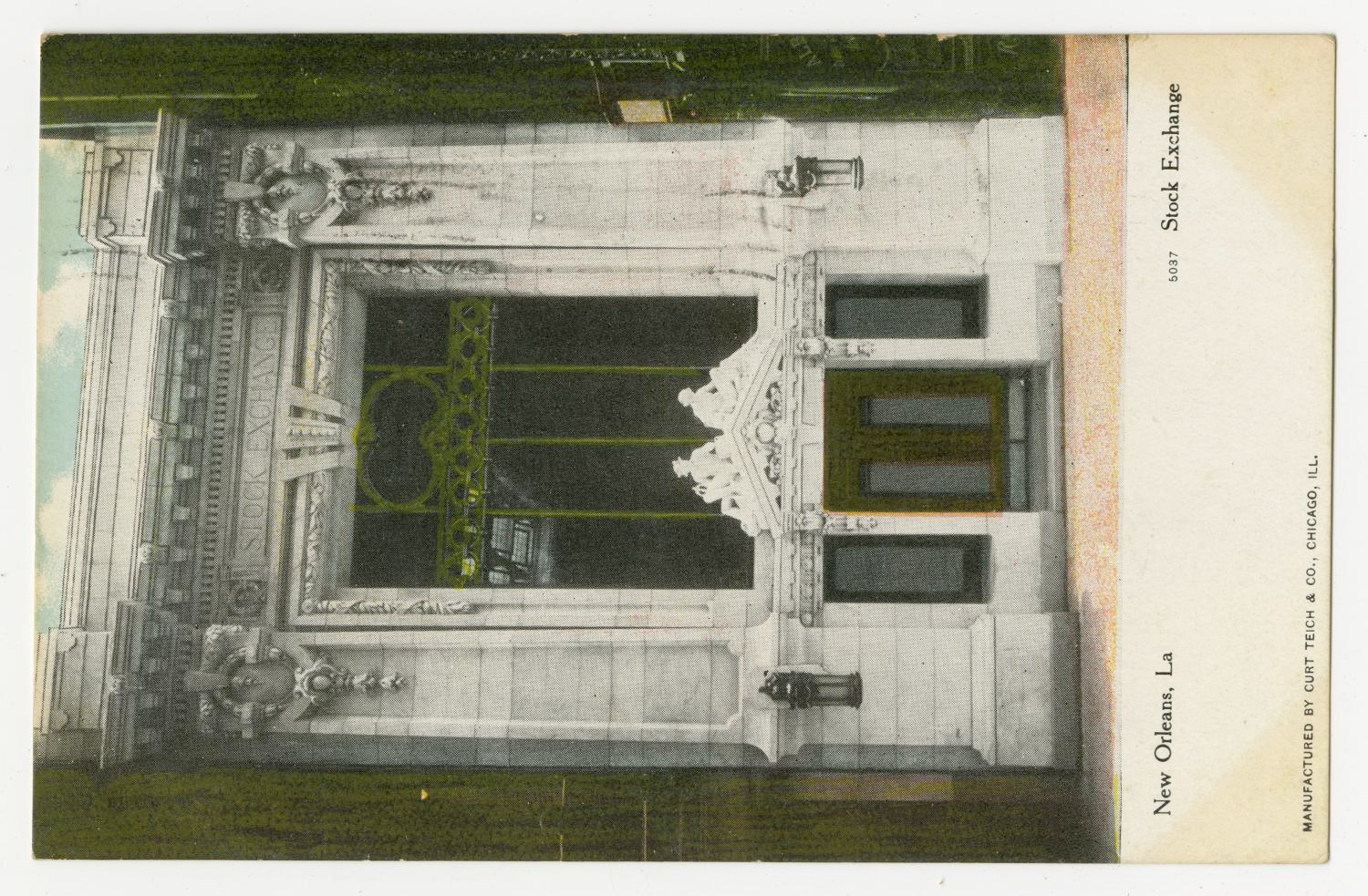
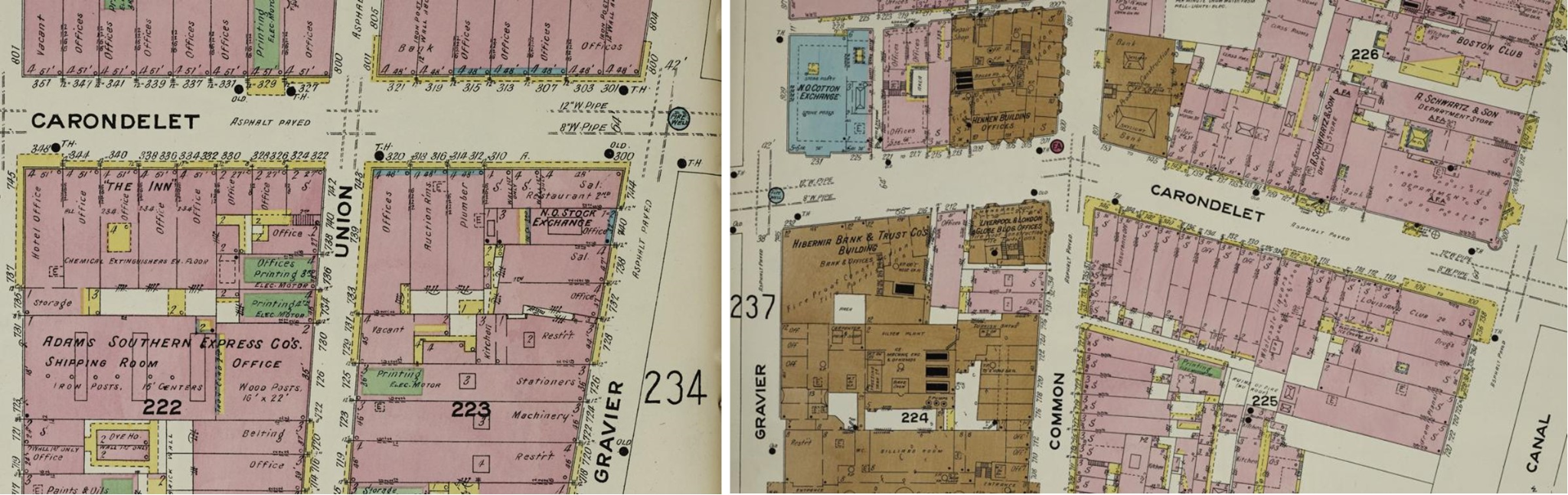
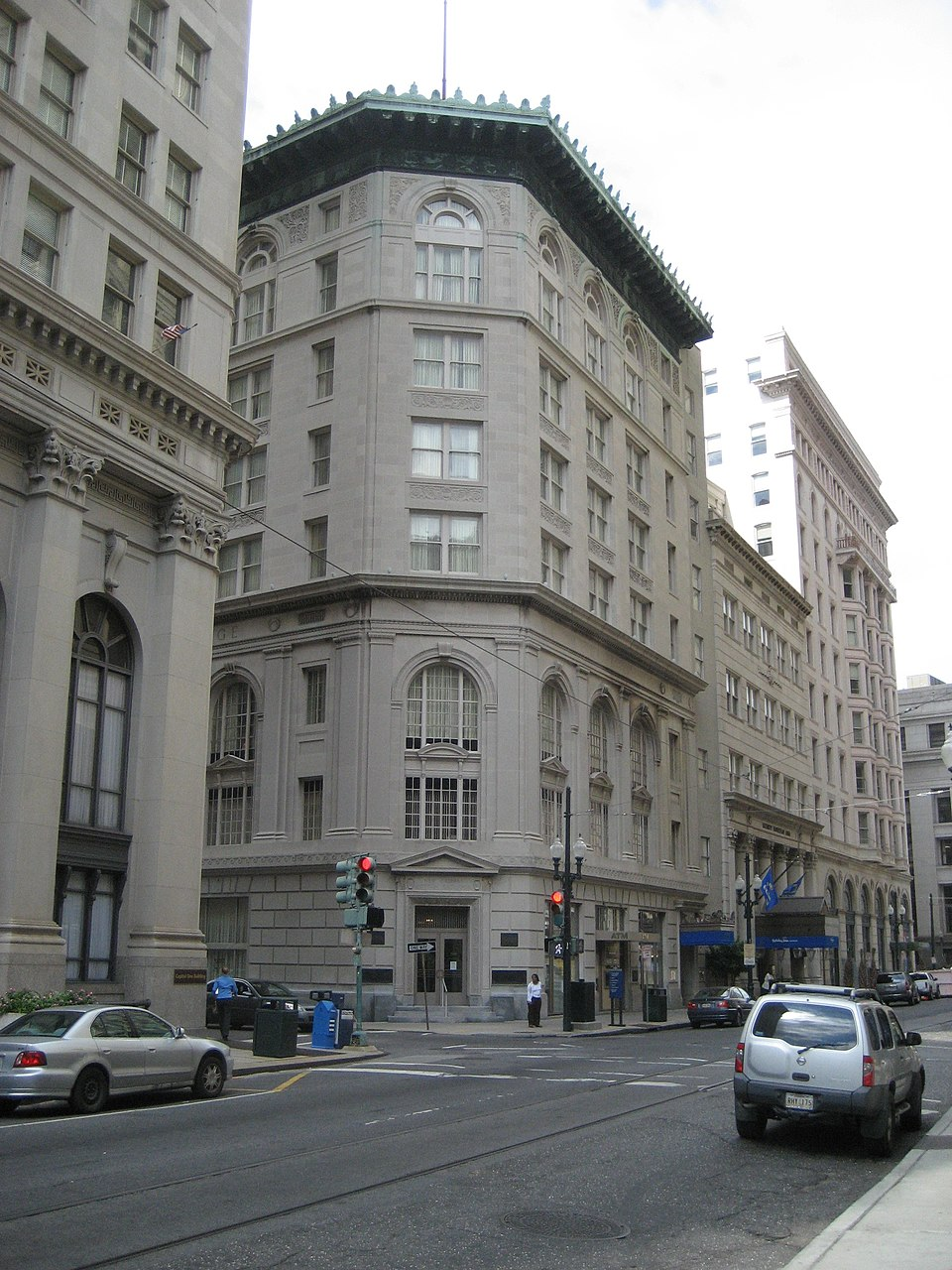
The New Orleans Stock Exchange occupied a succession of quarters that traced the evolution of the city’s financial district from informal counting rooms to purpose-built marble halls. Organized in 1875 among the securities brokers clustered along Gravier Street in the heart of what contemporaries called “the Wall Street of New Orleans,” the Exchange initially conducted business in rented offices within the dense commercial grid bounded by Camp, Carondelet, Gravier, and Poydras Streets. The neighborhood already housed the Cotton Exchange (founded 1871), the Produce Exchange (1880), and the Louisiana Sugar Exchange (1883), so the Stock Exchange took its place within a broader ecology of specialized trading institutions that had superseded the all-purpose Merchants’ Exchange model of the antebellum era. The Exchange’s most significant architectural moment came on September 4, 1906, when it opened its new building at 740 Gravier Street. A Library of Congress research guide describes the 1906 building as “the most expensive and artistic structure of its size in the city.” The facade was clad in marble, with double mahogany entrance doors surmounted by marble allegorical figures representing Industry and Commerce. The interior featured mahogany furnishings, a marble fireplace, two gilt brass chandeliers fitted with electric lights, and three telephone booths—a nod to communications technology transforming securities trading nationwide. Membership was capped at seventy seats, with an additional sixty-one visiting members permitted access to the trading floor. The value of a membership share had risen from one hundred dollars in 1875 to over six thousand dollars by 1906, reflecting both the Exchange’s growing prestige and the expansion of the regional securities market. The building stood on Gravier Street for more than half a century until the Exchange’s dissolution and merger with the Midwest Stock Exchange in 1959.
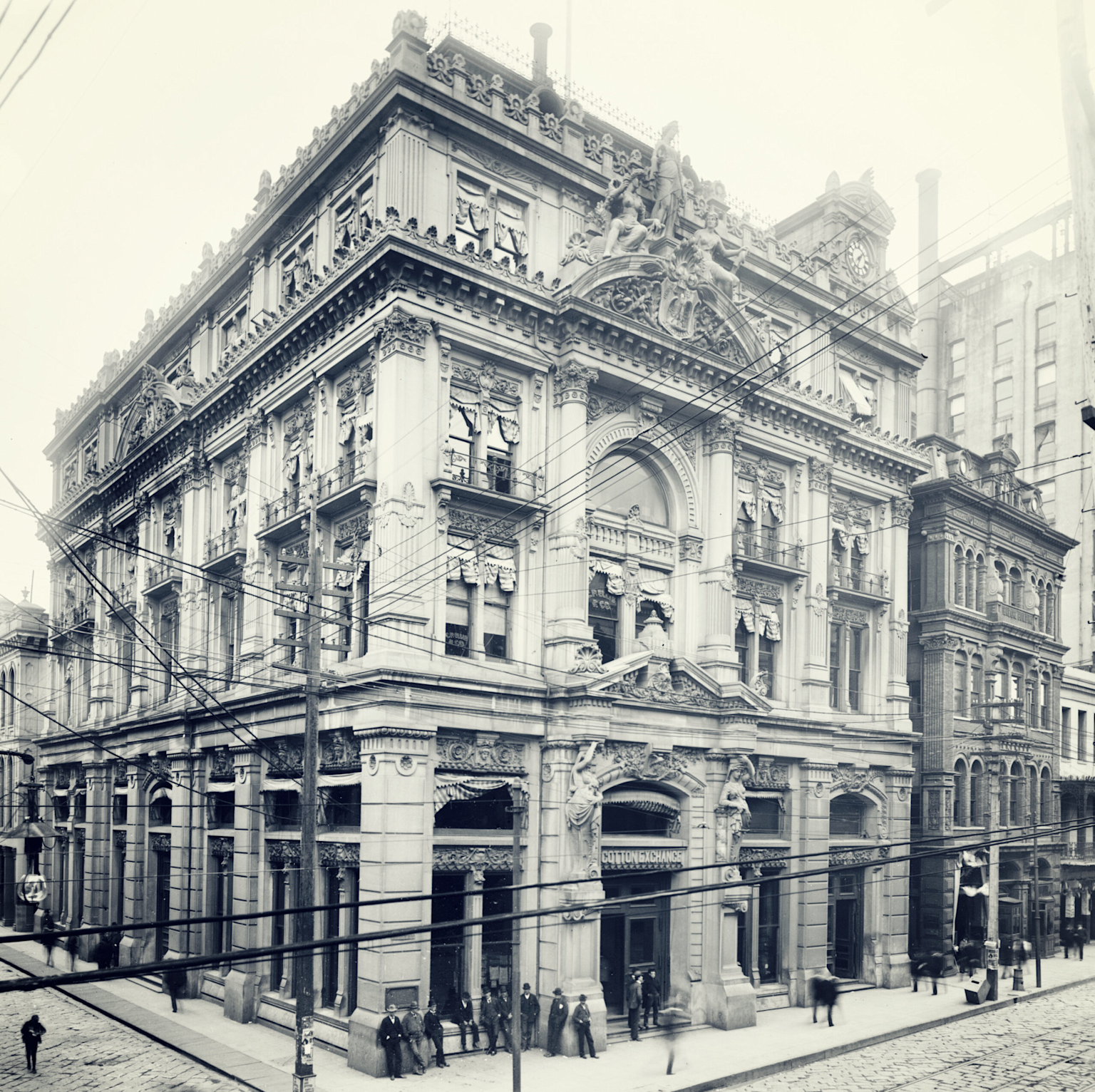
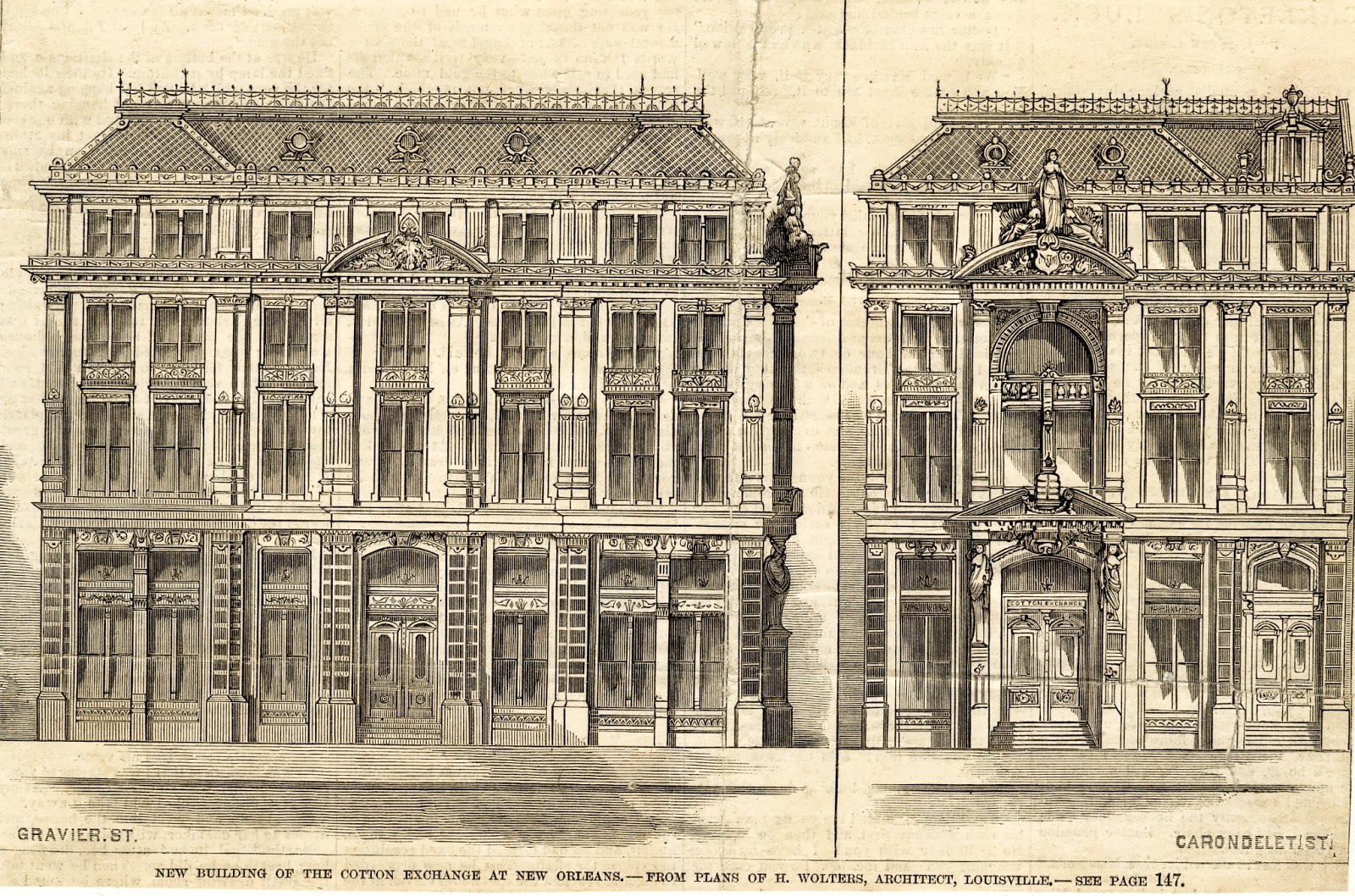
The decorative program of the New Orleans Stock Exchange’s 1906 building at 740 Gravier Street projected the gravitas of a mature financial institution through architectural ornament and material splendor. The marble facade bore sculptural allegories of Industry and Commerce, rendered with specificity linking the Exchange to the productive economy of the Gulf South. Behind the double mahogany doors, the interior was organized around a trading floor furnished entirely in mahogany, anchored by a marble fireplace serving as both functional hearth and emblem of mercantile permanence. Two gilt brass chandeliers with electric globes blended Gilded Age taste for ornamental metalwork with the modernity of electric light—a visual rhetoric announcing the Exchange’s participation in the technological transformation of American finance. The visual culture of New Orleans’s financial spaces extended beyond the Stock Exchange proper. The neighboring Cotton Exchange’s 1883 building, designed by the German-trained architect Henry Wolters, had set an extravagant standard: its facade featured two monumental bare-breasted caryatids flanking the entrance, with three allegorical statues of Agriculture, Commerce, and Industry crowning the roofline. As documented by the Preservation Resource Center of New Orleans, when that building was demolished around 1920, the caryatids were salvaged and relocated to the Weiblen Marble and Granite Works, where they survive today. The broader visual context included Edgar Degas’s celebrated painting A Cotton Office in New Orleans (1873), which Marilyn R. Brown analyzed in Degas and the Business of Art (Penn State University Press, 1994) as “one of the most significant images of nineteenth-century capitalism.” Degas depicted his uncle Michel Musson’s cotton brokerage on Carondelet Street in meticulous naturalistic detail, reminding us that the decorative austerity of the working exchange floor could itself become an object of aesthetic contemplation.
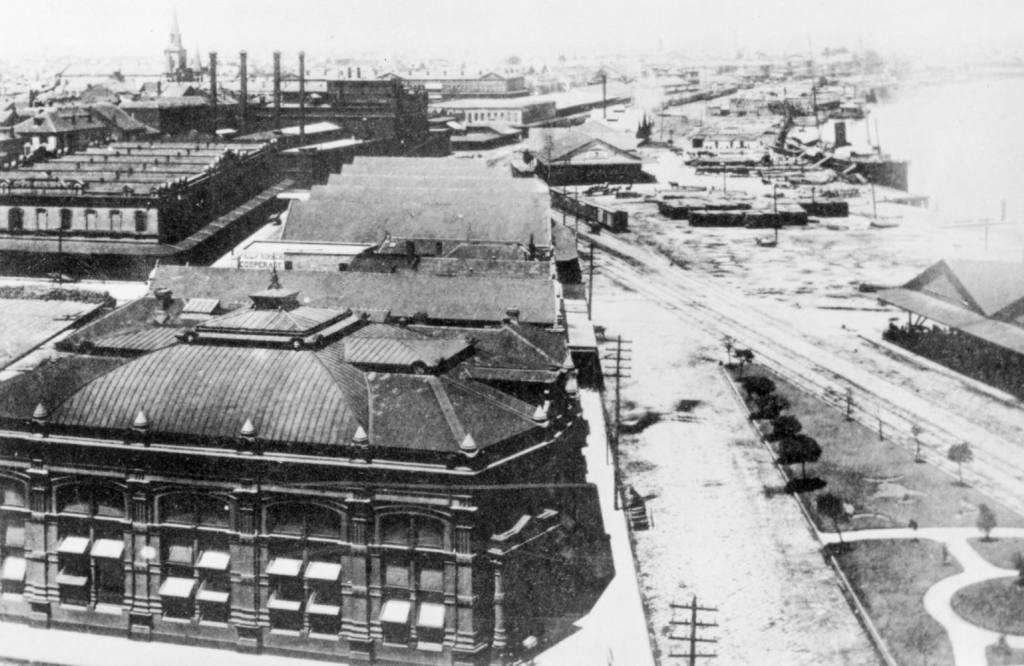
The New Orleans Stock Exchange at 740 Gravier Street occupied a position at the center of one of the most distinctive financial districts in the United States, shaped by the intersection of the Mississippi River port, the cotton trade, and the cultural fault line of Canal Street. As Scott P. Marler demonstrates in The Merchants’ Capital: New Orleans and the Political Economy of the Nineteenth-Century South (Cambridge University Press, 2013), the city’s globally oriented mercantile community represented a qualitatively unique form of wealth accumulation—“merchant capital”—rooted in extracting profit from exchange processes rather than direct production. The financial axis ran along Carondelet Street from Canal to Poydras, with secondary arteries on Gravier, Camp, and St. Charles. Canal Street functioned as the “neutral ground” between French-speaking Creole society of the Vieux Carré and the Anglo-American commercial world of the Faubourg Ste. Marie. After the Louisiana Purchase of 1803, Anglo-American merchants colonized the Faubourg, establishing banks on Camp Street and erecting monuments like the Gallier and Dakin Merchants’ Exchange on Royal Street (1836), whose spectacular rotunda served as a general-purpose commercial hall. By 1854, roughly ninety percent of the city’s cotton firms were clustered within a four-by-four-block area centered on the Carondelet-Gravier intersection. As Walter Johnson argues in River of Dark Dreams: Slavery and Empire in the Cotton Kingdom (Harvard University Press, 2013), the Mississippi Valley cotton trade made antebellum New Orleans one of the wealthiest cities in the Americas, with some thirty-five hundred vessels annually carrying cargo worth $220 million through its port. The Stock Exchange, Cotton Exchange, Sugar Exchange, Hibernia Bank, Whitney Bank, and the Federal Reserve’s New Orleans branch all occupied addresses within this dense financial ecosystem.
The New Orleans Stock Exchange was organized in 1875, a decade after the Civil War devastated the South’s financial infrastructure, at a moment when the city’s mercantile elite was rebuilding its position in national capital markets. Among the founders was Isidore Newman, a German-Jewish immigrant who prospered in cotton brokerage and stock speculation and later served as the Exchange’s president. The Exchange emerged within a broader institutional landscape including the Cotton Exchange (1871), the Board of Trade (1880), and the Louisiana Sugar Exchange (1883). As early as 1880, aggregate stock sales reached $7,891,300, and by 1887 trading hours were extended. The move to the marble-and-mahogany building at 740 Gravier Street in 1906 marked institutional maturity, with membership capped at seventy seats valued at over six thousand dollars each. The outbreak of World War I in August 1914 forced the Exchange to close temporarily, contributing to the suicide of former president Eugène Chassanoil at the Exchange premises. By 1922, the Exchange operated alongside forty-five investment firms, including Fenner and Beane (founded in New Orleans in 1916), which became the second-largest brokerage in the United States before merging with Merrill Lynch in 1941. As John Smith Kendall recorded in History of New Orleans (1922), the city’s banking resources by 1920 reached over $300 million with bank clearings of $3.3 billion. But consolidation forces overtook the Exchange: in 1959, the board voted to merge with the Midwest Stock Exchange. As revealed in Standard Fruit and Steamship Co. v. Midwest Stock Exchange (178 F. Supp. 669, N.D. Ill. 1959), the transaction was technically a dissolution—the Midwest did not acquire assets or assume liabilities, and selected only the most valuable securities formerly traded in New Orleans. The dissolution ended eighty-four years of organized securities trading in the Gulf South.
The securities listed on the New Orleans Stock Exchange reflected the distinctive economic profile of the Gulf South: commodity agriculture, maritime commerce, extractive industry, and the financial institutions serving them. From its founding in 1875, the Exchange provided a regional marketplace for shares in the banks financing cotton and sugar trades—institutions like Hibernia National Bank (founded 1870), Whitney National Bank (1883), and Citizens’ Bank of Louisiana, which the Historic New Orleans Collection documents was chartered in 1833 with $12 million capitalization, the largest bank in the nation after the Second Bank of the United States. Insurance companies and shares of railroads connecting New Orleans to its agricultural hinterland also traded on the Exchange. The discovery of oil at Jennings, Louisiana, in September 1901—just nine months after Spindletop—inaugurated Louisiana’s petroleum era, and oil and gas securities became increasingly prominent, as firms like Louisiana Land and Exploration Company (1926) established headquarters in the Central Business District. Public utilities represented another major category: New Orleans Public Service and Gulf States Utilities were both listed. Retail corporations with deep local identification—D. H. Holmes (1842) and Maison Blanche (1897)—also traded, giving investors a stake in the city’s commercial identity. By the 1950s, the most consequential listing was Standard Fruit and Steamship Company, whose shares were, as the federal court noted in Standard Fruit v. Midwest Stock Exchange (1959), “admittedly the most important” securities on the Exchange. Municipal bonds and U.S. government securities also figured in the Exchange’s business, alongside certain foreign government obligations—a vestige of New Orleans’s historic role as the most internationally connected port in the American South.