Nairobi Securities Exchange (NSE)
Nairobi, Kenya · Established 1954
This site requires authorization to access.
To request access, contact
william.goetzmann@yale.edu
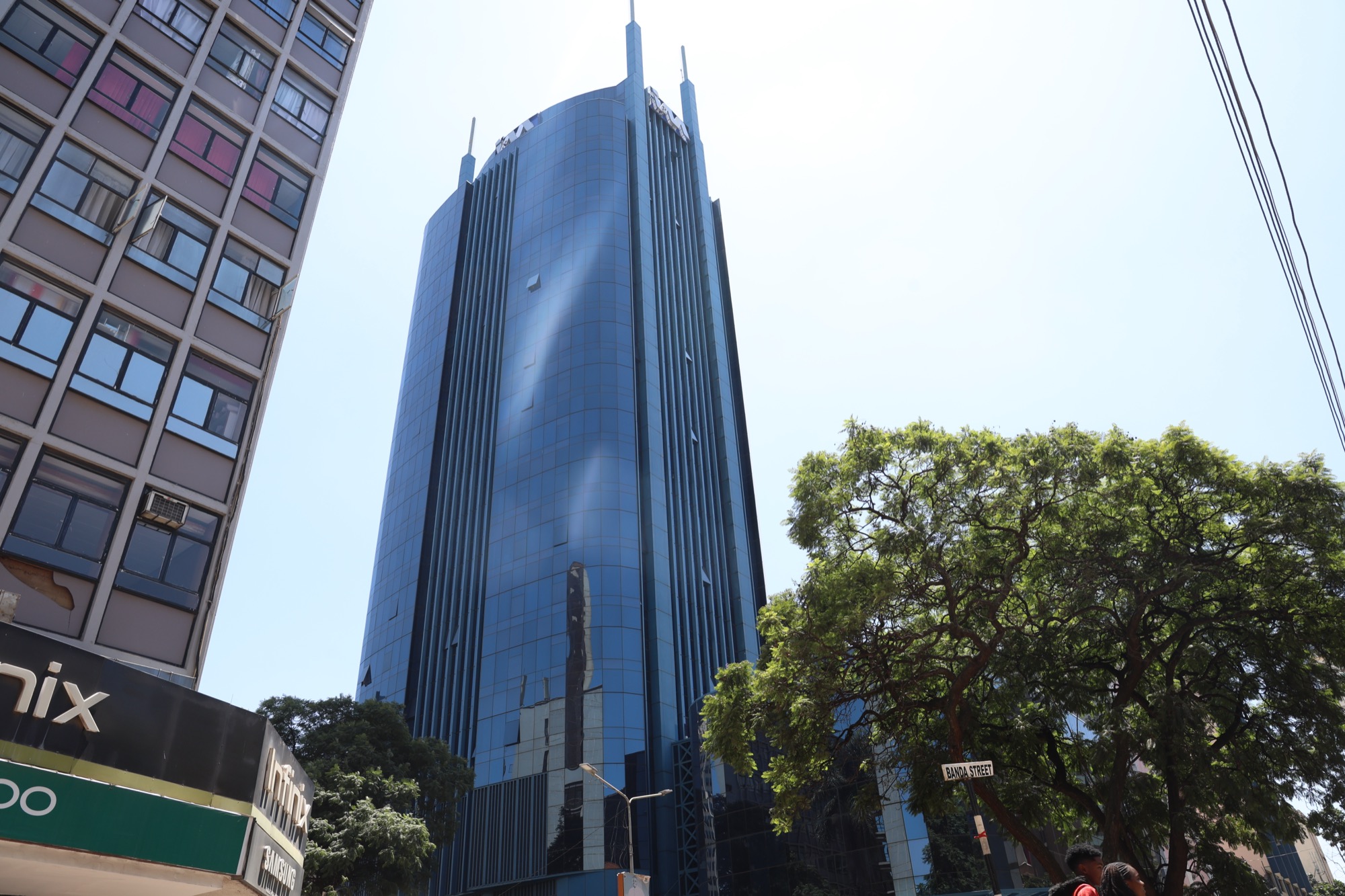
The Nairobi Securities Exchange has occupied a succession of buildings that trace the arc of Kenya’s transformation from colonial outpost to independent African nation. The earliest share dealing in Kenya took place not in a purpose-built exchange but at the Exchange Bar (originally the Long Bar) inside the Stanley Hotel on what is now Kenyatta Avenue. Established in 1902 by Mayence Bent as the Victoria Hotel, the Stanley was a modest two-storey wooden structure that became Nairobi’s premier social hub for the settler community. From the 1920s onward, accountants, auctioneers, estate agents, and lawyers gathered there informally to exchange share prices over coffee, as Rose Ngugi documented in Development of the Nairobi Stock Exchange: A Historical Perspective (KIPPRA Discussion Paper No. 27, 2003). This gentlemen’s agreement arrangement persisted for decades, with no formal trading floor or regulatory framework. When the Nairobi Stock Exchange was formally constituted in 1954, trading continued from the Long Bar until 1991. In that year, the NSE adopted a floor-based open outcry system housed in the IPS Building on Kimathi Street. The IPS Building, designed by the Italian firm McMillan Griffis and Mileto and constructed between 1965 and 1967 by PDM (K) Ltd as part of the Aga Khan Development Network’s Industrial Promotion Services, was Nairobi’s tallest structure at the time of its inauguration by President Jomo Kenyatta in March 1967. Its twelve storeys rise to approximately 50 meters, offering Grade A office space that symbolized post-independence economic ambition. In July 1994, the NSE relocated to the first floor of the newly completed Nation Centre on Kimathi Street. The Nation Centre was designed by the internationally acclaimed Danish architect Henning Larsen, whose concept and outline design were then developed by PLANNING Kenya, with construction by PDM Holdings between 1992 and 1997. The building rises 73 meters as twin cylindrical towers of seven floors each atop a ten-floor podium, fronted by a colonnade above three basement parking levels, encompassing approximately 18,000 square meters of lettable space. The concave-convex interplay between the podium and the towers introduces a baroque dynamism into the Nairobi skyline. In June 2013, the NSE moved to its current headquarters at The Exchange, 55 Westlands Road, a five-storey purpose-built facility outside the traditional central business district, signaling the exchange’s modernization beyond the colonial-era city center.
The decorative program of the Nation Centre, the NSE’s home from 1994 to 2013, represents a remarkable synthesis of contemporary architecture and traditional East African visual culture. Henning Larsen’s design deliberately incorporated African symbolic elements into a modern commercial structure. The most striking feature, documented by the Archnet digital library of the Aga Khan Trust for Culture, is the building’s resemblance to a Maasai face: the twin cylindrical towers evoke the horns of a traditional East African ceremonial mask, while the large windows on the lower floors serve as the mask’s “eyes,” the central red communication mast functions as the “nose,” and the wide entrance canopy reads as the “mouth.” Most prominently, an elongated vertical element placed between the twin towers and descending to just above the entrance represents the enkishili, the traditional Maasai headband, which is visible throughout Nairobi’s skyline. As Manuel Herz, Ingrid Schröder, and Hans Focketyn noted in African Modernism: The Architecture of Independence (Park Books, 2015), Kenya’s post-independence commercial buildings sought to merge modernist design with indigenous cultural references, positioning themselves as bridges between heritage and modernity. The Nation Centre’s facade further incorporates horizontal black and white stripes, originally symbolizing printed newspapers for its primary tenant, the Nation Media Group, while horizontal concrete louvres mask openable windows in the podium section. The building’s previous home, the IPS Building, was itself a significant work of postcolonial commercial architecture; its inauguration in 1967 was described by IPS representatives as “a symbol of faith placed in the country’s future by the Ismaili Community.” The NSE’s current premises at The Exchange on Westlands Road adopt a more restrained contemporary commercial idiom. The earlier trading venues, particularly the Stanley Hotel’s Exchange Bar, preserved a distinct colonial aesthetic; the bar retains its historical name as a reminder of the share dealing that originated there in the 1920s. Artistic depictions of Nairobi’s commercial architecture appear in the broader photographic documentation by Iwan Baan and Alexia Webster commissioned for the African Modernism project.
Nairobi’s emergence as East Africa’s financial center is inseparable from its origins as a colonial railway town. As Remi Jedwab, Edward Kerby, and Alexander Moradi demonstrated in “History, Path Dependence and Development: Evidence from Colonial Railroads, Settlers and Cities in Kenya” (The Economic Journal, 2017), the city began in 1899 as a depot on the Kenya-Uganda Railway, chosen for its water supply at a marshy plain the Maasai called Enkare Nyirobi (“place of cool waters”). The British colonial administration proclaimed it the capital of the East Africa Protectorate in 1905, and by the Nairobi Master Plan of 1948 the city had been organized along rigidly racial lines: European residential and commercial zones to the north and west of the railway line, with African and Asian quarters to the south and east. The central business district where the NSE operated for most of its history developed around the intersection of Kenyatta Avenue and Kimathi Street—the latter originally named Hardinge Street after a colonial commissioner and renamed after independence to honor Dedan Kimathi, a Mau Mau freedom fighter. The Stanley Hotel, where informal share trading began in the 1920s, stood at the heart of this European commercial precinct on what is now Kenyatta Avenue. The IPS Building and Nation Centre, both on Kimathi Street, placed the NSE within Nairobi’s densest cluster of commercial towers, banks, and government offices. The area around Kimathi Street became Kenya’s de facto financial district, anchored by the Central Bank of Kenya headquarters, major commercial banks, and the exchange itself. The NSE’s 2013 relocation to Westlands Road reflected a broader shift in Nairobi’s commercial geography, as modern office developments moved northwest beyond the congested colonial-era grid. Jedwab, Kerby, and Moradi’s research showed that colonial railroad infrastructure permanently shaped Kenya’s urban hierarchy: cities that grew around railway nodes, especially Nairobi, persisted as economic centers long after the original transport advantages faded. Nairobi’s position as the financial hub for the entire East African Community—serving Kenya, Uganda, and Tanzania—was thus path-dependent on decisions made during the construction of the railway over a century earlier.
The institutional history of the Nairobi Securities Exchange reflects Kenya’s broader transition from settler colonialism through independence to market liberalization. Informal share dealing began in the 1920s among European settlers at the Stanley Hotel’s Long Bar, where accountants, auctioneers, and estate agents exchanged prices over coffee without rules or regulations. In 1951, estate agent Francis Drummond established the first professional stockbroking firm and, together with Kenya’s Finance Minister Sir Ernest Vasey, approached London Stock Exchange officials in July 1953 to seek recognition for a formal exchange in East Africa. London agreed, and on 1 July 1954 the Nairobi Stock Exchange was constituted as a voluntary association of stockbrokers registered under the Societies Act, with founding member firms including J.S. Donovan and Co., Francis Drummond and Co., Dyer and Blair, and Chandulal Shah. As Mattia Fumanti documented in “Between Settler Colonialism, Regionalisation and Africanisation: The Making of the Nairobi Stock Exchange, 1954–1970” (Journal of Eastern African Studies, 2025), the NSE was established as a private initiative to channel long-term capital to settler-colonial industrial enterprise amid the political upheaval of the Mau Mau rebellion. Francis Drummond served as the first chairman. During the colonial period, Africans and Asians were excluded from securities trading, confining the market to the European community. Following independence in December 1963, the exchange became an instrument of Africanisation policies aimed at broadening ownership. Rose Ngugi’s KIPPRA study (2003) identified three developmental phases: an initiation stage dominated by foreign investors, a formalization stage with self-regulatory frameworks and post-independence diversification, and a revitalization stage beginning with the Capital Markets Authority’s establishment in December 1989 under the Capital Markets Authority Act. The CMA was inaugurated in March 1990, and in 1991 the NSE was registered as a private company limited by shares. The number of listed companies grew from 56 in 1960 to 63 by 1969, with the industrial sector dominating new issues. Christopher Yenkey’s sociological study “Mobilizing a Market: Ethnic Segmentation and Investor Recruitment into the Nairobi Securities Exchange” (Administrative Science Quarterly, 2015) analyzed how ethnic divisions shaped investor participation during the post-2006 recruitment wave. In 2014, the NSE demutualized and self-listed its shares through an IPO raising 627 million Kenyan shillings, becoming only the second African exchange after the Johannesburg Stock Exchange to list on its own board.
The instruments traded on the Nairobi Securities Exchange evolved from informal share swaps among colonial settlers to a sophisticated multi-asset platform. In the 1920s and 1930s, trading at the Stanley Hotel’s Long Bar involved shares in settler agricultural enterprises, tea and coffee estates, and nascent industrial firms, conducted on gentlemen’s agreements without standardized contracts. After the formal establishment of the NSE in 1954, the market centered on equities of companies operating across the East African British Protectorate, including firms based in present-day Kenya, Uganda, and Tanzania. As Fumanti documented (Journal of Eastern African Studies, 2025), the rapid expansion of ordinary capital on the NSE throughout the late 1950s reflected growing demand for long-term financing among European and Asian settlers. Faced with persistent inflation during the 1950s, British investors shifted from government debt toward ordinary shares offering inflation-hedging dividends, catalyzing a decisive transformation in market composition. Government stocks and debentures formed the other major asset class, with the colonial and later independent governments issuing bonds for development finance. By the 1960s, the industrial sector dominated, accounting for 42 percent of total issues and 74 percent of total value raised between 1966 and 1970. Major listed companies included East African Breweries (with deep roots in Kenya Breweries, founded in 1922), British American Tobacco, and Bamburi Cement. In 1991, trading shifted from informal over-the-counter methods to a floor-based open outcry system at the IPS Building. In September 2006, the NSE implemented the Automated Trading System sourced from Millennium Information Technologies of Sri Lanka, enabling electronic equities trading. In November 2009, automated trading in government bonds commenced through the ATS. The NSE created four market segments in 2001: the Main Investment Market Segment, Alternative Investment Market Segment, Fixed Income Securities Market Segment, and Growth Enterprises Market Segment. In October 2015, the NSE became the fourth African exchange to launch a Real Estate Investment Trust (REIT) market with the listing of the Stanlib Fahari I-REIT. Exchange-traded funds tracking indices and commodities were also introduced. In 2019, the NSE launched its NEXT Derivatives Market, becoming the second exchange on the African continent to offer futures trading, allowing investors to hedge positions in Kenyan equities and interest rate instruments.
Images will be added as the project develops. Photographs by Larry Ng and from research sources.