Nagapattinam (Chola Maritime Trade Port)
Nagapattinam, India · Established c. 7th century CE
This site requires authorization to access.
To request access, contact
william.goetzmann@yale.edu
The medieval port infrastructure of Nagapattinam has been largely obliterated by centuries of coastal sedimentation, cyclonic storm surges, and modern urban development, leaving scholars dependent on literary, epigraphic, and archaeological evidence to reconstruct what was once the Chola empire’s premier maritime installation. The harbor occupied a position at the southern edge of the Kaveri River delta, where distributary channels met the Bay of Bengal, creating a natural anchorage sheltered by shifting sandbars. As Noboru Karashima documents in “South Indian Society in Transition: Ancient to Medieval” (Oxford University Press, 2009) and in his broader studies of Tamil port geography, Nagapattinam’s harbor was not a constructed basin in the Mediterranean sense but rather a riverine-coastal interface where vessels could be beached or moored in the sheltered waters of tidal inlets. The most significant built structure associated with the port was the Chudamani Vihara, a Buddhist monastery founded around 1006 CE through an extraordinary act of cross-maritime diplomacy. The Leiden copper-plate grant, a bilingual Sanskrit-Tamil inscription analyzed by K.A. Nilakanta Sastri in “Sri Vijaya” (Bulletin de l’École française d’Extrême-Orient, 1949), records that the Srivijayan king Maravijayattungavarman petitioned the Chola ruler Rajaraja I for a land grant to endow the monastery, and that Rajaraja assigned the revenues of the village of Anaimangalam for its perpetual maintenance. Hermann Kulke, in “The Naval Expeditions of the Cholas in the Context of Asian History” (collected in “Nagapattinam to Suvarnadwipa,” ISEAS, 2009), interprets this grant as evidence of a functioning diplomatic-commercial protocol between the two maritime empires. Beyond the Vihara, Nagapattinam supported major Hindu temple complexes, including the Kayarohanaswami (Shiva) temple and the Soundararaja Perumal (Vishnu) temple, both patronized by Chola-era inscriptions. The Portuguese, arriving in the sixteenth century, built their own churches and fortifications over parts of the medieval port quarter, further obscuring the Chola-period built environment.
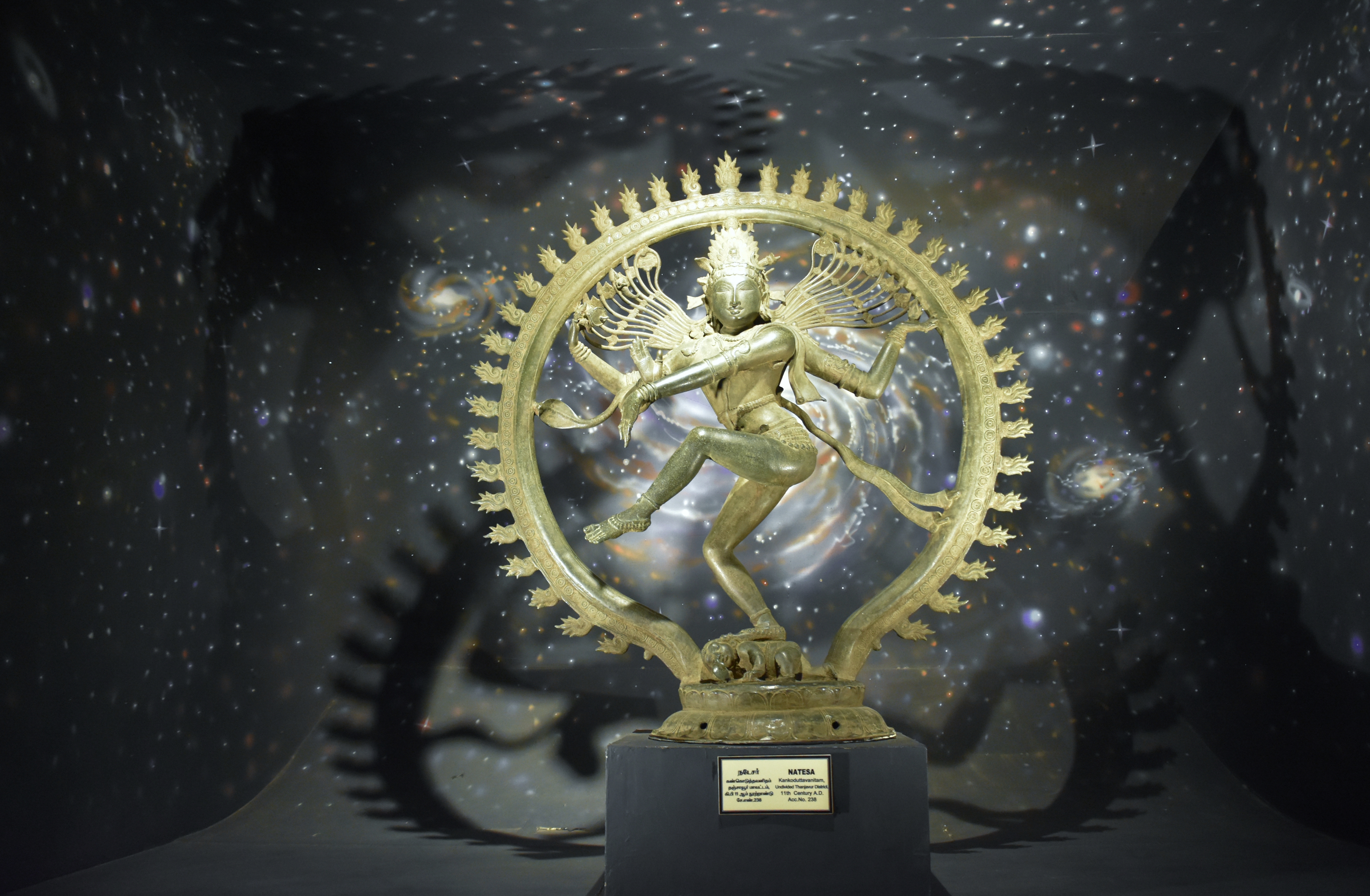
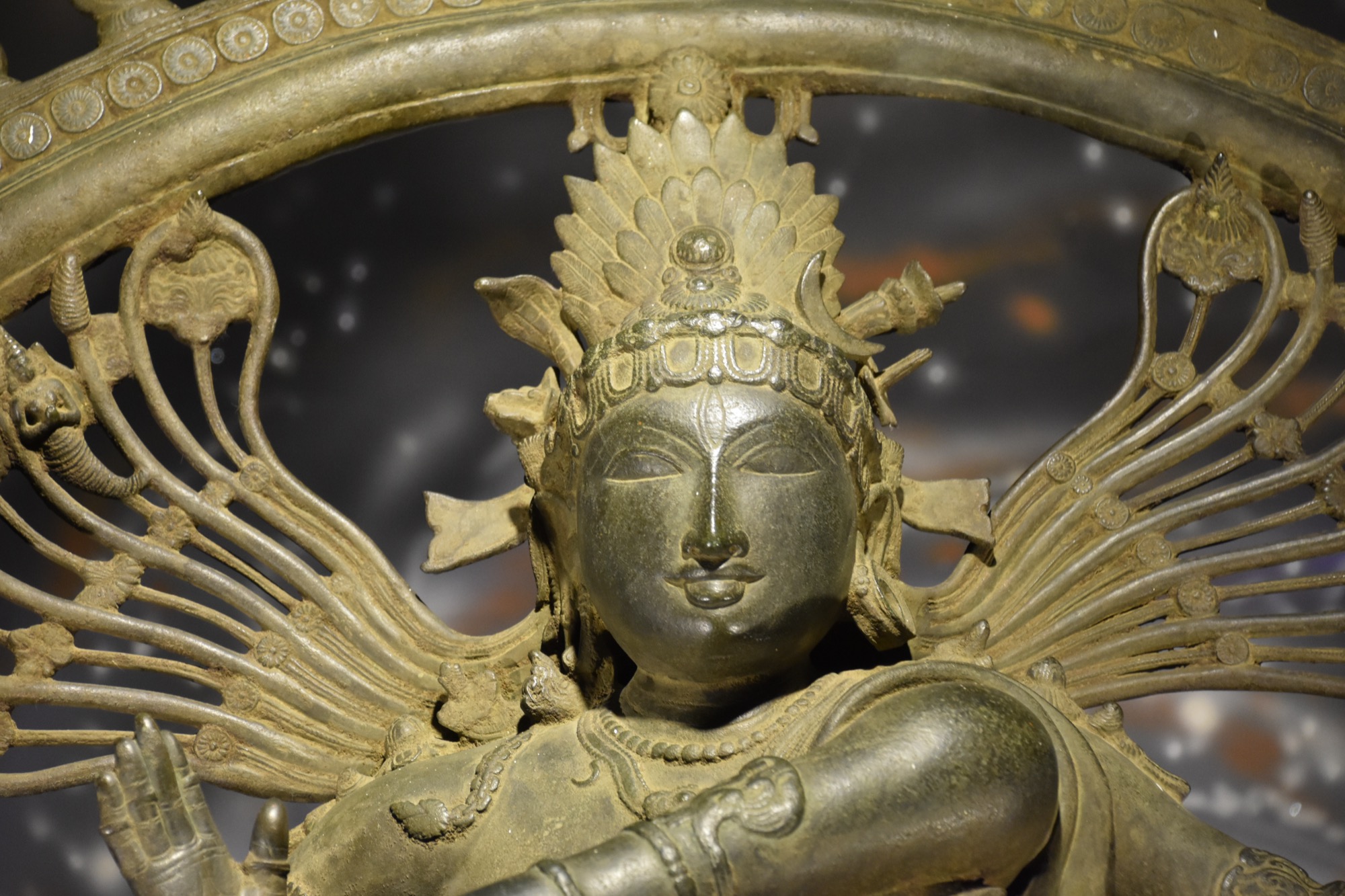
The artistic legacy of Nagapattinam resides above all in an extraordinary corpus of approximately 350 bronze images of the Buddha, Bodhisattvas, and Hindu deities recovered from the site since the nineteenth century, constituting one of the most significant collections of medieval South Asian metalwork. These bronzes, many discovered during construction excavations in the town and its immediate environs, display a distinctive synthesis of Chola bronze-casting virtuosity and Buddhist iconographic conventions derived from both the Pāla-Sena tradition of northeastern India and the Srivijayan-Javanese artistic sphere. R. Nagaswamy, in “Bronze Sculptures from Nagapattinam” (published in “Nagapattinam to Suvarnadwipa,” ISEAS, 2009), provides the most comprehensive catalog, demonstrating that the Nagapattinam bronzes were produced using the lost-wax (cire perdue) technique perfected by Chola master craftsmen, yet followed Mahāyāna and Vajrayāna iconographic programs foreign to the predominantly Shaiva devotional context of Chola-period Tamil Nadu. Several standing Buddhas exhibit the tribhanga (triple-flexion) posture and transparent-clinging drapery characteristic of late Chola bronze idiom, while seated Avalokiteśvaras and Tārā figures reveal parallels with Javanese and Sumatran prototypes. Vidya Dehejia, in “Art of the Imperial Cholas” (Columbia University Press, 1990), situates the Nagapattinam Buddhist bronzes within the broader Chola artistic tradition and argues that their stylistic hybridity reflects the cosmopolitan maritime culture of the port rather than mere provincial imitation. The major collections are divided between the Nagapattinam District Museum, the Government Museum in Chennai (formerly Madras), and the National Museum in New Delhi. Chinese ceramic sherds recovered from Nagapattinam archaeological layers, identified by John Guy in “Tamil Merchants and the Hindu-Buddhist Diaspora” (in “Nagapattinam to Suvarnadwipa,” ISEAS, 2009), further attest to the cross-cultural material exchanges that shaped the port’s artistic environment.
Nagapattinam occupies the southeastern Coromandel Coast of Tamil Nadu at the mouth of the Kaveri (Cauvery) River delta, a position that made it the natural maritime outlet for the agriculturally rich heartland of the Chola empire. The Kaveri delta, one of the most intensively irrigated agrarian zones in premodern South Asia, produced the rice surpluses that sustained the Chola state and generated exportable commodities; Nagapattinam was the point at which this deltaic wealth met the Bay of Bengal’s maritime corridors. The port lay roughly 300 kilometers southeast of Thanjavur (Tanjore), the Chola imperial capital, connected by riverine and overland routes that facilitated the movement of goods, troops, and administrative orders. As Tansen Sen argues in “Buddhism, Diplomacy, and Trade: The Realignment of Sino-Indian Relations, 600–1400” (University of Hawai’i Press, 2003), Nagapattinam functioned as the primary node in a Bay of Bengal maritime corridor that linked South India to the Malay Peninsula, Sumatra, Java, and ultimately to the ports of Song China. Hermann Kulke estimates in his contribution to “Nagapattinam to Suvarnadwipa” (ISEAS, 2009) that the port handled a substantial share of the Bay of Bengal’s maritime commerce during the tenth through twelfth centuries, a dominance underwritten by the Chola navy’s capacity to secure sea lanes. The monsoon system dictated the rhythms of this trade: the northeast monsoon (October–February) carried vessels from the Coromandel Coast to Southeast Asia, while the southwest monsoon (June–September) brought return voyages. Nagapattinam’s position relative to other Chola-period ports—Mamallapuram to the north, Kayalpattinam to the south, and the Malabar Coast entrepots accessible via overland routes across the Western Ghats—gave it a centrality in the Indian Ocean’s eastern maritime web. Noboru Karashima’s studies of Tamil merchant guild inscriptions, published in “A Concise History of South India” (Oxford University Press, 2014), show that the Ayyavole Five Hundred and Manigramam guilds maintained active operations at the port, extending their commercial networks to as far as Barus on the western coast of Sumatra.
Nagapattinam’s emergence as a major maritime port predates the Chola imperial period, with Chinese Buddhist pilgrim accounts placing it as a functioning center of trade and Buddhist worship by the seventh century CE. However, it was the consolidation of Chola naval power under Rajaraja I (r. 985–1014) and his son Rajendra Chola I (r. 1014–1044) that elevated the port to preeminence in the Bay of Bengal commercial system. The Chola navy, as Hermann Kulke analyzes in “The Naval Expeditions of the Cholas in the Context of Asian History” (in “Nagapattinam to Suvarnadwipa,” ISEAS, 2009), was unprecedented in the Indian Ocean world: a state-organized maritime fighting force capable of projecting power across thousands of kilometers of open sea. Rajendra Chola I launched two major naval expeditions against the Srivijayan empire—in 1017 and the larger campaign of 1025 CE—targeting ports along the Strait of Malacca and the coasts of Sumatra and the Malay Peninsula. Kulke interprets these campaigns not as conquests of territorial occupation but as punitive-commercial expeditions designed to break Srivijayan control over the choke points of maritime trade between the Indian Ocean and the South China Sea. Nagapattinam served as the primary staging and departure point for these fleets. The paradox of the Chudamani Vihara—a Srivijayan-funded Buddhist monastery established at the very port from which the Chola navy would later attack Srivijaya—has generated extensive scholarly debate. Kulke reads the monastery’s foundation as “ritual diplomacy,” an attempt by the Srivijayan court to secure goodwill at the Chola port through religious patronage, a strategy that evidently failed to prevent military confrontation. Tansen Sen, in “Buddhism, Diplomacy, and Trade” (University of Hawai’i Press, 2003), situates the Chola-Srivijaya rivalry within a broader triangular relationship involving Song China: the Chola expeditions, he argues, were partly motivated by a desire to establish direct trading access to China without Srivijayan intermediation, and he documents Chola diplomatic missions to the Song court in 1015 and 1033. Noboru Karashima, in “Ancient and Medieval Commercial Activities in the Indian Ocean: Testimony of Inscriptions and Ceramic-sherds” (Taisho University, 2002), connects the Chola naval campaigns to the broader expansion of Tamil merchant guilds across Southeast Asia, arguing that military expeditions and commercial penetration were complementary facets of a single imperial strategy. After the decline of Chola power in the thirteenth century, Nagapattinam successively passed under Pandya, Vijayanagara, and Nayak control before becoming a Portuguese trading post in the 1530s and later a Dutch settlement, each transition diminishing its role as a center of Indian Ocean maritime trade.
The commercial life of Nagapattinam was shaped by the monsoon-driven trading calendar of the Bay of Bengal and by the Chola state’s imperial capacity to secure maritime routes and regulate port operations. As Noboru Karashima documents in “Ancient and Medieval Commercial Activities in the Indian Ocean” (Taisho University, 2002), the port’s primary exports included fine cotton textiles—the celebrated South Indian muslins and calicoes that were among the most sought-after commodities in the medieval Asian trading world—as well as silk cloth, rice from the Kaveri delta’s surplus harvests, pepper and other spices transshipped from the Malabar Coast, and precious and semi-precious gemstones, particularly sapphires, rubies, and pearls from the Gulf of Mannar. Imports arriving at Nagapattinam, documented through both inscriptional and archaeological evidence, included Chinese ceramics and porcelain from Song-dynasty kilns—sherds of which John Guy identifies in “Tamil Merchants and the Hindu-Buddhist Diaspora” (in “Nagapattinam to Suvarnadwipa,” ISEAS, 2009)—camphor from the forests of northern Sumatra (a commodity so prized that it served as a near-currency in Indian Ocean trade), aromatic resins and sandalwood from the Indonesian archipelago, and tin from the Malay Peninsula. Tansen Sen, in “Buddhism, Diplomacy, and Trade” (University of Hawai’i Press, 2003), emphasizes that the commercial relationship between Nagapattinam and Song China extended beyond simple commodity exchange to encompass diplomatic gift-giving, Buddhist devotional objects, and the transmission of technological knowledge. The Tamil merchant guilds that operated from the port—principally the Ayyavole Five Hundred and the Manigramam, whose inscriptions Karashima catalogs extensively—organized trade through collective partnerships and maintained agents at distant ports from Barus in Sumatra to Quanzhou in Fujian. Chola imperial control of Nagapattinam facilitated long-distance commerce through the provision of naval escorts, the adjudication of commercial disputes, and the maintenance of standardized weights and measures, as attested by inscriptions at the port and at other Chola-period commercial centers documented by Kenneth R. Hall in “Trade and Statecraft in the Age of the Colas” (Abhinav Publications, 1980).