Bombay Stock Exchange (BSE)
Mumbai, India · Established 1875
This site requires authorization to access.
To request access, contact
william.goetzmann@yale.edu
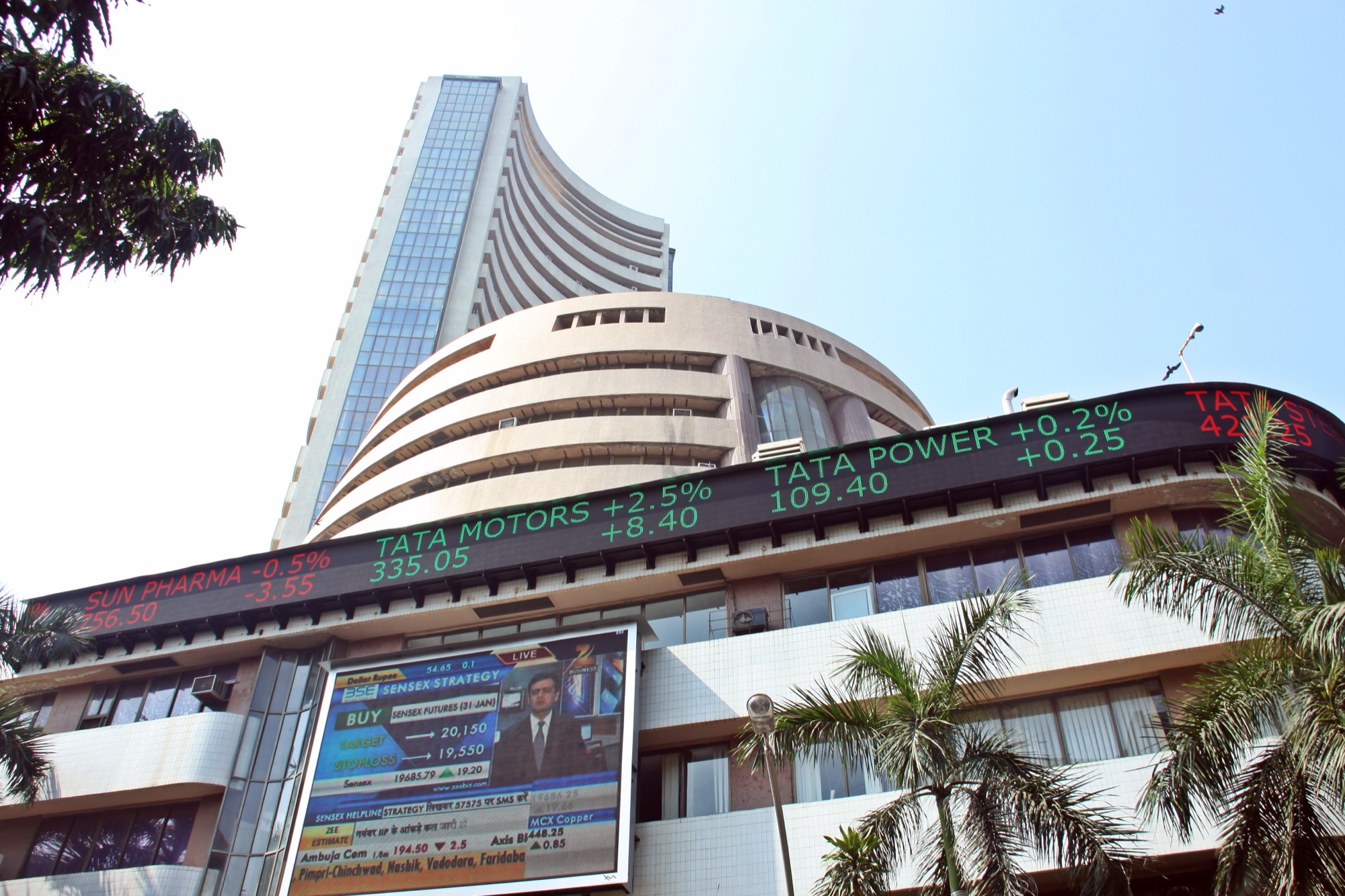
The Bombay Stock Exchange has occupied three distinct sites on Dalal Street in Mumbai’s Fort district. The earliest gatherings of brokers took place informally in the 1850s beneath a banyan tree near the Town Hall at what is now Horniman Circle, an arrangement that persisted for roughly two decades before the brokers migrated to a permanent address on Dalal Street in 1874. The first purpose-built exchange structure on the street was designed by the British architect Claude Batley, of the firm Gregson, Batley and King, and completed around 1930. Batley’s low-rise colonial building served the exchange for nearly half a century, but by the late 1960s the growing membership and trading volume demanded a radical replacement. As Kaiwan Mehta has documented in the architectural press, the commission to design a new tower went in 1969 to the young Mumbai architect Chandrakant Patel, who had recently returned from Finland where he had worked under Alvar Aalto. Patel imbibed Aalto’s vision of architecture as a total work of art, with functionalism and materiality as guiding principles. His design for the new Bombay Stock Exchange — the Phiroze Jeejeebhoy Towers — rejected orthogonal convention in favor of two swinging wings envisioned through non-concentric arcs, pinned together by a central structural core housing elevators and services. The reinforced cement concrete core rose approximately 300 feet using slip-form construction, a technique in which formwork is continuously winched upward floor by floor. The perimeter featured thin steel mullions that Patel called “matchstick columns,” enabling continuous ribbon windows across each façade without structural interruption, creating one of the earliest glass curtain wall systems in India. Structural engineer Kamal Hadkar devised innovations including diaphragm wall basements and a system of straight and Y-shaped columns with tilted steel mullions and reinforced concrete slabs. The completed tower reached 29 storeys and 118 meters (387 feet), making it the tallest building in India when it opened in 1980. Soon after occupation, following the death of Sir Phiroze Jamshedji Jeejeebhoy, who had served as chairman of the BSE since 1966, the building was renamed in his memory. A second phase in the late 1980s added a vast trading hall — a single domed space where brokers thronged to conduct business by open outcry, calling out the Gujarati terms Leedha! Deedha! (bought and sold). The building’s structural resilience was tested on 12 March 1993 when a car bomb exploded in its basement during the coordinated series of Bombay bombings; the tower survived relatively unscathed, a testament to Patel and Hadkar’s engineering (Mehta, “The Audacious Man Behind the Iconic Bombay Stock Exchange Building,” Scroll.in, 2024).
The decorative program of the BSE buildings reflects the transition from colonial ornamentation to modernist austerity and, eventually, to symbolic public sculpture. Claude Batley’s original 1930 exchange building on Dalal Street employed the restrained classical vocabulary characteristic of his firm’s institutional work in Bombay — arched openings, corniced façades, and stone detailing typical of the Indo-Saracenic and Edwardian commercial architecture that Preeti Chopra examined in A Joint Enterprise: Indian Elites and the Making of British Bombay (University of Minnesota Press, 2011). When Chandrakant Patel replaced this structure with the Phiroze Jeejeebhoy Towers in 1980, the decorative language shifted decisively toward the modernist idiom Patel had absorbed from Aalto: the building’s ornament resides in its geometry rather than in applied decoration, with the sweeping non-concentric arcs of the twin wings and the continuous ribbon windows serving as the primary aesthetic statements. Patel designed a seashell-shaped canopy at the entrance, a direct homage to Aalto’s organic forms. The most celebrated artwork associated with the exchange is the Big Bull, a bronze sculpture of a charging bull created by Solapur-based sculptor Bhagwan Rampure. Standing 5 feet (1.5 meters) tall, 8 feet (2.4 meters) long, and weighing 1,000 kilograms, the Big Bull was inspired by Arturo Di Modica’s 1989 Charging Bull on Wall Street in New York. Rampure first made a clay model for BSE approval, then cast the bronze version in four parts over three months. The BSE subsequently commissioned a thousand miniature fibre replicas as souvenirs for visiting dignitaries. The original sculpture was later gifted to GIFT City in Gandhinagar, Gujarat, in 2017, while a replica was installed at Horniman Circle alongside a statue of R. K. Laxman’s Common Man cartoon character. Inside the trading hall, the dominant visual element was the circular trading ring itself — the physical pit around which brokers gathered for open outcry sessions, ringed by tiered seating and electronic display boards that became increasingly prominent after the introduction of the BOLT electronic trading system in 1995.
The Bombay Stock Exchange sits at the heart of Dalal Street in Mumbai’s Fort district, the historic colonial commercial quarter of the city. The name Dalal Street derives from the Marathi word dalāl, meaning broker or go-between, reflecting the street’s identity as a financial thoroughfare since the 1870s. The Fort precinct takes its name from the walls of Fort George, the original British fortification whose demolition in the 1860s under Governor Sir Bartle Frere opened the area for grand civic development. As Preeti Chopra documented in A Joint Enterprise (2011), the resulting urban plan produced the neo-Gothic and neoclassical institutional buildings that still define the neighborhood: the Asiatic Society Library (Town Hall), the University of Bombay with its Rajabai Clock Tower, and the High Court. Horniman Circle — originally Elphinstone Circle, completed in 1872 — lies just steps from Dalal Street, its semicircular ring of uniform Porbandar stone buildings enclosing a 2.5-acre garden that served as the original gathering place for brokers under its banyan trees. As the Urban Design Research Institute’s conservation study has shown, this ensemble represents one of the most coherent examples of colonial commercial planning in South Asia. Dalal Street connects to the broader financial infrastructure of the Fort: the Reserve Bank of India headquarters, the Mint, and the offices of major banks and brokerage firms cluster within a few blocks. The proximity to Bombay’s natural harbor was critical to the city’s emergence as a trading center. As Lakshmi Subramanian argued in Indigenous Capital and Imperial Expansion: Bombay, Surat and the West Coast (Oxford University Press, 1996), the shift of commercial gravity from Surat to Bombay in the late eighteenth century was driven by the port’s superior access to oceanic trade routes, particularly the opium and cotton routes to China and Britain. Amar Farooqui’s Opium City: The Making of Early Victorian Bombay (Three Essays Collective, 2006) demonstrated that it was opium capital that linked Bombay to the international economy and funded the transformation of the Fort area into one of the leading commercial precincts of the British Empire. The congested, narrow character of Dalal Street itself — originally a lane lined with brokers’ offices — was dramatically altered in 1980 when the 29-storey Phiroze Jeejeebhoy Towers rose above the low-rise colonial fabric, creating a vertical landmark visible across the Fort district and serving as a symbol of India’s financial ambitions in the post-independence era.
The origins of organized securities trading in Bombay date to the 1830s, when a small group of brokers began dealing in bank shares and East India Company paper under a banyan tree near the Town Hall. The number of participants swelled dramatically during the cotton boom of 1861–1865, triggered by the American Civil War’s disruption of Confederate cotton exports. As Sven Beckert documented in Empire of Cotton: A Global History (Knopf, 2014), India emerged as a crucial alternative source of cotton for the textile mills of Lancashire, and Bombay became the principal entrepot: cotton exports from the Bombay Presidency surged from roughly 566,000 bales in 1861 to over one million by 1865, and prices rose by a factor of four or more. The resulting speculative frenzy, known as the Share Mania, saw the creation of dozens of joint-stock companies — banks, reclamation schemes, cotton presses, and shipping ventures — whose share prices reached extraordinary premiums. The central figure was Premchand Roychand (1832–1906), a Shvetambara Jain businessman known as the Cotton King and Bullion King, who was the first Indian broker able to read, write, and speak English. Roychand promoted the Back Bay Reclamation Company in 1864, whose shares with a face value of 5,000 rupees traded at 55,000 rupees at the peak. When news of the Civil War’s end reached Bombay in 1865, the market collapsed catastrophically; Asiya Siddiqi’s Bombay’s People, 1860–98: Insolvents in the City (Oxford University Press, 2014) drew on nearly 20,000 insolvency petitions to document the human toll, describing it as one of the severest disasters which ever fell upon a mercantile community. Despite his losses, Roychand donated 200,000 rupees to build the Rajabai Clock Tower at the University of Bombay, named after his mother. On 9 July 1875, Roychand and other brokers formalized their association as The Native Share and Stock Brokers’ Association, making the BSE the oldest stock exchange in Asia and among the ten oldest in the world. The association was further formalized in 1887 as a member-run nonprofit. In 1956, the BSE became the first stock exchange recognized by the Indian government under the Securities Contracts (Regulation) Act. The exchange’s most severe institutional crisis came in 1992 with the securities scam orchestrated by broker Harshad Mehta, who exploited loopholes in the inter-bank government securities market to divert approximately 3,500 crore rupees into stock speculation, as analyzed by S. K. Barua and J. R. Varma in Securities Scam: Genesis, Mechanics and Impact (Vikalpa, 1993). The scam exposed fundamental weaknesses in market infrastructure and regulation, and directly catalyzed the creation of the Securities and Exchange Board of India (SEBI) as a statutory authority and the founding of the rival National Stock Exchange (NSE) in 1992, which introduced electronic trading from inception. The BSE responded by launching its own BSE On-Line Trading (BOLT) system on 14 March 1995, ending over a century of open outcry trading on the floor of Dalal Street.
Trading on the Bombay exchange evolved from informal commodity dealings into one of the world’s largest securities markets. In the early nineteenth century, before the exchange’s formal establishment, the principal commodities traded through Bombay’s merchant networks were opium and raw cotton. As Amar Farooqui argued in Opium City (2006), opium was the main source of capital accumulation for indigenous merchants and bankers in western India during the first half of the nineteenth century, with firms like David Sassoon and Co. handling as much as 70 percent of the trafficked volume in Indian opium destined for China by the 1860s, as Joseph Sassoon documented in The Sassoons: The Great Global Merchants and the Making of an Empire (Penguin, 2022). Government securities — particularly East India Company bonds and later Crown debt — were among the earliest paper instruments traded alongside bank shares in the 1830s and 1840s. The cotton boom of the 1860s introduced speculative trading in joint-stock company shares on an unprecedented scale, encompassing cotton-pressing companies, reclamation ventures, insurance firms, shipping lines, and banking houses. By January 1865 Bombay had 31 banks, 8 reclamation companies, 16 cotton-pressing companies, 10 shipping companies, 20 insurance companies, and 62 joint-stock companies whose shares were actively traded. After the crash, the reorganized exchange concentrated on equity shares of textile mills, railway companies, and banking institutions. A distinctive feature of Bombay’s trading culture was the badla system, an indigenous carry-forward mechanism that allowed traders to extend positions past the settlement period by paying or receiving a financing charge, as Deena Maitra analyzed in Badla and the Curious Popularity of Single-Stock Futures in India (University of Pennsylvania CASI, 2020). Unlike standardized futures or options, badla had no fixed expiration date and variable margin requirements, functioning as an informal leverage device that SEBI banned in 1993, restored in 1996, and permanently prohibited in 2001 following the introduction of exchange-traded derivatives. The BSE launched index futures in June 2000, followed by index options in June 2001 and single-stock futures in November 2001, transforming the exchange into a modern derivatives market. The SENSEX, India’s first stock market index comprising 30 large-cap companies, was introduced in 1986 and quickly became the benchmark measure of Indian equity market performance.
Images will be added as the project develops. Photographs by Larry Ng and from research sources.