Mexican Stock Exchange (BMV)
Mexico City, Mexico · Established 1894
This site requires authorization to access.
To request access, contact
william.goetzmann@yale.edu
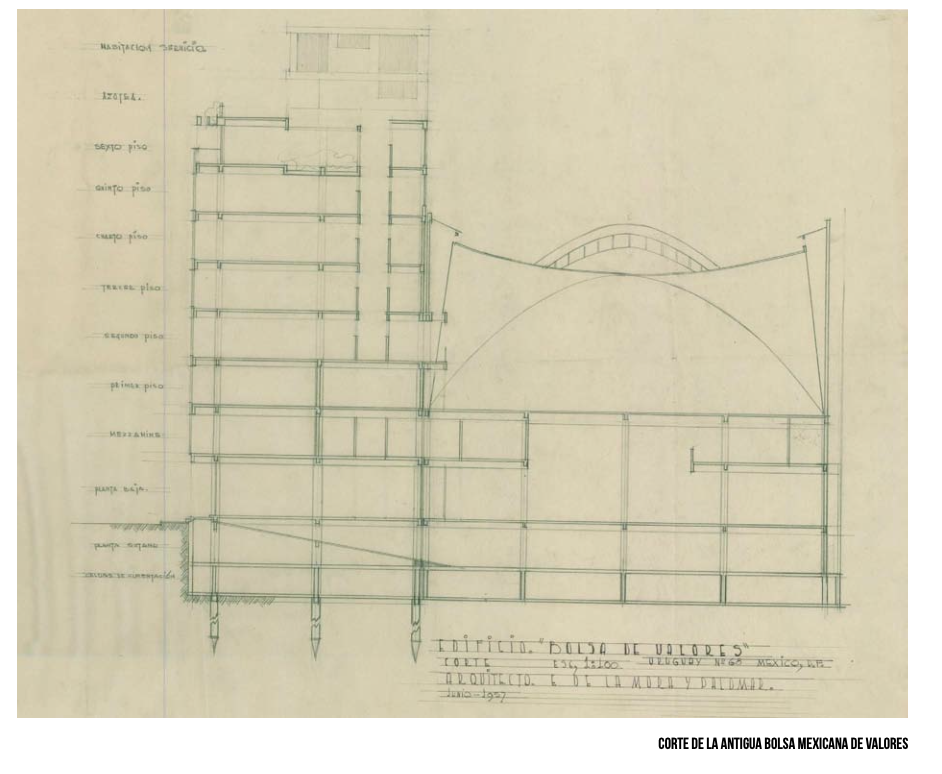
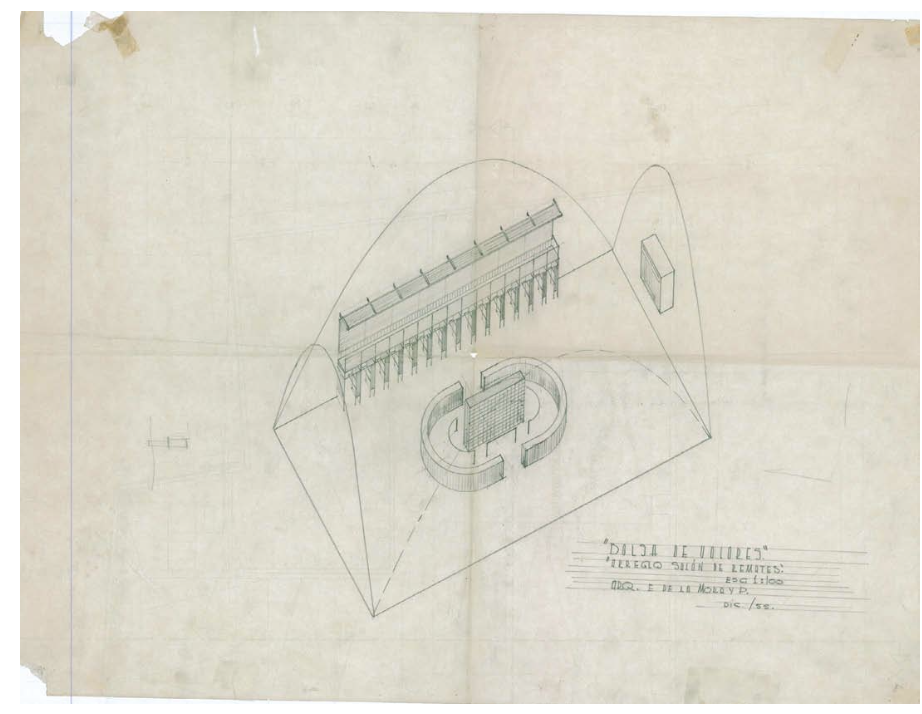
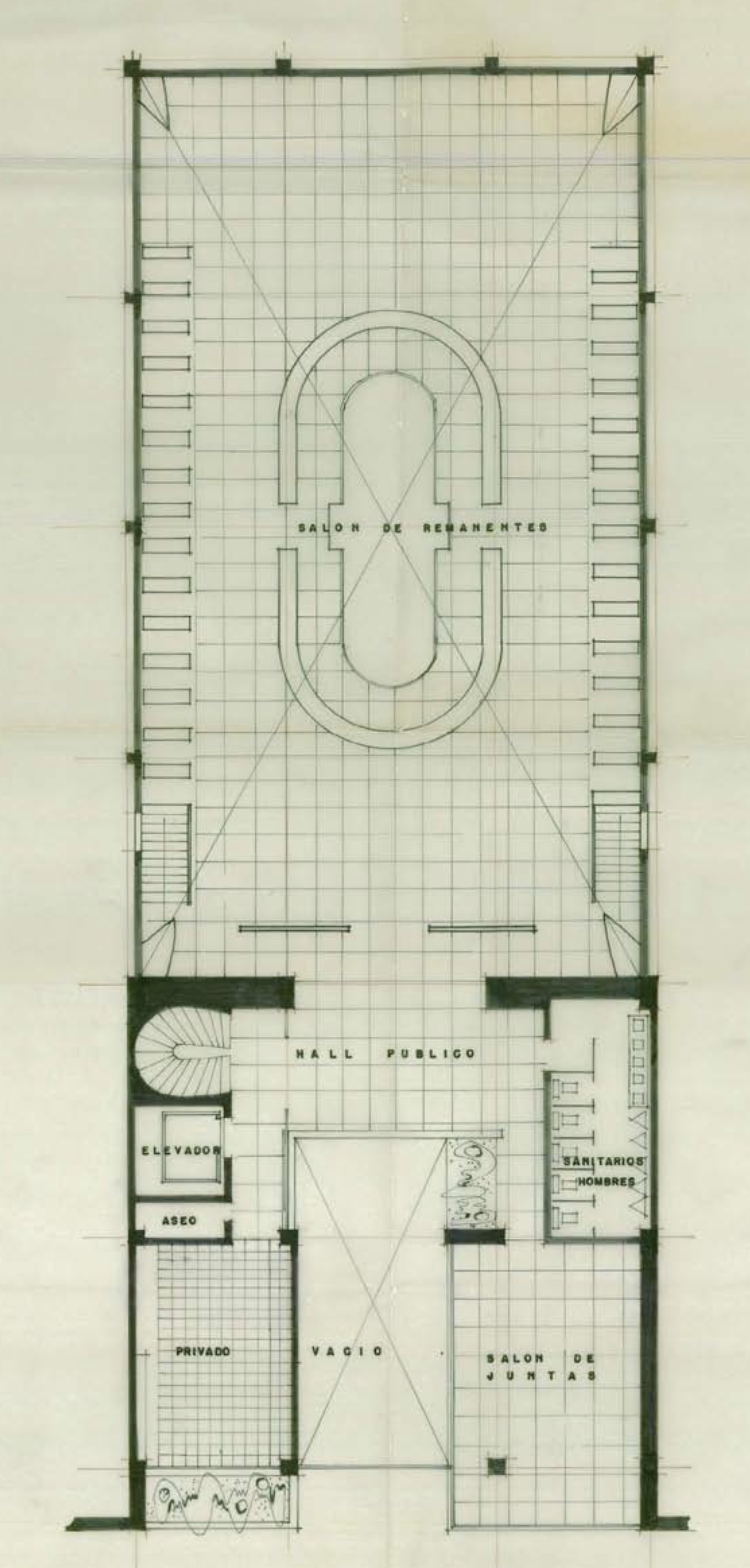
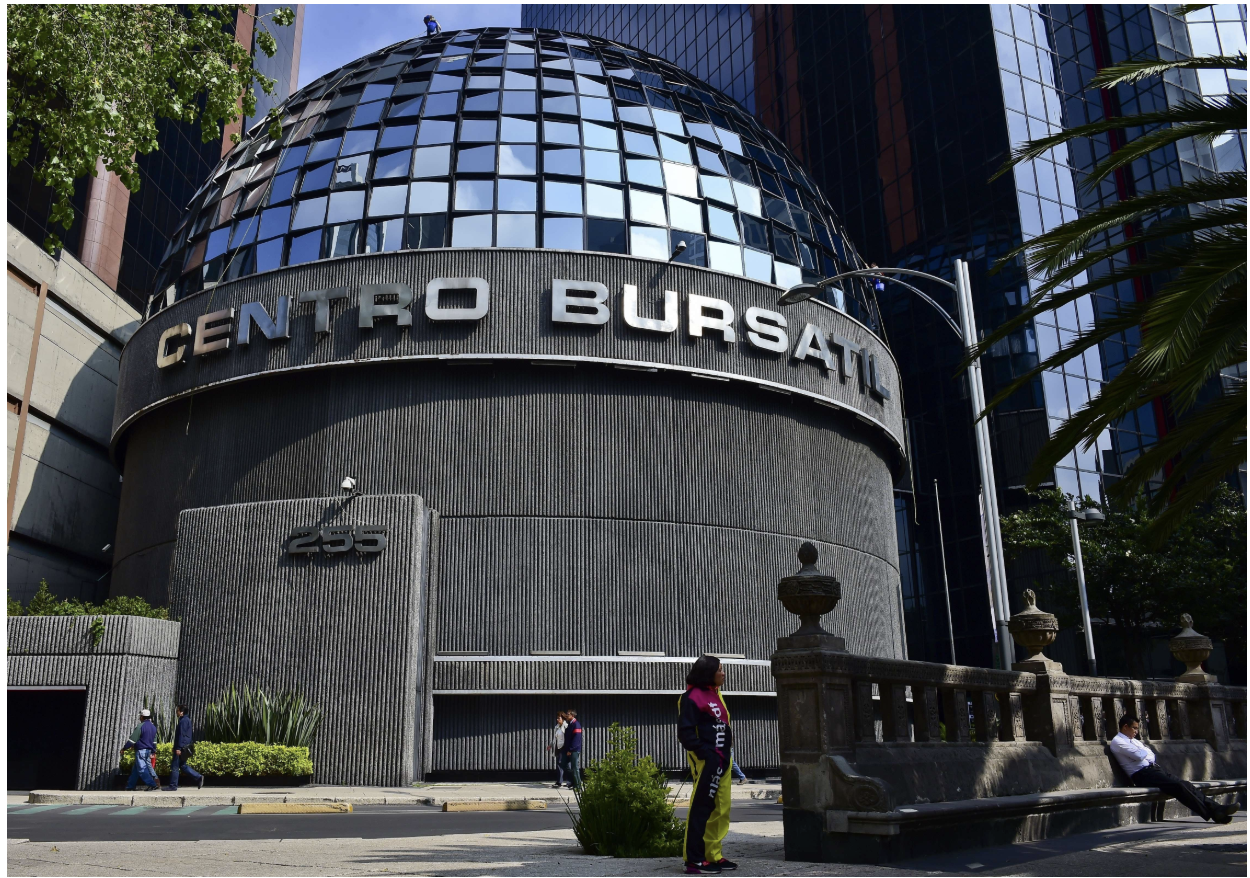
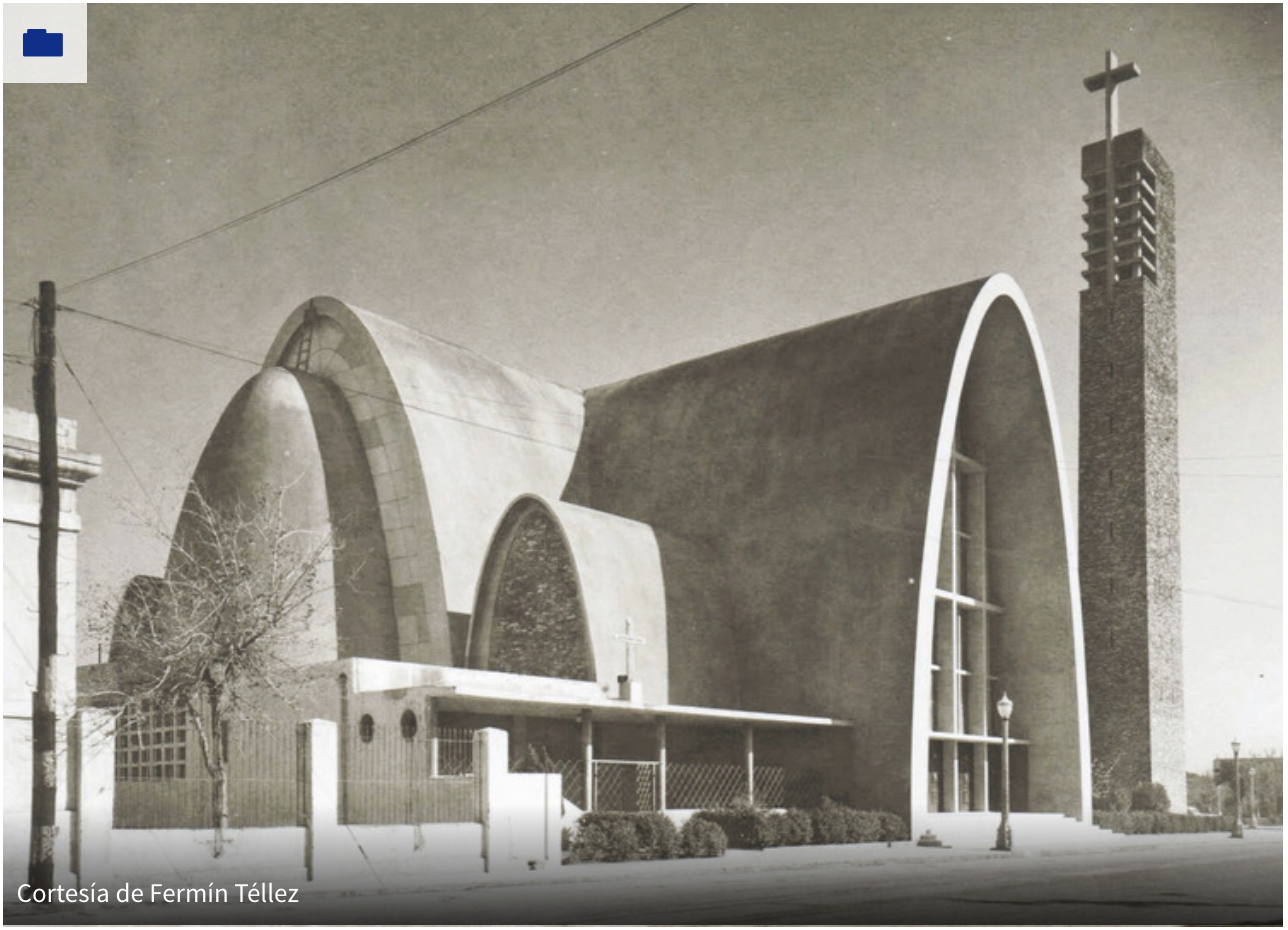
The architectural history of Mexico’s principal securities exchange spans three distinct eras. Stock trading in Mexico City began informally around 1850, conducted, as Javier Moreno Lázaro documents in “La Bolsa de Valores de México durante el porfiriato y la revolución, 1885–1934” (América Latina en la Historia Económica, 2017), “in a portal, in a carriage, or in a tavern.” After formal establishment of the Bolsa Nacional in 1894, brokers occupied rented quarters on Calle de Plateros before settling on Calle de Uruguay. The most architecturally significant chapter opened in 1953–1955, when Enrique de la Mora y Palomar, Fernando López Carmona, and the structural engineer Félix Candela designed a new exchange hall crowned by a revolutionary thin-shell concrete dome. As the Hidden Architecture project records, Candela’s ogival groined vault—two intersecting hyperbolic paraboloid surfaces meeting in sharp curves—became one of the first hypar groined vaults ever built. By the late 1980s, the exchange had outgrown this modernist landmark. Architect Juan José Díaz Infante Núñez collaborated with the seismic engineer Leonardo Zeevaert—designer of the Torre Latinoamericana’s foundations—to erect the Centro Bursátil on Paseo de la Reforma. Construction began in 1987, only two years after the catastrophic 1985 earthquake, and Díaz Infante prioritized seismic resilience in every structural decision. Inaugurated on April 19, 1990, the tower’s distinctive wedge-shaped plan and curtain wall of more than seven thousand glass panels—black and light blue, assembled in a semi-spherical technique—transformed the Centro Bursátil into an instantly recognizable landmark on Mexico City’s skyline.
The decorative programs of Mexico’s exchange buildings illuminate the interplay between artistic ambition and commercial purpose. The 1953 Candela-designed trading hall on Calle de Uruguay was itself an act of sculptural expression: the thin-shell concrete hyperbolic paraboloid dome functioned simultaneously as structure and ornament, its soaring ogival curves creating a cathedral-like interior that dignified securities trading. Enrique de la Mora, who also designed ecclesiastical buildings with stained glass by Kitzia Hofmann, brought sensitivity to light and spatial drama. Beyond the exchange’s walls, Mexico City’s great muralist tradition shaped the visual culture within which traders operated. Diego Rivera’s National Palace murals (1929–1935) depicted the full arc of Mexican commercial life—from pre-Columbian tianguis markets through colonial silver extraction to industrial capitalism—offering a monumental critique of the financial forces that the Bolsa embodied. When Díaz Infante designed the Centro Bursátil in the late 1980s, the decorative vocabulary shifted toward late-modern minimalism. The building’s principal artistic statement is its own skin: the curtain wall’s seven thousand glass panels create a shimmering, dematerialized surface reflecting Paseo de la Reforma’s monuments and sky. The spherical dome over the former trading floor serves as a geometric counterpoint to the tower’s angular mass. In 2018, the BMV inaugurated the Museo Interactivo de la Bolsa Mexicana de Valores (MUBO), a didactic museum within the Centro Bursátil using interactive installations and historical artifacts to narrate the exchange’s 125-year history, extending the decorative program into public education.
The Mexican Stock Exchange’s migration across Mexico City traces the shifting center of national economic power. The Bolsa Nacional was established in 1894 on Calle de Plateros, in the commercial heart of the Centro Histórico, steps from the Zócalo—the grand plaza that served as the nucleus of Aztec Tenochtitlán and Spanish colonial administration. For nearly a century, the exchange remained within the historic core. The 1990 relocation to Paseo de la Reforma marked a decisive reorientation. The boulevard itself is layered with imperial, republican, and modernizing ambitions: commissioned in 1864 by Emperor Maximilian I, designed by Ferdinand von Rosenzweig to link Chapultepec Castle to the National Palace, and modeled on the Champs-Élysées and Vienna’s Ringstraße. Originally called the Paseo de la Emperatriz in honor of Empress Carlota, the avenue was renamed after Maximilian’s execution to commemorate the Reform War. Under Porfirio Díaz, the boulevard was widened and electrified for the 1910 centenary celebrations. By the late twentieth century, Paseo de la Reforma had become Mexico City’s primary financial corridor. The Centro Bursátil sits at the Glorieta de la Palma, anchored visually within the boulevard’s sequence of monumental roundabouts—including the Ángel de la Independencia and the Diana the Huntress fountain. This placement connects the exchange to a symbolic axis running from the historic Zócalo through the Monumento a la Revolución, westward along Reforma to Chapultepec—a transect encompassing the full arc of Mexican national identity.
The institutional history of the Bolsa Mexicana de Valores is inseparable from Mexico’s turbulent passage through dictatorship, revolution, state-led industrialization, and neoliberal opening. As Moreno Lázaro details (2017), the Porfiriato’s liberal economic policies—orchestrated by Finance Minister José Yves Limantour—created the legal framework for organized trading. The Bolsa Nacional was founded on October 31, 1894, with approximately fifty brokers; by the late 1890s roughly one hundred mining companies were listed. The Revolution of 1910–1920 devastated market activity: Venustiano Carranza closed the exchange in 1916, citing “unrestrained speculation.” As Stephen Haber argues in Industry and Underdevelopment (Stanford University Press, 1989), Mexico’s concentrated banking system limited capital market development. Noel Maurer’s The Power and the Money (Stanford, 2002) similarly demonstrates how insider lending shaped early Mexican capitalism. The 1975 Securities Market Law consolidated all regional exchanges into a single BMV. The speculative boom of the mid-1980s ended catastrophically on Black Monday, October 19, 1987, when the IPC index lost over thirty percent in dollar terms. The peso crisis of December 1994—the “Tequila Crisis” analyzed by Nora Lustig in Mexico: The Remaking of an Economy (Brookings, 1998)—saw the peso lose nearly half its value. The $50 billion international rescue package underscored the systemic importance Mexico’s capital markets had acquired under NAFTA. Electronic trading via BMV-SENTRA became fully operational by 1999. The BMV went public in 2008, and in July 2018 the launch of BIVA ended the BMV’s forty-three-year monopoly.
The securities traded on Mexico’s exchange reflect the evolving national economy—from Porfirian extractive capitalism to twenty-first-century telecommunications. As Ernesto Riveroll González documents in Cien años de la Bolsa de Valores en México, 1894–1994, the earliest listings were dominated by mining shares: silver and gold extraction had been the backbone of the Mexican economy since the colonial era. Railroad bonds financed the Porfirian infrastructure boom, while bank shares proliferated after the 1897 Ley de Bancos de Emisión. Government debt instruments became central in the post-revolutionary period, particularly CETES—short-term treasury certificates introduced in 1978 that became the benchmark for Mexican money markets—alongside longer-term BONDES. The nationalization of petroleum in 1938 kept PEMEX off the equity market, but its debt securities became significant fixed-income instruments. The privatization wave of the late 1980s and early 1990s transformed the equity profile: the 1990 sale of Telmex to Carlos Slim’s Grupo Carso created what would become, through América Móvil, one of the world’s largest telecommunications companies and the BMV’s most heavily weighted listing. CEMEX emerged as another blue-chip anchor. The IPC index (now S&P/BMV IPC) captures this transformation from a mining-and-railroads exchange into a diversified market where telecommunications, banking (Banorte, BBVA México), retail (Walmex), and consumer goods dominate, alongside CKDs and FIBRAs (Mexico’s REIT equivalents).