Manila Stock Exchange
Manila, Philippines · Established 1927
This site requires authorization to access.
To request access, contact
william.goetzmann@yale.edu
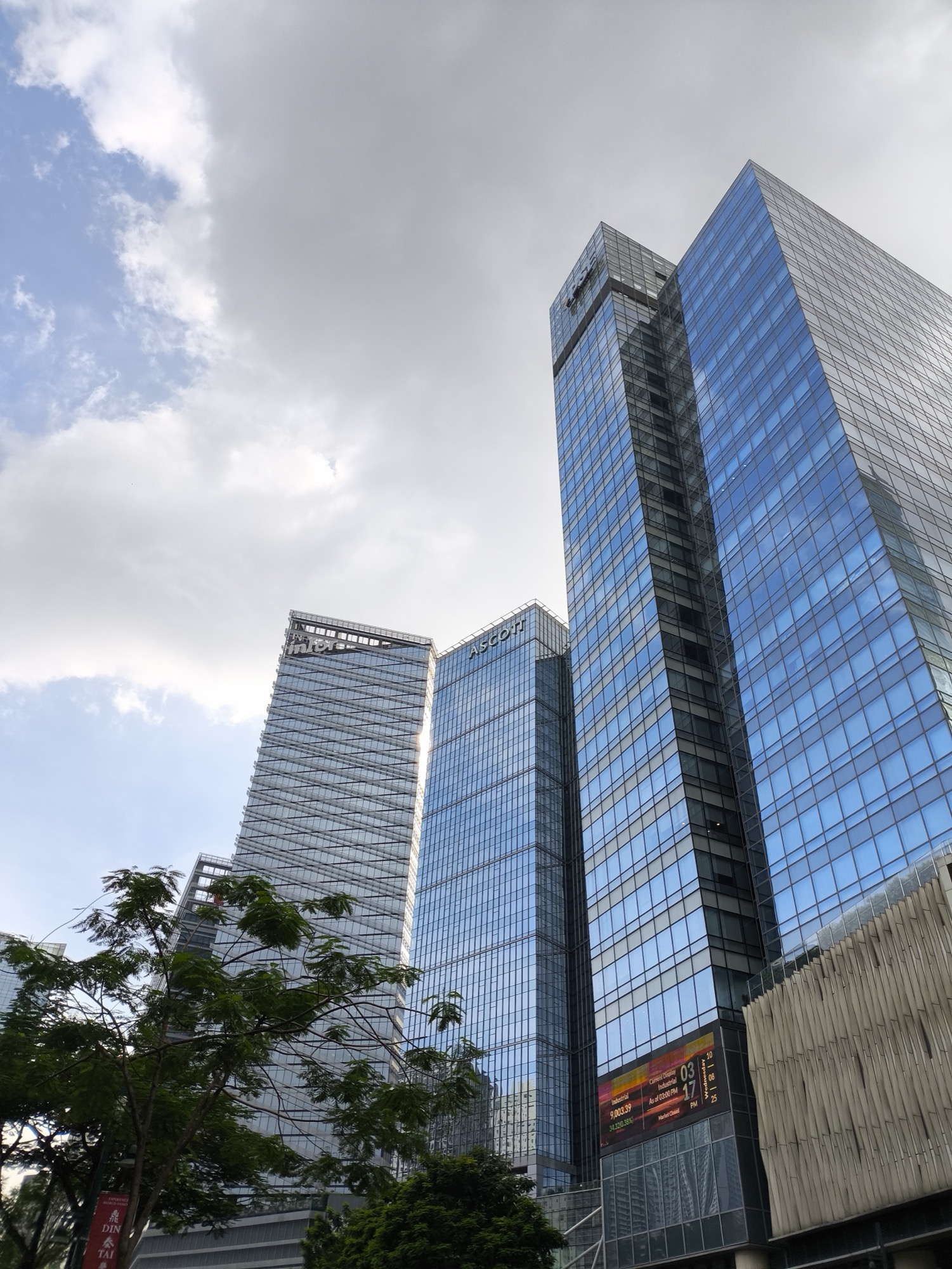
The Manila Stock Exchange began its institutional life on August 8, 1927, when five American businessmen established the bourse in the Insular Life Building on Plaza Cervantes, at the heart of Binondo’s commercial district. As Benito Legarda Jr. documents in After the Galleons: Foreign Trade, Economic Change and Entrepreneurship in the Nineteenth-Century Philippines (1999), the Escolta corridor had served as Manila’s principal axis of commerce since the late Spanish period. By 1932 the exchange relocated into the Crystal Arcade, a landmark Art Deco structure on Escolta designed by Andrés Luna de San Pedro, the École des Beaux-Arts–trained son of the painter Juan Luna. Gerard Lico, in Arkitekturang Filipino (2008), describes the Crystal Arcade as the Philippines’ first fully air-conditioned commercial building, featuring a double-curved grand staircase, skylights of imported glass, and a gallery of retail shops flanking the trading floor. The Battle of Manila in February–March 1945, chronicled in James M. Scott’s Rampage (2018), reduced the Crystal Arcade to rubble; one hundred percent of Manila’s business district was razed. Post-war trading resumed in makeshift quarters before the founding of the rival Makati Stock Exchange in 1963 drew activity southward to Ayala Avenue. The 1992 merger as the Philippine Stock Exchange consolidated operations at the PSE Centre in Tektite Towers, Ortigas Center. In February 2018, the PSE inaugurated the purpose-built PSE Tower at One Bonifacio High Street in Taguig—a thirty-story glass-clad skyscraper designed by Handel Architects in collaboration with Leandro V. Locsin Partners, housing the country’s first single national trading floor.
The decorative program of the Manila Stock Exchange’s successive homes tracks Philippine commercial aesthetics from Art Deco opulence through post-war austerity to contemporary corporate transparency. The Crystal Arcade of 1932, analyzed in Gerard Lico’s Deco Filipino (2020), represented a high point of the style in Southeast Asia: Luna de San Pedro drew on Parisian Exposition Internationale precedents and tropical Streamline Moderne to create an interior suffused with natural light, where glazed storefronts, chevron moldings, and a soaring skylight canopy channeled traffic from Escolta into the trading hall. The decorative glass—windows, transoms, lighting sconces, and balustrades—earned the “Crystal” epithet and served functional as well as aesthetic purposes in the tropical climate. Dominic Galicia, in “Stories Threatened: The Heritage of Manila as Seen Through Escolta” (2017), notes that the First United Building (originally Perez-Samanillo Building, 1928), also by Luna de San Pedro with Juan Nakpil, established the ornamental vocabulary of the district: geometric bas-relief panels, terrazzo floors, and brass elevator surrounds signaling commercial prestige. The destruction of 1945 obliterated most decorative heritage. Post-war premises were utilitarian. The 2018 PSE Tower in Bonifacio Global City returns to architectural legibility: its inflected glass facade with vertical solar-control fins, asymmetrical rooflines, and a street-level retail arcade consciously echo—in contemporary materials—the porosity and public engagement of Luna de San Pedro’s Crystal Arcade, linking the physical experience of market space to the transparency demanded of twenty-first-century capital markets.
The Manila Stock Exchange was born in Binondo, the quarter established in 1594 as a settlement for Catholic Chinese and recognized today as the oldest Chinatown in the world. As Edgar Wickberg demonstrates in The Chinese in Philippine Life, 1850–1898 (1965), Binondo’s merchant networks connected the archipelago to the South China trade, and Escolta Street evolved into the colony’s premier commercial boulevard. Under American rule, Escolta acquired the sobriquet “Wall Street of the Philippines,” hosting the stock exchange, British and American banks, insurance firms, and the earliest Philippine life-insurance company. The catastrophic destruction of 1945 created an opening for an alternative financial geography. Makati, then a semi-rural municipality owned largely by the Zóbel de Ayala family, was transformed under the master plan devised in 1947 by Colonel Joseph McMicking and the Ayala Corporation. Ayala Avenue, inaugurated in 1956, became the spine of a new central business district modeled on American suburban-corporate planning. The establishment of the Makati Stock Exchange in 1963 formalized the geographic bifurcation of Philippine capital markets. For nearly three decades the two bourses traded identical securities in rival locations, a redundancy that the Asian Development Bank identified as an impediment to market efficiency. The 1992 merger under President Fidel Ramos unified operations, but subsequent moves—to Ortigas Center (1994), Ayala Tower One in Makati (2010), and Bonifacio Global City (2018)—trace the continuing southward and eastward migration of Manila’s financial center, each relocation reflecting the Ayala group’s role as the Philippines’ most influential urban developer.
The Manila Stock Exchange was incorporated on August 8, 1927, during the American colonial period, when Governor-General Leonard Wood encouraged private capital formation. As Kunio Yoshihara argues in Philippine Industrialization: Foreign and Domestic Capital (Oxford University Press, 1985), the exchange was initially dominated by American and European brokers listing mining, agricultural-export, and utility firms. The gold-mining boom of the 1930s, centered on Benguet and Baguio, electrified the young bourse: Benguet Consolidated Mining Company—founded 1903, dual-listed on the NYSE in 1949—and Balatoc Mining ranked first and second in Philippine gold output between 1934 and 1937. Trading halted with the Japanese invasion of December 1941. The Battle of Manila in 1945 destroyed the exchange’s premises and devastated the financial district. Post-war recovery was slow; San Miguel Corporation—Southeast Asia’s oldest brewery, founded 1890—listed on November 5, 1948, as one of the first post-war listings. A rival Makati Stock Exchange, organized in 1963 by Hermenegildo B. Reyes and Bernard Gaberman, began trading November 16, 1965, fracturing market liquidity. The bitter rivalry persisted until President Fidel V. Ramos, acting on a condition attached to an Asian Development Bank loan for capital-market reform, compelled the merger creating the Philippine Stock Exchange on December 23, 1992. The unified PSE adopted electronic trading in 1993 and in 2018 inaugurated its Bonifacio Global City headquarters housing the country’s first single national trading floor.
The securities traded on the Manila Stock Exchange mirrored the Philippine economy’s shifting commodity foundations. In the early decades, mining equities dominated: Benguet Consolidated, Balatoc Mining, and Antamok Goldfields channeled investment into Cordillera gold fields that, as Legarda notes in After the Galleons (1999), extended pre-colonial mineral extraction patterns. Sugar-central shares constituted a second pillar, representing industrial milling companies of Negros Occidental and Pampanga that had consolidated under preferential American tariffs documented in Alfred McCoy’s Political Economy of Colonial and Post-Colonial Philippine Society (1993). Coconut and copra firms—the Philippines supplied roughly a third of global copra output—rounded out agricultural-export listings. After 1945, the board diversified to include banking stocks (Philippine National Bank, Bank of the Philippine Islands), San Miguel Corporation (listed 1948), and Ayala Land, whose 1991 IPO became a bellwether for real estate. Tobacco, shipping, and textile companies reflected import-substitution programs of the 1950s–60s analyzed by Yoshihara in Philippine Industrialization (1985). Since the 1990s the PSE composite index increasingly reflects service-economy listings—telecommunications (PLDT, Globe Telecom), retail conglomerates (SM Investments), and financial institutions processing overseas Filipino worker remittances, which reached a record $38.3 billion in 2024 and constitute roughly eight percent of GDP.
Images will be added as the project develops. Photographs by Larry Ng and from research sources.