NYSE Data Center (Mahwah)
Mahwah, USA · Established 2010
This site requires authorization to access.
To request access, contact
william.goetzmann@yale.edu
The NYSE Data Center at 1700 MacArthur Boulevard in Mahwah, New Jersey, occupies a 400,000-square-foot campus on twenty-eight acres of wooded corporate parkland in Bergen County, approximately thirty-four miles northwest of Wall Street. Commissioned by NYSE Euronext in 2008 as part of a roughly $500 million infrastructure investment that also included a companion facility in Basildon, England, the Mahwah center opened in August 2010, completing the migration of more than 4,500 listed equities from the older Securities Industry Automation Corporation (SIAC) systems that had operated out of Lower Manhattan. The facility was engineered to Tier IV–guided specifications by Syska Hennessy Group, a firm whose critical-facilities practice has designed data centers for major financial institutions worldwide. All power and mechanical systems are built to at least 2N redundancy, meaning every critical component—uninterruptible power supplies, diesel generators, chillers, and cooling distribution units—is fully duplicated so that no single point of failure can interrupt trading. The facility draws approximately 32 megawatts from the PSEG utility grid, with on-site backup generation capable of sustaining full operations indefinitely during grid outages. The architectural character of the building represents a deliberate anti-monumentality. Where the 1903 NYSE building at 18 Broad Street, designed by George B. Post, presents six fluted Corinthian columns, a pediment sculpture by John Quincy Adams Ward, and a facade of white Georgia marble intended to project permanence and civic authority, the Mahwah facility is a windowless, unmarked, low-rise structure screened by forest and surrounded by security perimeter fencing. As Donald MacKenzie observed in “Material Signals: A Historical Sociology of High-Frequency Trading” (American Journal of Sociology, 2018), the NYSE’s “$500 million initiative dubbed Project Alpha” created a building whose entire purpose is functional invisibility—optimized not for human presence but for the propagation of electronic signals measured in microseconds. The design constraint that most starkly illustrates this shift is the equal-length cross-connect cabling: every colocation customer’s cabinet is connected to the NYSE matching engine via cables of precisely identical length, ensuring that no firm gains a latency advantage from physical proximity within the building itself. This engineered fairness—what the NYSE terms “harmonized cabling”—transforms an architectural problem into a regulatory one, embedding market-structure principles directly into infrastructure. Juan Pablo Pardo-Guerra, in Automating Finance: Infrastructures, Engineers, and the Making of Electronic Markets (Cambridge University Press, 2019), argues that such facilities represent the culmination of a decades-long transfer of primacy from the trading floor to the data center, where the built environment is shaped entirely by the physics of signal propagation rather than the social rituals of open outcry.
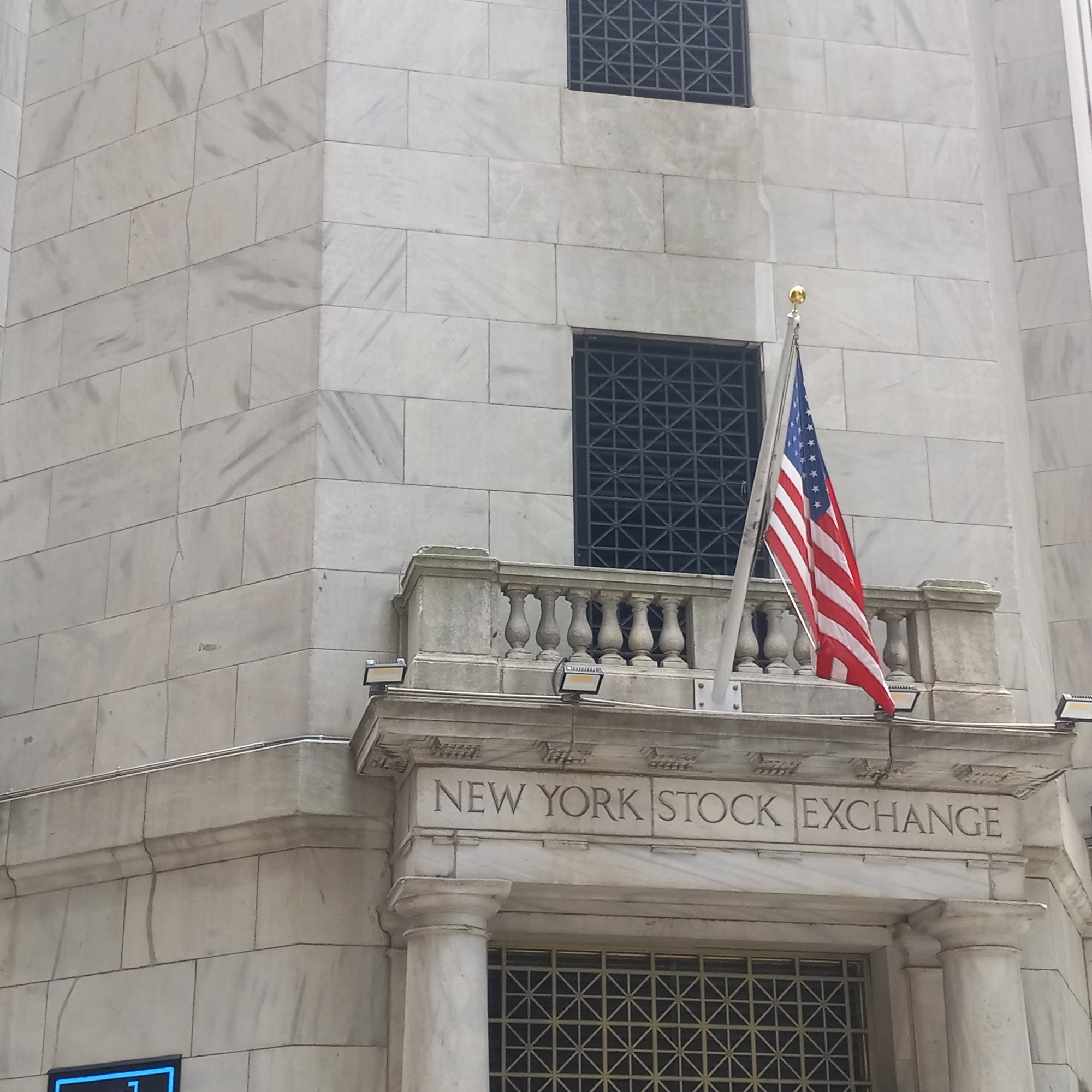
The visual culture of the NYSE in the electronic era is defined by a paradox: the world’s most recognizable stock exchange maintains an iconic trading floor at 11 Wall Street that functions increasingly as a media stage, while the actual market operates invisibly inside a data center no camera crew visits. The floor’s visual grammar—the hexagonal trading posts, the scrolling LED ticker displays, the blue-jacketed Designated Market Makers clutching handheld tablets, the massive American flag draped above the entrance—remains globally legible as the image of capitalism. The opening and closing bell ceremonies, broadcast daily on financial television, constitute a form of performance art: corporate executives, celebrities, and dignitaries ring a brass bell that once signaled the start and end of open-outcry trading but now serves a purely ceremonial function, since the matching engine in Mahwah processes orders continuously according to algorithmic protocols indifferent to the ringing of bells. The aesthetic experience of the electronic market itself is radically different. Inside the Mahwah facility, rows of identical black server cabinets stand in climate-controlled corridors illuminated by fluorescent light, their only visual variation the blinking of status LEDs. The “art” of this space is the art of absence—what Alexandre Laumonier, the Belgian researcher who writes the influential Sniper in Mahwah blog, has called the invisibility of the infrastructure that actually constitutes the market. Laumonier’s own practice—mapping microwave tower networks, photographing unmarked data centers, filing Freedom of Information requests for antenna permits—has become a kind of investigative aesthetic, revealing the hidden material geography of high-frequency trading to a public that still imagines Wall Street as a room full of shouting traders. The dominant visual interface through which most participants experience the market is the trading terminal—above all, the Bloomberg Terminal, whose distinctive black screen with amber and green text has been the canonical image of electronic finance since Michael Bloomberg launched the system in 1982. The visual grammar of the order book—bids stacked in green on the left, offers in red on the right, depth displayed as a histogram—constitutes a new form of financial visualization that replaced the chalkboard quotations and paper ticker tape of the physical exchange. Candlestick charts, developed in eighteenth-century Japanese rice markets and now ubiquitous on every trading screen, represent another layer of inherited visual convention operating within a wholly digital medium. Scott Patterson’s Dark Pools: The Rise of the Machine Traders and the Rigging of the U.S. Stock Market (Crown Business, 2012) describes how the aesthetic of the trading screen replaced the aesthetic of the trading floor, and how the shift to electronic markets rendered the visual spectacle of finance simultaneously more abstract and more pervasive—visible on every smartphone but intelligible only to initiates who can read the flickering data streams.
Mahwah’s position in the latency geography of American finance is the product of a specific convergence of infrastructure, regulation, and real estate economics that relocated the functional center of the U.S. equity market from Lower Manhattan to the suburbs of northern New Jersey. The data center sits twenty-seven miles northwest of the NYSE’s ceremonial address at 11 Wall Street, in a wooded office park near the intersection of Interstate 287 and Route 17. The choice of Mahwah was driven by the availability of cheap industrial land, abundant and reliable electric power from the PSEG grid, proximity to major fiber-optic trunk routes, and—critically—the post-September 11 imperative to move critical financial infrastructure out of Lower Manhattan, where the destruction of 7 World Trade Center and damage to neighboring buildings had exposed the fragility of concentrating the nation’s market systems in a single geographic cluster. The result has been the emergence of what might be called Wall Street’s shadow geography: a corridor of data centers stretching across northern New Jersey that constitutes the actual physical location of the American stock market. NYSE’s matching engine operates in Mahwah; Nasdaq’s matching engine runs in Equinix’s NY11 facility in Carteret; CBOE’s EDGX and BZX exchanges operate out of Equinix’s NY5 in Secaucus; and the IEX exchange, founded by Brad Katsuyama as an explicitly anti-high-frequency-trading venue, located its matching engine in Weehawken—deliberately choosing a site across the Hudson River that would impose a 350-microsecond “speed bump” via 38 miles of coiled fiber-optic cable, as Michael Lewis documented in Flash Boys: A Wall Street Revolt (W. W. Norton, 2014). Donald MacKenzie’s concept of “material signals” (American Journal of Sociology, 2018) illuminates the paradox: electronic markets, far from abolishing the importance of geography, have intensified it to a degree unimaginable in the era of physical trading floors. The construction of Spread Networks’ $300 million, 827-mile fiber-optic cable between Chicago and northern New Jersey—shaving the round-trip transmission time from about 17 to 13.1 milliseconds (roughly 6.5 milliseconds one-way)—and the subsequent development of microwave relay networks by firms such as McKay Brothers and Jump Trading, transmitting data at near the speed of light through the atmosphere, have created what Eric Budish, Peter Cramton, and John Shim described in “The High-Frequency Trading Arms Race” (Quarterly Journal of Economics, 2015) as a socially wasteful competition for infinitesimal speed advantages. The latency map—measured in microseconds rather than miles—has become the true geography of the market, and Mahwah sits at one of its most critical nodes. Colocation services at the facility, where trading firms rent cabinet space to place their servers physically adjacent to the matching engine, generate substantial revenue for ICE, the exchange’s parent company, and represent the commodification of proximity itself.
The institutional lineage of the Mahwah data center extends back to 1972, when the New York and American Stock Exchanges jointly created the Securities Industry Automation Corporation (SIAC) to manage the technology infrastructure of the nation’s largest equity markets. For decades, SIAC operated out of facilities in Lower Manhattan, including space at 55 Water Street, processing trade data, maintaining the Consolidated Tape System, and running the electronic networks that transmitted quotations and execution reports to broker-dealers nationwide. The attacks of September 11, 2001, exposed the catastrophic risk of concentrating this infrastructure in a single location. Although the NYSE’s trading floor at 11 Wall Street was not directly damaged, the destruction of 7 World Trade Center and the disruption of telecommunications networks throughout Lower Manhattan prompted the securities industry and its regulators to rethink the geographic distribution of critical market systems. The subsequent decade saw a steady migration of exchange technology to geographically dispersed data centers in the New Jersey suburbs. In 2005, the Securities and Exchange Commission adopted Regulation NMS (National Market System), which took full effect in 2007 and fundamentally reshaped the structure of American equity trading. By mandating that orders be routed to the exchange displaying the best price—the “Order Protection Rule” of Rule 611—Regulation NMS accelerated the fragmentation of trading across multiple electronic venues and created powerful incentives for speed, since the ability to update quotations faster than competitors became a decisive competitive advantage. As Sal Arnuk and Joseph Saluzzi argued in Broken Markets: How High Frequency Trading and Predatory Practices on Wall Street Are Destroying Investor Confidence and Your Portfolio (FT Press, 2012), Regulation NMS inadvertently catalyzed the high-frequency trading arms race by making latency a source of profit. NYSE Euronext announced plans for the Mahwah facility around 2008, investing approximately $500 million in the project alongside a companion data center in Basildon, England. The center opened on August 27, 2010, and within weeks completed the migration of all NYSE- and NYSE Amex–listed equities to the new matching engines. The timing was fateful: just months earlier, on May 6, 2010, the Flash Crash had sent the Dow Jones Industrial Average plunging nearly 1,000 points in minutes before recovering, an event that the joint SEC–CFTC report attributed in part to the interaction between a large algorithmic sell order from the mutual fund company Waddell & Reed and the fragmented, high-speed market structure that Regulation NMS had enabled. In November 2013, Intercontinental Exchange (ICE), the Atlanta-based commodities exchange operator led by Jeffrey Sprecher, completed its $11 billion acquisition of NYSE Euronext, bringing the Mahwah facility under ICE ownership. The SEC’s adoption of Regulation Systems Compliance and Integrity (Regulation SCI) in November 2014 imposed comprehensive requirements on exchanges and other “SCI entities” to maintain the capacity, integrity, resiliency, and security of their automated systems—effectively codifying the data center as a regulated object. The NYSE’s subsequent development of the Pillar trading platform, which by 2023 had unified all NYSE Group equities and options exchanges onto a single technology stack, reduced round-trip latency to approximately 26 microseconds via binary protocols—a figure that would have been incomprehensible to the specialists who once stood at the trading posts of 18 Broad Street, matching orders by voice and hand signal across a 72-foot-high room flooded with natural light.
The NYSE matching engine housed in the Mahwah data center processes trades in approximately 2,400 companies listed on the New York Stock Exchange, representing a combined market capitalization of roughly $25 trillion—making it the largest equity venue in the world by value of listed securities. Daily trading volume typically ranges between 1.5 and 2 billion shares, though it can spike dramatically during periods of market stress, as it did during the Flash Crash of May 6, 2010, and during the COVID-19 volatility of March 2020. The securities traded encompass the full range of modern equity instruments. Common stocks of the largest American and international corporations—from the industrial blue chips that have defined the NYSE since the late nineteenth century to technology companies that listed in the twenty-first—constitute the core of the market. Exchange-traded funds (ETFs), which have grown exponentially since State Street launched the SPDR S&P 500 ETF Trust (ticker SPY) in 1993, represent an increasingly large share of volume; SPY routinely trades over 50 million shares per day, making it the single most actively traded security in the world. The Mahwah matching engine also processes orders in exchange-traded notes, closed-end funds, structured products, and rights and warrants. The order types available on the NYSE Pillar platform reflect the complexity of modern electronic market microstructure. Beyond basic market and limit orders, the system supports pegged orders (whose prices track the national best bid or offer), discretionary orders (which can execute within a specified range beyond their displayed price), reserve orders (which display only a portion of their full size), and mid-point passive liquidity orders designed to minimize market impact. These order types evolved in response to the fragmented, multi-venue market structure created by Regulation NMS, as trading firms sought ways to execute large orders without revealing their full intentions to the high-frequency strategies operating in the same data center. The human element persists in attenuated form. Designated Market Makers (DMMs)—the electronic successors to the specialists who once maintained orderly markets at physical trading posts—retain obligations to facilitate price discovery during market opens, closes, and periods of unusual volatility. As of recent years, five DMM firms operated on the NYSE floor: Citadel Securities, GTS, Virtu Financial, and others. Floor brokers, numbering approximately 200 among roughly 150 member firms, continue to execute orders using handheld wireless devices on the trading floor at 11 Wall Street, though the vast majority of volume—over 95 percent—flows through the electronic matching engine in Mahwah. The NYSE also operates NYSE Arca, an all-electronic exchange with no physical floor, and NYSE American, which serves small-cap and micro-cap companies. All three venues’ matching engines run on the Pillar platform within the Mahwah facility, processing orders in a unified technological environment that stands in stark contrast to the decentralized, voice-driven, geographically embedded trading culture it replaced.
Images will be added as the project develops. Photographs by Larry Ng and from research sources.