Louisville Stock Exchange
Louisville, USA · Established 1880s
This site requires authorization to access.
To request access, contact
william.goetzmann@yale.edu
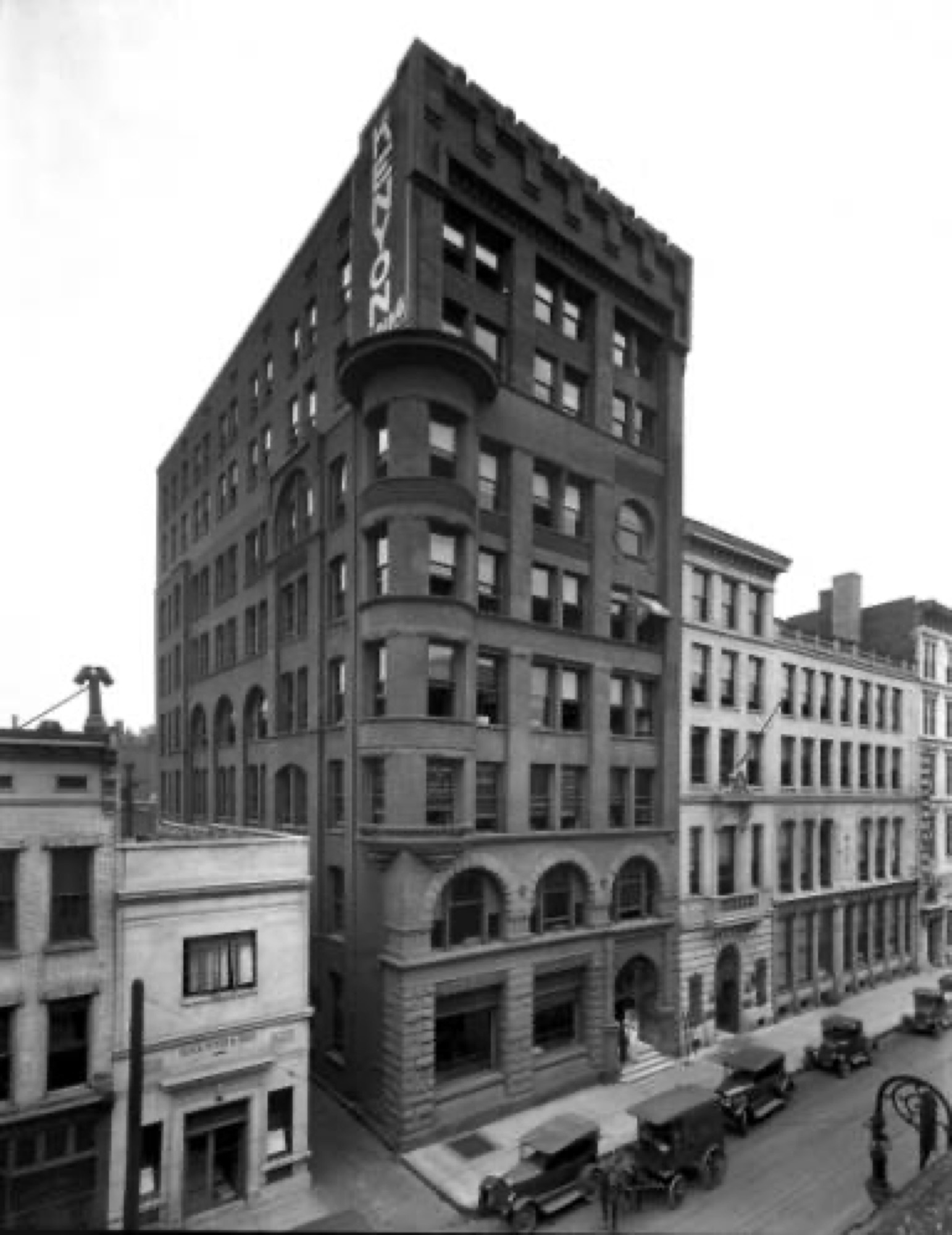
The Louisville Stock Exchange operated within the commercial district anchored by West Main Street, where Louisville’s most prominent financial and mercantile buildings stood in close succession. The exchange’s activities were closely associated with the Board of Trade, which from 1879 occupied the Lithgow Building at the corner of Third and Main Streets—a five-story structure designed by the Irish-born architect Henry Whitestone and completed in 1873. Elizabeth Fitzpatrick Jones’s MA thesis, “Henry Whitestone: Nineteenth-Century Louisville Architect” (University of Louisville, 1974), documents that Whitestone worked almost exclusively in the Italian Renaissance Revival style, and the Lithgow Building exemplified this mode with its ornately carved grey limestone facade and pink marble columns. The Library of Congress Historic American Buildings Survey (HABS KY-141) records the structure as “the most magnificent building in Louisville on its opening.” The Board of Trade added an expansive Merchants Exchange Hall on the second floor, providing a high-ceilinged auction room for securities and commodity dealings. West Main Street’s commercial buildings collectively formed the second-largest concentration of cast-iron facades in the United States, rivaled only by New York’s SoHo district, as the American Planning Association recognized in its 2008 Great Streets designation. Many of these facades were produced by the Snead & Company Iron Works, founded in 1849, which manufactured ornamental cast iron for window caps, cornices, railings, and entire building fronts along the corridor. The Lithgow Building was demolished in 1975 for a road-widening project, erasing one of Whitestone’s finest commercial designs.
The decorative programs of Louisville’s commercial exchange buildings reflected the city’s dual identity as a river port and a center for bourbon and tobacco commerce. The Lithgow Building’s facade featured ornately carved grey limestone enriched with pink marble columns in the Italian Renaissance Revival manner favored by Henry Whitestone, whose design vocabulary drew on cinquecento palazzo traditions transposed to American commercial purposes. Inside, the Merchants Exchange Hall—added in 1879 when the Louisville Board of Trade purchased the building—was described in contemporary accounts as “an elegant exchange hall, of sufficient capacity to meet all demands for current business, as well as for public meetings on matters of general interest.” Along Whiskey Row, the cast-iron storefronts that housed bourbon dealers and securities brokers displayed elaborate ironwork produced by Louisville’s own foundries. The Snead & Company Iron Works, as documented in the National Register nomination for the West Main Street Preservation District, supplied flamboyantly designed ornamental ironwork including Corinthian pilasters, foliated capitals, and bracketed cornices that transformed utilitarian commercial fronts into displays of civic ambition. Louisville’s role as a major iron-manufacturing center—with over twelve foundries operating by 1880—meant that the city’s financial buildings bore locally produced decorative metalwork of a quality and variety unmatched outside Manhattan. The Board of Trade also organized the Southern Exposition of 1883–1887, contracting to install 4,600 of Thomas Edison’s incandescent bulbs—the largest such display in the world at the time—demonstrating the commercial elite’s eagerness to project Louisville as a technologically progressive marketplace.
Louisville’s emergence as a financial center was inseparable from its position at the Falls of the Ohio River—the only natural obstruction to navigation between Pittsburgh and the Gulf of Mexico. As George H. Yater documented in Two Hundred Years at the Falls of the Ohio (1979), the falls created a mandatory portage point that compelled all river traffic to stop, unload, and transship cargo, generating the commercial infrastructure from which Louisville’s exchanges grew. The Louisville and Portland Canal, completed in 1833, eased but did not eliminate this bottleneck; by the 1850s roughly forty percent of Ohio River steamboats were too large for the canal, sustaining the city’s transshipment economy. West Main Street, laid out when Louisville was founded in 1779, ran one block from the river wharves and became the commercial spine of the city. By the 1880s the street housed the Board of Trade at Third and Main, the Bank of Louisville at 316 West Main—a Greek Revival masterpiece by James Harrison Dakin, completed in 1837 and designated a National Historic Landmark in 1971—and the concentrated bourbon dealerships of Whiskey Row between Ninth Street and Brook Street. The Louisville and Nashville Railroad, chartered in 1850 and included in the original Dow Jones Transportation Average by 1884, connected the river port to southern markets and made Louisville the junction where northern capital met southern commodities. The West Main Street Historic District, added to the National Register of Historic Places in March 1974, preserves this layered commercial landscape in a corridor that the Advisory Council on Historic Preservation has called one of America’s finest examples of nineteenth-century urban commerce.
The Louisville Stock Exchange was established in the mid-1880s as one of more than fifty regional securities exchanges that operated across the United States during the Gilded Age, serving local investors who sought a marketplace for the stocks and bonds of Kentucky’s rapidly expanding corporations. The exchange emerged from a commercial ecosystem shaped by the Louisville Board of Trade, itself founded in 1862 for members’ “mutual protection” and to promote “transportation of commodities,” as the University of Louisville Archives catalog documents. Louisville’s economy in this period was driven by bourbon whiskey—with more than one hundred whiskey-related businesses on Main Street by 1900—and by tobacco, with the city selling over 65,000 hogsheads in 1880 alone and solidifying its position as the world’s largest wholesale tobacco market through the 1890s. The Board of Trade’s forty-plus bourbon-industry members by 1890 included distillers, wholesalers, coopers, and still makers, creating a critical mass of capital that supported a local securities market. The exchange also benefited from Louisville’s banking infrastructure, anchored by institutions such as the Fidelity Trust and Safety Vault Company, incorporated in 1884 as the city’s first corporate trustee. The crash of 1929 and subsequent Depression devastated regional exchanges nationwide; the SEC Historical Museum records that when the Securities Exchange Act of 1934 imposed federal registration requirements, many smaller exchanges could not bear the compliance costs. The Louisville Stock Exchange closed in 1935, one of numerous regional markets that ceased operations as the SEC’s standardized disclosure regime concentrated trading volume on larger registered exchanges in New York, Chicago, and Philadelphia.
The Louisville Stock Exchange provided a regional marketplace for the securities of corporations rooted in Kentucky’s distinctive economic base: bourbon distilling, tobacco processing, river transportation, and railroad development. Chief among locally traded issues were shares in the Louisville and Nashville Railroad, chartered in 1850 and by the 1880s one of the most important rail systems in the South; Maury Klein’s History of the Louisville and Nashville Railroad (University Press of Kentucky, 2003) documents that L&N stock fluctuated from $99 per share in late 1881 to $31 by late 1882, illustrating the volatility that made a local exchange valuable for Kentucky investors. The Louisville Railway Company, reorganized in 1880 from the original 1859 horse-car operation and electrified in 1889, offered another actively traded local security. Louisville Gas & Electric, formed in 1838 as Louisville Gas and Water and expanded into electric power by 1890, provided utility shares to the exchange’s listings. Distillery and tobacco-company securities—including firms such as Brown-Forman, founded in Louisville in 1870 by George Garvin Brown—circulated among local investors alongside municipal bonds and bank shares from institutions like the Bank of Louisville. As the SEC Historical Museum’s gallery on equities market structure notes, regional exchanges in this era “found a niche facilitating trading in new industrial and mineral issues” with more lenient listing requirements than the New York Stock Exchange, making them essential platforms for smaller enterprises that could not meet NYSE thresholds. Trading was conducted through an open-outcry auction system, with members gathering on the exchange floor to match buy and sell orders at quoted prices.
Images will be added as the project develops. Photographs by Larry Ng and from research sources.