Malaysian Rubber Exchange
Kuala Lumpur, Malaysia · Established 1962
This site requires authorization to access.
To request access, contact
william.goetzmann@yale.edu
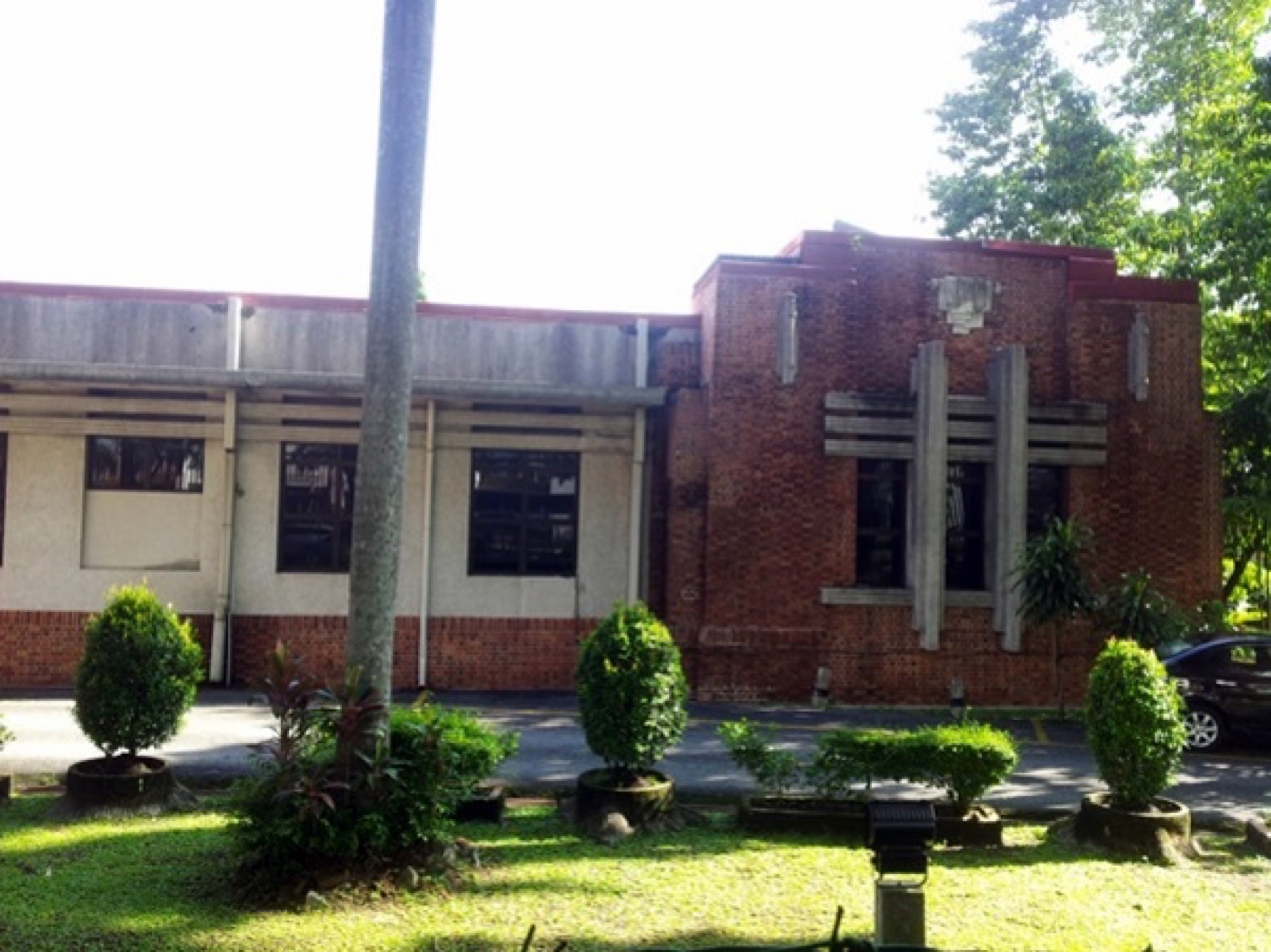
The Malaysian Rubber Exchange has been housed since the 1960s in Bangunan Getah Asli (“Natural Rubber Building”), located at 148 Jalan Ampang in the heart of Kuala Lumpur’s commercial district. The complex comprises a four-storey low-rise annex constructed in the early 1960s—coinciding with the Exchange’s formal incorporation under the Malaysian Rubber Exchange (Incorporation) Act of 1962—and an eighteen-storey office tower added in the 1980s, as documented in property surveys by the Malaysian Rubber Board (Lembaga Getah Malaysia). The Exchange itself occupies the fourth floor, while the Malaysian Rubber Board headquarters sits on the eighteenth floor, creating a vertical integration of trading and regulatory functions under one roof. The building stands directly opposite the Petronas Twin Towers on what was historically one of Kuala Lumpur’s most important commercial arteries. Jalan Ampang, originally a track linking the tin-mining settlement of Ampang to the city center in the 1880s, became the principal address for rubber-industry institutions in the twentieth century. Most notably, the Rubber Research Institute of Malaya (RRIM) building at 260 Jalan Ampang—an Art Deco masterpiece designed by Arthur Oakley Coltman and consulting engineer Steen Sehested, completed on 14 May 1937 at a cost of M$200,000—stands as the most architecturally distinguished structure associated with Malaya’s rubber trade, as described in the heritage surveys by Badan Warisan Malaysia. Coltman, an English architect who practiced in Malaya for thirty-two years through the firm Booty Edwards & Partners, also designed the Market Square Clock Tower, the OCBC Building, and the Lee Rubber Building. The RRIM building’s single-storey form features exposed red-brick façades, paired mullions between window openings, geometric Shanghai-plaster ornamentation, and two prominent pylons with flagpoles flanking the entrance beneath a projecting concrete canopy—details that bear comparison with Frank Lloyd Wright’s Imperial Hotel in Tokyo. The foundation stone was laid on 22 April 1936 by Sultan Sir Alaeddin Sulaiman Shah, the fifth Sultan of Selangor. Though Bangunan Getah Asli itself is a functional mid-century office building rather than an architectural landmark, its clustering with the RRIM building along Jalan Ampang created a de facto “rubber row” that anchored Malaysia’s most important commodity trade to a specific urban corridor.
The Malaysian Rubber Exchange, as a mid-twentieth-century commodity trading institution, does not possess the elaborate decorative programs found in older European bourses. Its visual and material culture is instead rooted in the industrial processes of rubber production and the rituals of commodity grading. The most distinctive material artifacts of the trade are the implements of latex collection: the curved tapping knife used to shave thin strips from the bark of Hevea brasiliensis, the galvanized metal spouts hammered into the cut, and the ceramic or aluminum collecting cups (mangkuk getah) hung on wire springs encircling each tree. In the early decades of Malayan rubber cultivation, clay cups produced in local kilns—including Singapore’s surviving dragon kilns at Jalan Bahar—served as the primary latex vessels, representing a material culture linking Chinese ceramic traditions to plantation agriculture. The grading of rubber sheets constituted another visual ritual with its own aesthetic conventions. Under the Ribbed Smoked Sheet (RSS) system, trained graders held each sheet against clear light to inspect for specks, bubbles, mold, and impurities, sorting them into six grades from 1XRSS to 5RSS based on color, translucency, and surface integrity. The ideal RSS 1 grade exhibited a uniform honey-amber color indicating proper smoking and minimal oxidation. For export, sheets were pressed by hydraulic machine into sixty-centimeter cube bales of approximately 111 kilograms and coated with a white powder of kerosene and calcium carbonate to prevent adhesion—a distinctive visual signature of rubber warehouses worldwide. The most significant artistic expression connected to the rubber trade in Kuala Lumpur is the Art Deco ornamentation of the RRIM building on Jalan Ampang, where Coltman’s geometric grooved patterns, Shanghai-plaster banding, and modernist symmetry embodied the progressive aspirations of a colonial research establishment devoted to improving rubber science, as analyzed in heritage studies by Badan Warisan Malaysia.
Kuala Lumpur’s emergence as the center of the global rubber trade is inseparable from its origins as a tin-mining settlement. The town was founded around 1857 at the confluence of the Gombak and Klang rivers, when Raja Abdullah bin Raja Jaafar recruited Chinese miners from Lukut to prospect for tin, as recounted in numerous histories of the city. Under Kapitan Yap Ah Loy’s leadership in the 1870s–1880s, the settlement was rebuilt after civil wars, with Medan Pasar (Old Market Square) established as the commercial heart. When British Resident Frank Swettenham made Kuala Lumpur the capital of Selangor in 1880 and mandated brick-and-tile construction after devastating fires, the city acquired the Neo-Classical shophouses and colonial administrative buildings—including the Sultan Abdul Samad Building and the Railway Station—that defined its architectural character. The rubber boom of the early 1900s transformed this tin-mining town into a metropolis, as described by Amarjit Kaur in her work on Kuala Lumpur’s historical geography. When global demand for natural rubber surged after 1905—driven by the automobile industry—international plantation firms including Guthrie, Harrisons and Crosfield, and Dunlop established their Southeast Asian headquarters in Kuala Lumpur, particularly along Jalan Ampang. The city’s strategic position on the Malay Peninsula, connected by rail to the port of Klang on the Strait of Malacca, gave it direct access to international shipping routes. Malaysia’s western coastal states—Perak, Selangor, Negeri Sembilan, and Johor—became the world’s premier rubber-producing region, and Kuala Lumpur served as the administrative and commercial nexus where plantation output was consolidated, graded, and dispatched for export. The clustering of rubber-related institutions along Jalan Ampang—the RRIM at number 260 and Bangunan Getah Asli at number 148—created a commodity corridor linking research, regulation, and trading. By the late twentieth century, as Malaysia’s economy diversified and the Petronas Twin Towers rose directly across from Bangunan Getah Asli, the rubber exchange found itself physically embedded in the nation’s new financial center, a palimpsest of commodity and capital economies.
The history of rubber trading in Malaya begins with an act of imperial botany. In 1876, Henry Wickham collected approximately 70,000 seeds of Hevea brasiliensis from the Santarém region of Brazil—declaring them “academic specimens” to evade export scrutiny—and delivered them to the Royal Botanic Gardens at Kew, as recounted in Joe Jackson’s The Thief at the End of the World (2008). Only about 2,700 germinated, but seedlings were dispatched to British Ceylon, Singapore, and Malaya. Henry Nicholas Ridley, director of the Singapore Botanic Gardens from 1888, earned the nickname “Mad Ridley” for his tireless campaign to persuade Malayan planters to cultivate rubber, developing improved tapping methods and conducting research on planting density, seedling propagation, and processing, as documented in histories of the Singapore Botanic Gardens. By 1905, Malayan rubber exports reached 200 tons; by 1919, Malaya’s exports exceeded the rest of the world combined, as John H. Drabble established in Rubber in Malaya, 1876–1922: The Genesis of the Industry (Oxford University Press, 1973). The industry depended on massive labor migration: nearly three million Indian workers came to Malaya by 1941, their wages kept low by continuous recruitment, as analyzed in Lynn Hollen Lees’s Planting Empire, Cultivating Subjects: British Malaya, 1786–1941 (Cambridge University Press, 2017). The first major regulatory intervention was the Stevenson Restriction Scheme (1922–1928), which limited exports to a percentage of each estate’s “standard production” to stabilize prices, followed by the International Rubber Regulation Agreement of 1934, a cartel encompassing Britain, India, the Netherlands, France, and Thailand that controlled 98 percent of world production, as discussed in Klaus Knorr’s World Rubber and Its Regulation (1945). The Japanese occupation (1942–1945) devastated the industry: approximately 150,000 tons were requisitioned, large plantation areas were abandoned, and real per capita income fell to half its 1941 level by 1944. The Rubber Research Institute of Malaya, established by Act of the Federal Council on 29 June 1925 with Dr. G. Bryce as its first director, played a crucial role in post-war recovery through development of high-yield clones and improved processing techniques, as detailed in Colin Barlow’s The Natural Rubber Industry: Its Development, Technology, and Economy in Malaysia (Oxford University Press, 1978). The Malaysian Rubber Exchange was formally incorporated on 24 February 1962 under the Federation of Malaya Rubber Exchange (Incorporation) Act, creating a corporation to establish and maintain a domestic market for rubber with rules governing trade conduct, marketing, distribution, and a clearing house for contract settlement. The Exchange was restructured as the Malaysian Rubber Exchange and Licensing Board (MRELB) under the MRELB Act 1972, combining trading and regulatory functions. The Standard Malaysian Rubber (SMR) scheme, launched in 1965, revolutionized the industry by replacing subjective visual grading with technical specifications based on dirt content, ash, nitrogen, and plasticity—a system that Colin Barlow described as giving Malaysia a decisive competitive advantage in international markets. In 1980, the Kuala Lumpur Commodity Exchange (KLCE)—the first futures exchange in Southeast Asia—began trading rubber futures alongside palm oil, tin, and cocoa. On 1 January 1998, the Malaysian Rubber Board was established, merging the MRELB, RRIM, and the Malaysian Rubber Development Corporation into a single body overseeing research, regulation, and exchange operations.
The Malaysian Rubber Exchange trades natural rubber in multiple forms that reflect the evolution of processing technology over more than a century. The traditional product is Ribbed Smoked Sheet (RSS) rubber, produced by coagulating field latex with formic acid, rolling the coagulum through profiled rollers to create a ribbed texture that increases surface area, and smoking the sheets in wood-fired smokehouses for several days—a process yielding grades from 1XRSS (the lightest and most translucent) through RSS 5, graded by visual inspection against light. The transformative innovation was the Standard Malaysian Rubber (SMR) scheme, introduced in 1965, which replaced visual appraisal with laboratory analysis of technical parameters including dirt content, ash content, nitrogen levels, volatile matter, and Wallace plasticity. Current SMR grades traded on the Exchange include SMR CV (constant viscosity), SMR L (light-colored), SMR 5, SMR GP (general purpose), SMR 10, and SMR 20, each defined by precise specifications published by the Malaysian Rubber Board. SMR 20, the most widely traded grade, became the benchmark contract for the Kuala Lumpur Commodity Exchange when rubber futures trading commenced in 1980. Trading on the MRE operates through two membership categories—Ordinary and Associate—with applicants required to demonstrate reliable standing and financial soundness. The Exchange publishes daily prices that serve as reference benchmarks for the global natural rubber market, with Malaysia historically controlling over 30 percent of world output until the late 1980s. The relationship between the Malaysian and London rubber markets was historically mediated through agency houses: firms such as Guthrie, Harrisons and Crosfield, and Sime Darby maintained offices in both Kuala Lumpur and London’s Mincing Lane—the “Street of Tea” that also served as the hub for global plantation commodity trading from 1679 to 1998, with Plantation House as its purpose-built center from 1930. The Cold War introduced geopolitical complexity, as the Sino-Malaysian rubber trade persisted despite the UN embargo on China during the Korean War, with the United States ultimately retreating from enforcement between 1953 and 1955, as analyzed by Ai Tee Koh in a 2023 article in the Journal of Global History. Malaysia’s share of world natural rubber production declined from dominance (exceeding 50 percent in 1919) to approximately 25 percent by 1990, as smallholders supported by the Federal Land Development Authority (FELDA, established 1956) and the Rubber Industry Smallholders Development Authority (RISDA) gradually shifted acreage to oil palm. Rubber’s contribution to Malaysian export earnings fell from 55 percent in 1960 to less than 4 percent by 1990 and under 1 percent by the end of the twentieth century, though the Exchange continues to operate as a pricing mechanism within the Malaysian Rubber Board’s institutional framework.
Images will be added as the project develops. Photographs by Larry Ng and from research sources.