Kairouan Souks
Kairouan, Tunisia · Established c. 9th century CE
This site requires authorization to access.
To request access, contact
william.goetzmann@yale.edu
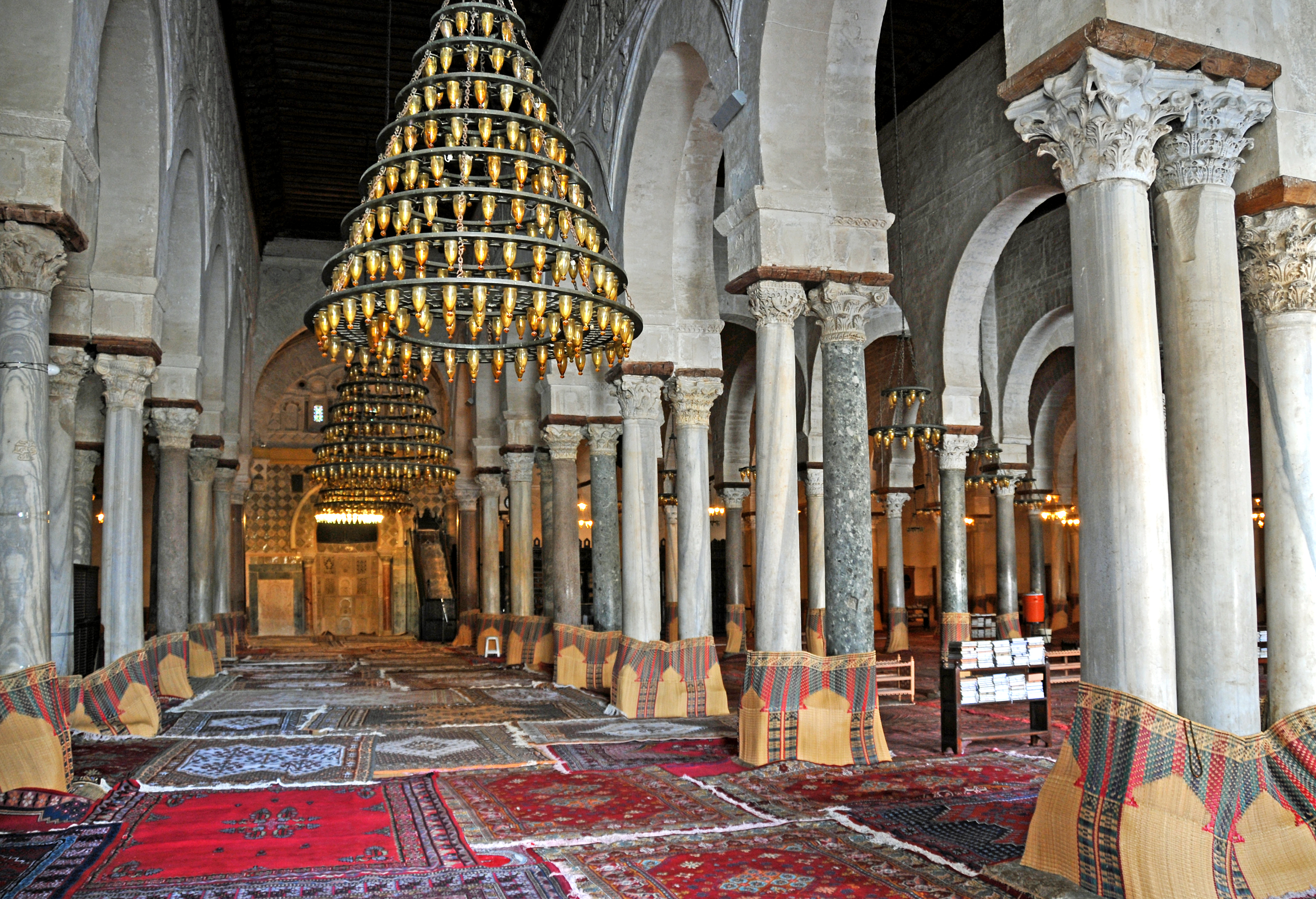
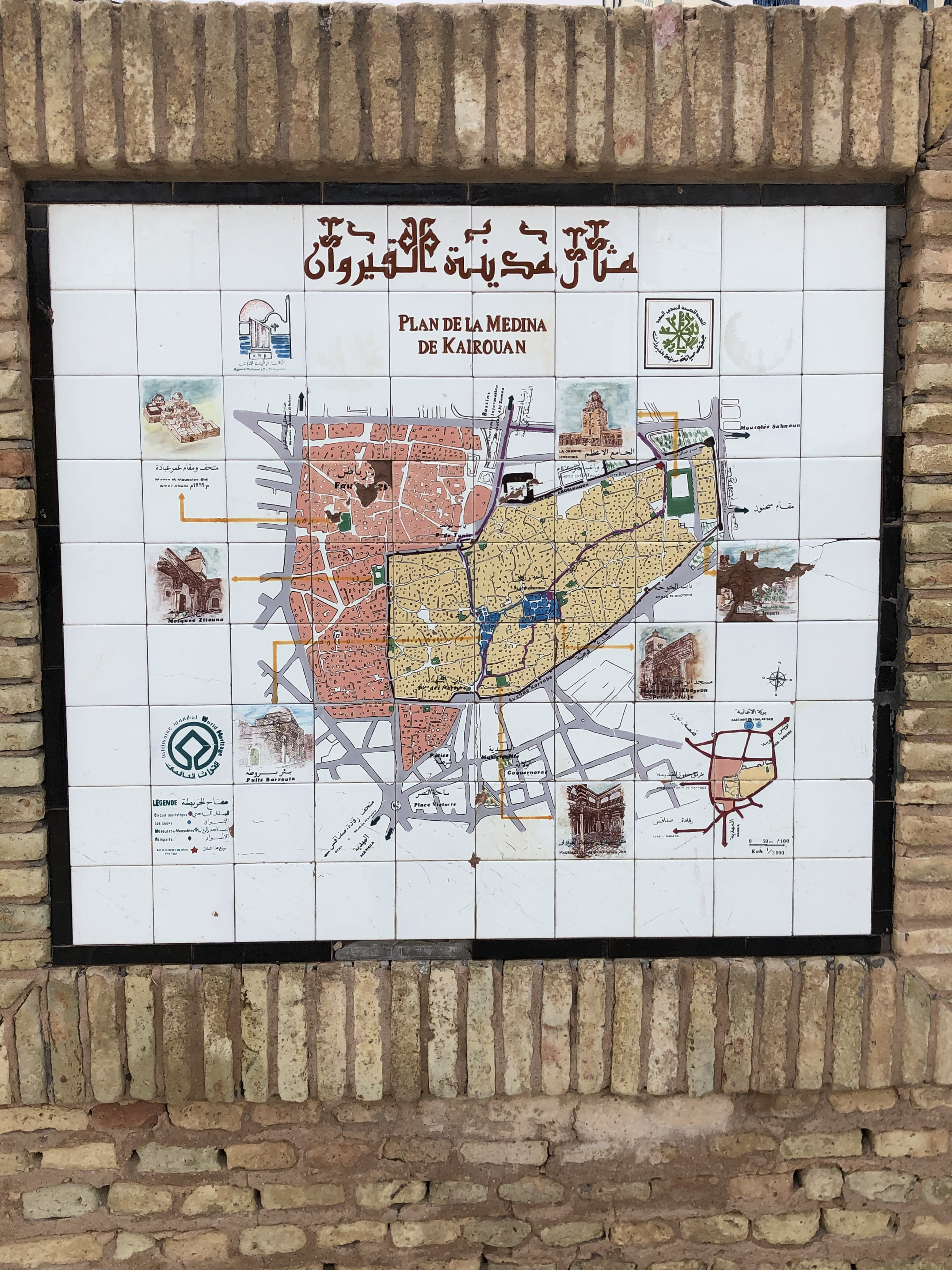
The medina of Kairouan, inscribed on the UNESCO World Heritage List in 1988, encompasses roughly fifty-four hectares enclosed by more than three kilometres of crenellated ramparts pierced by monumental gates — the Bab al-Tunis to the north, Bab al-Jalladin to the south, and Bab al-Khoukha to the east. Within this fortified perimeter, the commercial quarter radiates outward from the Great Mosque of Kairouan (Jamiʿ Uqba ibn Nafiʿ), founded in 670 CE and progressively rebuilt under the Aghlabid emirs in the ninth century, as documented by Georges Marçais in L’Architecture musulmane d’Occident (1954). The souks occupy a dense lattice of narrow, vaulted alleys organized by trade specialty — a pattern that Paul Sebag, in his study of Tunisian urban morphology, identified as characteristic of Ifriqiyan commercial planning. The Souk al-Birka (the slave and luxury-goods market), the Souk al-Attarin (perfumers), and the Souk al-Najjarin (carpenters) reflect the hierarchical spatial ordering described by Besim Hakim in Arabic-Islamic Cities: Building and Planning Principles (1986), whereby prestige trades cluster nearest the congregational mosque while noxious crafts are relegated to the periphery. The medina’s earliest protective legislation dates to a 1921 French Protectorate decree, and Tunisian law has maintained this heritage classification since independence. Alexandre Lezine’s Architecture de l’Ifriqiya: Recherches sur les monuments aghlabides (1966) remains the definitive architectural survey of the Aghlabid-era structures, documenting the horseshoe arches, reused Roman columns, and carved stucco that distinguish the commercial arcades. UNESCO’s periodic monitoring reports note that the medina retains an exceptional degree of medieval urban fabric, with many souk structures preserving their original ninth- to eleventh-century masonry beneath later plaster and whitewash.
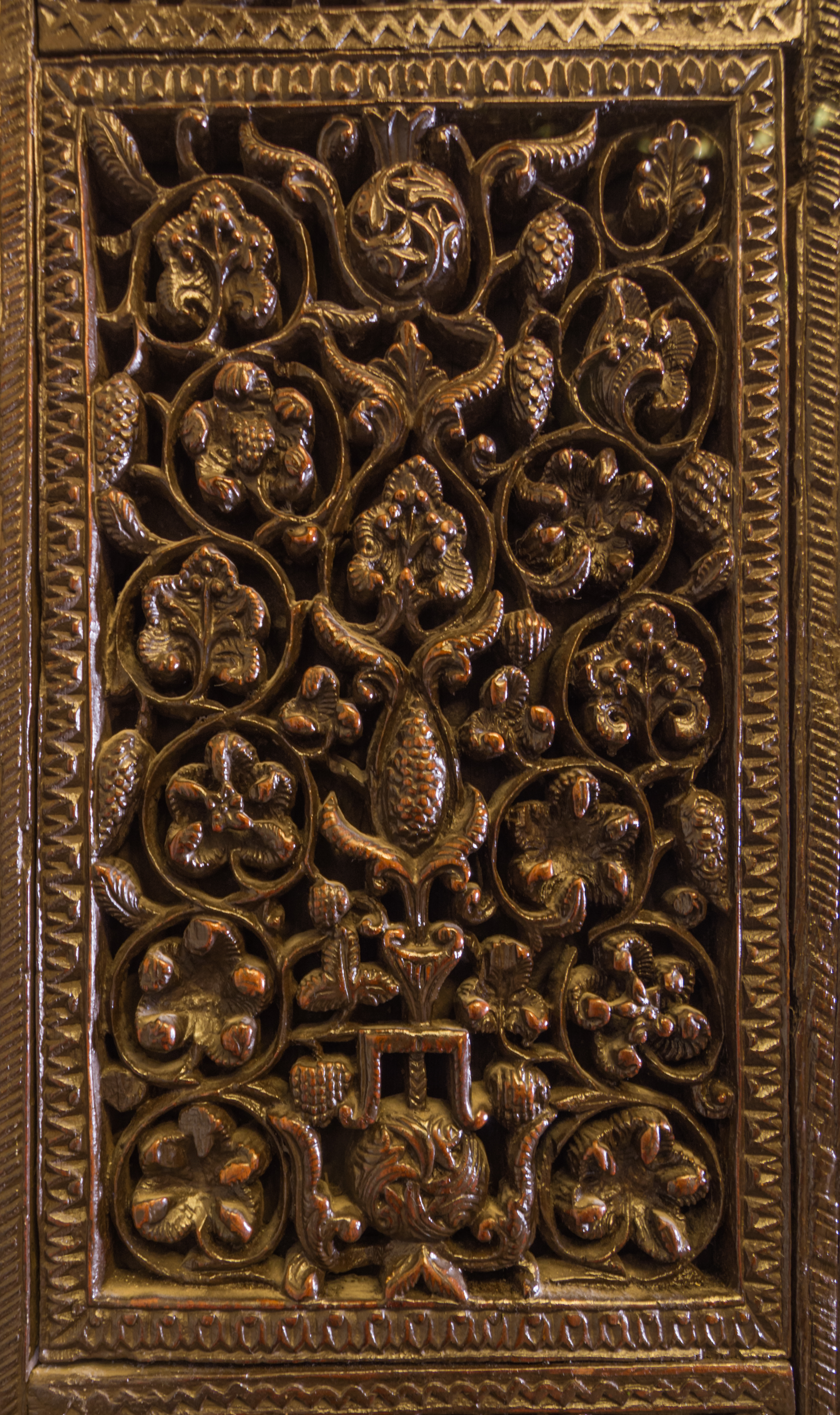
The artistic heritage of Kairouan’s commercial quarter is inseparable from the decorative programme of the Great Mosque, whose mihrab (prayer niche) displays a celebrated panel of 139 lustre-painted tiles imported from Mesopotamia, probably from Baghdad or Samarra, in the ninth century. Lucien Golvin, in his Recherches archéologiques à la Qalʿa des Banû Hammād (1965) and subsequent studies, argued that these tiles represent the earliest datable evidence of Iraqi lustre technique in the western Mediterranean, establishing a material link between Abbasid court arts and Aghlabid Ifriqiya. The minbar (pulpit), carved from teak around 862 CE and discussed by Jonathan Bloom in Arts of the City Victorious: Islamic Art and Architecture in Fatimid North Africa and Egypt (2007), ranks among the oldest surviving wooden minbars in the Islamic world and demonstrates the quality of woodcarving available through Kairouan’s long-distance trade networks. Within the souks themselves, the tradition of embossed copperware and brasswork, analysed by Paul Ben Amos and other scholars of Maghribi metalcraft, reflects techniques transmitted along trans-Saharan routes. Aghlabid and Fatimid ceramic production in Kairouan, documented by the Musée National d’Art Islamique de Raqqada (located just outside the city), included green-and-brown painted wares and early tin-glazed pottery that anticipated later developments in Andalusian and Italian maiolica, as argued by Robert B. Mason in Shine Like the Sun: Lustre-Painted and Associated Pottery from the Medieval Middle East (2004). Textile production, particularly the weaving of silk and wool brocades recorded in Geniza letters as arriving from Kairouan, constituted a significant component of the city’s artisanal output, with S.D. Goitein noting in A Mediterranean Society, Volume I: Economic Foundations (1967), that Kairouanese textiles featured among the goods shipped to Fustat by Maghribi merchants.
Kairouan occupies a strategic position on the semi-arid steppe of central Tunisia, roughly 150 kilometres south of Tunis and sixty kilometres inland from the Mediterranean coast. This deliberately inland siting, as Michael Brett and Werner Forman explained in The Moors: Islam in the West (1985), served both military and commercial purposes: the city controlled caravan routes linking the coastal ports of Sousse and al-Mahdiyya to the trans-Saharan gold and slave roads running south through the Jarid oases toward the Fezzan and the kingdoms of the Sudan. Recognized as the fourth holiest city in Islam — after Mecca, Medina, and Jerusalem — Kairouan attracted pilgrims and scholars who in turn stimulated the commercial life of the souks. The Aghlabid Basins (Bassins des Aghlabides), a remarkable ninth-century hydraulic installation comprising a settling basin and a large circular reservoir of nearly 128 metres in diameter, demonstrate the engineering investment required to sustain an urban population in this arid environment, as analysed by Mohamed Solignac in Recherches sur les installations hydrauliques de Kairouan (1953). Under the Fatimid caliphate (909–1171), Kairouan’s commercial role was partially eclipsed by the foundation of the new dynastic capital at al-Mahdiyya on the coast, yet the city retained its function as an interior entrepot. Jessica Goldberg, in Trade and Institutions in the Medieval Mediterranean: The Geniza Merchants and Their Business World (2012), demonstrated that Kairouan remained the principal inland node in a commercial network extending from al-Andalus to Egypt, with its merchants maintaining agents and warehouses in Fustat, Palermo, and Almeria. The relationship between Kairouan and Tunis shifted decisively only after the Hilalian invasions of the 1050s redistributed economic gravity northward.
Kairouan was founded in 670 CE by the Arab general ʿUqba ibn Nafiʿ as a military garrison (misr) during the early Islamic conquest of Ifriqiya, and within two generations it had become the political and commercial capital of the western Islamic world. Under the Aghlabid dynasty (800–909), the city entered its golden age: the emirs rebuilt the Great Mosque, constructed the Aghlabid Basins, and presided over a flourishing interregional trade, as narrated by Mohamed Talbi in L’Émirat aghlabide (1966). The Fatimid conquest of 909 temporarily diminished Kairouan’s political status in favour of al-Mahdiyya and later al-Qahira (Cairo), but the city’s merchants continued to dominate trans-Mediterranean commerce. The Cairo Geniza — the extraordinary cache of discarded documents preserved in the Ben Ezra Synagogue — reveals a dense correspondence network among Jewish traders based in Kairouan during the tenth and eleventh centuries. S.D. Goitein, in A Mediterranean Society (1967–1993), identified Kairouan as one of the three great commercial poles (alongside Fustat and Palermo) of the Geniza world, documenting partnerships, credit instruments, and commodity shipments in extraordinary detail. Avner Greif, in his landmark article “Reputation and Coalitions in Medieval Trade: Evidence on the Maghribi Traders” (Quarterly Journal of Economics, 1989) and subsequently in Institutions and the Path to the Modern Economy: Lessons from Medieval Trade (2006), used the Geniza evidence to model the Maghribi traders’ coalition as an informal enforcement mechanism — a multilateral punishment strategy that enabled long-distance agency relationships without formal legal institutions. Key Geniza figures associated with Kairouan include the prominent merchant and communal leader Nahray ben Nissim (active mid-eleventh century), whose correspondence, studied by Murad al-Qaddumi and more recently by Jessica Goldberg (2012), illuminates the mechanics of credit, forward contracting, and partnership (shirka and mudaraba) in the Kairouanese trading world. The catastrophic invasion of the Banū Hilāl and Banū Sulaym — nomadic Arab tribes dispatched westward by the Fatimid caliph al-Mustansir in the 1050s — devastated Kairouan and permanently disrupted the overland trade routes. Ibn Khaldūn famously described this invasion as “like a swarm of locusts” in the Muqaddima (1377), and modern historians including Hichem Djait in Al-Kufa: Naissance de la ville islamique (1986) have debated the invasion’s long-term economic consequences. After the Hilalian devastation, surviving merchant families relocated to Tunis and coastal cities, and Kairouan never recovered its former commercial pre-eminence, though its souks continued to function as a regional market centre under Hafsid, Ottoman, and French Protectorate rule.
The Kairouan souks served as the principal entrepot for goods moving between sub-Saharan Africa and the Mediterranean basin. Gold — mined in Bambuk, Bure, and other deposits in the western Sudan — arrived via trans-Saharan caravans passing through the Fezzan, and was re-exported northward to the mints of Ifriqiya and onward to Egypt and al-Andalus. As Ronald Messier argued in “The Almoravids: West African Gold and the Gold Currency of the Mediterranean Basin” (Journal of the Economic and Social History of the Orient, 1974), North African intermediaries like those based in Kairouan were essential links in the gold chain that sustained Mediterranean monetary systems. Ivory, enslaved persons, and ostrich feathers likewise transited through Kairouan’s markets. In the opposite direction, Mediterranean manufactures — textiles, glassware, metalware, and processed foodstuffs including olive oil and wheat — flowed southward. The Geniza documents analysed by Goitein (1967) and Goldberg (2012) detail the specific commodities traded by Kairouanese merchants: flax, indigo, silk, lac, pepper, and medicinal drugs from the eastern Mediterranean; locally produced leather goods, woollen textiles, and hides; and Sicilian wheat and cheese. The souk system organized trade by commodity in designated streets, a spatial arrangement that facilitated guild-like quality control and price transparency, as described by Hakim (1986). Greif’s coalition model (1989, 2006) emphasized that the Maghribi traders’ ability to enforce honest agency through collective reputation was central to the operation of long-distance commerce, since agents stationed in distant ports handled goods on consignment without formal contracts enforceable across jurisdictions. Goldberg (2012) refined this picture by showing that Kairouanese merchants employed a range of partnership forms — including the Islamic mudaraba (commenda), bilateral shirka (partnership), and simple commission agency — alongside credit instruments such as the suftaja (bill of exchange) and the hawala (transfer order). These financial innovations, Goldberg demonstrated, were not merely informal trust mechanisms but drew on a sophisticated blend of Islamic commercial law (fiqh al-muʿamalat) and customary mercantile practice, enabling the Kairouan souks to function as a node in one of the most complex pre-modern trading systems documented in the historical record.