Hong Kong Mercantile Exchange (HKMEx)
Hong Kong, China · Established 2011

This site requires authorization to access.
To request access, contact
william.goetzmann@yale.edu
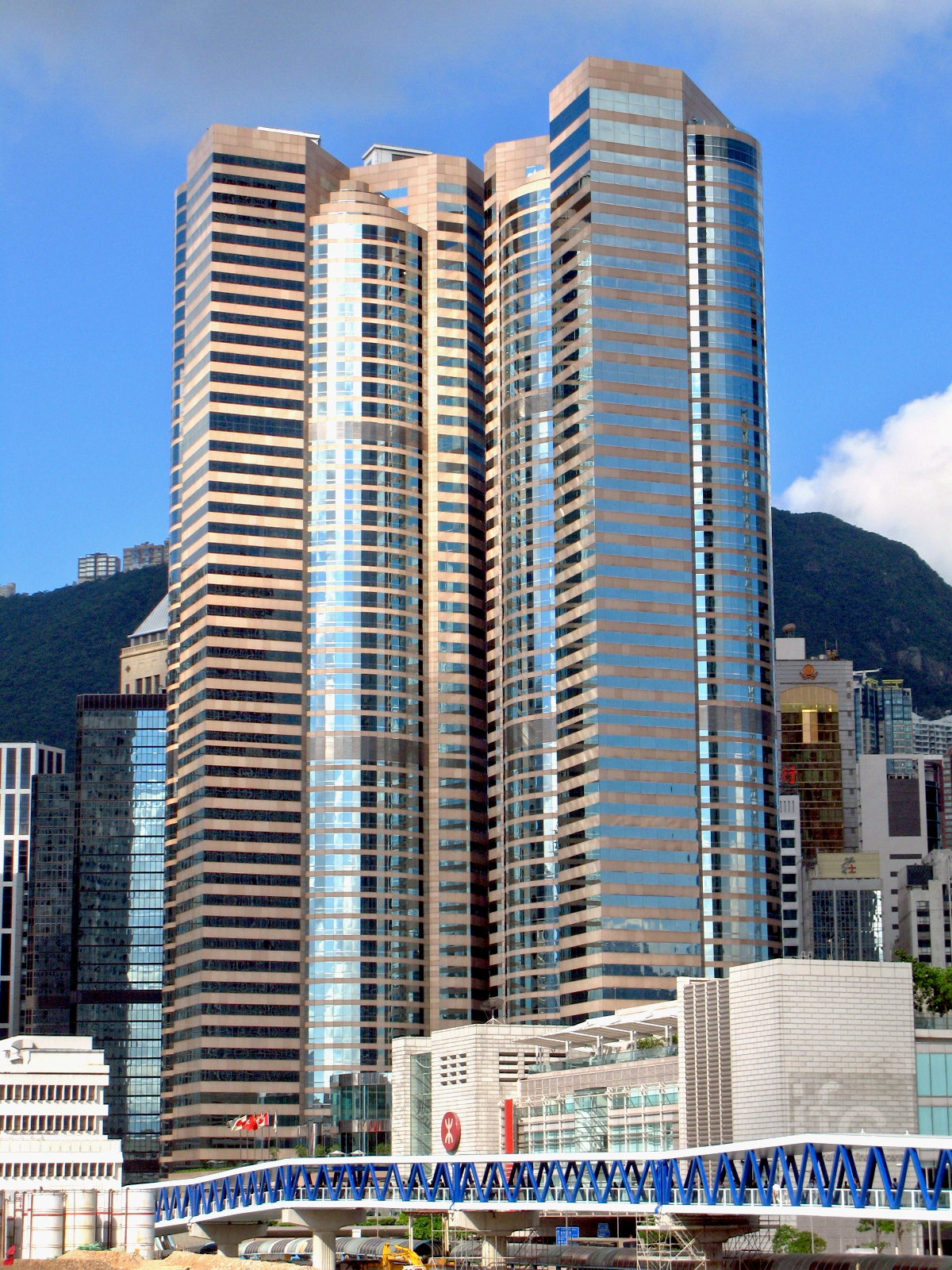
The Hong Kong Mercantile Exchange maintained its offices in Two International Finance Centre (2IFC), the landmark 88-storey skyscraper at 8 Finance Street in Hong Kong’s Central district. Completed in 2003, Two IFC was designed by César Pelli of Pelli Clarke & Partners in collaboration with local architect Rocco Yim of Rocco Design Ltd., with structural engineering by Ove Arup & Partners. Pelli described the tower as “one of the purest, most elemental skyscraper forms I have ever designed,” realizing a classical obelisk silhouette he had long envisioned (Pelli Clarke & Partners, International Finance Center project description). Rising 415 meters with carefully proportioned setbacks that taper from a 57-meter base to 39 meters at roof level, the tower culminates in a sculptural open crown that dematerializes the building form against the sky. As documented by WikiArquitectura, the composite structural system features a substantial concrete core connected to eight composite steel-tube columns filled with concrete, with transfer structures every twenty floors to resist Hong Kong’s typhoon winds. The curtain wall employs lightly reflective glass panels combined with pearl-colored silver aluminum mullions, reinforcing verticality while softening the facade’s appearance. The complex consumed 38,000 tons of steel sourced from Spain, Britain, Japan, and China, along with 500,000 cubic meters of concrete. Two IFC houses sixty-two elevators, including rare double-deck models, serving 312,000 square meters of built-up area. The Hong Kong Monetary Authority purchased fourteen floors—including the 55th, 56th, and 77th through 88th—for US$480 million in 2001, establishing its headquarters and public exhibition center there. For HKMEx, locating within this prestigious address signaled the exchange’s ambition to position itself alongside the territory’s most prominent financial institutions.
The decorative program specific to the Hong Kong Mercantile Exchange’s offices within Two IFC is not well documented in published sources, reflecting the exchange’s brief operational life of barely two years (2011–2013) and its abrupt closure amid regulatory investigation. The broader IFC complex, however, features notable artistic elements. The sculptural crown atop Two IFC, designed by César Pelli, functions as both structural termination and urban art—an open-skyward lattice that, when illuminated at night, serves as a beacon visible for miles across Victoria Harbour (WikiArquitectura, Two International Finance Centre project documentation). The tower participates nightly in “A Symphony of Lights,” which the Guinness World Records recognized as the world’s largest permanent light and sound show, with laser beams and colored lighting emanating from the IFC towers alongside other Central skyline buildings (Hong Kong Tourism Board). Within the complex, the HKMA Information Centre on the 55th floor houses art installations fashioned from monetary materials, including “Chanting Notes,” a bauhinia tree sculpture crafted from shredded currency notes, and “Small Change, Big Ode,” a composition assembled entirely from Hong Kong coins—works that directly connect decorative art to the building’s financial function. The IFC Mall’s public spaces have hosted rotating contemporary art installations, including “Flux” by Korean artist Ahn Pil-Yun. The four-storey transport interchange entrance hall, designed with transparent and fluid spaces maximizing natural light through full-height windows and skylights, represents an architectural decorative program in its own right. As a commodities exchange, HKMEx’s most significant material connection was not visual art but physical gold: the exchange contracted with the HKIA Precious Metals Depository at Hong Kong International Airport for the storage and physical delivery of gold bars, making bullion itself the exchange’s primary aesthetic and material artifact.
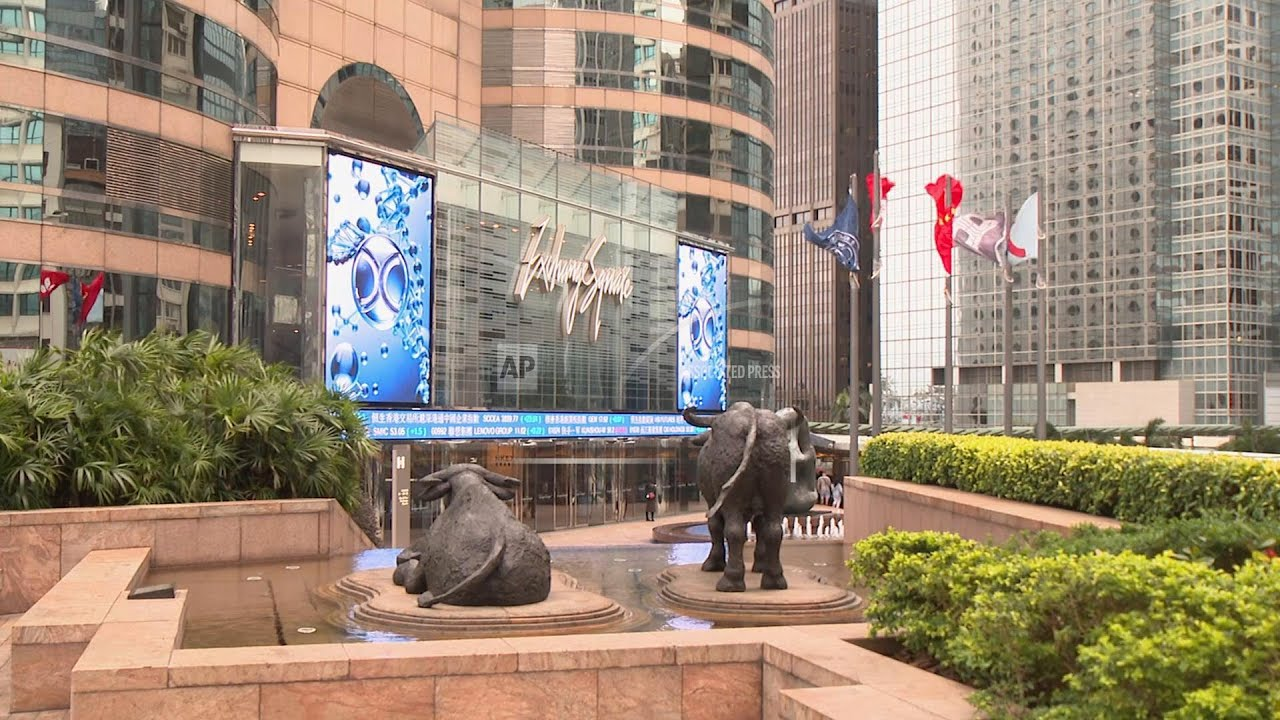
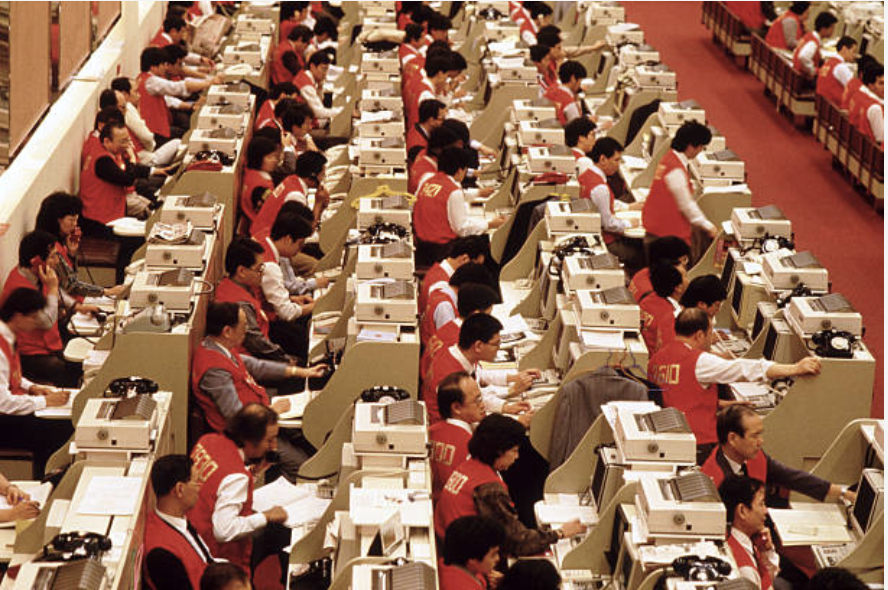
The Hong Kong Mercantile Exchange was situated at the epicenter of one of the world’s most concentrated financial districts. Two IFC stands on reclaimed land along the northern shore of Hong Kong Island, directly on Victoria Harbour’s waterfront in Central, the historic heart of Hong Kong’s commercial life. The IFC complex was built above the MTR Hong Kong Station and Airport Express terminal as part of the Hong Kong Airport Core Programme of the 1990s, which transformed the harbour’s edge through extensive land reclamation (International Finance Centre official documentation). The complex sits within a dense cluster of financial institutions: Exchange Square, completed in phases from 1985 to 1988 and home to the Hong Kong Stock Exchange trading hall, stands just to the east, while the Bank of China Tower and Cheung Kong Center are nearby. As the Zolima CityMag feature “Hong Kong’s Skyline Icons” (2019) observed, Two IFC and the International Commerce Centre across the harbour on the Kowloon side form twin sentinels guarding Victoria Harbour, symbolizing Hong Kong’s financial dynamism. Hong Kong’s position as an international financial center derives from its free movement of capital, common-law legal system, and strategic location bridging Asian and Western time zones—attributes HKMEx explicitly sought to leverage. The Chinese Gold and Silver Exchange Society, founded in 1910, had long operated its physical bullion market in Sheung Wan, just west of Central, establishing Hong Kong’s century-long tradition in precious metals trading (Chinese Gold and Silver Exchange Society historical records). HKMEx’s choice to locate within the IFC rather than in Hong Kong’s traditional gold-trading neighborhood reflected its ambition to be a modern, globally connected electronic platform rather than a continuation of Hong Kong’s older, floor-based trading culture. The district’s extraordinary concentration of financial infrastructure—regulators, clearing houses, banks, and rival exchanges—both supported and ultimately overwhelmed the fledgling exchange.
The Hong Kong Mercantile Exchange represents one of the most dramatic cautionary tales in modern exchange history. Announced at a press conference on 25 June 2008 by chairman Barry Cheung Chun-yuen, a prominent businessman and adviser to then-incoming Chief Executive Leung Chun-ying, HKMEx was conceived as a vehicle to establish Hong Kong as Asia’s premier commodities trading hub (South China Morning Post, “Ill-fated Hong Kong Mercantile Exchange simply could not compete,” 2013). Total investment reached approximately HK$1 billion (US$129 million), with Cheung contributing 56 percent through his company New Effort Holdings. Strategic shareholders included Industrial and Commercial Bank of China (Asia), COSCO Treasury, China Ocean Shipping Group, Reliance Money of India, and En+ Group, the Russian holding company controlling aluminum giant Rusal—each taking roughly 10 to 15 percent stakes (Institutional Investor, “Hong Kong Mercantile Exchange Collapse Raises More Questions than Answers,” 2013). Albert Helmig, former vice-chairman of NYMEX, was appointed president in 2009 to lead operations. HKMEx launched trading on 18 May 2011 with a US dollar gold futures contract, followed by silver futures in July 2011. However, the Securities and Futures Commission denied HKMEx full authorization as an exchange operator due to insufficient financial capacity for clearing and settlement, granting only a lower-grade Automated Trading Services license—a distinction that legislator Christopher Cheung later argued gave “false impression to overseas investors” (South China Morning Post). Trading volumes collapsed from an average of 5,415 daily gold contracts in May 2012 to just 866 by May 2013, while silver fell to 182 contracts daily. The exchange had operated unprofitably since opening. On 18 May 2013—exactly two years after launch—HKMEx surrendered its license, with only 200 contracts in open interest. Three days later, the SFC announced an investigation into “suspected irregularities in financial affairs” and referred the matter to police. Cheung was arrested, and in July 2020 was found guilty of fraud and conspiracy to defraud for concealing the exchange’s deteriorating financial position from the SFC between May 2012 and May 2013; he was sentenced to four years’ imprisonment (Regulation Asia, “Hong Kong Court Sentences Ex-HKMEx Chairman to Four Years Jail,” 2020). Corporate governance activist David Webb observed that HKMEx’s fundamental flaw was the assumption that “China needed its own offshore exchange to influence prices,” when in reality “supply and demand influence prices, not the location” of trading (Institutional Investor, 2013). The collapse was Hong Kong’s most significant bourse failure since the Hong Kong Futures Exchange went bust after the global stock market crash of October 1987.
The Hong Kong Mercantile Exchange operated as a fully electronic commodities exchange, utilizing the TRADExpress trading platform developed by Swedish technology firm Cinnober Financial Technology, paired with Cinnober’s Scila Surveillance system for market monitoring (MarketsWiki, “Hong Kong Mercantile Exchange”). HKMEx’s inaugural product, launched on 18 May 2011, was a 32-troy-ounce gold futures contract denominated in US dollars with physical delivery in Hong Kong—a contract size deliberately smaller than the standard 100-ounce COMEX contract to attract Asian retail and institutional participants. On 22 July 2011, the exchange introduced a 1,000-troy-ounce silver futures contract, also dollar-denominated. Physical settlement was conducted through the HKIA Precious Metals Depository at Hong Kong International Airport, a facility operated by a subsidiary of the Airport Authority Hong Kong and capable of storing 150 tonnes of precious metals including gold, silver, platinum, and palladium (London Bullion Market Association, “Gold Vault at the Hong Kong International Airport,” Alchemist Issue 67). All clearing members were required to maintain gold bar stock at this depository, with physical transfer of bars between contracted parties settling the futures obligations. HKMEx positioned itself as a gateway between international commodities markets and mainland China’s booming demand, operating in a jurisdiction open to free capital movement and participation by non-domiciled investors. The exchange had ambitious plans to expand into renminbi-denominated gold and silver futures, base metals, energy products, and agricultural commodities, but none of these materialized before its closure. HKMEx faced overwhelming competition from established venues: the London Metal Exchange (acquired by Hong Kong Exchanges and Clearing in 2012 for £1.4 billion), the Chicago Mercantile Exchange, and domestically, twenty-two other licensed electronic exchanges operating in Hong Kong, as well as the century-old Chinese Gold and Silver Exchange Society, which processed approximately HK$80 billion in daily bullion transactions. Mainland China’s four commodity exchanges also actively lobbied Beijing to restrict offshore trading access, further constraining HKMEx’s potential client base. The exchange’s low liquidity became self-reinforcing: as one trader whose firm paid US$50,000 in annual membership fees told Institutional Investor, his company never actually traded because volume was “simply too low” (Institutional Investor, 2013).