Delos: Sanctuary of Apollo (Temple Bank) and Hellenistic Free Port
Delos, Greece · Established 5th century BCE (earliest surviving temple accounts c. 434 BCE); free port 167/166 BCE
Delos has no single exchange building; its marketplace was a sequence of structures that grew up between the sanctuary of Apollo and the harbour over some four centuries. The oldest financial architecture was the sanctuary itself, where the god's money and the record of its management were kept and displayed. John Harvey Kent, in his study of "The Temple Estates of Delos, Rheneia, and Mykonos" (Hesperia 17, 1948), observed that roughly one fifth of all the inscriptions of Delos contain accounts of Apollo's treasurers, and that the annual reports of the hieropoioi were engraved on stone stelai and set up in the temple precinct, where the public could inspect them; daily records were kept on papyrus, monthly statements were posted on whitened wooden boards, and a cypress-wood duplicate of each year's stele was stored in the temple archive. The sanctuary was thus an archive and a counting-house as much as a place of cult. In the Hellenistic period royal patrons framed the approach to the sanctuary from the harbour with long colonnades. The Stoa of Philip, built by Philip V of Macedon (sources place it around 210-200 BCE), flanked the avenue to the propylon and carried his dedication to Apollo on its architrave (P. Bruneau, Princeton Encyclopedia of Classical Sites, 1976). Along the west shore south of the sanctuary a row of warehouses opened directly onto the port, and an inscription of 126/5 BCE (ID 1645) honours the Athenian epimelete Theophrastos for having "laid out the market place and built piers around the harbour." After 166 BCE the expatriate communities built their own premises. The so-called Agora of the Italians, north of the sanctuary, was excavated between 1877 and 1905 and published by Étienne Lapalus in the Exploration archéologique de Délos (1939). Monika Trümper's two-volume architectural study, Die 'Agora des Italiens' in Delos (2008), shows it to be a slightly trapezoidal court of about 3,440 square metres surrounded on all four sides by a two-storey colonnade, built around 120 BCE, with a bath suite, shops and statue niches added later and an unpaved inner court supplied by wells (review by Mantha Zarmakoupi, Classical World 106, 2013). West of the Sacred Lake, the Establishment of the Poseidoniasts of Berytus was a complex of courts and rooms with a Doric peristyle, cistern, a mosaic-paved hall, four chapels and basement shops; Bruneau dated it to the first half of the second century BCE, while Trümper's re-examination of its sanctuary (Bulletin de correspondance hellénique 126, 2002) reconstructs several building phases whose sequence remains debated. Near the harbour, the flagged square now called the Agora of the Competaliasts was, according to Claire Hasenohr (BCH 132, 2008), created in the third or early second century BCE and enlarged during the second. The site was excavated by the École française d'Athenes from 1873, when it sent Albert Lebègue, and on a large scale with the annual support of the Duc de Loubat from 1903; the results appear in the Exploration archéologique de Délos series and in Philippe Bruneau and Jean Ducat's Guide de Délos.
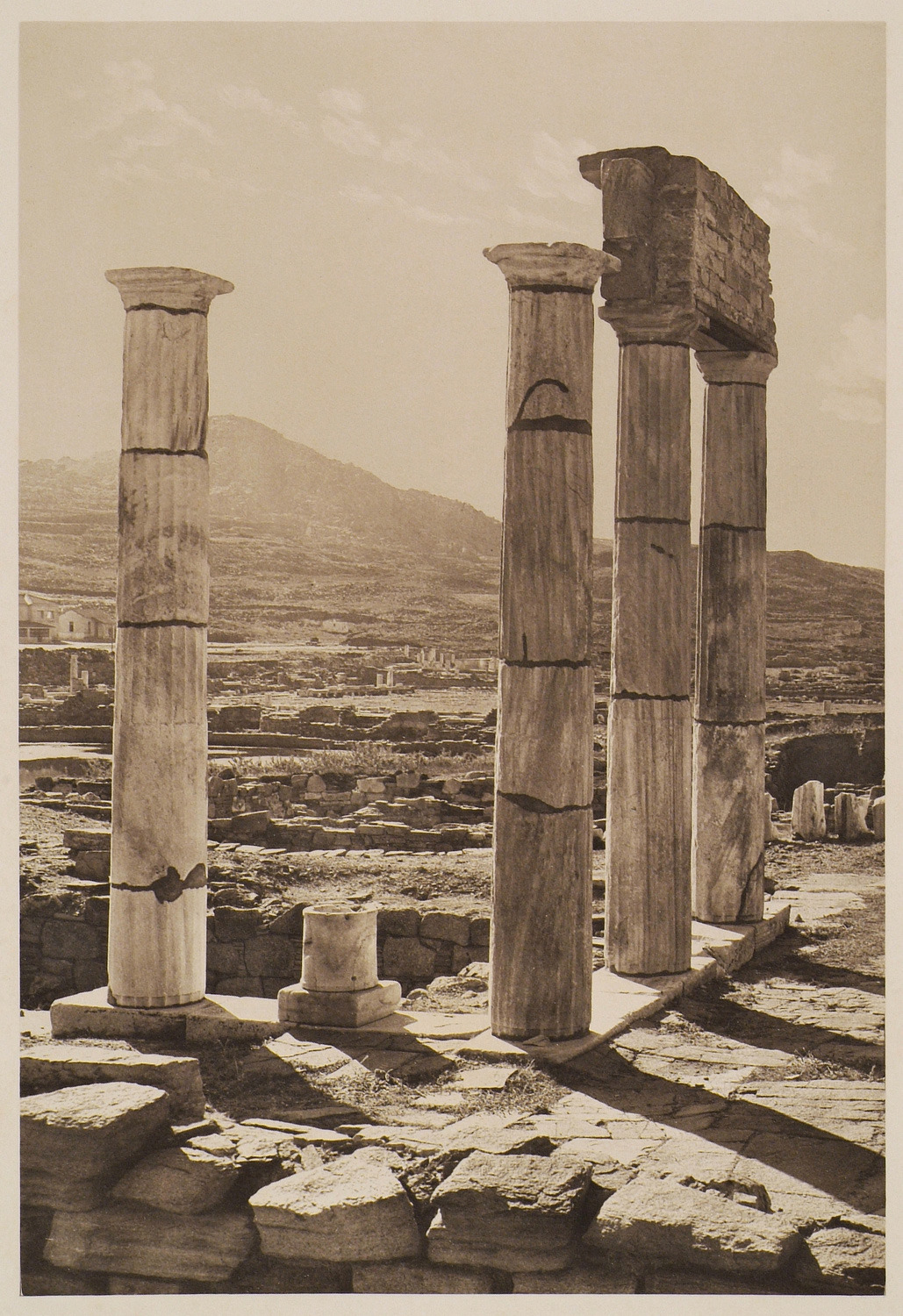
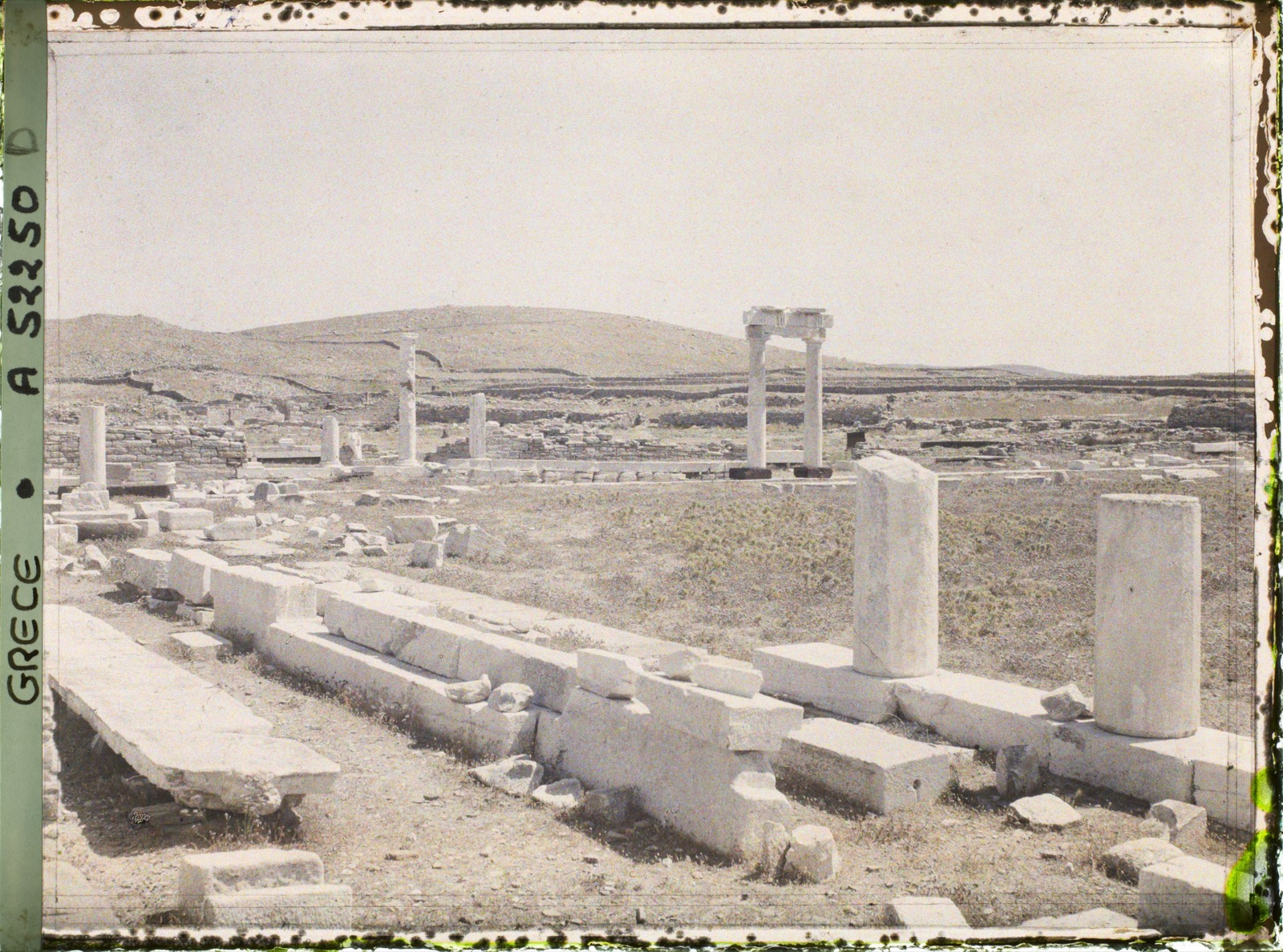
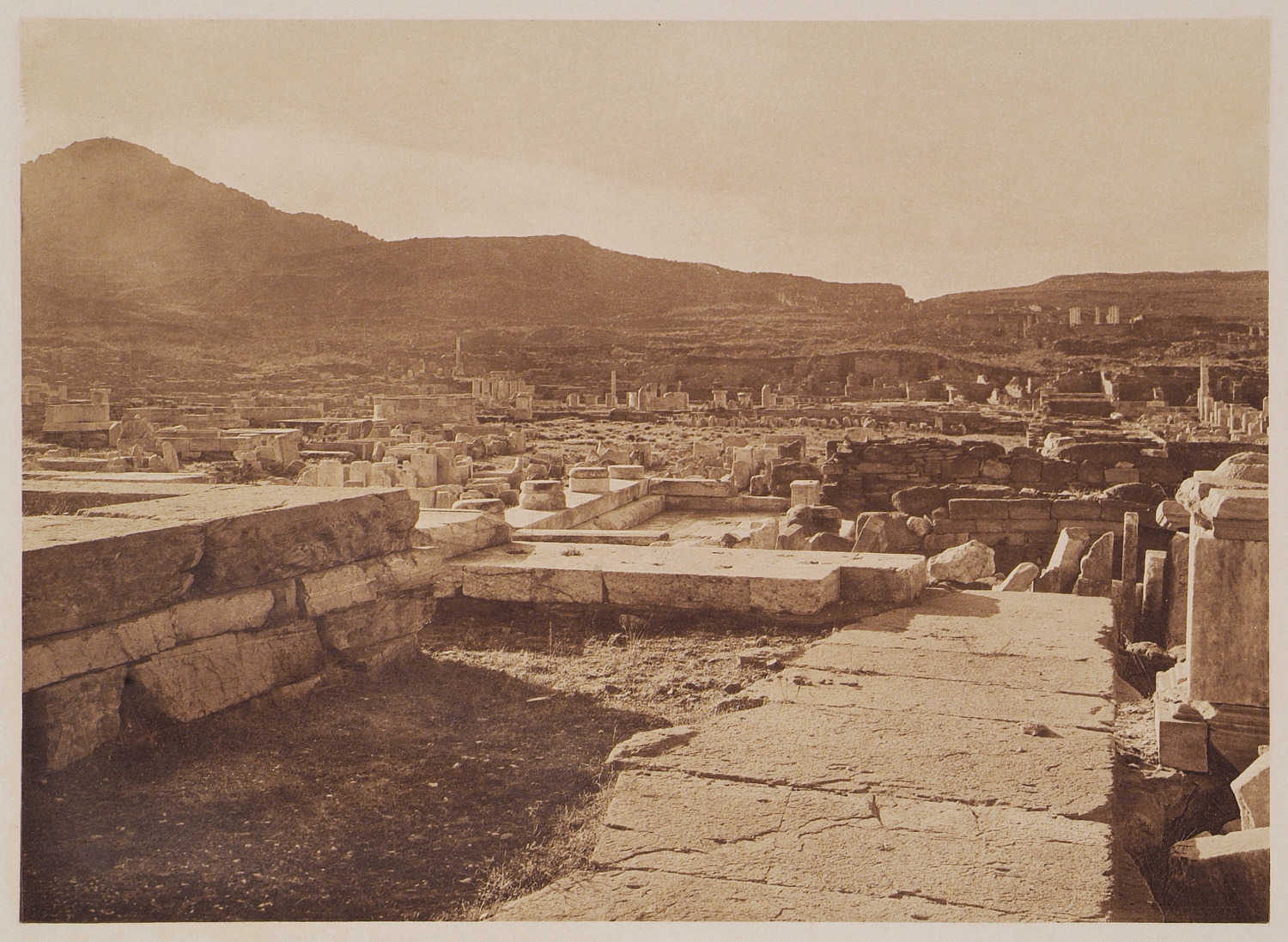
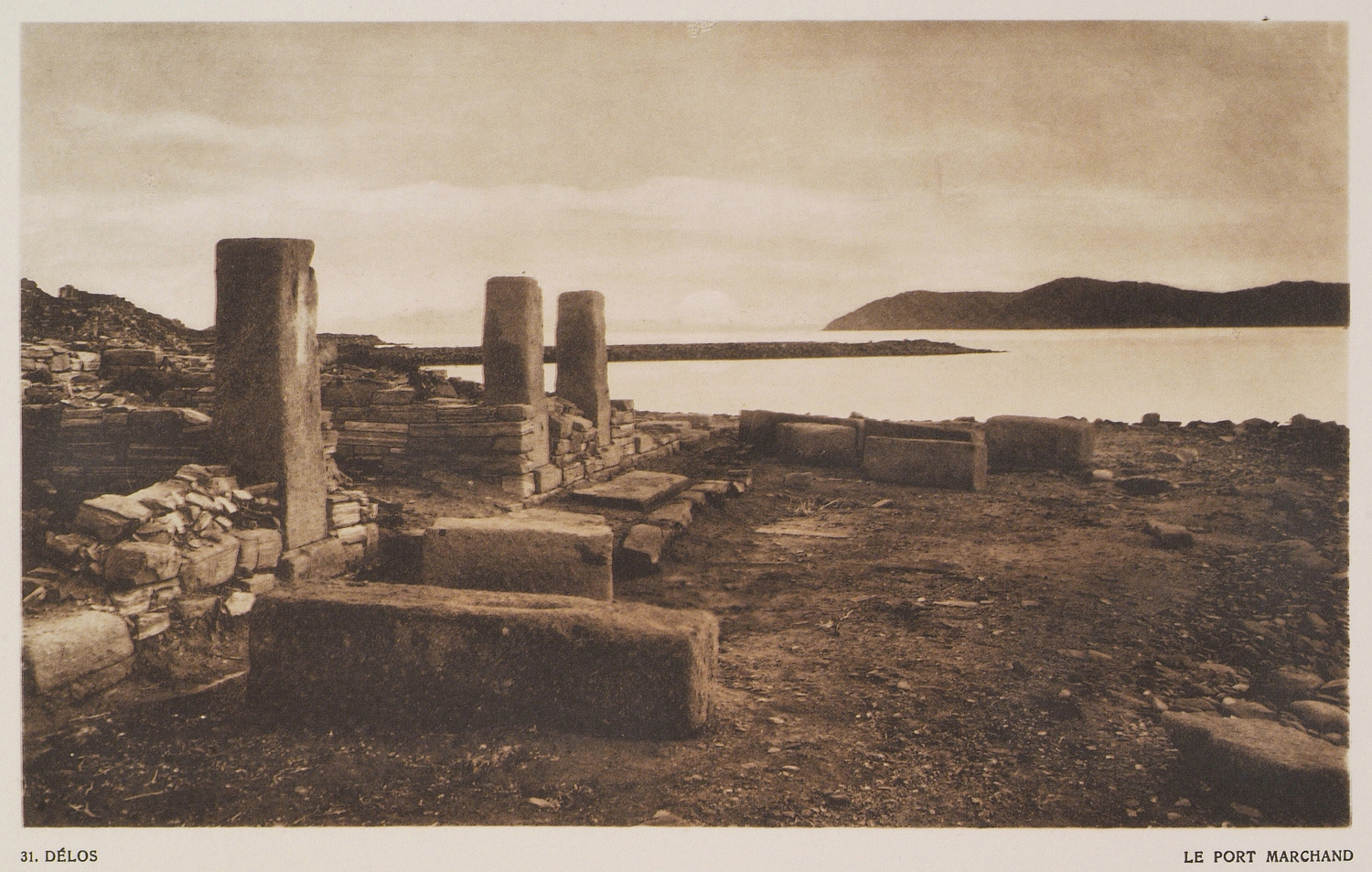
The most important visual artefacts of Delian finance are the inscriptions themselves. Monumental stone accounts, more than five hundred of which once stood in the sanctuary according to Veronique Chankowski's Parasites du dieu (2019), turned the god's balance sheet into a public monument. One of them, the 'Sandwich Marble' (IG II2 1635 = ID 98), recording the accounts of the Athenian amphictyons for 377/6-374/3 BCE, was obtained in Athens by the Earl of Sandwich and brought to Cambridge in 1739; it is now in the Fitzwilliam Museum and has been re-edited, with translation by Stephen Lambert, in Attic Inscriptions in UK Collections. The free-port community commissioned portrait sculpture on a scale unusual for a commercial town, much of it honouring the merchants and bankers themselves. A statue of Gaius Ofellius Ferus, dedicated to Apollo 'by the Italians' around 100 BCE, was signed by the Athenian sculptors Dionysios son of Timarchides and Timarchides son of Polykles (ID 1688); a statue of the Roman banker Maraeus Gerillanus was set up by the merchants who did business in the market and was signed by Agasias son of Menophilos of Ephesus (ID 1725) (both translated in N. Lewis and M. Reinhold, Roman Civilization). In the Establishment of the Poseidoniasts the association of Berytian merchants, shippers and warehousemen set up a statue of the goddess Roma as their benefactor (ID 1778), and the clubhouse also yielded the marble group of Aphrodite, Pan and Eros known as the 'Slipper Slapper', now in the National Archaeological Museum, Athens, whose display context has been re-examined in the Journal of Greek Archaeology. Trümper interprets the statue niches of the Agora of the Italians as a showcase for the self-representation of the Italian merchant elite. Delos was also an early subject of documentary photography. The Swiss photographer Frédéric Boissonnas recorded the merchant harbour and the Poseidoniasts' building for Daniel Baud-Bovy's Des Cyclades en Crète au gré du vent (Geneva, 1919), and Georges Chevalier photographed the Agora of the Italians in July 1927 for Albert Kahn's Archives de la Planète. A partial reconstruction of the Stoa of Philip, funded by the Paul and Alexandra Canellopoulos Foundation, was begun in the late 2010s.
Delos is a small, barren island at the centre of the Cyclades, lying between Mykonos and Rheneia; its significance was religious before it was commercial, and its geography made it a natural meeting point for Aegean shipping. The sanctuary of Apollo lay immediately behind the main harbour, so that the god's precinct, the quays and the warehouses formed one continuous waterfront (Bruneau, Princeton Encyclopedia of Classical Sites). The École française d'Athenes describes the island in the third century BCE as a community of about 5,000 people whose market was 'regional above all else', supplied from the neighbouring Cyclades, with luxury goods such as ivory and incense arriving from Egypt and the Near East. Apollo was, in the EFA's phrase, the biggest landowner in the Cyclades. Kent (1948) showed that the temple held ten farm estates on Rheneia, probably dating from Polycrates of Samos's gift of the island in the later sixth century BCE, plus estates on Delos and later on Mykonos, as well as some twenty houses in the town. The sanctuary's revenues therefore connected the financial life of Delos to the agricultural economy of the surrounding islands. Gary Reger's Regionalism and Change in the Economy of Independent Delos (1994) argues that prices and rents on the island are best explained by local and Cycladic conditions rather than by a unified Mediterranean market. After 166 BCE the town expanded rapidly. Bruneau notes that the influx of foreigners brought non-Greek sanctuaries and new quarters laid out on a predetermined plan in the second half of the second century; the Poseidoniasts' clubhouse stood west of the Sacred Lake, the Agora of the Italians north of the sanctuary, and the Agora of the Competaliasts at the foot of the Street of the Theatre beside the harbour. Strabo (Geography 14.5.2) explains the island's slave trade by its position: Delos was 'not far' from Cilicia, so pirates could readily sell their captives there. The same nodal position made it vulnerable, and after the sacks of 88 and 69 BCE, and the redirection of traffic straight to Italian ports, the town was gradually deserted; the legate Triarius's hasty wall of 69 BCE still survives in places east of the lake quarter.
The financial history of Delos falls into two phases, both unusually well documented. In the first, the sanctuary of Apollo acted as a lender. Athens controlled the sanctuary for most of the period from the foundation of its naval league at Delos in 478 BCE until about 314 BCE; Veronique Chankowski's Athènes et Délos à l'époque classique (2008) reconstructs the Athenian amphictyons' administration, arguing for a loan portfolio of nearly 50 talents by 410 BCE, managed separately from current income and from older deposits, and allowing for substantial bad debts (BMCR 2009.04.44). The 'Sandwich Marble' accounts of 377/6-374/3 BCE record interest received from ten island communities, among them Mykonos, Syros, Tenos, Keos, Paros, Siphnos and Seriphos, while Naxos, Andros and Karystos paid nothing over the four years; the editors of Attic Inscriptions in UK Collections note an interest rate of 10 per cent, that only 6 of 24 individual borrowers paid interest, that Athens itself does not appear as a borrower, and that the amphictyons seem to have allowed the loans to act as a 'safety valve' for Athens' Cycladic allies. In the period of independence (314-167/6 BCE) the sanctuary was run by annually elected Delian hieropoioi, who granted loans to individuals, collected rents and reported monthly to the Delian council (Kent 1948; Reger 1994). A general regulation, the hiera syngraphe (ID 503), was adopted around 300 BCE to govern the leases; Kent showed that estates were let for ten years, could be renewed at a 10 per cent increase in rent, and required guarantors who were renewed every year. Reger's 'Private Property and Private Loans on Independent Delos' (Phoenix 46, 1992) and the earlier prosopography of Claude Vial suggest that many loans served productive ends, and that houses increasingly replaced land as security. Reger also records that the Delians asked the Ptolemaic official Philokles to compel islands to repay what they owed Apollo. Chankowski's Parasites du dieu (2019) describes the sacred treasury as a 'permanent credit reserve' for the city of Delos. The second phase began when Rome, after the Third Macedonian War, gave Delos to Athens and declared its port free of dues (late 167 or 166 BCE; the EFA and Bruneau give different years). The Delians were expelled and Athenian settlers and an Athenian epimelete took over; the last dated temple account is of 140/39 BCE (ID 1450, per Kent). Italians, Syrians, Phoenicians and Egyptians arrived in large numbers. In autumn 88 BCE Mithridates VI's forces seized and plundered the island; the EFA notes that the sacred treasury was taken to Athens. Ancient accounts by Appian and Pausanias of total destruction are probably exaggerated, and Bruneau speaks of partial devastation. In 69 BCE pirates under Athenodoros, allies of Mithridates, sacked Delos again, and it never recovered its commercial role.
In its first phase Delos traded above all in credit. The sanctuary lent its money at interest to Aegean cities and to private individuals, typically at 10 per cent a year in the classical accounts (Attic Inscriptions in UK Collections, IG II2 1635), secured by property and backed by guarantors. Kent (1948) explains how sureties worked in the parallel system of temple leases: each tenant normally named two guarantors, each liable for half the rent, renewed annually in a public ceremony. Comparison with Athens is instructive. Edward E. Cohen's Athenian Economy and Society: A Banking Perspective (1992) argues that fourth-century Athenian trapezitai were true deposit-taking banks, whereas Paul Millett's Lending and Borrowing in Ancient Athens (1991) emphasises lending embedded in personal relationships; the Delian temple offered something different, a standard published rate and a public, audited loan book. Raymond Bogaert's Banques et banquiers dans les cités grecques (1968) remains the basic catalogue of Greek temple and private banks, including those of Delos. Private bankers appear at Delos well before the free port. Chankowski's Parasites du dieu notes that around 194-192 BCE the Syracusan banker Timon exchanged Rhodian for Attic silver at a ratio of 100 to 105 so that a delegation of the island league could buy grain (IG XII 5, 817), that in 169 BCE a deposit entered the sacred treasury from the bank of Philon (ID 461), and that much of the hieropoioi's arithmetic was probably carried out through the banks. Reger's price series for grain, olive oil, pigs and firewood, drawn from the same accounts, make Delos one of the best-documented commodity markets of the Hellenistic world. After the free port opened, Delos became a clearing-house for eastern Mediterranean trade. Polybius (30.31) reports a Rhodian envoy complaining that Rhodes' harbour dues, once farmed for a million drachmas, now fetched only 150,000 because Rome had made Delos a free port. Inscriptions name Italian bankers such as Marcus Minatius, honoured in 149/8 BCE by the Poseidoniasts for helping finance their building, and Maraeus Gerillanus, 'banker at Delos' (ID 1725). Claire Hasenohr (2007) finds wine merchants, olive-oil dealers and bankers among the dedicants, though she finds no evidence that the Italian colleges met for professional purposes. Delos was also notorious as a slave market. Strabo (14.5.2) says it 'could both admit and send away ten thousand slaves on the same day', linking the trade to Cilician piracy and Roman demand after the destruction of Carthage and Corinth. The figure is a proverbial statement of capacity, not a count, and no building can securely be identified as the slave market: Filippo Coarelli read the Agora of the Italians as one, Nicholas K. Rauh's The Sacred Bonds of Commerce (1993) as a recreational complex for the trade society, and Trümper's Graeco-Roman Slave Markets: Fact or Fiction? (2009) argues that it was a porticus, a view still contested (Ulrike Roth, BMCR 2010.12.20).