Brussels Stock Exchange (Bourse de Bruxelles)
Brussels, Belgium · Established 1873

This site requires authorization to access.
To request access, contact
william.goetzmann@yale.edu
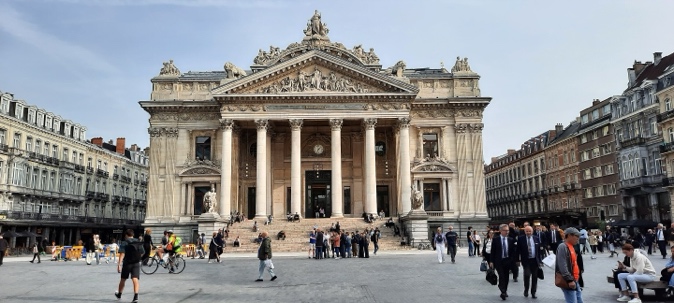
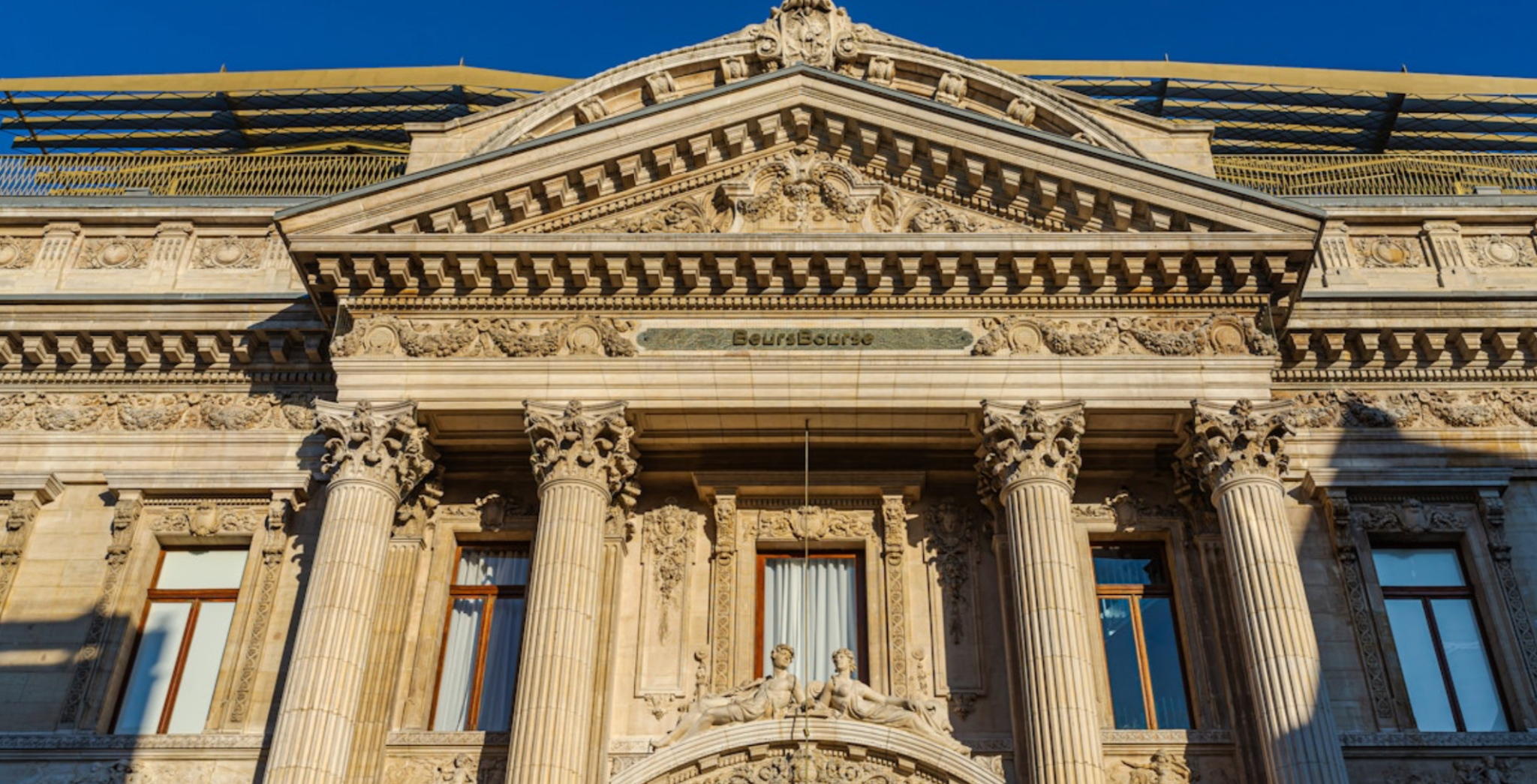
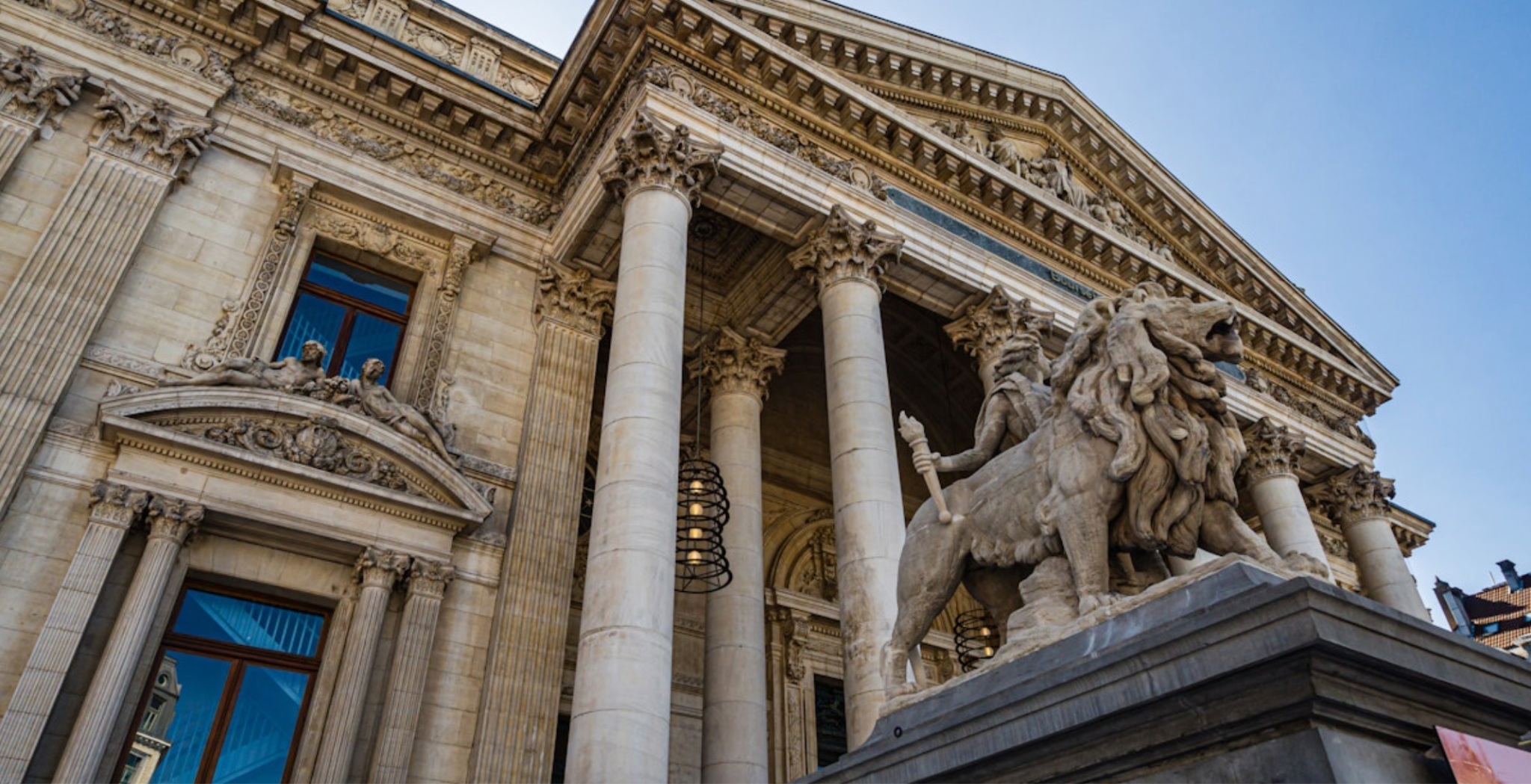
The Palais de la Bourse in Brussels, designed by architect Léon-Pierre Suys and erected between 1868 and 1873, is among the most architecturally ambitious stock exchange buildings in Europe. Its construction was part of the sweeping modernization of central Brussels that accompanied the covering of the river Senne in the late 1860s. Suys conceived the building in a lavish Second Empire and Eclectic style, drawing freely on neo-Renaissance and classical motifs. Sited prominently on the Boulevard Anspach, the Bourse was intended to anchor the commercial identity of a rapidly growing capital.
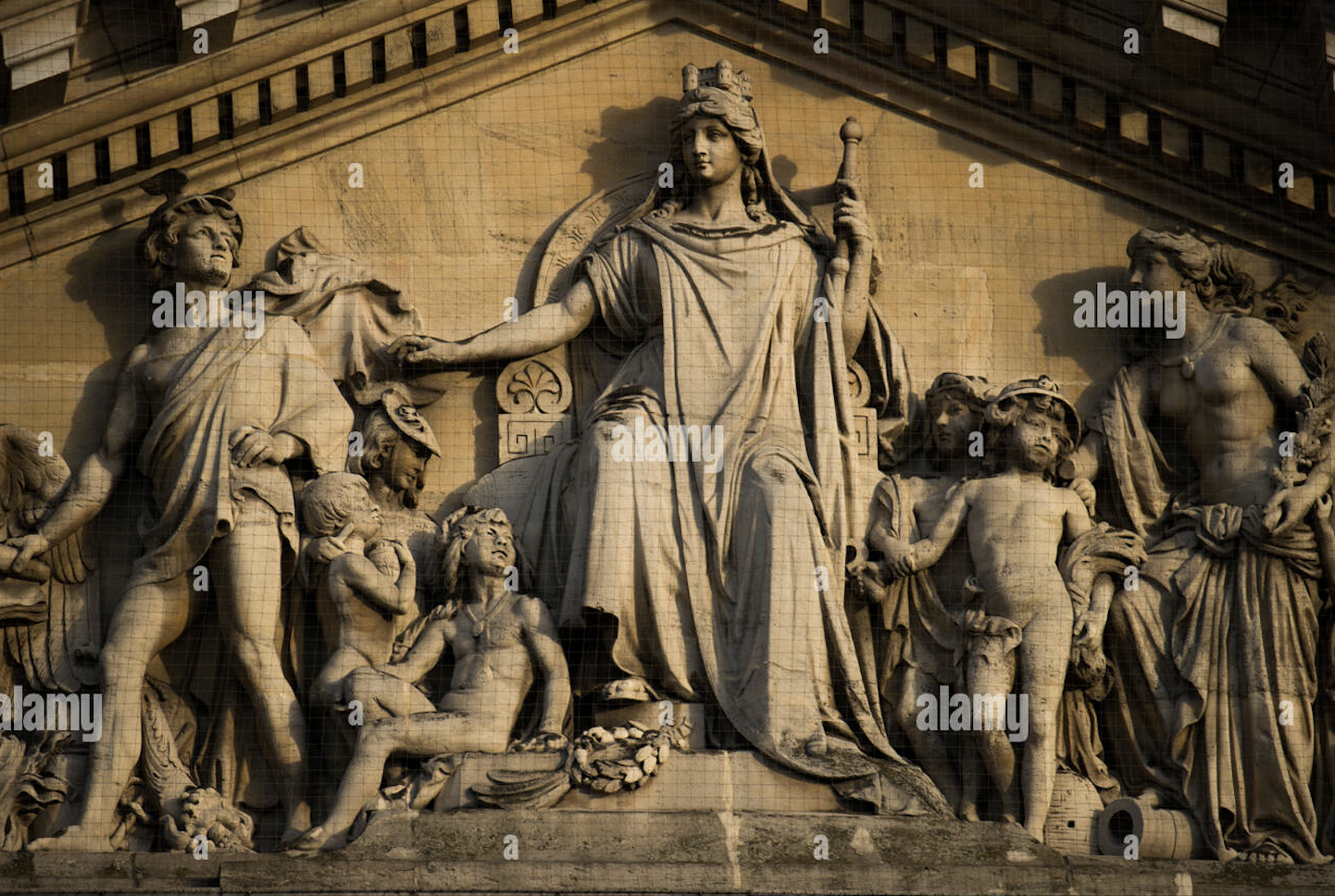
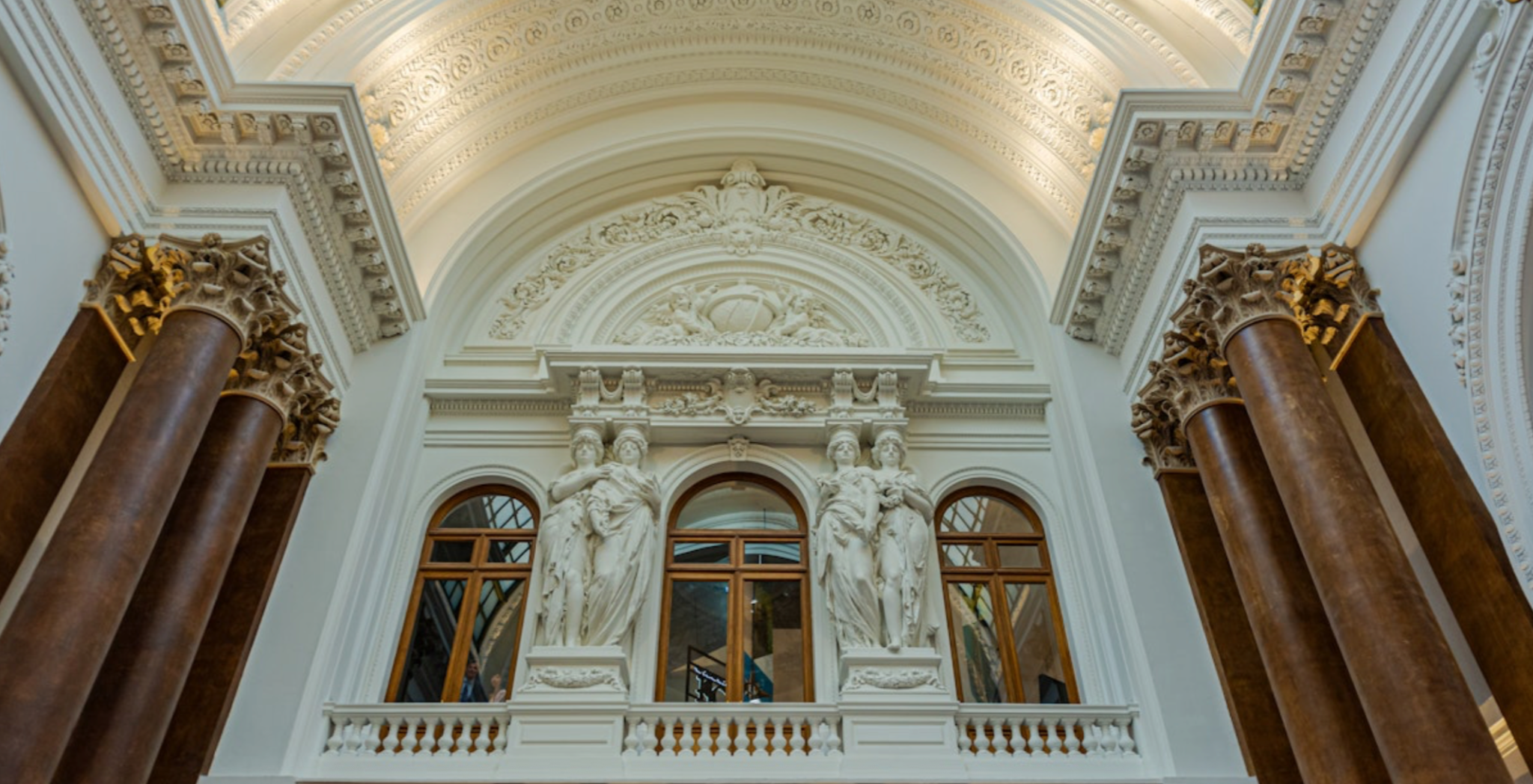
The building's sculptural program is remarkably rich and enlisted some of the foremost sculptors of the era. Albert-Ernest Carrier-Belleuse designed the allegorical frieze along the facade, while his then-assistant, the young Auguste Rodin, carved four caryatids on the inner pediment representing Protection, Commerce, Art, and Victory. Additional reliefs and figures by the brothers Jacques and Joseph Jacquet, Guillaume de Groot, and Jacques de Haen complete a decorative ensemble of unusual ambition for a financial institution.
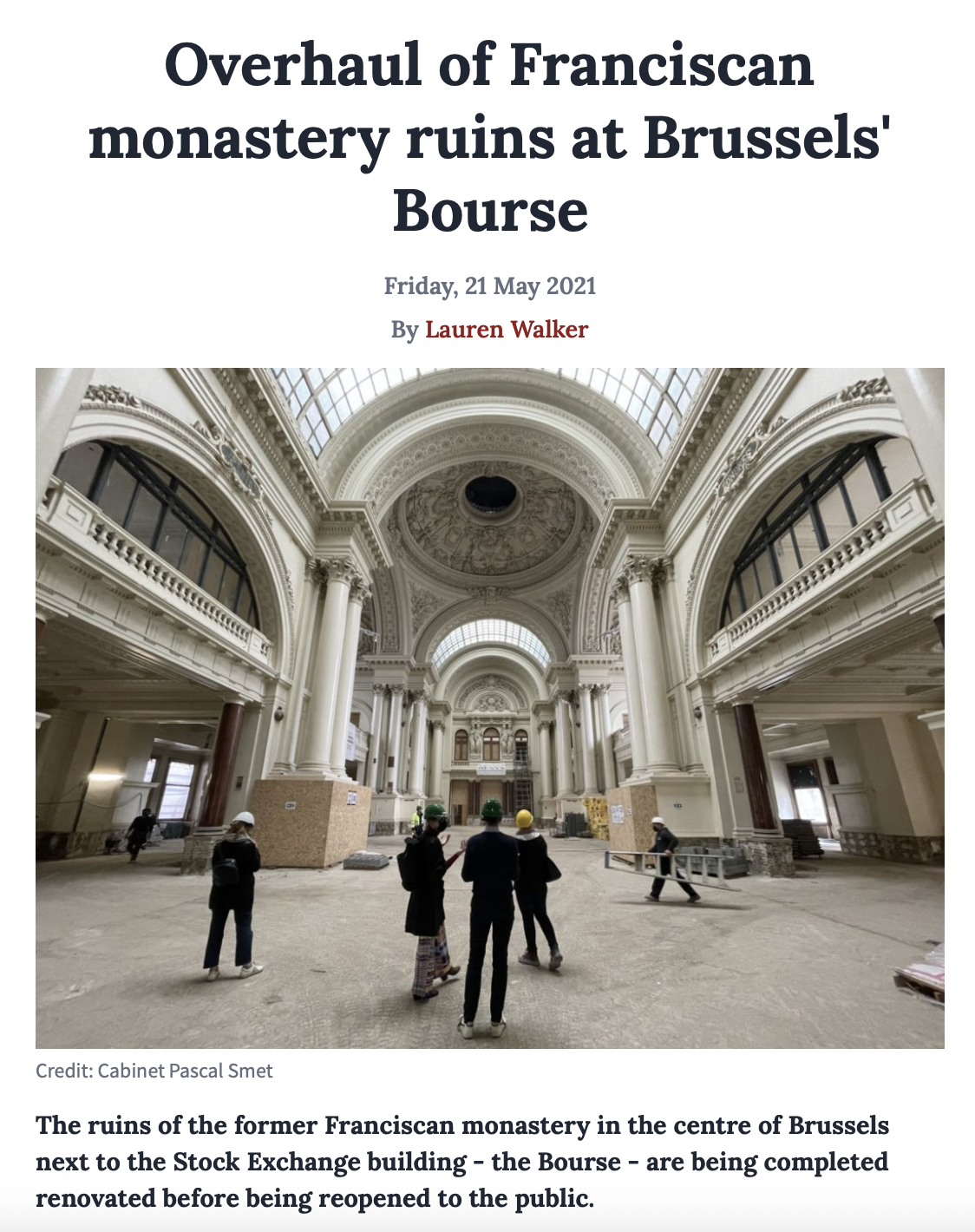
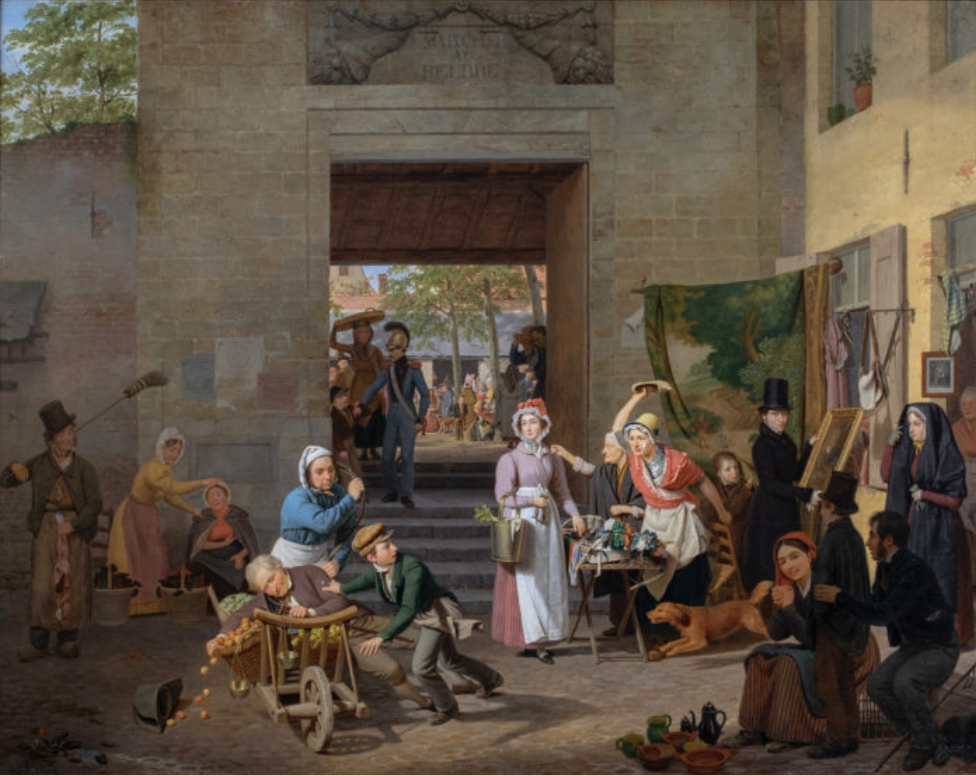
The Palais de la Bourse occupies a pivotal site in the urban geography of Brussels, positioned at the midpoint of the Boulevard Anspach — the grand north-south artery created between 1869 and 1871 over the vaulted channel of the river Senne. As Serge Jaumain documents in "A Historical Perspective on the Central Boulevards in Brussels's City Centre" (2020), this major axis emerged from the desire to entomb a waterway that had become, by mid-century, an acute public-health menace; the cholera epidemic of 1866, which claimed 3,469 lives in Brussels alone according to research at the Quetelet Center at Ghent University, lent final urgency to the project. Mayor Jules Anspach commissioned the architect Leon Suys to design both the infrastructure and the monumental buildings that would line the new boulevards, consciously emulating the Haussmann-era transformation of Paris. Construction began on 13 February 1867 and displaced nearly 8,000 residents from the formerly working-class quarters flanking the Senne. The Bourse, erected 1868-1873 on the site of the old Butter Market and the thirteenth-century Recollets Franciscan convent, was conceived as the architectural focal point of Suys's program — set at the widening of the boulevard now called the Place de la Bourse, halfway between the Gare du Nord and the southern terminus. Michel Hubert, Eric Corijn, and colleagues note in Brussels Studies (no. 115, 2017) that the boulevard system functioned as a commercial spine connecting the city's two principal railway stations, attracting department stores, luxury hotels, and brasseries. Just steps to the east lies the Grand Place and the surrounding Ilot Sacre, the medieval street fabric that survived demolition and was formally protected by a 1960 municipal plan, later serving as the UNESCO buffer zone. For a nation independent only since 1830, the Bourse's monumental classicism asserted Brussels's ambition to stand among the great European capitals, anchoring commercial modernity within a cityscape still layered with guild-era memory.
The Brussels Stock Exchange traces its origins to a Napoleonic decree of 1801, though Belgium's connection to organized securities trading runs deeper still, rooted in the medieval gathering of merchants at the Van der Buerse family's establishments in Bruges. Through the nineteenth and twentieth centuries, the Bourse served as the principal marketplace for Belgian equities, government bonds, and later derivatives. In September 2000, it merged with the Paris and Amsterdam exchanges to form Euronext, the first pan-European securities exchange.
After electronic trading rendered the grand hall unnecessary, the building underwent a ninety-million-euro renovation and reopened in September 2023 as Belgian Beer World, an interactive museum devoted to the country's brewing heritage. For the first time, the monumental central nave — with its soaring ceilings and ornate stonework — is open to the general public, ensuring that Suys's masterwork continues to serve Brussels as a civic landmark.