Boston Stock Exchange
Boston, USA · Established 1834

This site requires authorization to access.
To request access, contact
william.goetzmann@yale.edu
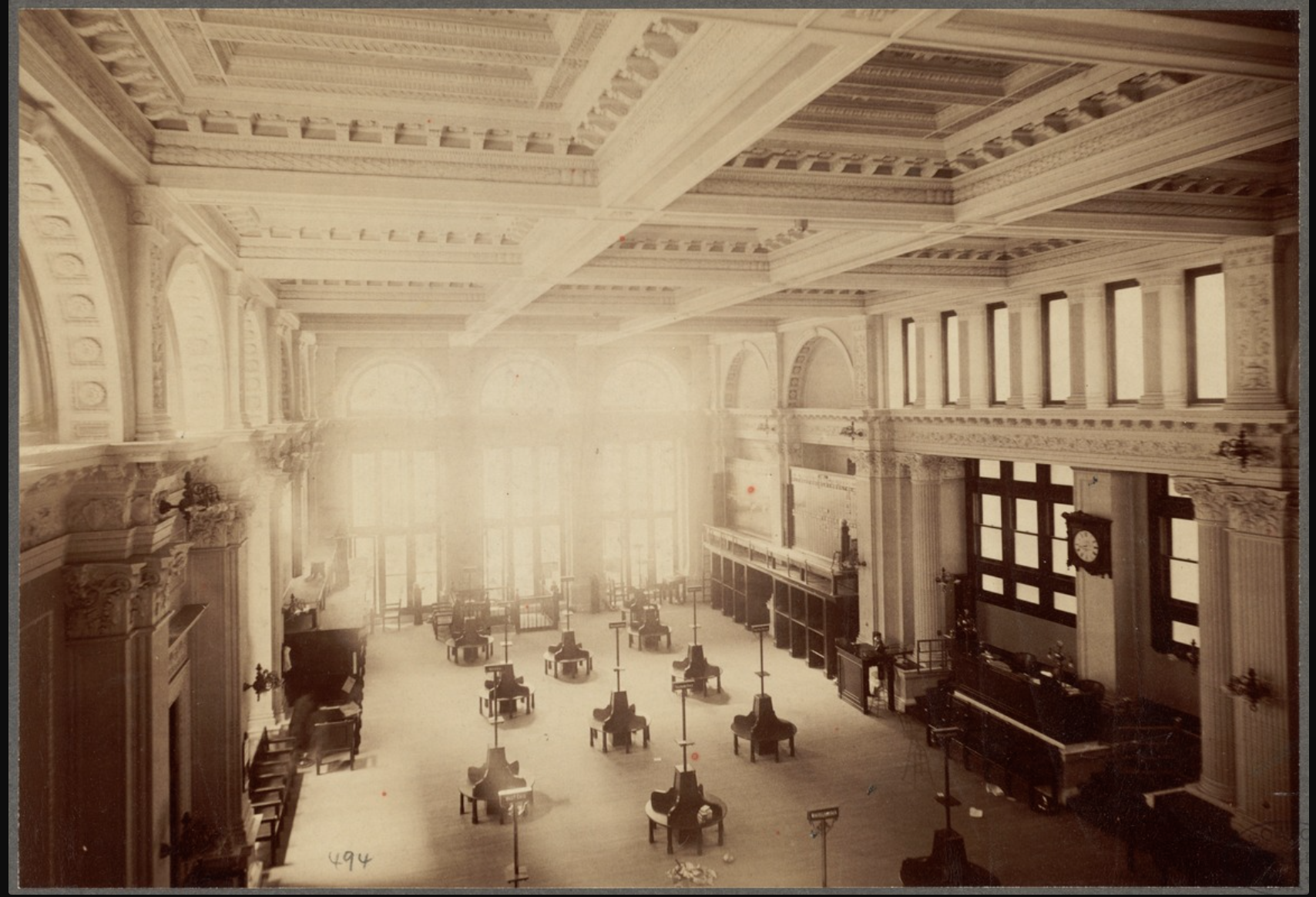
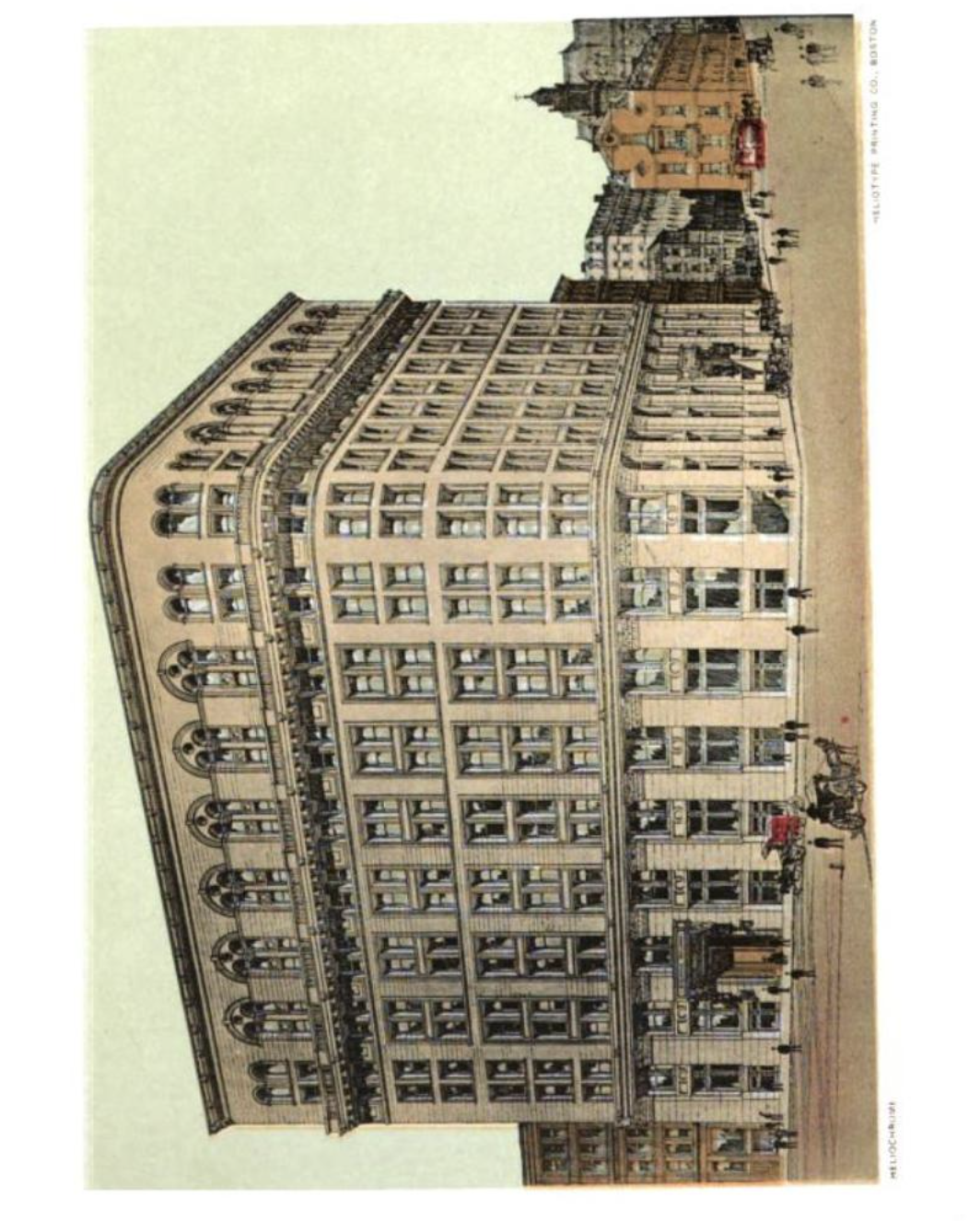
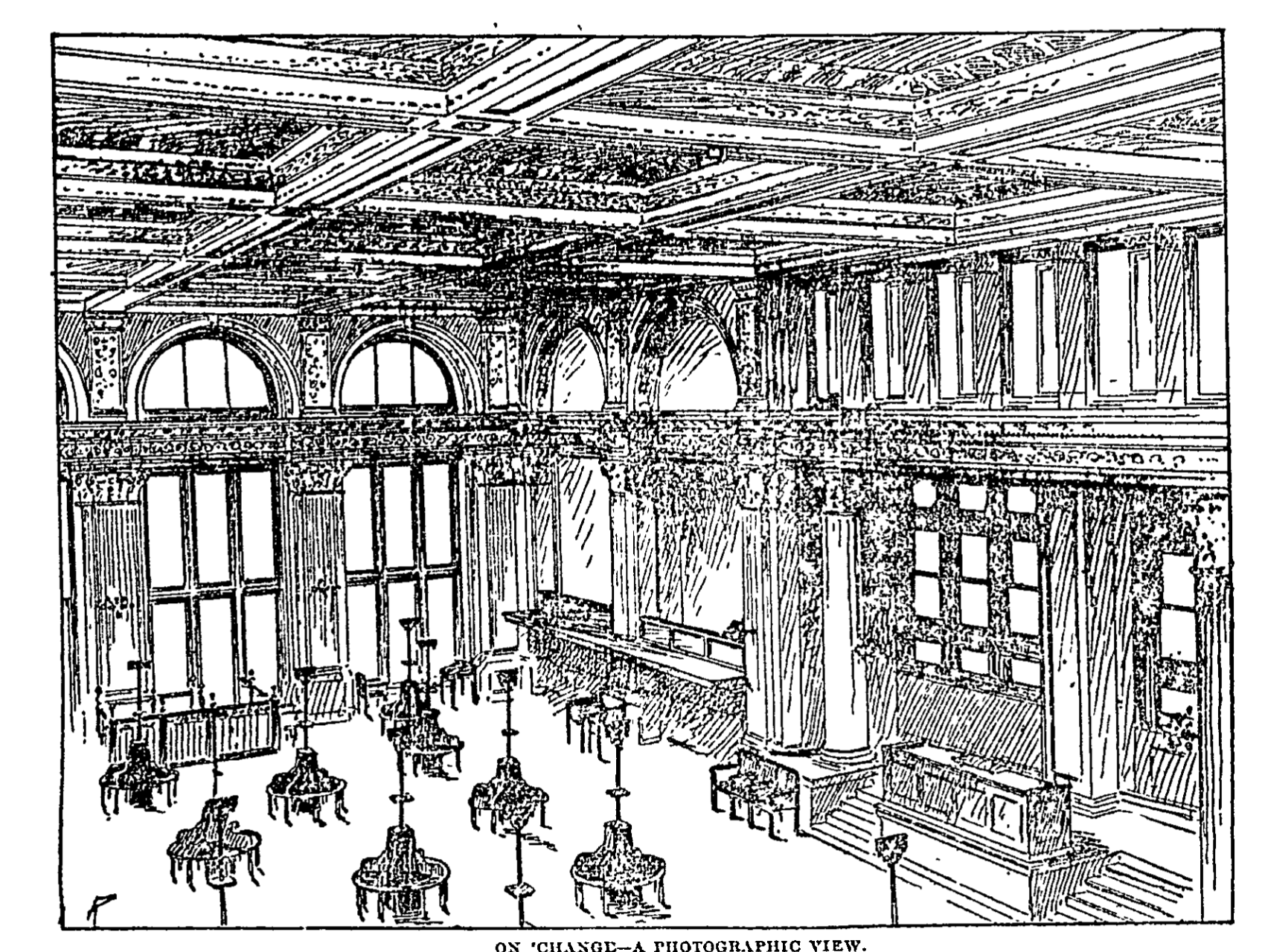
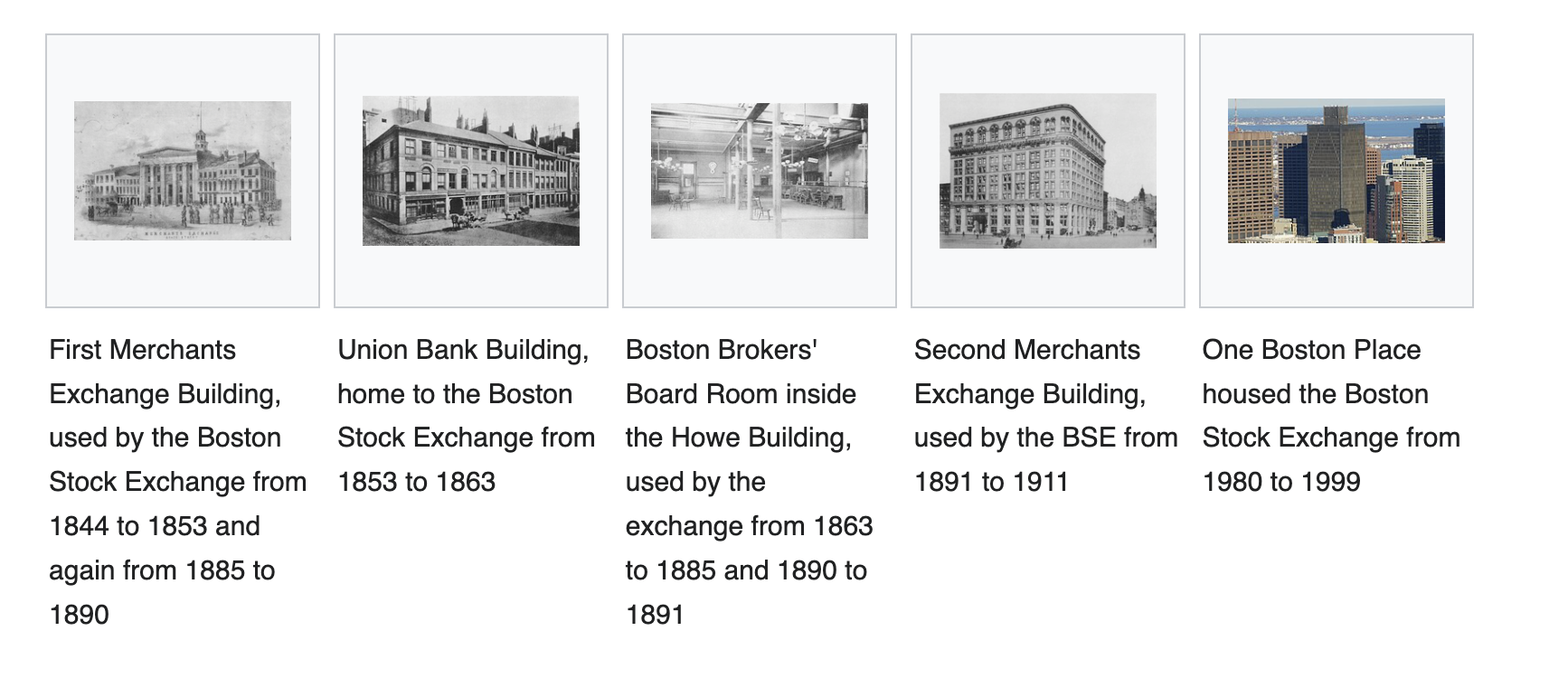
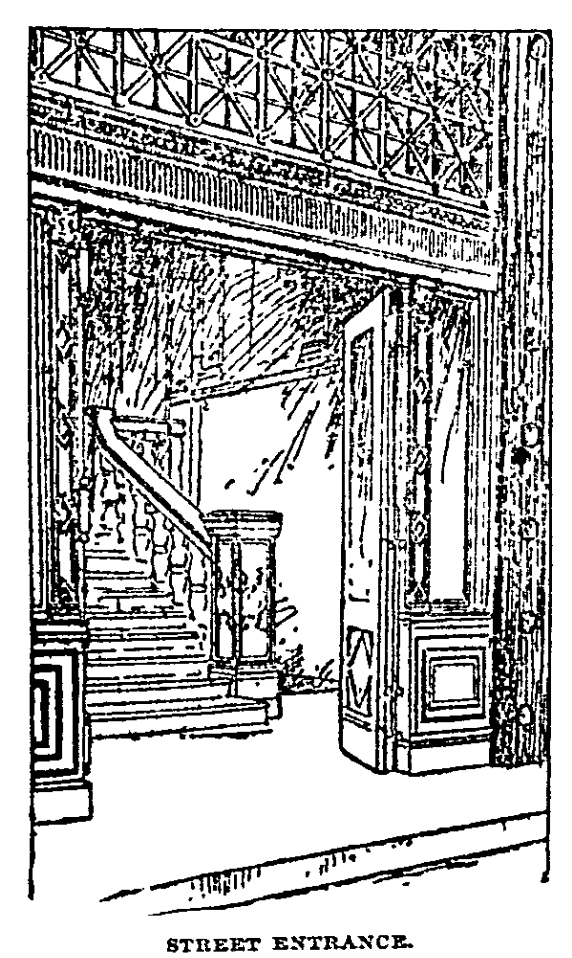
The Boston Stock Exchange’s architectural legacy centers on the magnificent Exchange Building at 53 State Street, designed by the prominent firm of Peabody & Stearns and constructed between 1889 and 1891 at a cost of four million dollars. As documented in the Boston Landmarks Commission Study Report, the eleven-story structure was built of brick and faced with pink Milford granite, presenting a façade that fused Romanesque Revival massing with Italianate palazzo refinement—a hallmark of Peabody & Stearns’s commercial idiom. The building’s frontage extended 170 feet along State Street and 160 feet along Kilby Street, commanding the corner that had once housed the Bunch of Grapes Tavern, a gathering place of the Sons of Liberty and site of the nation’s first Masonic Lodge. Visitors entered through a lobby finished in marble and tile, dominated by an elegant grand staircase in white marble that ascended to second-story brokerage offices and a public gallery overlooking the trading room. The main State Street entrance was bracketed by large and elaborate bronze lanterns, lending a monumental quality to the approach. The trading room itself—the heart of the exchange—measured 115 feet long, 50 feet wide, and 35 feet high, with a coffered ceiling covered in stucco designs and walls elaborately decorated in white and yellow with Italian marble on the lower portions, articulated by Corinthian columns and pilasters that gave the space what contemporaries described as “weight and dignity.” When the WZMH Group undertook a major redevelopment in 1981–1984, preservationists led by Marcia Myers, Boston’s historic preservation director, succeeded in saving a sixty-foot, L-shaped portion of the granite façade at the corner of State and Kilby Streets. The white marble grand staircase was carefully salvaged, packaged, and re-erected in its original location and orientation within a new five-story setback atrium—a striking example of what architectural historians have termed “prosthetic architecture,” in which historic fragments are embedded within modern construction. Behind the preserved façade, a forty-story glass tower clad in reflective blue glass and ruled by a black metal grid now rises, creating a dramatic juxtaposition of Gilded Age civic grandeur and late-twentieth-century corporate modernism. The preservation effort established an important precedent for downtown Boston and influenced subsequent façade-retention projects nationwide.
The decorative program of the original Boston Stock Exchange building, as recorded in the Boston Landmarks Commission Study Report and described in an 1891 Boston Daily Globe article on the exchange’s opening, reflected the Gilded Age conviction that financial institutions should project civic dignity through lavish ornamentation. The great trading hall’s Corinthian columns and pilasters were executed in the classical vocabulary that Peabody & Stearns deployed across their major commercial commissions, lending the space an air of Roman gravitas appropriate to what was then one of the nation’s most important securities markets. The coffered ceiling, covered in intricate stucco designs, drew on Renaissance precedents and was described by contemporary observers as “richly frescoeed,” with the white-and-yellow color palette creating an impression of luminous amplitude. Italian marble lined the lower walls of the trading room, establishing a material continuity with the white marble of the grand staircase—the building’s most celebrated artistic element. This staircase, ascending from the tile-and-marble lobby to the second-floor gallery, was flanked by balustrades of carved marble and illuminated by the large and elaborate bronze lanterns that framed the State Street entrance. The Society of Architectural Historians’ Archipedia entry notes that the staircase functioned as both a practical circulation element and a piece of architectural theater, offering visitors dramatic views of the trading room below. When the 1980s redevelopment preserved the staircase within a modern atrium featuring a mirrored chrome ceiling and colossal columns, it was effectively transformed from a functional passage into an architectural sculpture—what Atlas Obscura has memorably called the “staircase to nowhere.” The preserved façade itself, with its rusticated pink granite, large arched windows, and intricate carved details, constitutes an important piece of urban art. In more recent renovations of the Exchange Place complex, a local artist was commissioned to create three original works for the lobby that blur the lines between contemporary and historic sensibilities, establishing a dialogue between the Gilded Age decorative tradition and present-day artistic practice. The bronze lanterns at the entrance survive as material artifacts of the original decorative scheme, serving as tangible links to the era when Boston’s financial institutions competed with New York’s in architectural splendor.
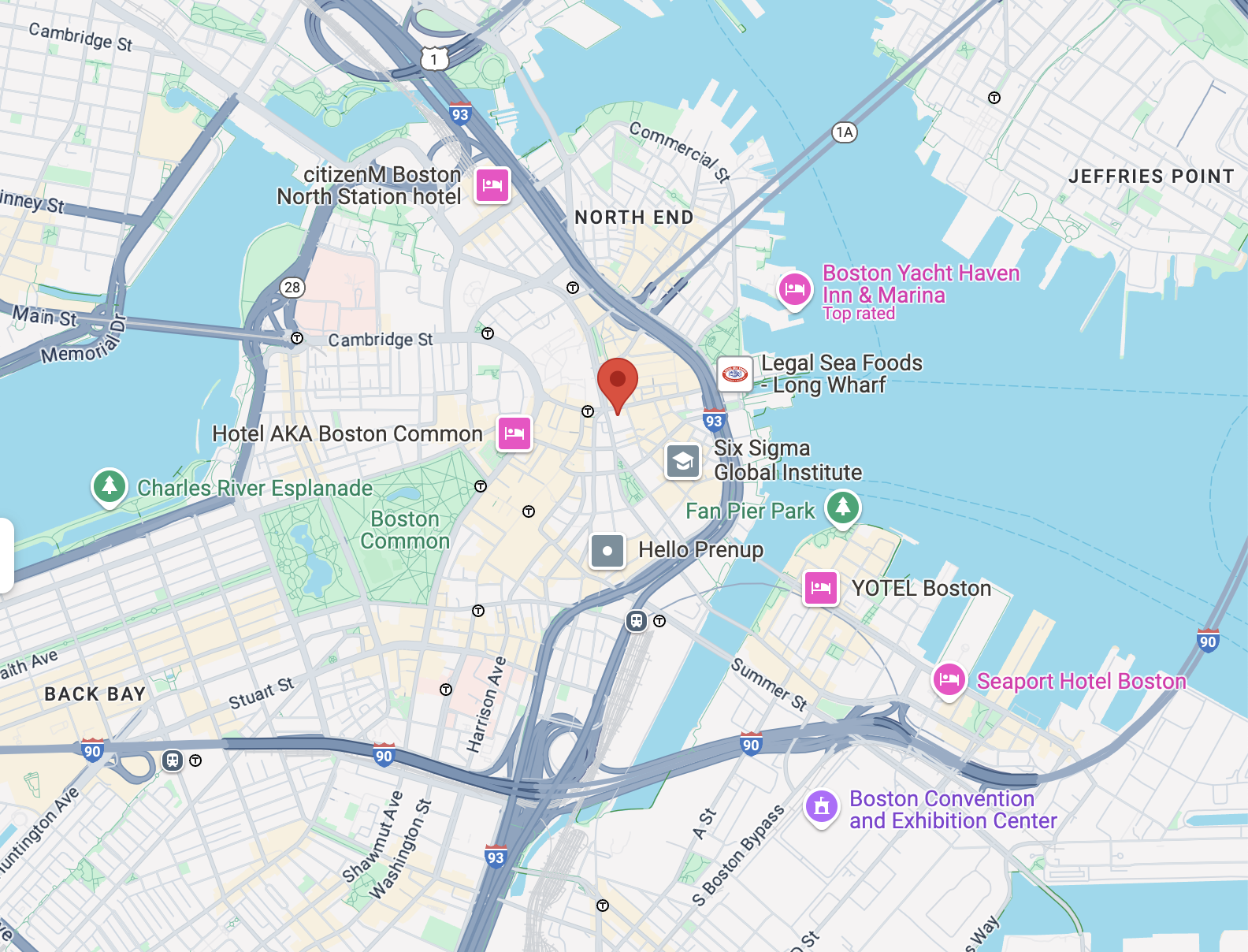
The Boston Stock Exchange occupied a pivotal position within Boston’s Financial District, the dense cluster of banks, brokerages, and insurance companies centered on State Street that made the city America’s preeminent financial center through much of the nineteenth century. As Walter Muir Whitehill documented in Boston: A Topographical History (Harvard University Press, 1959), State Street had served as the commercial axis of the city since colonial times, when merchants gathered at the Townhouse—later the Old State House—to negotiate trade and insurance. The exchange’s site at 53 State Street, formerly home to the Bunch of Grapes Tavern, placed it squarely within the geography of revolutionary commerce and Federalist-era finance. Boston’s financial supremacy rested on the capital accumulated by the merchant elite that Oliver Wendell Holmes Sr. famously dubbed the “Boston Brahmins” in his 1860 Atlantic Monthly essay. These interconnected families—the Cabots, Lowells, Lawrences, Appletons, and Jacksons—channeled mercantile fortunes from the China trade and whaling into textile manufacturing and railroad finance, as Robert F. Dalzell Jr. analyzed in Enterprising Elite: The Boston Associates and the World They Made (Harvard University Press, 1987). By the number of financial firms in the district proliferating to two hundred by 1868, the exchange stood at the center of a formidable concentration of capital. New York’s ascendancy as the nation’s financial capital after the Civil War, driven by railroad finance and the gravitational pull of the New York Stock Exchange, gradually diminished Boston’s primacy. Yet the city reinvented itself in the twentieth century as the birthplace and global capital of the mutual fund industry. The 1924 founding of Massachusetts Investors Trust launched a revolution in democratized investing, and the subsequent rise of Fidelity Investments (founded 1946), Putnam Investments (1937), and State Street Corporation—which in 1993 introduced the first exchange-traded fund, the SPDR S&P 500—cemented Boston’s identity as a center of asset management. Today the Financial District retains its historic street pattern and the preserved façade of the Exchange Building, even as modern towers house the global operations of firms managing trillions of dollars in assets.
The Boston Stock Exchange was founded on October 13, 1834, when thirteen brokers agreed to meet daily for a half-hour to compare their offerings, making it the third-oldest stock exchange in the United States after Philadelphia (1790) and New York (1792). Initially known as the Boston Brokers’ Board, the exchange listed securities of seventeen companies by 1835, growing to forty-six by 1855. Its early listings reflected New England’s industrial economy: shares in cotton textile firms such as the Amoskeag Manufacturing Company and the Merrimack Manufacturing Company, along with banks, insurance companies, and canal projects. The “Boston Associates”—the interlocking network of families analyzed by Robert F. Dalzell Jr. in Enterprising Elite (Harvard University Press, 1987)—had pioneered the corporate form to finance the great mills at Lowell, Lawrence, and Manchester, and the exchange provided a secondary market for these securities. As the railroad era dawned, the Boston Stock Exchange became a vital venue for financing New England’s rail network, listing the Boston and Lowell Railroad, the Boston and Providence Railroad, and the Boston and Worcester Railroad among its most actively traded securities. Capital from Boston also flowed into the whaling industry centered in New Bedford, where, as economic historians have documented, investors earned average annual returns exceeding fourteen percent over seven decades—an early form of venture capital. The exchange weathered the panics of 1857, 1873, and 1893, and by the late nineteenth century had grown sufficiently to warrant the construction of the grand Peabody & Stearns building in 1891. In the twentieth century, the BSE adapted to changing markets: it co-founded the Boston Options Exchange (BOX) in 2002 with the Montreal Exchange and Interactive Brokers, creating a fully automated electronic options platform that captured six percent of the U.S. options market by 2005. Fidelity Investments and several Wall Street firms invested twenty million dollars to develop the Boston Equities Exchange (BeX), an electronic stock trading platform. Despite these innovations, the consolidation pressures reshaping American exchanges proved irresistible: on October 2, 2007, NASDAQ acquired the BSE Group for sixty-one million dollars, encompassing the Boston Stock Exchange, BeX, the Boston Stock Exchange Clearing Corporation, and regulatory authority over BOX. The exchange was subsequently rebranded as NASDAQ OMX BX, bringing to a close 173 years of independent operation.
The securities traded on the Boston Stock Exchange traced a remarkable arc through American economic history, from the textile revolution to the birth of the mutual fund. In its earliest decades following the 1834 founding, the exchange’s listings were dominated by shares in New England’s cotton textile corporations—the Merrimack Manufacturing Company, the Amoskeag Manufacturing Company, the Lawrence Manufacturing Company, and the Boott Cotton Mills—enterprises financed by the “Boston Associates” who, as Dalzell documented, controlled a fifth of America’s cotton production by 1850 through a complex web of interlocking directorates. Bank stocks, insurance company shares, and canal bonds rounded out the early listings. By mid-century, railroad securities had become the exchange’s most dynamic segment. The Boston and Lowell Railroad, chartered in 1830 and financed largely by the same families that owned the mills, was among the first railroads listed; it was followed by the Boston and Providence, Boston and Worcester, and eventually transcontinental lines in which Boston capital played a significant role. Government bonds also traded actively, particularly during and after the Civil War, when, as financial historians have noted, many small investors gained their first experience with securities markets through war-bond purchases. The whaling industry of New Bedford and Nantucket, while not formally listed on the exchange, was financed through the same networks of Boston capital, with whaling voyage shares functioning as an early form of venture capital—what Tom Nicholas of Harvard Business School has analyzed as a precursor to modern venture finance. Perhaps the Boston exchange’s most consequential contribution to financial history was its role in the ecosystem that produced the mutual fund. On March 21, 1924, Massachusetts Investors Trust was established in Boston as the world’s first open-end mutual fund, offering investors of modest means a transparent, affordable path to diversified securities ownership. The State Street Investment Corporation followed in July 1924, and by 1926 Massachusetts Investors Trust had established the practice of publishing comprehensive reports to investors—a benchmark procedure that all regulated mutual fund companies follow today. The mutual fund revolution transformed Boston into the global capital of asset management: Fidelity Investments, Putnam Investments, Eaton Vance, and dozens of other firms clustered in the Financial District, their products trading alongside traditional equities and bonds on the BSE and its electronic successors, BeX and the Boston Options Exchange.