Belgrade Stock Exchange (BELEX)
Belgrade, Serbia · Established 1894
This site requires authorization to access.
To request access, contact
william.goetzmann@yale.edu
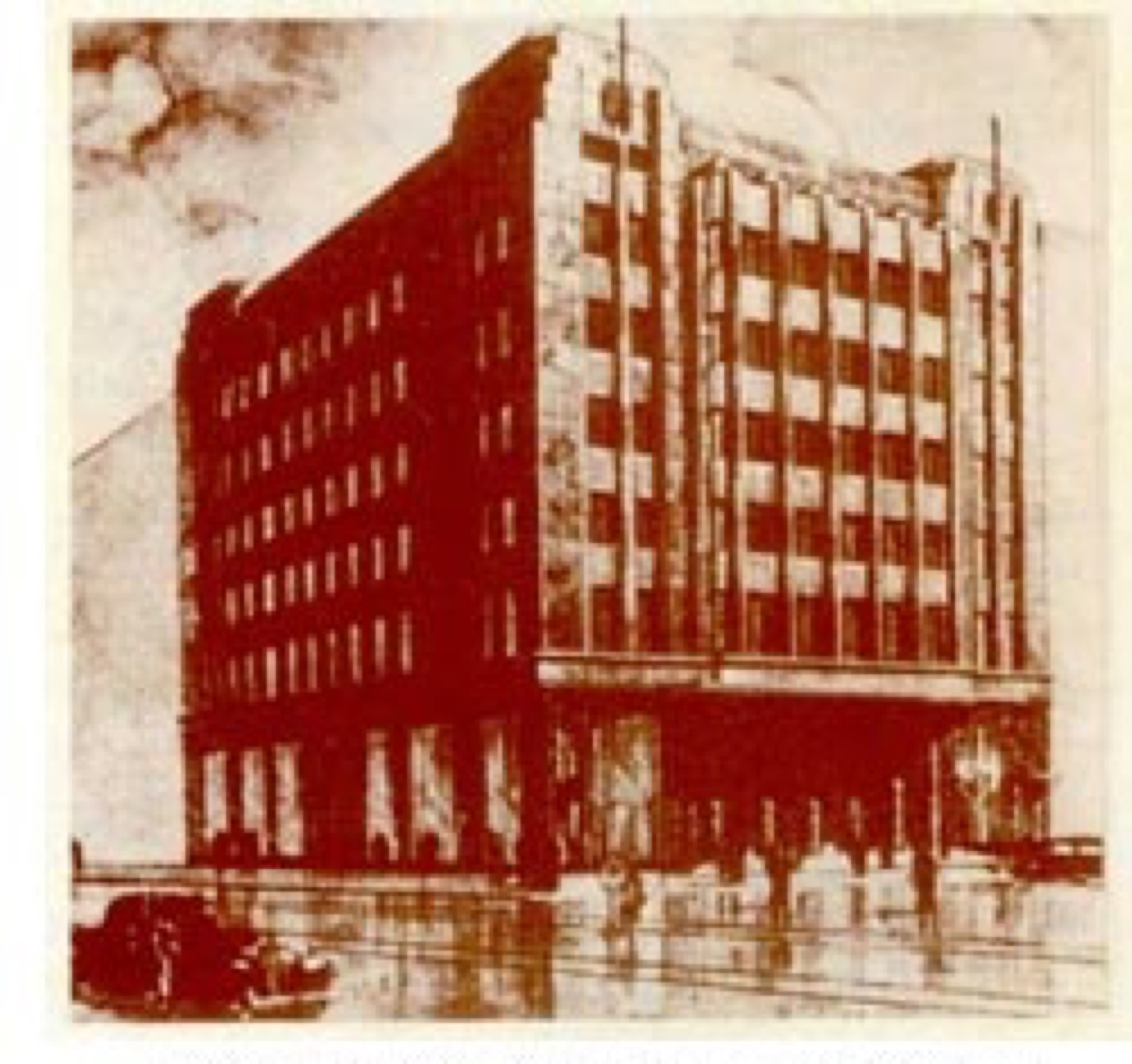
The Belgrade Stock Exchange has occupied a succession of commercial spaces that trace Serbia’s transformation from Ottoman province to modern European state. When the exchange held its founding assembly on 21 November 1894 at the Građanska kasina, a civic club in the heart of old Belgrade, the institution had no permanent home of its own. Regular trading commenced on 3 January 1895 in the Hotel Bosna, a waterfront establishment in the Savamala quarter on the banks of the River Sava, where commodity exporters negotiated contracts for dried fruit and agricultural produce. As the exchange’s activities expanded into separate commodity and currency departments, the currency and effects section relocated to the Hotel Srpska kruna at 56 Knez Mihailova Street, later moving to the fifth floor of number 50 on the same thoroughfare, as documented in the exchange’s own institutional history (Belgrade Stock Exchange, “History,” 2014 anniversary publication). The interwar period brought a decisive architectural upgrade: in 1934, the Bourse relocated to purpose-built premises at Kraljev trg (King’s Square) No. 13, in what is today Studentski trg. The new quarters provided modern communication equipment, laboratory facilities for commodity inspection, and a dedicated courtroom for the exchange’s arbitration tribunal. Daily visitor traffic reached 100–150 persons, and official price lists were printed in 1,000 copies in three languages, reflecting the exchange’s international standing. The building at King’s Square exemplified the interwar Belgrade preference for monumental Academicist facades, a style Ljiljana Blagojević has situated within the broader Yugoslav tension between modernism and national classicism (Blagojević, “Modernism in Serbia,” 2003). Following the exchange’s abolition in 1953, the premises were repurposed for state institutions. When the Yugoslav Capital Market was reestablished in 1989 and renamed the Belgrade Stock Exchange in 1992, it operated from offices within the new commercial infrastructure of Novi Beograd (New Belgrade). The contemporary BELEX is headquartered at Omladinskih brigada 1 in New Belgrade’s modernist business corridor, a district of glass-curtain office towers that stands in striking contrast to the ornamental nineteenth-century commercial architecture of old Belgrade’s Knez Mihailova Street.
The decorative programs of Belgrade’s commercial and financial buildings provide essential context for understanding the visual culture that surrounded the Bourse in its various locations. The Hotel Bosna and Hotel Srpska kruna, where early trading sessions took place along Knez Mihailova and in Savamala, belonged to a generation of commercial architecture shaped by Emilijan Josimović’s transformative 1867 urban plan, which reimagined Belgrade along European lines comparable to Haussmann’s Paris (Vujačić and Ristić, “Surveying of Belgrade: Technical Background of Emilijan Josimović Plan from 1867,” 2020). The facades along Knez Mihailova featured tall windows, wrought-iron balconies, and richly decorated portals in neo-Renaissance and neo-Baroque modes. Particularly instructive is the Prometna Banka (Commercial Bank) building of 1914, designed in the Secession style, whose geometric ornament and functionalist layout reflected the institution’s modern commercial purpose. Viktor Azriel’s 1907 commercial building on Knez Mihailova introduced Art Nouveau retail architecture to Belgrade, with a broad glass facade framed between marble pillars and wrought-iron grilles—a deliberate program of transparency signaling openness to commerce. The nearby National Bank of Serbia on Kralja Petra Street, designed by Konstantin Jovanović and completed in 1890, deployed a richly symbolic decorative scheme: cornucopias, sphinxes, gryphons, and a central figure of Mercury, the god of commerce, conveying themes of prosperity and financial probity (Đorđe Jovanović contributed an allegorical bust of Serbia). This iconographic program, as described in the National Bank’s own architectural history, established a visual vocabulary for Belgrade’s financial quarter that persisted into the interwar period. When the Bourse moved to its own premises at Kraljev trg No. 13 in 1934, the building adopted the restrained monumentalism characteristic of interwar Yugoslav institutional architecture. The contemporary BELEX at Omladinskih brigada occupies a functional modernist office environment that prioritizes electronic trading infrastructure over symbolic ornamentation, marking the decisive twentieth-century shift from the decorated commercial palace to the digital trading floor.
Belgrade’s position at the confluence of the Sava and Danube rivers has defined its commercial geography for millennia, creating what the geographer Jovan Cvijić described as a natural crossroads between Central Europe, the Balkans, and the Eastern Mediterranean (Cvijić, “The Balkan Peninsula,” 1918). The stock exchange’s successive locations trace the city’s commercial center of gravity as it shifted from the Ottoman-era waterfront to the modernized European core. The earliest trading sessions at the Hotel Bosna took place in Savamala, Belgrade’s nineteenth-century merchant quarter on the Sava riverbank, which by the 1860s had overtaken the old walled town in economic output, as Mirjana Rotovilj has documented (“Belgrade in the 19th Century,” 2012). Prince Miloš Obrenović had developed Savamala from the 1830s as “a new Serbian Belgrade,” with planned streets, customs houses, and the steamboat quay that linked Serbia to Habsburg trade networks. By the time the exchange’s currency department moved to Knez Mihailova Street, this grand pedestrian boulevard had become Belgrade’s premier commercial artery, connecting the Terazije square—the city’s modern center, with its hotels, banks, and insurance offices—to the ancient Kalemegdan Fortress above the river confluence. This axis represented Serbia’s deliberate reorientation toward Western European urban models, as Ljiljana Blagojević has argued in “Modernism in Serbia” (2003). The interwar relocation to Kraljev trg placed the Bourse within Belgrade’s academic and institutional quarter. In the post-communist era, the exchange’s move to New Belgrade reflects the wholesale relocation of Serbia’s financial infrastructure to the planned modernist municipality across the Sava, where international corporate headquarters cluster along broad socialist-era boulevards. Belgrade’s position between Western and Eastern European financial systems remains defining: Serbia’s EU candidacy process shapes capital market regulation, while significant Russian investment (notably Gazprom Neft’s acquisition of NIS) underscores the city’s enduring role as a financial bridge between competing spheres of influence.
The Belgrade Stock Exchange was established by royal decree following the Stock Exchange Law adopted by the Serbian National Assembly on 3 November 1886 and proclaimed by King Milan M. Obrenović. Eight years elapsed before the founding assembly convened on 21 November 1894, electing the merchant Dimitrije Stamenkovć, president of the Serbian Trade Association, as the exchange’s first leader. Stamenkovć declared that the institution placed Serbia on “the path, cultural and economic, that other more educated people already follow.” Regular operations began on 3 January 1895 with transactions in napoleons, francs, and forints—currencies reflecting Serbia’s embeddedness in both Austro-Hungarian and French financial networks. The commodity department, which handled agricultural exports including the prune trade that was central to Serbia’s nineteenth-century economy, closed briefly in 1896 before reopening in 1897. By the early twentieth century, the Belgrade Bourse was recognized as one of the best-organized financial institutions in southeastern Europe, with its quotations serving as reference prices on other European exchanges. During the interwar Kingdom of Yugoslavia, six stock exchanges operated across the country, but Belgrade, Zagreb, and Ljubljana set market trends, as Ranko Končar has examined in research on Yugoslav capital markets (“Stock Exchanges in the Kingdom of Yugoslavia,” CEEOL). Government securities dominated trading, reflecting greater public trust in state paper than in corporate equity. The exchange’s final board meeting took place on 28 March 1941, days before the Axis invasion. Many founders and intermediaries perished during the Second World War or faced political persecution afterward, and substantial archival documentation was destroyed. The Presidium of the Serbian government formally abolished the exchange in 1953, as Yugoslavia consolidated its unique system of socialist self-management. Revival came with the establishment of the Yugoslav Capital Market in 1989 by thirty-four major banks, renamed the Belgrade Stock Exchange in 1992. Remarkably, trading continued uninterrupted even during the 1999 NATO bombing campaign. The post-2000 privatization era transformed the market: share trading began in earnest, the BELEX15 index was launched in 2005, and in 2018 the exchange facilitated its first initial public offering since the Second World War through the “Serbia: IPO Go!” program, signaling a new chapter in Serbian capital market development.
The securities and commodities traded on the Belgrade Stock Exchange reflect Serbia’s evolving integration into European and global financial networks across more than a century. At its founding in 1895, the exchange handled three categories simultaneously: currencies (including napoleons, French francs, Austrian forints, and German marks), government securities, and agricultural commodities, notably the dried prunes that constituted one of Serbia’s principal export goods. As the Belgrade Stock Exchange’s own institutional records note, government bonds consistently attracted the greatest trading interest, “which is quite understandable as people trusted the state more than public companies.” Banking stocks and mining shares also circulated, reflecting Serbia’s developing extractive industries and the capital requirements of the new Kingdom’s financial infrastructure. During the interwar period, the exchange listed bonds and equities from across the Kingdom of Yugoslavia, though Belgrade competed with Zagreb for dominance in corporate securities, while Vojvodina’s exchanges handled the bulk of agricultural commodity trading. The post-2000 revival fundamentally reshaped the product mix. The mass privatization process (MPP) distributed shares in formerly state-owned enterprises to citizens, producing a peak of over 2,500 listed companies by 2007—a figure that has since declined sharply as illiquid privatization-era shares were delisted. Today the BELEX15 index tracks the market’s most liquid equities, dominated by two flagship listings: Naftna Industrija Srbije (NIS), the national oil company in which Gazprom Neft holds a controlling stake, and Telekom Srbija, the state telecommunications operator whose employee and citizen shares were listed in 2012. A World Bank technical note on Serbia’s capital market development (2019) observed that approximately 95 percent of trading volume occurs in equities, with bond trading remaining marginal. Municipal bonds were introduced in 2000, and the exchange has worked to develop derivative instruments, though a 2016 study by Mlađenović and Zdravković in the “Journal of Policy Modeling” found that the Serbian market does not yet satisfy the efficient-market hypothesis, reflecting the structural challenges of a transitional economy.
Images will be added as the project develops. Photographs by Larry Ng and from research sources.