Barus / Lobu Tua (Tamil Guild Outpost)
Barus, Indonesia · Established c. 9th century CE
This site requires authorization to access.
To request access, contact
william.goetzmann@yale.edu
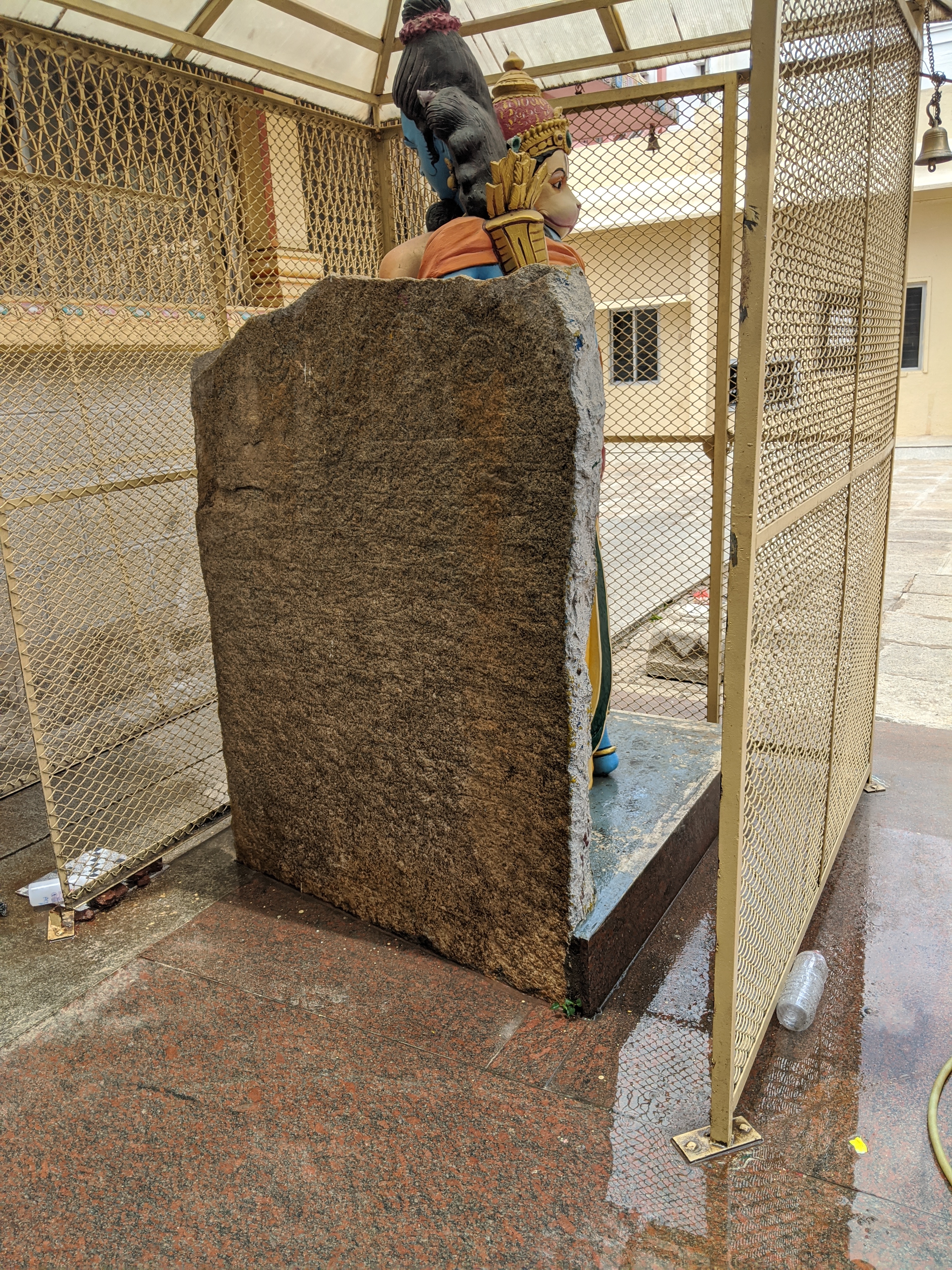
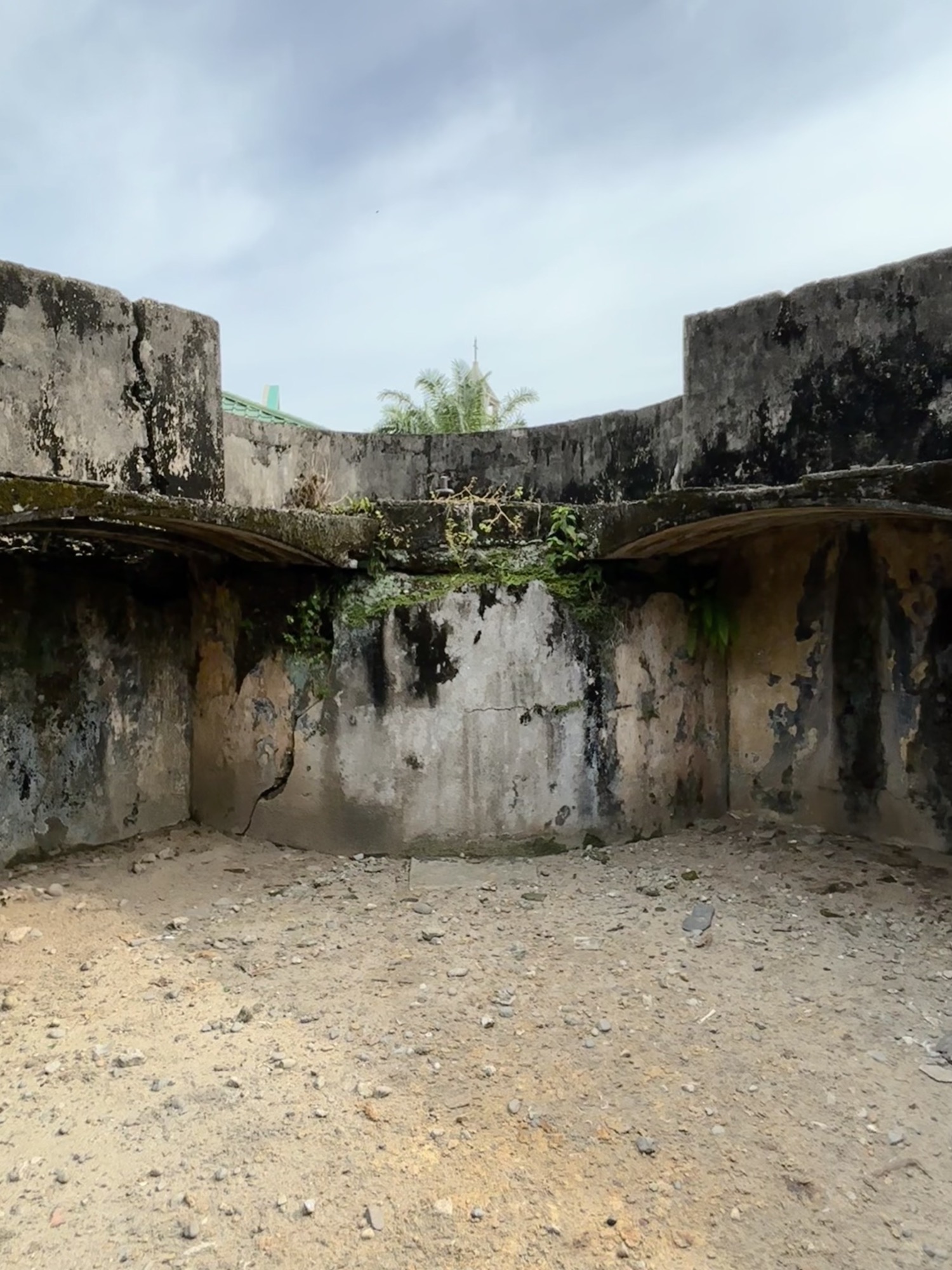
The archaeological site of Lobu Tua lies east of the modern town of Barus on Sumatra’s western coast, identified in late Batak royal chronicles as the location of the ancient settlement before its destruction in the early twelfth century. Beginning in 1995, a Franco-Indonesian research campaign led by Claude Guillot of the École française d’Extrême-Orient (EFEO) and the Pusat Penelitian Arkeologi Nasional (Indonesian National Centre for Archaeological Research), in cooperation with the CNRS, undertook systematic excavations at the site that continued through 2005. Guillot’s two-volume publication, Histoire de Barus, Sumatra: Le site de Lobu Tua (Cahiers d’Archipel, vol. 1, 1998; vol. 2, 2003), documented the discovery of merchant quarters, trading infrastructure, and evidence of multi-ethnic habitation stretching from the ninth through twelfth centuries. The excavations revealed structural remains of what appears to have been a permanent or semi-permanent Tamil merchant settlement — including a red granite Buddha torso, suggesting the community maintained its own religious facilities. Most dramatically, the site yielded the stone stele bearing the Tamil inscription of 1088 CE, the single most important epigraphic artifact linking South Indian commercial guilds to the Sumatran trade. The inscription was originally discovered in 1873 in the village of Lobu Tua; today seven of its eight fragments are held in the National Museum of Indonesia in Jakarta, with one fragment remaining at the original site.
The Lobu Tua inscription, dated 1010 Śaka (1088 CE), is the most dramatic physical artifact of Tamil commercial expansion in the Malay world. Carved in Tamil script on stone, the inscription records the activities of the Aiṇṇūrruvar — the ‘Five Hundred Lords of Ayyavoḷe,’ a powerful merchant guild originating from Aihole in the Deccan — at the port they called Vārōcu (the Tamil rendering of Barus). As Jan Wisseman Christie documented in her landmark study ‘The Medieval Tamil-language Inscriptions in Southeast Asia and China’ (Journal of Southeast Asian Studies, vol. 29, no. 2, 1998), this inscription belongs to a scattered corpus of Tamil-language epigraphic evidence across the region, but the Lobu Tua stone is exceptional for its detailed references to guild taxation and organizational structure operating more than four thousand kilometers from the guild’s homeland. Beyond the inscription, the Franco-Indonesian excavations recovered a remarkably cosmopolitan assemblage of artifacts. Chinese ceramics, including Song-dynasty trade wares, appeared alongside Near Eastern pottery bearing engobe and incised decoration — evidence documented in detail in volume one of Guillot’s Histoire de Barus (1998). Persian, Arab, and Egyptian objects testified to Barus’s position as a node in a truly intercontinental trading network. Metalwork and Tamil-origin artifacts further confirmed the permanent character of the South Indian merchant presence at the site.
Barus occupies a strategic position on the western coast of North Sumatra, facing directly onto the Indian Ocean rather than the Strait of Malacca. This geographic orientation made it accessible to vessels sailing from South India, the Persian Gulf, and the Red Sea without requiring passage through the heavily contested strait — a factor that may explain why Tamil and Middle Eastern merchants established direct trading relationships at the port from an early period. The settlement’s commercial significance derived above all from its proximity to the camphor forests of the Sumatran interior. The Dryobalanops aromatica trees that produced Barus camphor (kapur Barus in Malay) grew in the highlands behind the coast, and Barus served as the primary collection and export point for what was universally recognized as the finest camphor in the medieval world. As the Venetian traveler Marco Polo attested, Fansur camphor (his rendering of the Barus product) ‘sold for its weight in fine gold.’ The Arabic geographer Sulaiman noted as early as 851 CE the presence of ‘plantations called Fansur, where one obtains a superior quality of camphor.’ The Malay term kapur Barus itself became the source of words for camphor across medieval Afro-Eurasia, borrowed into languages as distant as Old French and Chinese. The port’s position on the Indian Ocean littoral connected it simultaneously to the Tamil-speaking Coromandel coast, the Persian Gulf entrepots, the Red Sea route to Egypt, and — via coastal and overland routes across Sumatra — to the Strait of Malacca and the maritime highways leading to Song-dynasty China.
The Tamil merchant presence at Barus represents one of the most remarkable episodes of long-distance commercial organization in the medieval world. The Lobu Tua inscription of 1010 Śaka (1088 CE) records the operations of the Aiṇṇūrruvar, known as the ‘Five Hundred of a Thousand Directions’ (Disai-Ayirattu-Aiṉṉūrruvar), a merchant guild that had originated in Aihole in present-day Karnataka and subsequently expanded under Chola patronage across southern India and into Southeast Asia. The guild’s presence at Barus must be understood in the context of the Chola naval expeditions against the Srivijaya maritime empire. As Hermann Kulke, K. Kesavapany, and Vijay Sakhuja documented in their edited volume Nagapattinam to Suvarnadwipa: Reflections on the Chola Naval Expeditions to Southeast Asia (ISEAS, Singapore, 2009), Rajendra Chola I launched raids against Srivijayan ports in 1017 and a larger campaign in 1025, attacking fourteen key port cities across the Malay world. Kulke characterized the 1025 expedition as ‘the only large-scale long-distance naval attack launched from South Asia in recorded history.’ These campaigns fundamentally disrupted Srivijaya’s commercial hegemony and created openings for Tamil merchant associations — the Aiṇṇūrruvar, the Maṇigrāmam, and others — to expand their operations across the region. The Lobu Tua inscription, erected sixty-three years after the 1025 campaign, provides direct evidence of the guild’s established presence at a port more than four thousand kilometers from its Aihole origin. Jan Wisseman Christie’s systematic study of the medieval Tamil-language inscriptions in Southeast Asia and China (Journal of Southeast Asian Studies, 1998) placed the Barus inscription within a broader pattern of Tamil epigraphic evidence extending from Sumatra through the Malay Peninsula to southern Thailand and coastal China. Claude Guillot’s archaeological campaigns at Lobu Tua (1995–2005) provided the material confirmation for what the inscriptions had long suggested: a substantial, sustained Tamil merchant community operating at this remote Sumatran port, engaged in the camphor and benzoin trade that linked the forests of the interior to markets across the Indian Ocean and beyond.
The commercial raison d’être of the Tamil guild outpost at Barus was above all the camphor trade. Barus camphor, harvested from the Dryobalanops aromatica trees of the Sumatran interior, was universally recognized as the most valuable grade of camphor in the ancient and medieval world — prized far above the cheaper Japanese camphor (Cinnamomum camphora) for its purity and fragrance. It was used across Eurasia in medicine, embalming, ritual practice, and as a luxury aromatic; Islamic, Chinese, and Indian sources all single out Barus (rendered as Fansur, Baros, or Vārōcu) as the origin of the finest quality. The second major forest product was benzoin resin (kemenyan), a gum resin tapped from Styrax trees that grew abundantly in northern Sumatra and was in strong demand in China for use in Buddhist rituals and pharmaceuticals, and in the Middle East and Mediterranean for incense and perfumery. Gold from the Sumatran interior and spices rounded out the export portfolio. The Aiṇṇūrruvar guild organized the collection and export of these commodities, and the Lobu Tua inscription’s references to taxation and commercial regulation suggest a formalized system of duties and governance at the port. The guild connected Barus into the broader Chola–Srivijaya–Song China maritime network documented by scholars including Kenneth R. Hall in his work on maritime trade and state development in early Southeast Asia. Tamil merchants brought Indian textiles, metalwork, and manufactured goods to exchange for the raw materials of the Sumatran forests, while Chinese ceramics recovered in the Guillot excavations attest to active trade with Song-dynasty ports. Arab and Persian merchants, whose pottery and artifacts also appear in the Lobu Tua assemblage, connected Barus westward to the Persian Gulf and Red Sea routes, creating a truly intercontinental commodity chain centered on this small Sumatran port.