Llotja de Mar (Barcelona Maritime Exchange)
Barcelona, Spain · Established 1392
This site requires authorization to access.
To request access, contact
william.goetzmann@yale.edu
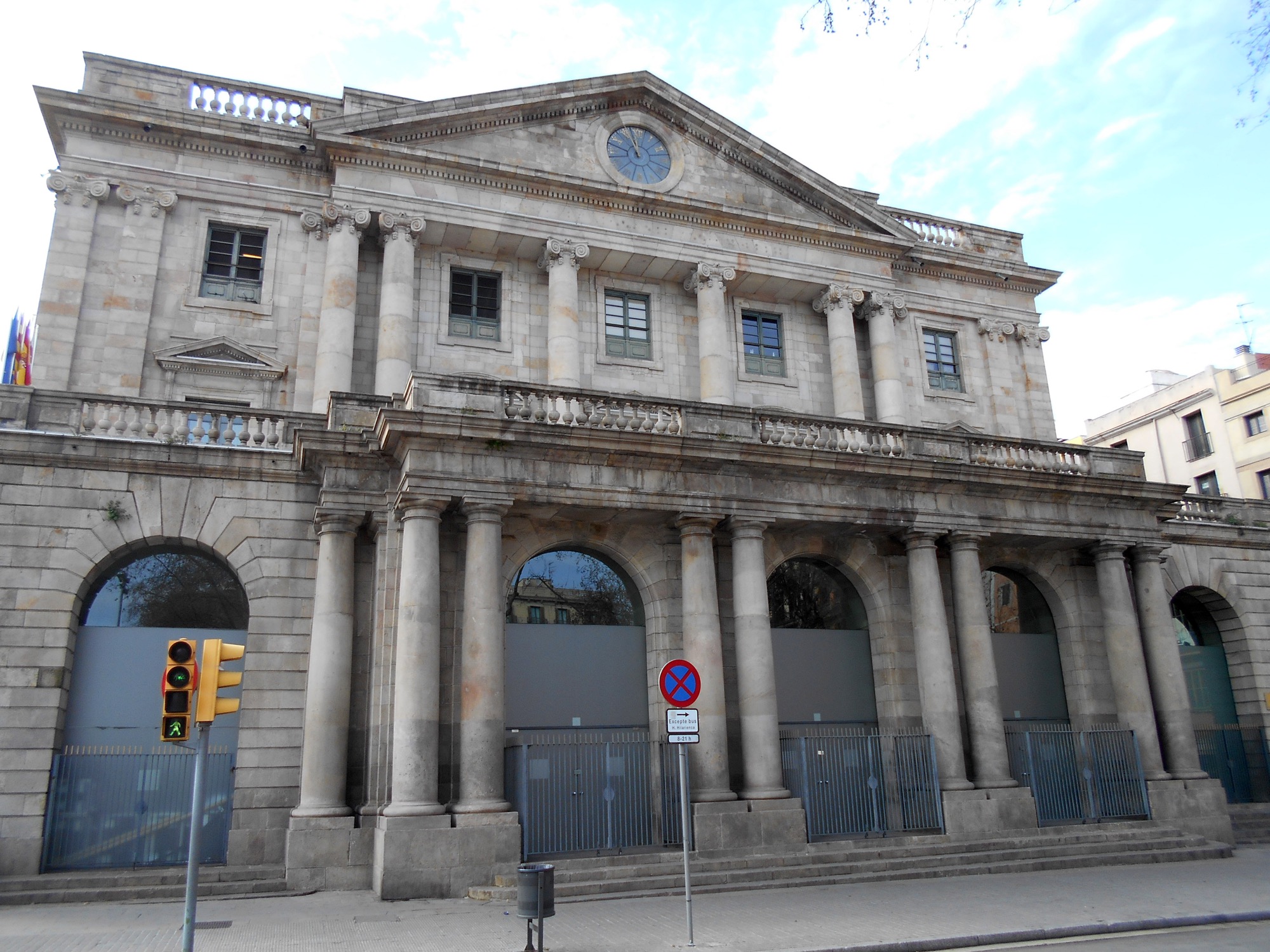
The Llotja de Mar is one of Europe's earliest purpose-built commercial exchange buildings, predating the great exchanges of Antwerp and Amsterdam by more than a century. The original structure began as an open portico or loggia near the port, built by the master builder Pere Llobet between 1352 and 1357, where merchants could gather in the open air. Around 1380, King Pere III el Cerimonios (Peter the Ceremonious) authorized the construction of a large enclosed hall to shelter traders from inclement weather and the effects of the sea. The architect Pere Arvei directed the construction of this hall between 1384 and 1397, producing the Salo de Contractacions (Contracting Hall), which survives today as one of the finest civil Gothic interiors in the Mediterranean. The Salo de Contractacions is a vast rectangular space approximately 709 square meters in area, with ceilings soaring to fourteen meters. Its three naves are separated by semicircular arcades resting on four robust stone columns that support six broad arches, which in turn carry the wooden beams of the upper floor. Above the Contracting Hall sits the Salo dels Consols (Consuls' Hall), where the judges of the maritime trade court conducted their proceedings. Between 1452 and 1453, a courtyard and small chapel were added to the complex. In the fifteenth century, the Tarongers (Orange Tree) courtyard was established between 1456 and 1459, and a first floor was added above the arcade's side nave. The building belongs to the typology of Gothic Mediterranean trading halls that flourished under the Crown of Aragon. As Joan Domenge i Mesquida described in his study of Catalan civil Gothic architecture (Catalan Historical Review, 2020), the Barcelona Llotja can be considered the first mature example in the Crown of Aragon of a building type designed specifically for mercantile activity. It directly inspired the later and more elaborate exchanges at Palma de Mallorca, designed by Guillem Sagrera beginning in 1420, and the Llotja de la Seda in Valencia, built between 1482 and 1533. These buildings all follow the same basic scheme of a large rectangular hall supported by columns, but the Valencia and Palma versions introduced dramatic helical columns and elaborate ribbed stone vaults, whereas Barcelona's hall retains a more austere character with its wooden-beamed ceiling and broad round arches. Between 1774 and 1802, the Gothic structure was enveloped in a neoclassical shell designed by the architect Joan Soler i Faneca (1731-1794) and completed after his death by his son Tomas Soler i Ferrer and the architect Joan Fabregas. The Junta de Comerc de Barcelona (Royal Board of Trade), which had recovered ownership of the building in 1767 after its use as military barracks since 1714, commissioned this transformation. Soler i Faneca created a freestanding quadrangular building bordered by the Pla de Palau, Placa d'Antoni Lopez, Passeig d'Isabel II, and Carrer del Consolat de Mar. The renovation preserved the Gothic hall intact within the new exterior, producing Barcelona's remarkable architectural palimpsest of a medieval trading hall wrapped in an Enlightenment-era classical facade. The building is considered one of the finest neoclassical structures in Barcelona.
The artistic program of the Llotja de Mar spans its Gothic origins and neoclassical transformation, producing a layered ensemble of medieval stonework and Enlightenment-era sculpture. Within the Salo de Contractacions, the Gothic decoration is restrained but symbolically charged. The spandrels of the six broad arches bear alternating carved scallop shells and heraldic shields displaying the coat of arms of the king and the city of Barcelona, reflecting the dual royal and municipal patronage that funded the building's construction under Peter the Ceremonious and the Consell de Cent. The scallop shell, a symbol associated with Mediterranean pilgrimage and maritime travel, resonates with the building's function as a center of seaborne commerce. In the late sixteenth century, master craftsman Gil Fontanet created stained-glass windows for the Contracting Hall, though these disappeared by the late 1600s. During restoration work in 1997, original plaster ceiling moldings, continuous friezes displaying the Board of Trade's coat of arms, and Gothic-period stone remains were uncovered in the Contracting Hall floor, which were subsequently revealed through glass flooring installations. The neoclassical renovation of 1774-1802 introduced a far more ambitious sculptural program. The centerpiece of the new ensemble is the Staircase of Honour designed by Joan Soler i Faneca, a masterwork of stone stereotomy that forks into two symmetric flights on the first landing, flanked by allegorical sculptures representing Trade and Industry. The courtyard features a square ground plan with three openings onto each wing; four vaulted corner niches contain sculptures representing the four continents. At the base of the staircase stands the Fountain of Neptune, sculpted by Nicolau Traver, with two nereids by Antoni Sola (1780-1861), one of the leading sculptors of European neoclassicism who studied at the Llotja school before winning a Rome grant in 1803. The building's most celebrated work of art is the Dying Lucretia by Damia Campeny (1771-1855), widely regarded as one of the finest European neoclassical sculptures. Campeny, born in Mataro, studied at the Llotja school before moving to Rome in 1796, where he attended the Accademia di San Luca and worked alongside Antonio Canova. The marble Lucretia, completed around 1803, depicts the Roman noblewoman recumbent on a curule seat, her torn dress exposing a discreet wound on her left side, with an expression of placid resignation. The work so impressed the Council of Europe that in 1972 it was requested for the major exhibition The Age of Neo-Classicism in London. Additional neoclassical sculptures by Campeny in the building include figures of Hymen, Diana the Huntress, Paris, and allegorical vases dedicated to Bacchus and Hercules, all in Italian marble. Other sculptors represented include Salvador Gurri (1749-1819), who bridged the Baroque and neoclassical styles and taught Campeny, and Francesc Bover (1769-1831), who studied in Rome from 1790 to 1795. The Llotja also shaped Barcelona's artistic life more broadly. In 1775, the Junta de Comerc established the Escola gratuita de disseny (Free School of Design) in the building's upper floors, initially to train pattern designers for the textile industry. The school evolved into the Escola de Belles Arts (School of Fine Arts), which became the most important producer of artists in Catalonia. Pablo Picasso enrolled in 1895 at the age of thirteen, where his father Jose Ruiz Blasco taught drawing. Joan Miro, Maria Fortuny, Isidre Nonell, and Joaquim Mir also studied within these walls.
The Llotja de Mar stands at the Pla de Palau, historically the most important point of entry to Barcelona from the sea. In the medieval period, the building sat at the very edge of the harbor, directly on the waterfront where the beach met the city walls. The Portal de Mar, the principal maritime gateway through the city walls, opened onto this square, making it the natural convergence point for goods and people arriving by ship. As the Pla de Palau was originally an extension of the beach itself, importers and retailers conducted their exchanges here from the thirteenth to the nineteenth centuries, and the Llotja anchored this commercial geography. The port of Barcelona did not acquire an artificial wharf until the mid-fifteenth century, having previously relied on occasional wooden pontoon bridges as makeshift jetties. Over the following centuries, land reclamation and port construction pushed the waterline steadily outward, so that today the Llotja sits several hundred meters from the sea. The building's full name, Llotja de Mar (Sea Exchange), preserves its original waterfront identity even as the harbor has retreated. The exchange is embedded in the Ribera quarter, Barcelona's medieval maritime commercial district. As Stephen Bensch documented in Barcelona and Its Rulers, 1096-1291 (Cambridge, 1995), the neighborhood's economic character was shaped by market-oriented agriculture, Mediterranean shipping, and the growing power of a merchant patriciate. The street names of the surrounding district still record the trades that once clustered around the exchange: the carrer dels Canvis (Street of the Money Changers), carrer dels Argenters (Street of the Silversmiths), and carrer dels Miralllers (Street of the Mirror Makers). A few blocks to the north stands the Basilica de Santa Maria del Mar, the great merchants' church built between 1329 and 1383, in an extraordinary feat of communal patronage. While Barcelona Cathedral was funded by the Crown, Santa Maria del Mar was raised by the common people of the Ribera: wealthy merchants provided the funds, while the bastaixos (longshoremen) carried the massive stones from the quarries of Montjuic on their backs. The basilica's austere Catalan Gothic interior, with its columns set an unprecedented thirteen meters apart, expressed the commercial confidence of the neighborhood that also produced the Llotja. Together, the Llotja de Mar, Santa Maria del Mar, and the dense grid of commercial streets between them formed the mercantile heart of medieval Barcelona. The city's position as a Mediterranean trading power was inseparable from its port geography: sheltered by Montjuic to the southwest and connected by sea to the Balearic Islands, Sardinia, Sicily, North Africa, and the Levant, Barcelona served as the commercial capital of the Crown of Aragon's maritime empire.
The institutional history of the Llotja de Mar is inseparable from Barcelona's rise as one of the great Mediterranean trading powers. In 1258, King Jaume I of Aragon granted the Carta Consular to Barcelona, establishing the Consolat de Mar (Consulate of the Sea), one of Europe's earliest maritime trade courts. As the Cambridge historian David Abulafia documented in A Mediterranean Emporium: The Catalan Kingdom of Majorca (Cambridge University Press, 1994) and The Great Sea: A Human History of the Mediterranean (Penguin, 2011), the Crown of Aragon's commercial expansion through the thirteenth and fourteenth centuries made Barcelona a pivot of Mediterranean trade, rivaling Genoa and Venice. The Consolat de Mar was not granted to the city itself but to the Universitas Proborum Hominum Riparie Civitatis Barchinone, the corporation of leading merchants of the maritime quarter, giving Barcelona's traders the right to settle their commercial disputes without interference from the royal courts. In return, the king received financial support for his wars of expansion. As the territories of the Crown of Aragon expanded, new Consulates of the Sea were established in major ports throughout the Mediterranean. The Consolat de Mar gave rise to the Llibre del Consolat de Mar (Book of the Consulate of the Sea), a compendium of maritime customs and ordinances compiled over the fourteenth and fifteenth centuries, first printed at Barcelona in 1494. As Olivia Remie Constable argued in Trade and Traders in Muslim Spain: The Commercial Realignment of the Iberian Peninsula, 900-1500 (Cambridge University Press, 1994), the thirteenth-century Christian conquest of Muslim territories in Iberia redirected the peninsula's commerce from the Islamic world toward European trading networks, and Barcelona was at the center of this realignment. The Llibre del Consolat collected the scattered maritime customs of Roman, Greek, Byzantine, Italian, French, and Spanish origin into a single authoritative code that governed Mediterranean trade for centuries and formed the foundation of modern international maritime law. The physical exchange building was constructed to house this flourishing commercial culture. After merchants had traded in open-air spaces and temporary structures for decades, Pere Arvei built the enclosed Salo de Contractacions between 1384 and 1397 under royal authorization. The hall served simultaneously as the seat of the Consolat de Mar and as the daily gathering place where merchants negotiated contracts, settled debts, and conducted the ordinary business of Mediterranean commerce. In 1401, the Consell de Cent (Council of One Hundred), Barcelona's governing body, established the Taula de Canvi, a municipal bank of deposit that has been described as one of Europe's first public banks. As Laura Miquel Milian analyzed in her study of the institution (Journal of Medieval Iberian Studies, 2021), the Taula was created to provide an efficient and stable deposit and giro transfer system while also funding the city government. It accepted both sight and term deposits in coin or jewelry, and deposits were transferable so long as they did not result in overdraft, making the Taula an early form of central banking. Its success was immediate and its clients powerful, though it was severely tested by the Catalan Civil War of 1462-1472, which ultimately led to institutional reforms that strengthened it. The model spread to Valencia (1408), Perpignan (1404), and Palma de Mallorca (1507). Barcelona also played a pioneering role in the development of marine insurance. The city's 1435 insurance ordinances, appended to the Llibre del Consolat de Mar, represent the earliest known formal regulatory framework for insurance contracts, mandating that traders bring insurance disputes before formal courts. As Montserrat Guillen documented in her study of the Spanish insurance market (Assurances et Gestion des Risques, 2013), these Barcelona ordinances can be considered among the first written insurance regulations in Europe, establishing rules to prevent the fraud and abuse that had plagued earlier informal arrangements. The Catalan Civil War of 1462-1472 and the subsequent decline of Catalan Mediterranean trade diminished Barcelona's commercial prominence, but the institutional innovations born in the Llotja, particularly the consular trade court and the public bank, proved enduring models that influenced commercial practice across Europe.
Trading in the Salo de Contractacions encompassed the full range of Mediterranean commercial activity. As Damien Coulon documented in his study of Barcelona's ruling class and long-distance trade (published in the proceedings of the Catalan Historical Review), the city's merchants operated extensive networks reaching from the closest regions of Occitania and southern France to Italy, the Maghreb, the eastern Mediterranean Levant, and the Atlantic coasts of Andalusia, Portugal, England, and Flanders. The principal commodities moving through Barcelona included spices from the East (pepper, cinnamon, cloves, and ginger), which generated enormous profits and were among the most valuable goods traded. Barcelona's tariffs from as early as 1160-1180 taxed spices, fine cloth of silk and purple, and cotton arriving from Muslim Spain and the Orient. Textiles were central to the Catalan economy: wool was the most important industry in the Crown of Aragon from the thirteenth century onward, and Catalan woolen cloth of middling quality became a major export commodity, carried eastward on ships that returned laden with spices. Local products used for exchange included saffron, dried fruit, raisins and figs, coral, tallow, crafted hides, ceramics from Valencia, and glass items. Grain imports were critical for feeding the city, arriving from Sicily, Sardinia, and North Africa. The Salo de Contractacions was not merely a commodity market but a center for financial innovation. Barcelona's merchants pioneered several instruments of commercial finance. Marine insurance contracts were being written in Barcelona by the mid-fourteenth century, part of a broader Mediterranean development that scholars have traced primarily to Italian origins. As Maristella Botticini, Pietro Buri, and Massimo Marinacci of Bocconi University analyzed in Botticini’s 2023 EEA Presidential Address to the Journal of the European Economic Association, studying more than 7,000 insurance contracts from archives in Barcelona, Florence, Genoa, Palermo, Prato, and Venice from 1340 to 1500, insurance contracts and markets developed first in Italian commercial centers and soon spread to Barcelona and Palermo, likely brought by Genoese and Florentine merchants with commercial partners and subsidiaries there. Barcelona's 1435 ordinances on insurance formalized these practices, requiring disputes to be adjudicated in formal courts. Bills of exchange (cambium) circulated along well-established axes connecting Barcelona with other major commercial centers. As the University of Toronto economic historian John Munro documented, Barcelona was a key node in the medieval bill of exchange network, with instruments moving regularly between Barcelona and Bruges, Barcelona and Genoa, and Barcelona and the cities of the Levant. The Taula de Canvi, established in 1401, facilitated these transactions by providing a reliable system for deposit and transfer of funds. The consular system that governed foreign trade was integral to how business was conducted. Barcelona's Council of One Hundred appointed consuls in every foreign port with which the city traded; these officials had authority to govern, judge, and punish all subjects of the Crown of Aragon residing abroad. The consuls operated from fondacos (merchant warehouses and hostels) that served as combination trading posts, diplomatic missions, and residential quarters. This institutional infrastructure, extending from the Salo de Contractacions in Barcelona to consular outposts scattered across the Mediterranean, enabled Catalan merchants to manage risk, enforce contracts, and sustain long-distance commercial relationships that made Barcelona one of the great trading cities of medieval Europe.
Images will be added as the project develops. Photographs by Larry Ng and from research sources.