Antwerp Old Exchange (Oud Beurs van Antwerpen)
Antwerp, Belgium · Established 1531
This site requires authorization to access.
To request access, contact
william.goetzmann@yale.edu
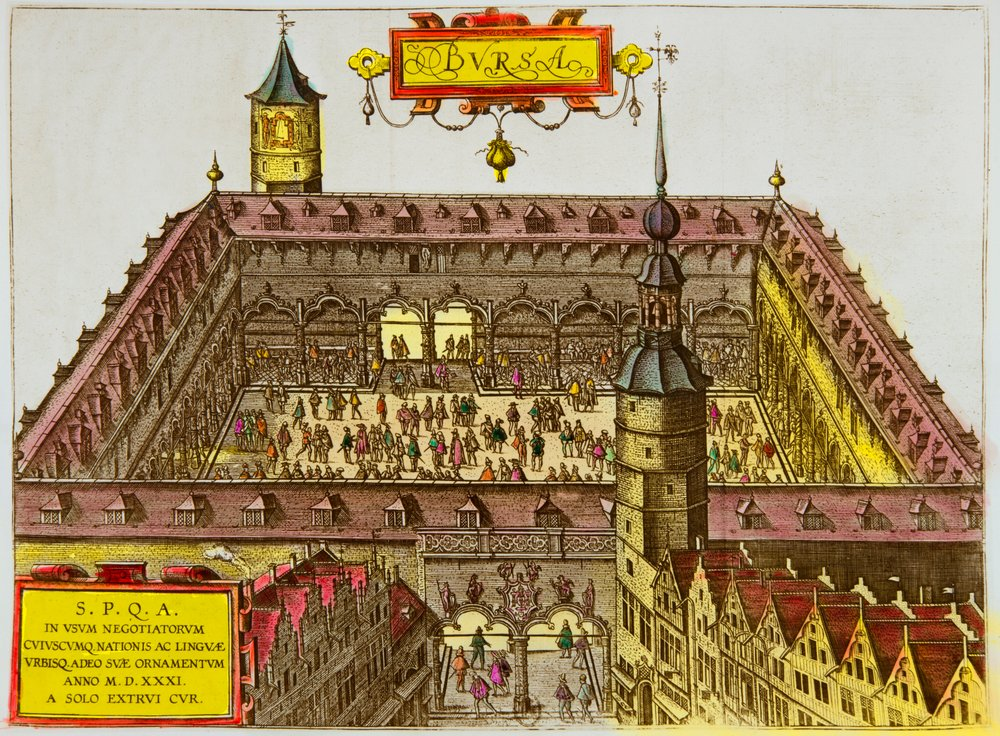
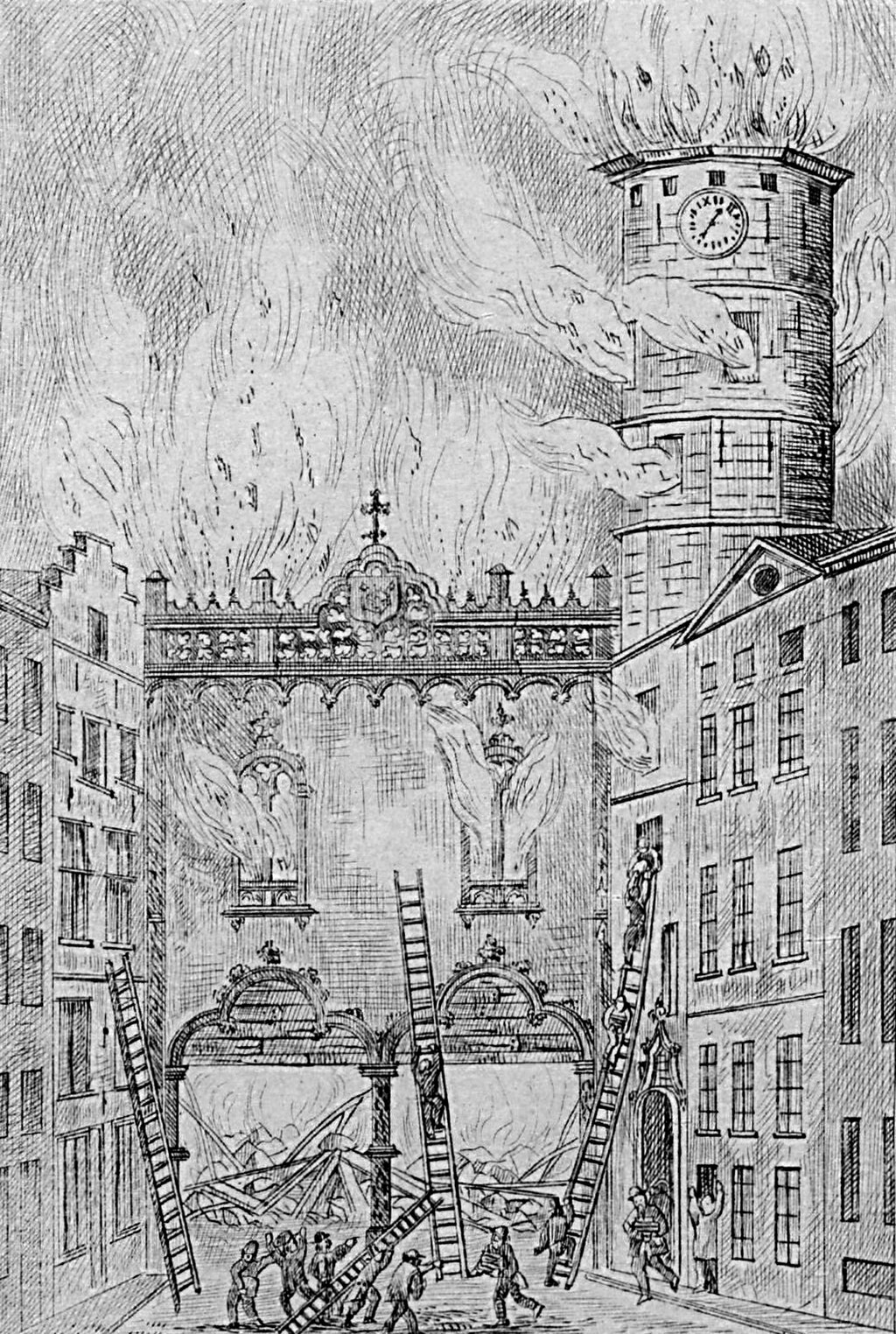
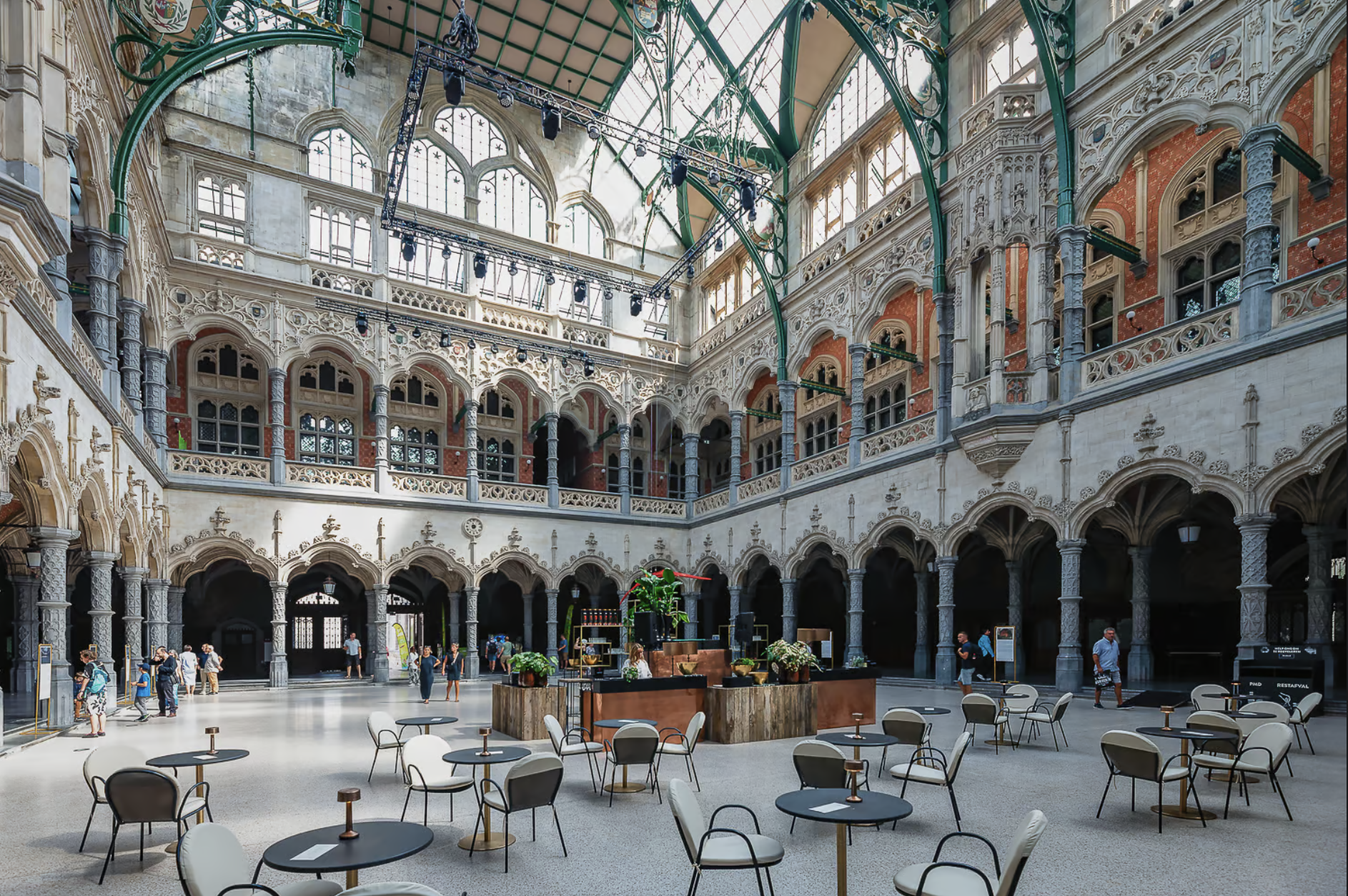
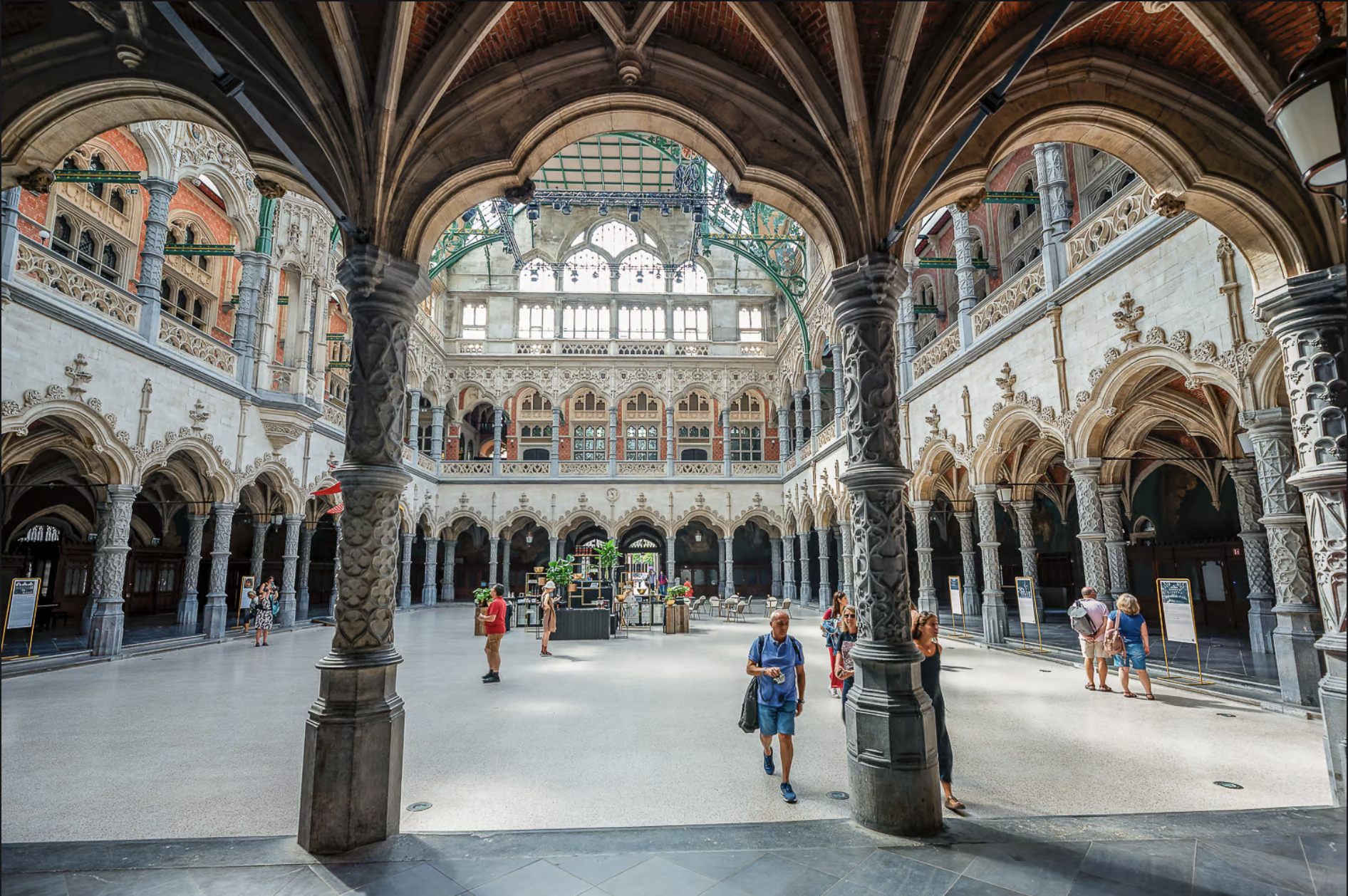
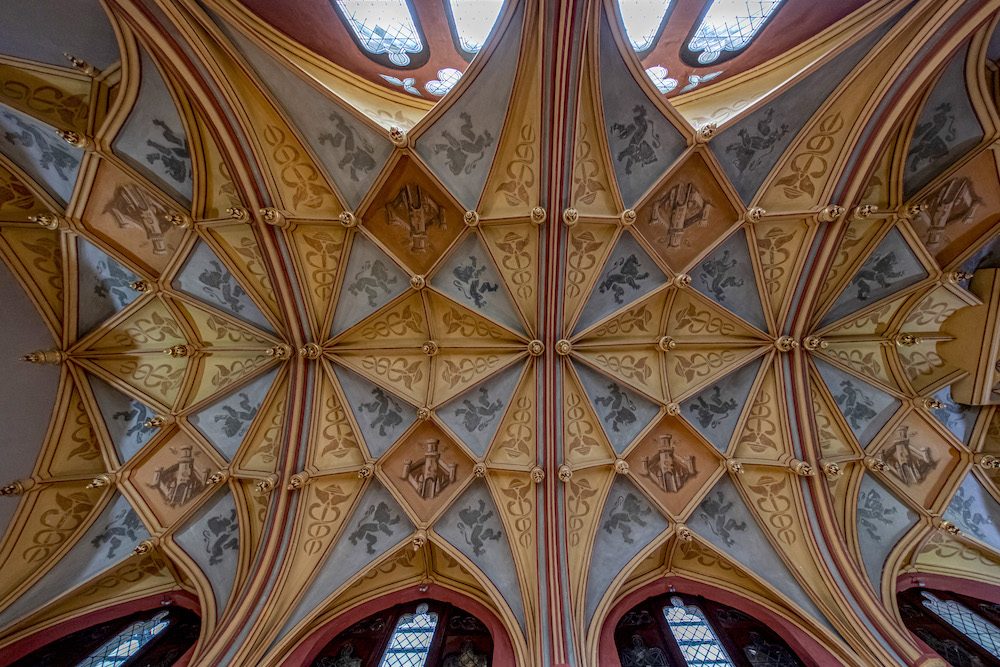
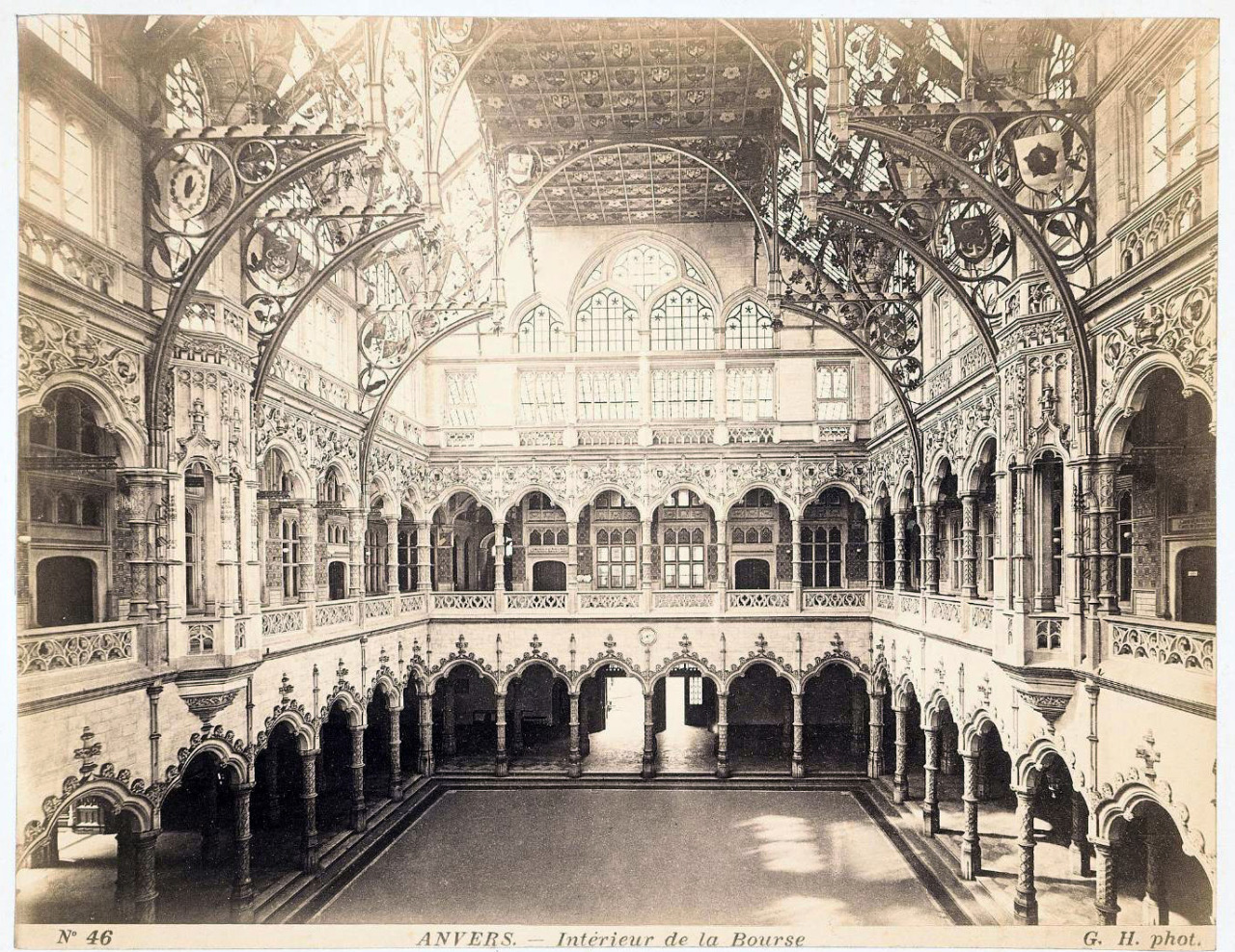
The Antwerp Bourse of 1531, designed by the city architect Domien de Waghemakere (c. 1460–1542), represents one of the most consequential buildings in the history of European commerce. Commissioned by the Antwerp magistrates to formalize the open-air trading that had long taken place on the Meir and adjacent streets, de Waghemakere created what Oscar Gelderblom, in Cities of Commerce: The Institutional Foundations of International Trade in the Low Countries, 1250–1650 (Princeton, 2013), calls the institutional embodiment of Antwerp’s open-access commercial regime. The building’s plan was revolutionary in its simplicity: a large rectangular open courtyard enclosed on all four sides by arcaded galleries carried on slender columns supporting elaborate star and net vaults in the late Brabantine Gothic style. Fifty-six wooden offices for stockbrokers lined the perimeter, while upper levels housed administrative functions. The courtyard was originally open to the sky, a feature some contemporaries attributed to the principle that God should observe all transactions conducted within. The building’s architectural logic proved enormously influential. Thomas Gresham, the English Crown’s agent in Antwerp from 1551, directly commissioned the Flemish architect Hendrik van Paesschen (c. 1515–1582) to design London’s Royal Exchange (opened 1571) on the Antwerp model. The Amsterdam Bourse of 1611 by Hendrick de Keyser likewise followed the courtyard-and-gallery formula. After a devastating fire in 1583 during the religious wars, the exchange was immediately rebuilt to the same plan, testifying to the building type’s functional success. A second fire in 1858 destroyed it again; the current Neo-Gothic structure by Joseph Schadde, completed in 1872, preserves the original courtyard arrangement beneath spectacular iron-and-glass vaulting.
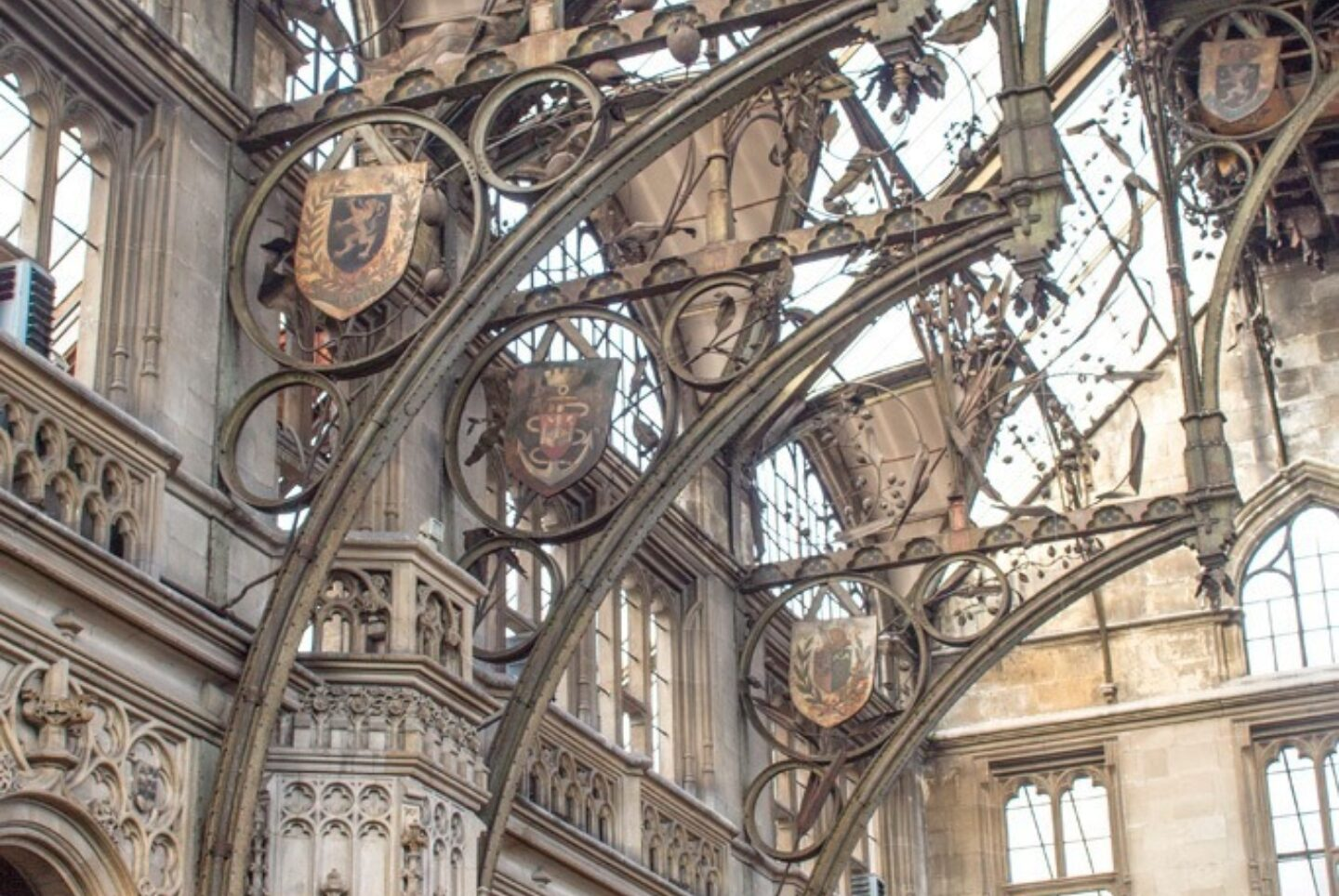
The decorative program of the 1531 Antwerp Bourse announced the building’s cosmopolitan purpose with a celebrated Latin inscription above the principal entrance: “In usum negotiatorum cujuscunque nationis ac linguae”—for the use of merchants of every nation and language. This motto, which Lodovico Guicciardini recorded in his Descrittione di tutti i Paesi Bassi (1567), became synonymous with the ideal of the universal marketplace and was echoed in the inscriptions of derivative exchanges across Europe. The interior walls displayed world maps, reinforcing the global reach of Antwerp’s commercial networks, while heraldic shields representing the trading nations adorned the arcade bays. The sculptural vocabulary of de Waghemakere’s Gothic arcades—foliated capitals, tracery patterns, and the intricate star-and-net vaulting—reflected the Brabantine decorative tradition then at its apogee. The building became one of the most frequently depicted commercial structures of the sixteenth century. Guicciardini’s 1567 edition, published by Willem Silvius, included an engraving of the exchange interior showing merchants gathered beneath the arcades. The monumental bird’s-eye views of Antwerp prepared by Joris Hoefnagel (1542–1600) for Georg Braun and Frans Hogenberg’s Civitates Orbis Terrarum (first volume 1572) situated the Bourse within the city’s dense commercial fabric. These engravings circulated widely and helped establish the Antwerp exchange as the visual archetype of organized commerce. The 1872 reconstruction by Joseph Schadde introduced a new decorative program of heraldic shields of European trading nations along the arcade spandrels, explicitly commemorating the cosmopolitan heritage of the original building.
The Antwerp Bourse occupied a site near the Meir, the city’s principal commercial artery, in the heart of a dense mercantile quarter that stretched between the Grote Markt and the Scheldt riverfront. As Jeroen Puttevils documents in Merchants and Trading in the Sixteenth Century: The Golden Age of Antwerp (Routledge, 2015), the city’s commercial geography was structured by its relationship to the river. The Scheldt connected Antwerp to the North Sea and gave it an inland port of extraordinary capacity: in prosperous years, some 2,500 ships called annually, carrying approximately 250,000 tons of goods—four times the traffic of London. The city had grown from a secondary Brabantine town to what Richard Ehrenberg called “the greatest marketplace in the world” in his Capital and Finance in the Age of the Renaissance (1928). By mid-century, Antwerp housed over 100,000 inhabitants, including some 10,000 foreign merchants. The Portuguese maintained their Feitoria de Flandes at Kipdorp from 1494; the English Merchant Adventurers established their headquarters at the House of Liere in 1558; Italian, Spanish, and Hanseatic merchant communities each occupied distinct neighborhoods. The Bourse stood at the nexus of these merchant colonies. Christophe Plantin established his printing house nearby around 1555, making Antwerp not only Europe’s commercial capital but also its leading center of book production. The Grote Markt, with its guild houses, the Cathedral of Our Lady, and the city’s monumental Stadhuis (completed 1564 by Cornelis Floris de Vriendt), formed an architectural ensemble that expressed civic wealth sustained by commerce flowing through the Bourse.
The founding of the Antwerp Bourse in 1531 marked the institutional crystallization of what was already Europe’s dominant entrepôt. As Oscar Gelderblom argues, Antwerp’s rise reflected a competitive dynamic among Low Countries cities, with municipal authorities creating open-access institutions to attract international merchants. The Portuguese Crown had established its spice factor in Antwerp by 1494, and after Vasco da Gama’s voyage, Antwerp became the primary European distribution point for Asian pepper and spices. South German banking houses—the Fugger, Welser, Hochstetter, and Imhoff—brought Alpine silver and copper essential for the Asian trade, while simultaneously extending massive credit to the Habsburg emperors. As William Goetzmann observes in Money Changes Everything: How Finance Made Civilization Possible (Princeton, 2016), these free cities generated the first money markets. The Bourse formalized daily trading in commodities and financial instruments. By mid-century, some 1,500 to 2,000 merchants gathered regularly in its courtyard. The system’s fragility was exposed by the Spanish sovereign default of 1557, when Philip II’s inability to service his debts devastated the South German banking houses and shook the Antwerp money market. The subsequent Dutch Revolt brought catastrophe: the Spanish Fury of November 4, 1576, saw mutinous tercios sack the city, killing thousands of citizens. A fire destroyed the Bourse itself in 1583. Most critically, the Fall of Antwerp to the Duke of Parma on August 17, 1585, and the subsequent Dutch blockade of the Scheldt, triggered a mass exodus. Between 1578 and 1609, over 500 merchants migrated to Amsterdam, transferring the networks, capital, and institutional knowledge that would fuel the Dutch Golden Age. The Antwerp model of the purpose-built exchange traveled with them.
The Antwerp Bourse hosted what Geoffrey Poitras, in “From Antwerp to Chicago: The History of Exchange Traded Derivative Security Contracts” (Revue d’Histoire des Sciences Humaines, 2009), identifies as the earliest fully developed exchange trading in transferable commodity contracts. The building was designed, as its inscription declared, exclusively for the conduct of business in commodities and financial instruments. Portuguese pepper and Asian spices formed the most prominent commodity trade, alongside English cloth, Baltic grain, Rhenish wine, whale oil, herring, and salt. South German merchants brought silver and copper from Alpine mines. But the Bourse’s most transformative innovation was in financial instruments. As Jeroen Puttevils demonstrates in “Tweaking Financial Instruments: Bills Obligatory in Sixteenth-Century Antwerp” (Financial History Review, 2015), private promissory notes—bills obligatory—became transferable and negotiable instruments on the Antwerp market to such an extent that they functioned as part of the money supply. Charles V’s decrees of 1537 gave legal sanction to the assignment of commercial paper. Bills of exchange, which Raymond de Roover traced in L’Evolution de la Lettre de Change (1953), became successively assignable, transferable, negotiable, and, from the 1540s, discountable on the Bourse. The open courtyard design was essential to price discovery: merchants from all nations gathered at fixed daily hours, their physical co-presence generating the continuous flow of information that constituted a market. Forward contracts—“to arrive” agreements on grain still at sea—represented early derivative trading. Printed price lists circulated from mid-century onward, further standardizing market information. The Bourse thus created the institutional template for continuous, multilateral trading in standardized instruments that defines exchange-based finance to this day.