Amsterdam Stock Exchange (Beurs van Berlage)
Amsterdam, Netherlands · Established 1602

This site requires authorization to access.
To request access, contact
william.goetzmann@yale.edu
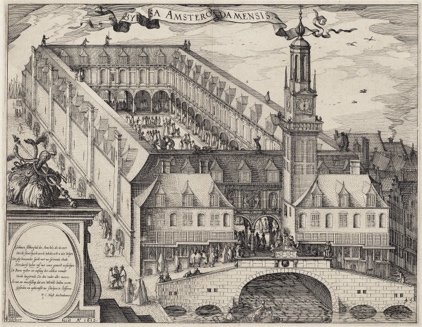
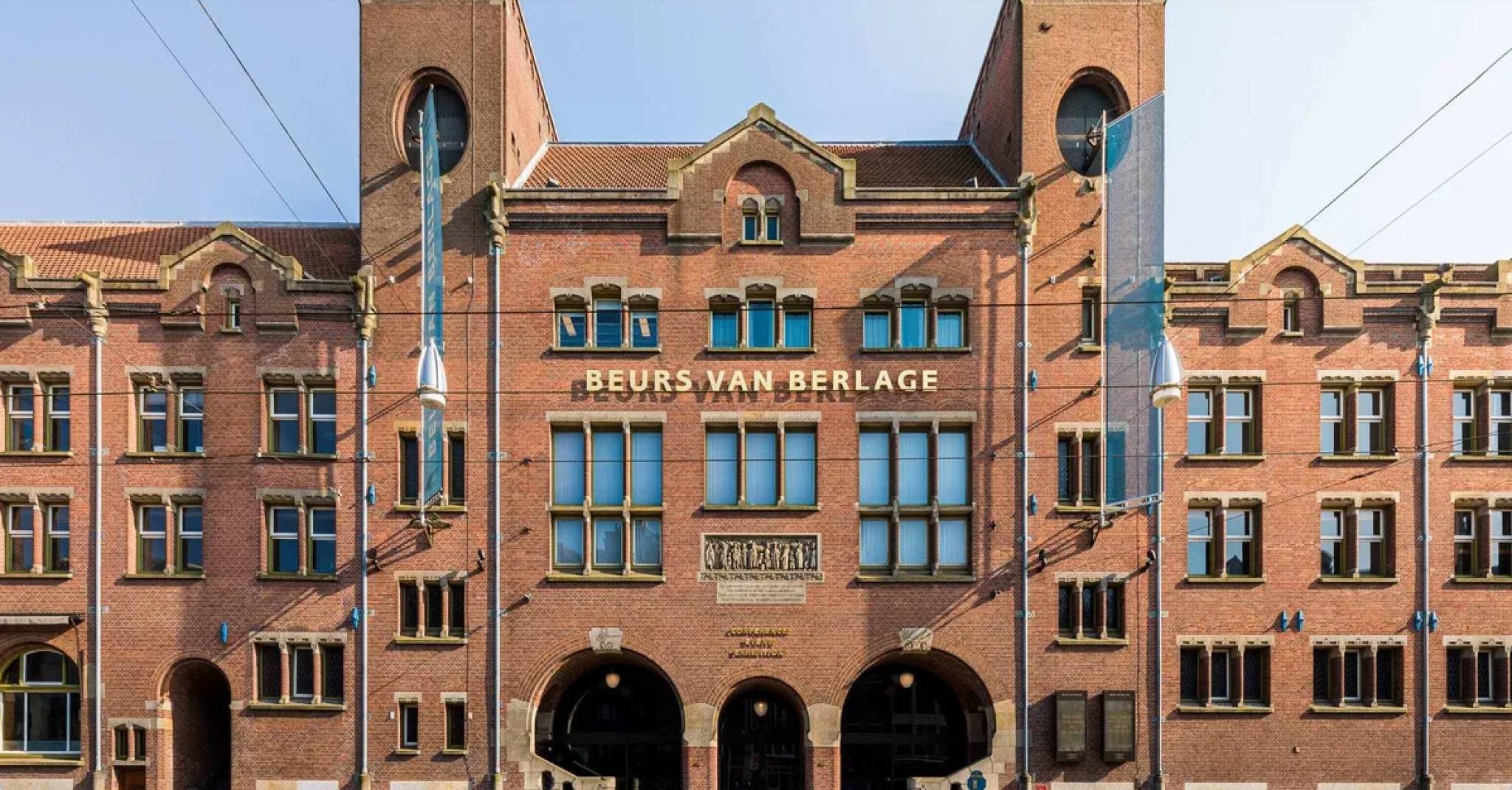
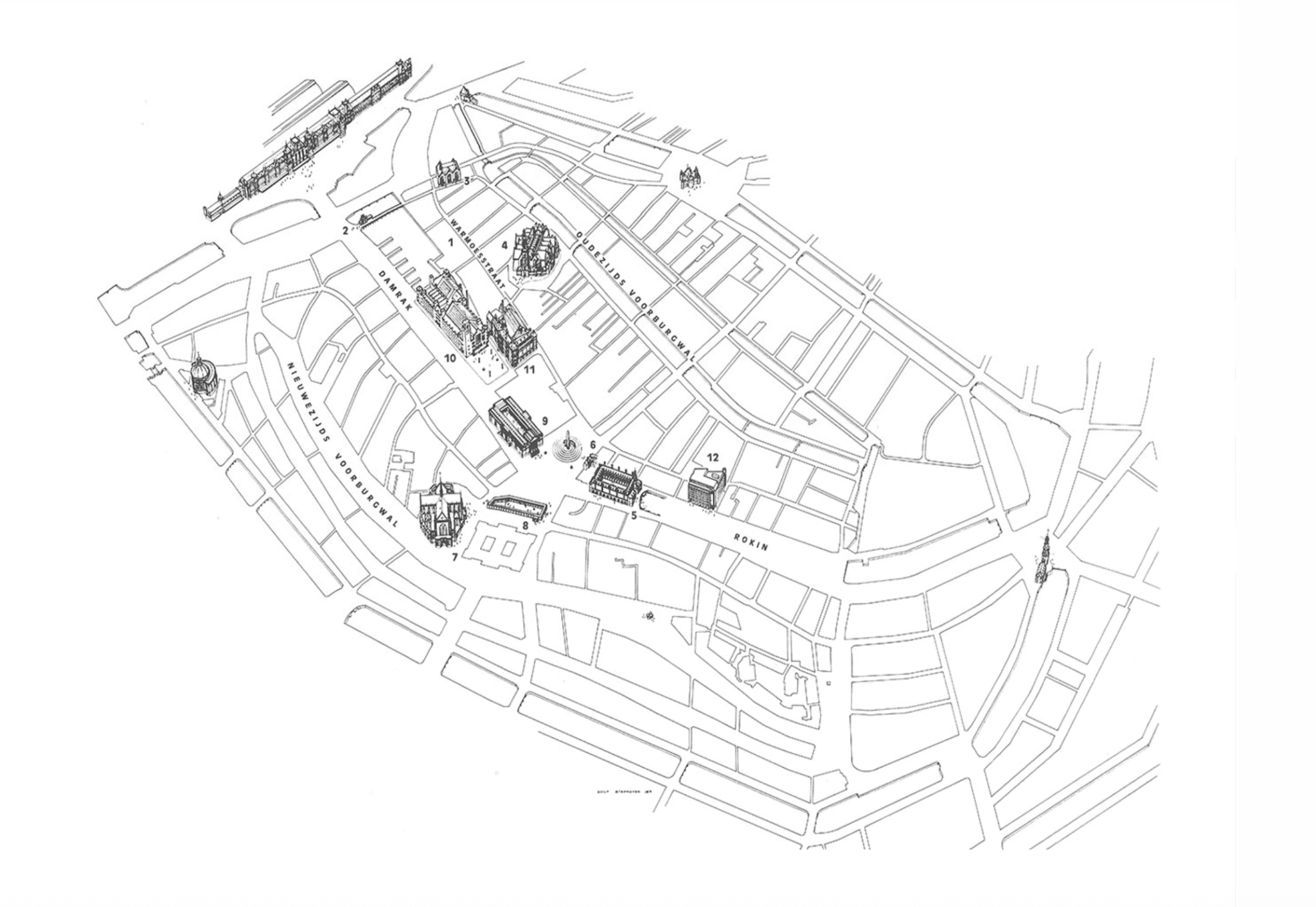
The Amsterdam Stock Exchange occupied three successive buildings on or near the Damrak. The first, designed by Hendrick de Keyser and completed in 1611, enclosed an open-air courtyard approximately sixty meters long and thirty-five meters wide, ringed by forty-two numbered stone columns beneath covered arcades. Merchants claimed permanent positions at designated pillars, and trading concentrated in designated corners — a system of “hoeken” that survived into the twentieth century. By 1668 the volume of securities dealing required a dedicated annex for share trading. Subsidence forced the building's demolition in 1835. After a decade of makeshift shelter, the city opened Jan David Zocher's Beurs van Zocher in 1845. Its nearly windowless Roman-inspired facade earned the nickname “the Mausoleum.” In 1896 the city commissioned Hendrik Petrus Berlage, who built between 1898 and 1903 in red brick with iron-and-glass barrel vaults. Three separate multi-story trading halls — for commodities, grain, and securities — are flooded with natural light. The entrance sits beneath a forty-meter clock tower. Berlage organized the plan on a rigorous 3.80-meter structural grid. The main hall covers nearly 1,600 square meters, the largest interior space in central Amsterdam.
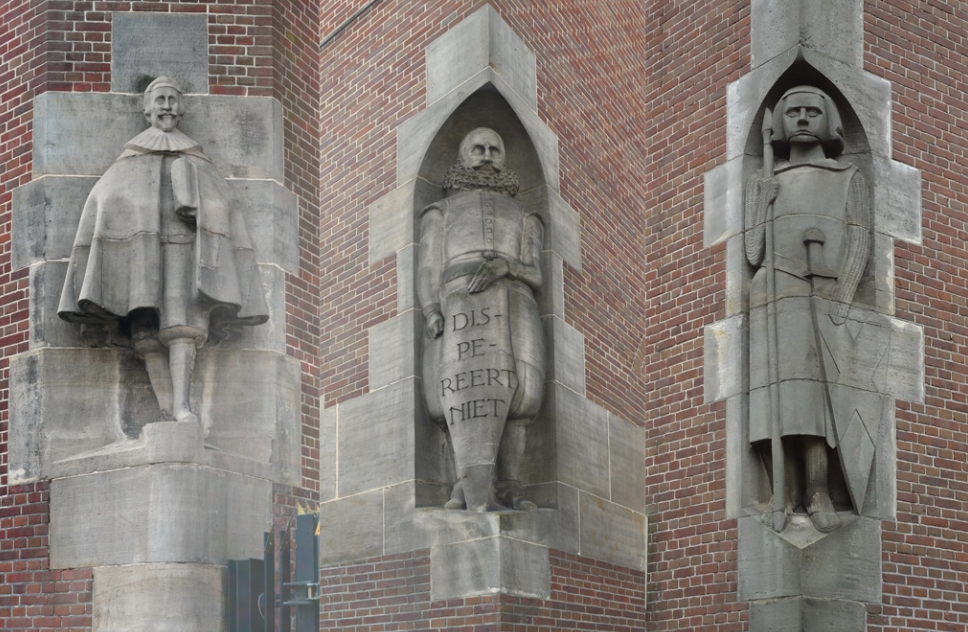
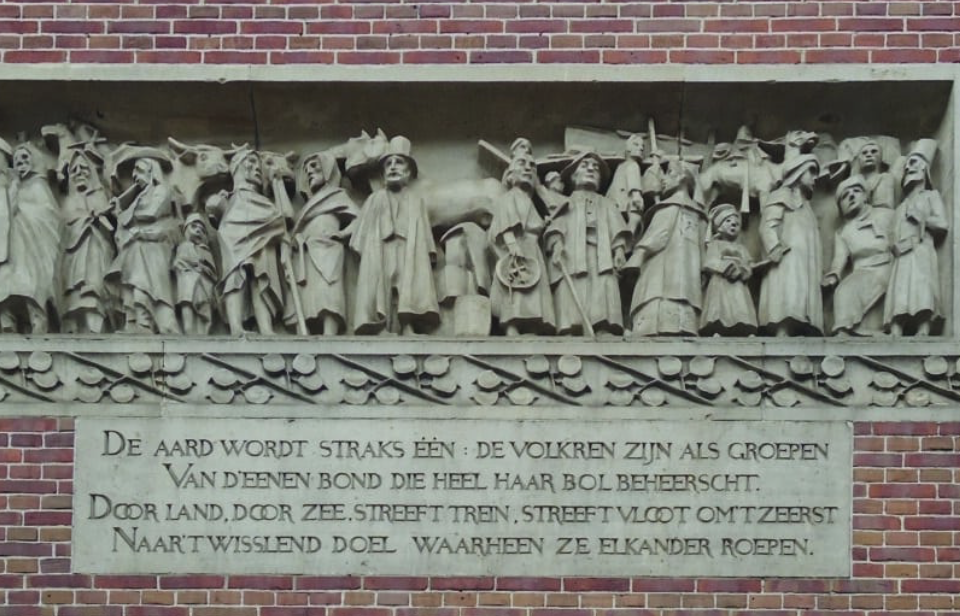
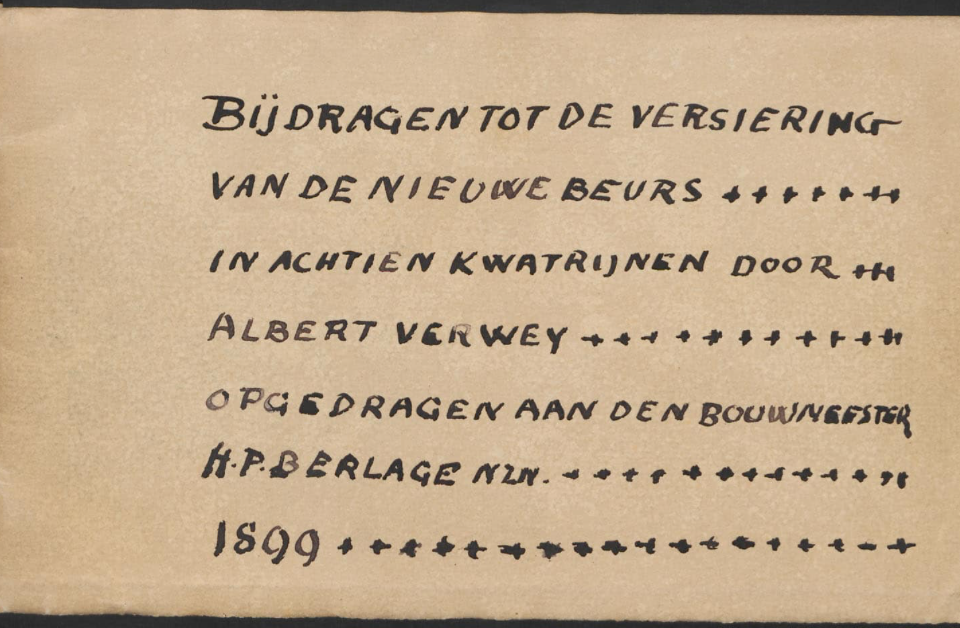
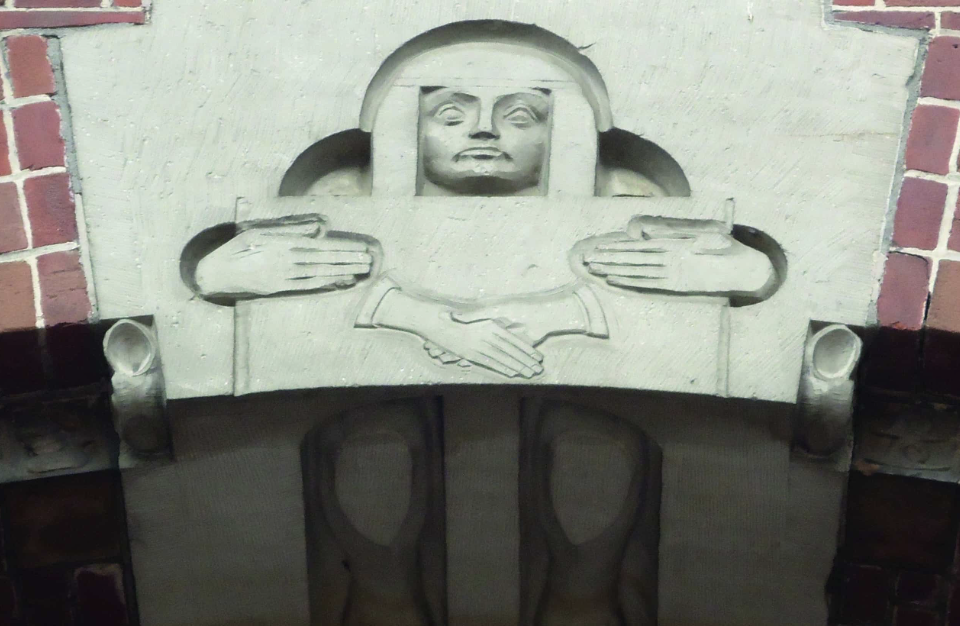
Berlage conceived the Beurs as a Gesamtkunstwerk — a total work of art. The literary scholar Albert Verwey composed eighteen quatrains expressing the building's philosophical program; each artist based their contribution on one of these verses. Jan Toorop created three monumental tile tableaux at the entrance hall depicting Past, Present, and Future. “The Past” evokes the reality of the trade in human beings; “The Present” shows a woman and a worker united in social emancipation; “The Future” envisions harmony between spiritual and material life. Richard Roland Holst contributed large wall paintings representing Industry and Commerce. Lambertus Zijl carved three monumental corner sculptures: Gijsbrecht van Aemstel (legendary founder of Amsterdam), Hugo de Groot (whose Mare Liberum advocated free seas and free trade), and Jan Pieterszoon Coen (the VOC governor-general). Zijl also executed keystones along the arcades bearing symbols of net, plough, ship, and fire-gear, and the relief above the main entrance depicting international trade as brotherhood.
The Beurs stands on the Damrak, once Amsterdam's busiest waterway — the natural harbor inlet of the Amstel where oceangoing vessels sailed up to unload Baltic grain at the Dam. The dam built across the Amstel around 1270 gave the city both its name and its first market square. De Keyser's 1611 exchange was erected atop a covered canal at the southern end of this square, transforming the waterfront from harbor to commercial precinct. Today the Beurs presides over a broad boulevard running from Centraal Station to Dam Square, where the Koninklijk Paleis — originally Jacob van Campen's 1655 Town Hall — faces it from the west. The building occupies the exact axis along which Amsterdam evolved from a fishing settlement into the financial capital of the seventeenth-century world.
The institutional history begins not with a building but with a financial instrument. In August 1602, the directors of the Vereenigde Oost-Indische Compagnie (VOC) opened subscription books to the public, creating the world's first freely transferable corporate equity. By the time de Keyser's exchange opened in 1611, traders had developed forward contracts; by the 1630s, options, futures, margin purchases, bear raids, and short selling were in active use. Isaac le Maire organized the first documented short-selling syndicate in 1609. The tulip mania of 1636–37 saw futures contracts on dormant bulbs traded through winter months in tavern colleges. In 1688, Joseph de la Vega, a Sephardic merchant, published Confusion de Confusiones, the first book to describe a stock exchange — cataloguing puts, calls, pools, repos, and manipulations in terms still recognizable today. Through three centuries and three buildings, the Amsterdam exchange evolved from an open-air commodity market into the institutional prototype for every securities exchange in the modern world.
From the outset, the exchange combined physical commodities with financial instruments. Grain, timber, salt, herring, whale oil, and East Indian spices were traded in bulk. VOC shares (1602) were joined by WIC shares (1623) and government bonds at national, provincial, and municipal levels. The Amsterdam market pioneered nearly every derivative instrument known before the twentieth century: forward contracts appeared within years of the VOC's founding; options and futures were standard by the 1630s; repos and short selling were commonplace by the 1680s. The Dutch term “actie” — meaning a share of stock — entered financial vocabulary here. In 1774, broker Abraham van Ketwich founded the world's first investment fund.