Kazakhstan Stock Exchange (KASE)
Almaty, Kazakhstan · Established 1993
This site requires authorization to access.
To request access, contact
william.goetzmann@yale.edu
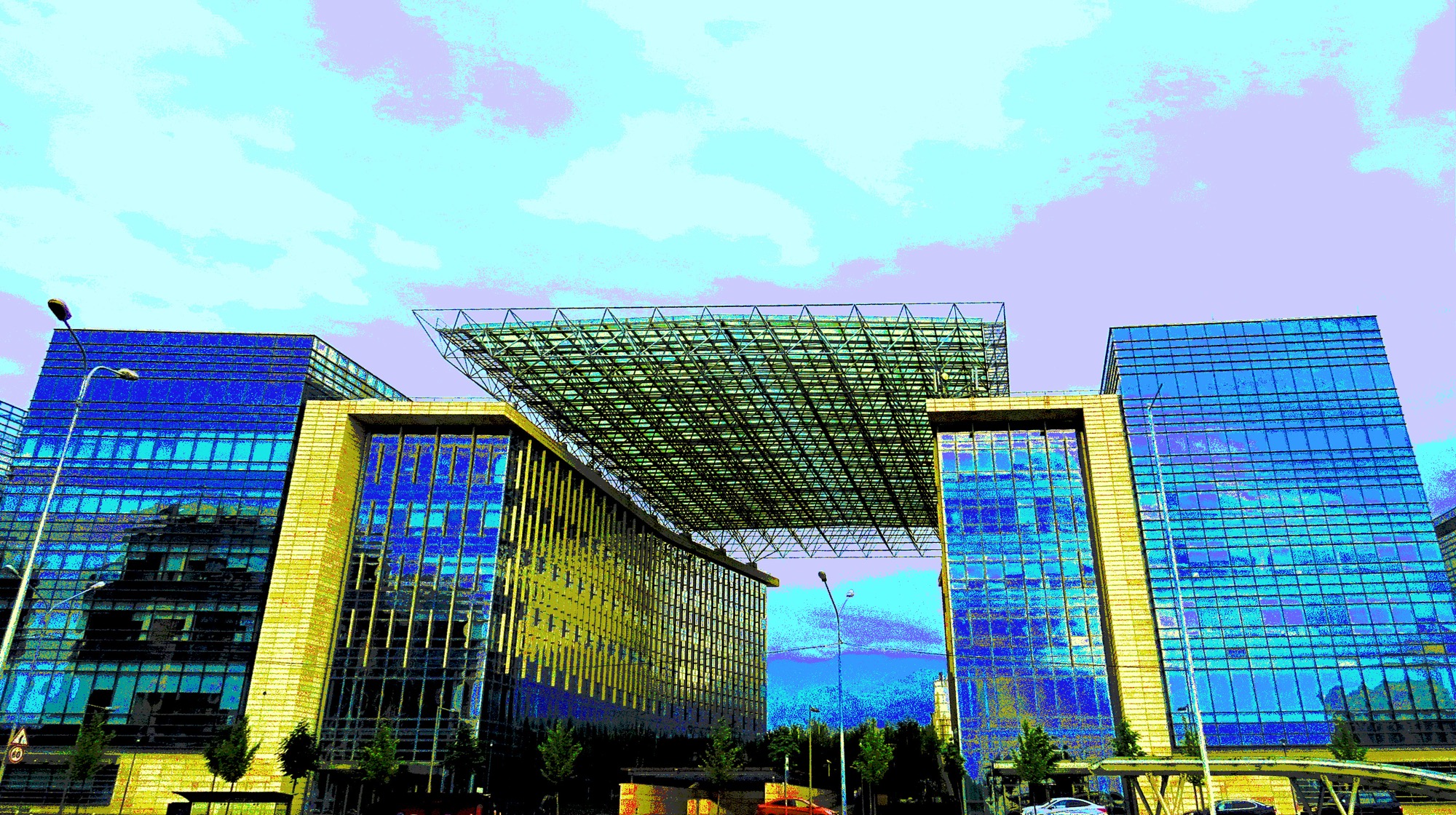
The Kazakhstan Stock Exchange (KASE) occupies the eighth floor of the northern tower of Almaty Towers, a dual-tower business complex at 280 Baizakov Street in Almaty completed in 2008 after four years of construction. Originally known as Rakhat Towers, the 25-story, 100-meter-tall complex exemplifies the glass-curtain-wall commercial architecture that reshaped Central Asian cities during the 2000s oil boom. The towers’ reflective facades and steel-frame construction draw on international corporate modernism rather than regional vernacular, a design philosophy characteristic of Almaty’s rapid post-independence urbanization documented by scholars such as Aliya Sabitova in her studies of Kazakhstani high-rise architecture (E3S Web of Conferences, 2018). KASE’s institutional presence within a multi-tenant commercial high-rise—rather than a purpose-built exchange—reflects the lean infrastructure typical of post-Soviet securities markets, where electronic trading platforms supplanted the need for open-outcry trading floors. The broader Almaty Financial District, masterplanned by T.J. Gottesdiener of Skidmore, Owings & Merrill and featuring twin 48-story towers designed by Foster + Partners with their signature diagrid glass facades, envisions a twenty-acre precinct of Grade-A office space, residential units, and parkland intended to rival Dubai and Singapore as a regional financial hub. Nearby, the Nurly Tau Business Center—a mixed-use complex of glass towers with low-emission coatings—and the 37-story Esentai Tower along Al-Farabi Avenue form an emerging skyline of international-standard commercial architecture that frames KASE’s operational home.
The decorative program of KASE’s commercial environment is shaped less by sculptural or painted ornamentation than by the visual language of Kazakh national symbolism embedded in its institutional identity and the broader architecture of Almaty’s financial quarter. KASE’s corporate logo incorporates geometric motifs reminiscent of traditional Kazakh ornamental patterns—a design heritage documented in the extensive catalog of Kazakh ornaments compiled by ethnographers, where horn-shaped “qoshqar müyiz” (ram’s horns) motifs symbolize prosperity and well-being. These zoomorphic and geometric patterns, rooted in the art of the ancient Saka peoples as described by archaeologist Kemal Akishev in his studies of the Issyk Golden Man kurgan near Almaty, appear throughout Kazakhstani public and commercial architecture—woven into facade panels, lobby mosaics, and decorative metalwork. The shanyrak, the circular crown of the traditional yurt that appears at the center of the national emblem, recurs as an architectural motif in government and commercial buildings across Almaty, symbolizing communal home and cosmic order. The Kazakhstani tenge banknotes themselves constitute a numismatic decorative program of considerable artistry: the IMF’s Currency Note column (Finance and Development, September 2016) describes how designer Mendybay Alin incorporated snow leopards, golden eagles, and traditional ornamental borders into the currency’s imagery, creating what has been internationally recognized as one of the most beautifully designed banknote series in circulation. These symbols of steppe heritage—transferred from felt hangings and silverwork to glass facades and digital trading screens—represent the continuity of decorative tradition within Kazakhstan’s commercial spaces.
KASE’s location in Almaty reflects the city’s enduring role as Kazakhstan’s financial capital, even after the political capital moved to Astana (now Nur-Sultan and recently renamed back to Astana) in 1997. Almaty sits at the foot of the Trans-Ili Alatau range of the Tian Shan mountains in southeastern Kazakhstan, a geographic setting that shaped its development as a Silk Road trading post and later as the Soviet administrative center of the Kazakh SSR. The Almaty Financial District, stretching along Al-Farabi Avenue in the Bostandyk district, concentrates the headquarters of major Kazakhstani banks—Halyk Bank, Kaspi Bank, and ForteBank—alongside international institutions including HSBC and Citibank. The district’s masterplan, designed to accommodate over one million square feet of commercial space per parcel around a central park and cultural center, was conceived as Central Asia’s answer to established financial quarters in Dubai and Singapore. Yet KASE now operates alongside a rival: the Astana International Financial Centre (AIFC), launched in 2018 on the repurposed Expo 2017 campus, which houses the Astana International Exchange (AIX) backed by Goldman Sachs, the Shanghai Stock Exchange, and Nasdaq’s trading platform. As the IMF’s 2024 Financial Sector Assessment Program technical note observes, this dual-exchange structure—KASE in commercial Almaty, AIX in political Astana—creates both competitive tension and complementary market development across Kazakhstan’s two principal cities, a spatial arrangement that echoes historical precedents such as the division between Amsterdam and The Hague or New York and Washington.
KASE was founded on November 17, 1993, just two days after Kazakhstan introduced the tenge as its national currency, replacing the Soviet ruble at a rate of one tenge to five hundred rubles. The National Bank of Kazakhstan and twenty-three leading commercial banks established the Kazakhstan Interbank Currency Exchange to provide an organized marketplace for foreign-exchange trading in the newly sovereign republic, as documented in the exchange’s official history and in Richard Pomfret’s study The Central Asian Economies since Independence (Princeton University Press, 2006). The first US dollar trades took place that same year. The institution was renamed the Kazakhstan Stock Exchange in 1996, when it received a full-scale license to operate securities markets. New market segments were introduced incrementally: government securities trading began in 1995, futures on the tenge/dollar exchange rate in 1996, the first equity listings in 1997, and corporate bonds in 1999. Kazakhstan’s economy suffered severely during the post-Soviet transition—real GDP fell to fifty-nine percent of its 1990 level by 1995, as documented by Chatham House researchers—before oil-driven recovery in the 2000s transformed the exchange’s fortunes. The “People’s IPO” program launched in 2012, beginning with KazTransOil, sought to democratize share ownership by offering stakes in state companies through the sovereign wealth fund Samruk-Kazyna. By 2023, KASE’s trading volume reached 283.4 trillion tenge (a fifty-two percent year-on-year increase), its index rose twenty-four percent, and the Central Depository surpassed two million personal accounts, as Chairwoman Alina Aldambergen reported to the World Federation of Exchanges.
KASE operates as Kazakhstan’s sole universal exchange platform, encompassing four integrated markets: foreign exchange, securities (equities and bonds), money market (repo and swap transactions), and derivatives. As the World Federation of Exchanges profile documents, the exchange provides access to nearly 1,600 tradable instruments from 255 issuers, including 79 foreign issuers. The foreign-exchange market—KASE’s founding segment—handles trades in US dollars, euros, Chinese yuan, and Russian rubles against the tenge, capturing between fifty and eighty-three percent of Kazakhstan’s total interbank currency turnover in recent years. Government securities, numbering approximately 200 issues worth US$1.7 billion in constant circulation, form the backbone of the fixed-income market. The equity segment lists shares of over eighty issuers with a combined market capitalization exceeding US$56 billion by late 2023, dominated by mining, energy, and financial-sector companies—reflecting Kazakhstan’s resource-dependent economy. The repo transactions market traditionally accounts for nearly half of total exchange volume, providing critical short-term liquidity to the banking sector. In 2020, KASE launched a sustainable bond segment, with sixteen ESG issuances comprising ten “green” bonds totaling 131 billion tenge and six social bonds totaling 77 billion tenge. The exchange aspires to transition from FTSE and MSCI “Frontier” to “Emerging” market classification—a reclassification that, as scholars such as Nichkasova, Nezhinsky, and Shmarlouskaya argue in Ekonomika Regiona (2022), would significantly increase foreign portfolio inflows into Kazakhstani securities.
Images will be added as the project develops. Photographs by Larry Ng and from research sources.